Lead Quality vs. Lead Quantity: Why B2B Teams Are Rethinking Their Funnel in 2026
Bigger buying committees and tighter budgets are forcing B2B teams to rethink lead quality vs. quantity. Here's how top teams rebalance the tradeoff in 2026.
Updated April 21, 2026

Over the years, the measurement of digital marketing relied on a single type of invisible technology: third-party cookies. Marketers were able to track users across websites, trace journeys, and match conversions with amazing accuracy. Reports were detailed, dashboards were scientific, and budgets were justified by tracking data.
The landscape has changed. Digital analytics have been altered in response to privacy regulations, browser limitations, and growing consumer awareness. We are now in a post-cookie world, where it is no longer feasible or economical to monitor individuals online.
If you can’t track people everywhere, how do you prove marketing performance?
Looking for a Digital Marketing agency?
Compare our list of top Digital Marketing companies near you
Contemporary marketing is intent, first-party, and revenue-driven. And through search marketing, one of the most accurate performance measurement tools has emerged. Understanding what ROI means in SEO is now useful for companies to determine overall marketing performance rather than rankings.
This article describes the current process for measuring marketing ROI.
Marketing ROI is the ratio of marketing revenue to marketing expenses. Previously, attribution was user-based. Today, it is outcome‑based. Marketers assess value rather than monitoring behavior. They do not count clicks; they count business results.
One of the most obvious starting points is search marketing. The initial performance measurement concept most companies learn about before discovering the meaning of ROI in SEO is that organic traffic reflects real demand, not a targeted interruption.
The importance of SEO ROI has grown because it is what people want, not what algorithms may have presumed they would want. and channels like white hat link building play a key role in building the sustainable authority that makes SEO measurable long-term.
The third-party tracked Cookies. Contemporary marketing is measurable.
With no cross-site tracking, companies rely on owned, trusted signals such as analytics data, CRM records, and value-creating conversions. It attracts profitable consumers.
That is why companies pay close attention to the ROI of SEO as an appropriate channel. Active demand also generates search traffic and is therefore, naturally measurable even when tracking technologies have been lost. This is precisely why search marketing has become a cornerstone of modern attribution — it captures intent-driven demand without relying on third-party data.
The basic SEO ROI formula is the first step towards understanding more of this broader marketing ROI:
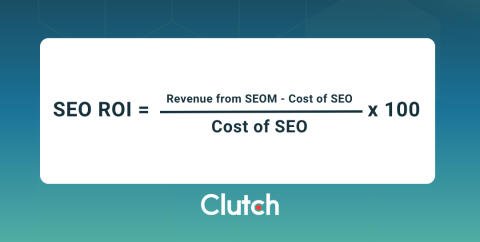
Consider a business that uses $5,000 every month on SEO and earns $20,000 in organic revenue. The annualized rate is 300 percent, meaning that every dollar deposited yields three dollars in profit.
This is the calculation on which:
The ability to quantify search results can be used by a business to undertake the same type of reasoning for email, paid ads, and content marketing.
Traffic in a post-cookie world counts for little. There has to be performance linked to results.
The key SEO ROI measures and more general marketing measures are:
Monitor the performance of every marketing source in terms of money.
Conversion rate is frequently used to maximize SEO ROI rather than traffic.
The long-term customers significantly increase SEO and overall marketing ROI.
Several visits are more important than last-click attribution.
Marketing affects brand demand across channels.
These measurements are much more insightful than behavioral tracking.
Many businesses are still asking whether it is possible to measure ROI from SEO. When it comes to revenue, the process is simple.
Use analytics and CRM integration.
Making assignments.
Example:
Calculate total revenue from searches.
Included are tools, staff, and agency costs.
Now you can understand how to measure the ROI of SEO efforts without cookies.
Large firms cannot simply use historical information. They make predictions based on an enterprise SEO ROI calculator. It allows them to estimate how they will perform before they spend money.
The forecasts are based on the number of searchers, the site's ranking, the frequency of clicking, and the customer's worthiness. This helps companies visualize ROI and compare marketing strategies prior to investing in them.
Local businesses face a particular issue of their own: people can locate them online, but purchase them offline. At that, first-party data can be used to track the ROI of local SEO.
Searches can be associated with calls, map requests, appointments, and store visits. Local marketing tends to have a higher ROI than large-scale campaigns because local searches occur close to the time of purchase.
Local search demonstrates the extent to which marketing can be measured without spying on people, the correlation between what people want and what they do.
The question that comes to people is, " How long does it take to realize ROI on SEO.
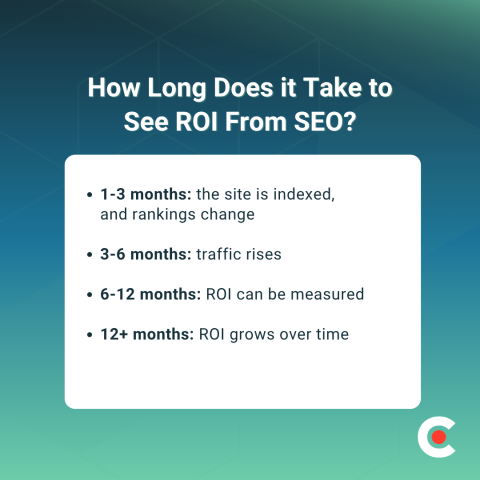
SEO is not as immediate as ads, but long-term returns are high; it is a good long-term marketing tool.
Not all industries earn the same amount of profit. Being visible in search results is a beneficial thing for professional services, such as law firms. In legal practices, SEO typically offers a high payoff because a single new client can generate substantial revenue.
This is a significant lesson in recent marketing measurement: ROI is determined by the value of a single customer, not by traffic volume. Ten competent guests can surpass ten thousand non-competent guests.
Linked data is currently used in marketing measurement rather than tracking scripts. Companies combine some sources to estimate performance: first-party analytics to evaluate visits and conversions; search data to evaluate visibility trends; and CRM data to evaluate closed deals. Based on the results, it is not people who allow companies to correctly measure the ROI of SEO and other channels.
An effective SEO firm, one that concentrates on the ROI, does not utilize vanity measures. Rankings and impressions are useful, but revenue is the key performance indicator.
The right agency connects organic traffic with high-quality leads, predicts further performance, and demonstrates the financial impact. Marketing measurement cannot be complete without an element of revenue reporting.
ROI can be measured and can be improved. These companies increase their profits by targeting high-intent searches, enhancing the conversion experience, updating helpful content, and reinforcing authority signals.
In most cases, the benefit of improving conversion rate outweighs that of merely increasing traffic. In a post-cookie world, optimization is more important than surveillance.
Advertisements provide instant exposure, which can be lost once the money is exhausted. SEO is slow to deliver value, yet it builds over time. Since it is more of an intent-based tracker than a behavioral tracker, firms are placing greater emphasis on SEO, which can provide sustainable ROI. Paid advertising buys attention, search ownership.
The loss of third-party cookies did not halt measurements; it clarified them. Marketing shifts from following people to knowing value. Businesses, finding out where users visit online, analyze which channels attract customers, and determine revenue and future expansion.
Understanding how to measure SEO ROI provides a useful framework for evaluating any marketing effort. Winners of the privacy-first future will not be those who have the most data, but those who know what data is worth.
Search is one of the best indicators of actual marketing ROI.