Lead Quality vs. Lead Quantity: Why B2B Teams Are Rethinking Their Funnel in 2026
Bigger buying committees and tighter budgets are forcing B2B teams to rethink lead quality vs. quantity. Here's how top teams rebalance the tradeoff in 2026.
Updated May 5, 2026

Discord communities offer community and authenticity to younger audiences and can represent significant marketing opportunities for brands. Taking advantage means doing your research, writing a plan, and learning to use the community like a native.
Brands put themselves in front of thousands of eyeballs when they use social media platforms such as Instagram, Facebook, or TikTok. Discord, a relatively recent platform that works a bit like the chat rooms or message boards of yore, seems like small potatoes. However, if your brand targets younger audiences or certain niche communities, Discord might be exactly where you need to be.
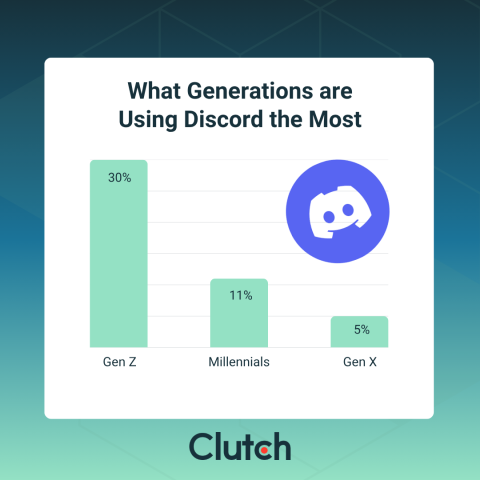
In a Clutch survey of 413 online community members, only 10% reported regularly using Discord. However, that top-line number masks a significant generational divide. 30% of Gen Z and 11% of millennials regularly use Discord, compared to only 5% of Gen X and virtually no baby boomers. Discord offers brands special access to a youth-oriented, uniquely engaged community, but only if marketing teams do their research and develop a plan.
Looking for a Digital Marketing agency?
Compare our list of top Digital Marketing companies near you
Learn what makes Discord different and how brands are using it today. Explore common pitfalls and practical steps for using the platform so you can get started building a presence in Discord communities.
Discord started in 2015 as a voice app for gamers, designed to address shortcomings in existing voice software. Over several years, the app gained dedicated fans in the e-sports world, support from other tech brands, and, most importantly, additional funding to go mainstream.
While the app continued to make gradual inroads into gaming-adjacent communities online, the real Discord boom came during the COVID-19 pandemic. The platform's combination of voice and text channels gives users multiple ways to stay in touch, and unlike other social media, it isn't designed around a central algorithmically driven feed. Instead, servers are divided into channels based on interests.
Amid shelter-in-place orders, Discord fostered a sense of closeness and community you couldn't find anywhere else online. Everyone from artists to university instructors took advantage.
Now, Discord servers are popular with streamers, YouTubers, and other influencers. Interest-based channels keep fans engaged in what they like most, and role-based permission structures allow server moderators to restrict access to certain channels. Subscribers may receive access to a special channel, or a channel might be reserved for commercial requests.
Interest-based communities are popular with consumers; our survey found that 69% prefer this structure. Discord is offering consumers, especially younger ones, exactly what they want: a conversation-first rather than content-first platform.
Let's take a closer look at the generational breakdown in Clutch's data. Nearly a third (30%) of Gen Z respondents used Discord regularly, compared with 11% of millennials and 5% of Gen X. For youth-oriented brands, those are great numbers.
It's easy to see why Discord is so popular with Zoomers. These are the true digital natives, who have barely known a world before Web 2.0, smartphones, and the ever-present algorithm. Discord offers something different: a laid-back place to hang out with friends and fellow enthusiasts. It's a clubhouse environment that feels more authentic than elsewhere on the internet.
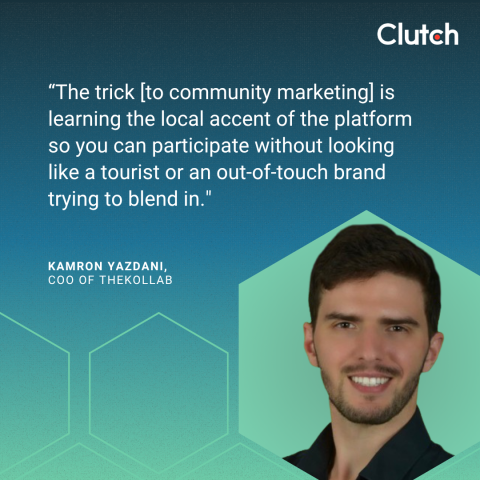
Your challenge as a marketer is determining a way to join these conversations without killing the vibe. The most important thing is knowing your audience and how they express themselves. According to Kamron Yazdani, COO of theKOLLAB, "The trick [to community marketing] is learning the local accent of the platform so you can participate without looking like a tourist or an out-of-touch brand trying to blend in." Don't be afraid to lurk for a while and take notes.
Understanding what makes Discord so different is key to unlocking its full potential. You need to know what Discord can do, and what it can't.
Discord isn't like other apps, so many of the typical social marketing strategies won't work there. Remember, there's no algorithm to boost your work.
Instead, focus on building a community that your customers trust and feel invested in. Determine your goals, create channels that support your aims, and foster community however you can. Even the best content needs a community to engage with and share it.
Create or join a server with the goal of providing something useful to your target audience. Discord isn't a one-way channel, and it isn't a place for straightforward sales pitches. However, the platform offers unique aspects that marketers can leverage.
One way brands currently use Discord is for intelligence gathering. If you give customers and fans a place to freely express their feelings, they'll be happy to use it. While no one likes to hear criticism, brands willing to listen to and engage with unfiltered complaints can learn a lot.
These communities can be a way to warm potential customers up before a pitch. Discord logs are searchable, and a consumer considering a particular product may take a look at a brand's Discord as part of their research.
Journalists may also use a server's log for their research. When you give a journalist access to your Discord channel, you allow them to see the kinds of conversations your staff is having with your customers. Instead of being emailed a press release about your great customer service, they can read the press release on your Discord, then see proof of it in how you interact with consumers on your other channels.
Discord makes it easy for the members of a server to self-select into channels on topics they care about. Go with the flow and don't try to force everyone into one central conversation or channel. For instance, Perplexity allows new members of its Discord server to self-select the channels they want to join, so they're not overwhelmed by options.
Your server should have role-exclusive channels that make it easier for certain groups to see relevant messages. Many servers feature channels specifically for community moderators, journalists, influencers, or paid subscribers.
This isn't about gatekeeping — things you say in one channel will bleed over into the others. Journalists shouldn't have to wade through days of meme posts to get the information they need, though, and customers looking for product advice are much happier when they don't have to hunt for the information they want.
Discord marketing is about community and conversation. Give roles to channel members, even those who aren't employed by your team, and make sure you highlight and reward active contributors. Many servers allow members to accumulate flair for participation or for linking other accounts to their Discord profile.
Most importantly, allow your members to shape the space. You're there to provide value, not control the conversation. Moderation is a must, but a policy that's too strict or seems arbitrary is a great way to ruin credibility with members.
Write clear server rules, prominently post them, and follow through on the consequences. Discord has tools that can help you keep a light but steady touch, such as activity alerts about unusual server behavior and the ability to place users on a time-out.
You can't build a community very effectively with a faceless brand account.
Empower your team to participate in conversations, use their real photos as avatars, and engage as real people, not marketing reps.
Discord can facilitate deeper conversations with both fans and the press. Game developers use Discord to take questions about new features, musicians use it to tease new music, and PR professionals use it to coordinate press requests.
Giveaways can be a great way to increase server numbers. If you build enough buzz around a server event, you can generate earned media coverage.
Discord doesn't operate like other social media apps, so it's no surprise that brands make many mistakes. Here are some of the most common ones we see:
Discord may not be the best place for brands that want strict control over messaging or don't have the resources to keep the conversation flowing. Before every post, do a gut check. Will your target consumer feel this post adds value? Will they feel it's too corporate — or worse, too cringe?
One bad post isn't the end of the world, though. Just use the feedback you get to up your posting game.
If those are the Discord pitfalls, how can you set yourself up for success? Here's a practical structure to help you get started:
Each brand's Discord marketing strategy will look a little different, but no strategy will deliver results overnight. Research and writing a plan may take several months on their own. After you implement your plan, it may take three to six months to generate consistent earned media moments, but building a Discord community right is worth the effort.
Though they aren't for every brand, Discord communities are among the best ways for a brand to reach Gen Z and young millennial consumers. With conversation-driven engagement and an authentic, comfortable environment, Discord can help a brand build deep trust with fans while improving its reputation with journalists and casual consumers.
Discord presents significantly different challenges to other social media platforms, but doing your research, taking your time, and setting appropriate expectations can bring great rewards.