Lead Quality vs. Lead Quantity: Why B2B Teams Are Rethinking Their Funnel in 2026
Bigger buying committees and tighter budgets are forcing B2B teams to rethink lead quality vs. quantity. Here's how top teams rebalance the tradeoff in 2026.
Updated May 20, 2026

Gmail’s AI summaries are changing how people read and respond to emails. As more users rely on summaries rather than full threads, emails with clear requests, deadlines, and direct communication are far more likely to be noticed, prioritized, and acted on.
Gmail shaped how many people learned to handle too many emails.
Priority Inbox trained users to triage faster, while Smart Compose reduced the friction between forming an idea and sending it.
Looking for a Digital Marketing agency?
Compare our list of top Digital Marketing companies near you
Now Google is changing something more fundamental.
AI summarization inside Gmail means more people are seeing a machine-generated version of the thread before they read the thread itself.
The summary is the first read. Sometimes the only one.
That shifts what your email is actually up against. It isn't competing with the other emails in the inbox anymore; it's competing with how well an AI can read it and forward it.
Gmail’s summaries use natural language processing to extract the key parts of long threads: decisions, deadlines, owners, unresolved questions, and next steps. They do this in two ways:
That distinction matters.
Extractive systems mostly surface what already exists. Like your flight details, for instance.
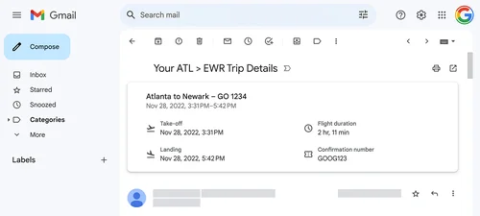
Abstractive systems interpret. They compress context and decide what appears important enough to survive the reduction.
Google’s earlier PEGASUS research helped build the foundation for this kind of summarization by training models to understand missing context in text.
Gemini 1.5 pushed that further by letting models process much larger email threads, attachments, and supporting documents together instead of separately.
That is why newer summaries feel materially better than the earlier generation of AI assistants.
Older systems could shorten text, but they struggled to understand full conversations.
The bigger challenge was making AI summarization reliable enough for real workplace communication, not just demos.
Google’s Workspace AI systems had to handle speed, privacy, permissions, and enterprise-level security simultaneously.
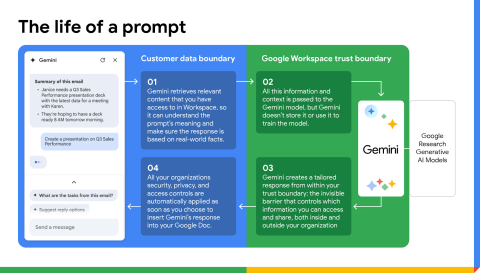
That is what turned AI summarization from a research feature into something companies could actually use.
The behavioral shift is already visible.
People are opening fewer emails just to figure out what they are about. More of that filtering now happens through summaries first.
That changes how urgency gets perceived.
If your request surfaces clearly in the summary, the email moves forward quickly.
If the important part sits halfway down the thread under context, pleasantries, or internal discussion, it often gets mentally categorized as later.
Hong Zhou Jin, CEO of eSign.AI, says, “Once AI summaries became part of how people triaged communication, we noticed something quickly: the emails that moved projects forward were usually the ones that surfaced the decision immediately.
If the actual request was buried under too much context or technical backstory, people delayed it because the summary never made the urgency obvious.”
And later is where many emails die.
What summaries increasingly determine:
Microsoft’s Work Trend Index research points in the same direction. Knowledge workers increasingly want AI systems to handle prioritization and synthesis because communication volume itself has become an operational overhead.
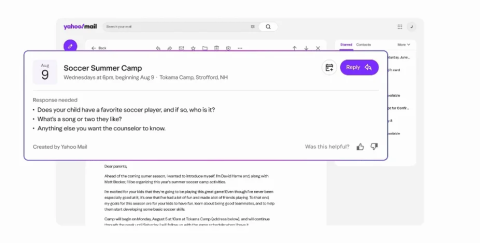
Summaries are becoming the new preview pane, not the subject line, not the first sentence, and definitely not the email itself.
Smart email writing now means putting your key message in the first two sentences.
Use bullet points for action items and deadlines. The AI will pick up these elements more effectively.
That sounds simple. In practice, most business emails still bury the actual ask.
People open with context, softening language, and background before they get anywhere near the decision request.
AI summarization punishes that structure.
Samuel Charmetant, Founder of ArtMajeur, works with artists, galleries, and creative professionals whose outreach often depends on getting attention quickly in crowded inboxes.
Charmetant says, “A lot of creative professionals still write emails the way people did ten years ago, with long introductions before the actual point.
That becomes a problem once summaries decide what gets surfaced first. The emails that perform best now usually make the ask, the opportunity, or the decision visible almost immediately.”
The emails that survive summarization well tend to share a few characteristics:
This works better:
“Request: Approve Q3 pilot budget. Decision needed by Fri, May 22.”
Than this:
“Hope you’re doing well. Following up on some discussions we’ve been having internally around the broader budget planning process…”
One gets surfaced correctly. The other gets compressed into mush.
Formatting matters more now, too.
Short tags such as “Action:”, “Decision:”, “Deadline:”, and “Owner:” create semantic anchors that the model can quickly identify.
Ambiguous dates are another common failure point:
The same applies to task ownership:
One small thing that consistently helps: end with a response path that requires almost no cognitive effort.
“If approved, reply ‘Approved,’ and I’ll proceed.”
Machines understand it cleanly. Humans do too.
The next phase moves beyond summarizing individual threads.
The bigger shift is contextual aggregation: AI summarizing across email, chat, and call transcripts simultaneously.
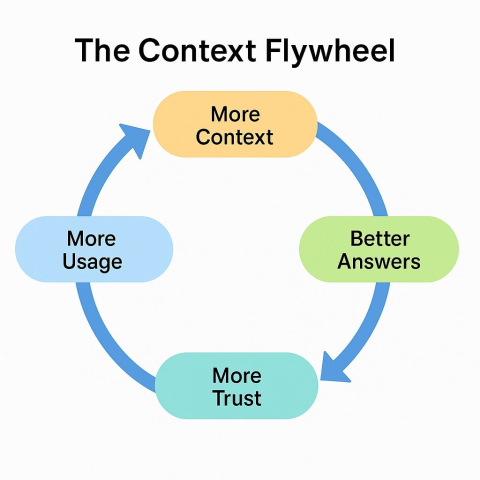
Imagine a unified summary of related emails, chat messages, and video call transcripts. The technology will help us see the full picture, not just individual messages.
That direction already fits where long-context models are heading.
The likely evolution is not just shorter email summaries. It is workflow-level synthesis:
Some early versions already exist inside productivity suites.
Once summaries become reliable enough, they stop being passive reading aids and start becoming operational triggers.
Christopher Skoropada, CEO of Appsvio, works on workflow visibility designed to reduce coordination friction across teams.
Skoropada says, “The next step is not just better summaries. It’s systems that can turn communication into structured operational context automatically.
Once AI can reliably identify blockers, approvals, deadlines, and owners across email and meetings, summaries stop being informational features and start becoming workflow infrastructure.”
That changes how internal communication systems behave.
Every AI summary represents a moment where algorithms interpret our private communications.
Organizations need clear policies about data retention, processing limits, and user control. The convenience is undeniable, but users have to understand and consent to how their communications are analyzed.
A few risks matter more than the rest.
Faithfulness is one.
Abstractive summaries can flatten disagreement, soften nuance, or unintentionally distort tone.
NLP researchers have already documented hallucination issues in summarization systems where outputs sound plausible while subtly changing meaning.
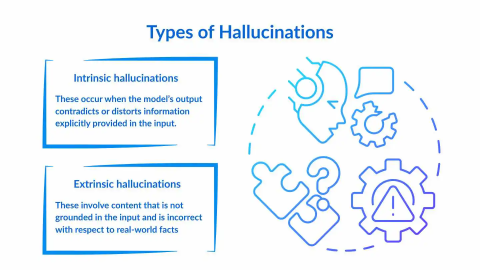
That becomes dangerous in legal reviews, financial approvals, HR discussions, or operational escalations where nuance matters.
Conrad Wang, Managing Director of EnableU, works in disability and support services, where communication often involves sensitive contexts and compliance requirements.
Wang says, “There’s real risk when nuance gets compressed too aggressively. In support environments, tone, context, and small details can materially change how a situation is understood.
That’s why teams still need clear policies around what gets summarised, how it’s reviewed, and when people need to read the full thread instead of relying on the shortcut.”
Then there is governance.
Companies deploying these systems need clear policies around retention, visibility, consent, and administrative access.
Google says Workspace content is not used to train public models, but organizations still need to understand their own settings, permissions, and compliance obligations.
Especially in regulated environments.
The practical takeaway is straightforward: if context materially changes interpretation, do not bury that context halfway down the thread and assume the summary will preserve it correctly.
Put the nuance near the top.
AI summarization is changing how communication works inside companies.
A message that is easy to summarise becomes easier to prioritize, delegate, approve, and act on.
A message that hides the real point under too much setup increasingly gets filtered out before anyone fully reads it.
The tools will keep evolving. The pressure toward clearer communication may not.