Testimonial Advertising: How to Turn Customer Stories Into Sales
Testimonial advertising uses real customer stories and reviews to promote your brand. Discover popular types and how to put this content to work.
Updated October 22, 2026

More advertisers can place ChatGPT ads, but users still struggle to distinguish them from real answers. This guide covers how to get started and maintain the trust that makes ad placement worth buying.
On February 9, 2026, OpenAI began testing ads in ChatGPT in the United States. On May 5 of the same year, the company launched a beta self-serve Ads Manager, allowing companies to buy ads directly without an agency or partner. Access to the beta program continues to open gradually. Since ads launched on ChatGPT, access has expanded beyond the U.S. to markets including Canada, Australia, the United Kingdom, Mexico, Brazil, Japan, and South Korea.
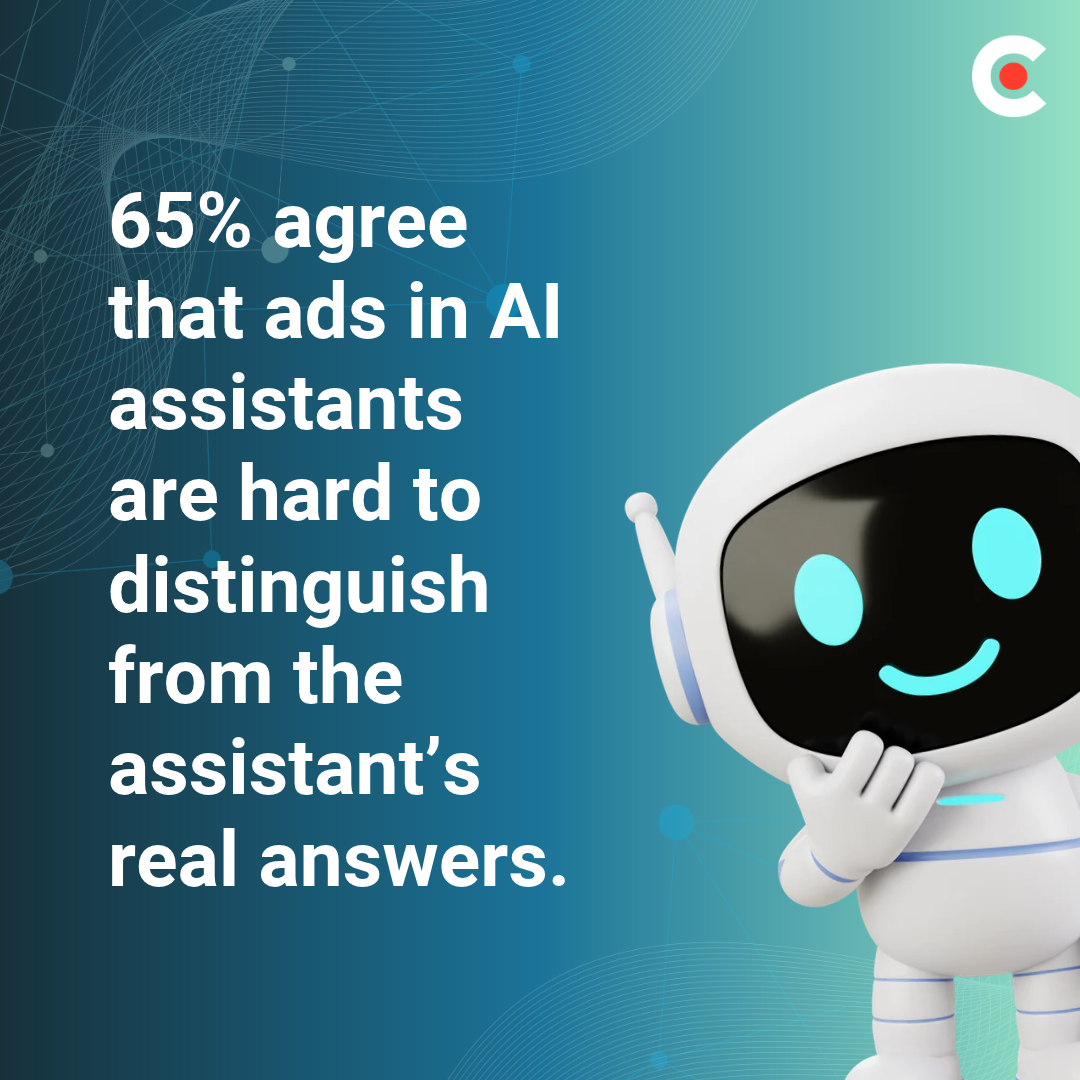
In September 2026, Clutch surveyed 747 consumers, 628 of whom regularly use AI assistants, about ads in ChatGPT and other similar platforms. Of those 628 people, 65% agree that ads in AI assistants are hard to distinguish from the assistant’s real answers, and 26% aren’t at all confident they could tell the difference between an AI assistant’s own organic answer and a paid placement.
Looking for a Advertising agency?
Compare our list of top Advertising companies near you
Though OpenAI says it labels ads and visually separates them from answers, most users still say they struggle to distinguish ads on the platform. Your brand can’t afford to assume ChatGPT’s ad label will solve the consumer trust problem.
Explore how advertising on ChatGPT works, how to launch a campaign, and how to advertise on ChatGPT without eroding consumer trust.
Ads in ChatGPT are sponsored placements that appear directly below the model’s responses. These conversational ads, which bear a “sponsored” label, appear to logged-in adults using the Free and Go pricing tiers. Those using the Plus, Pro, Business, Enterprise, or Education tiers don’t see sponsored ads. Free users can also opt out of ads, but in exchange, they get fewer daily messages from the model.
OpenAI’s ad policies restrict ads for users it believes are under 18. The platform doesn’t place ads near sensitive or regulated topics, such as health, mental health, and politics. Certain business categories cannot advertise on ChatGPT, and others face light restrictions, case-by-case allowances, or verification procedures.
Unlike in many ad models, advertising on ChatGPT doesn’t involve brands choosing keywords to trigger ads. Instead, they describe the conversations to which their product is relevant using specific targeting mechanisms, which include:
OpenAI assures users that advertisers never see users’ chats, chat history, memories, or personal identity details, and that they receive only aggregated performance data such as views and clicks.
Other AI assistants are considering similar ad models.
There are two ways to buy ads in ChatGPT. The self-serve Ads Manager lets your team create and run campaigns directly, without an agency or partner. The second route is via agencies and ad tech partners, which best suits brands wanting help with creative, buying, or reporting.
Here’s how to advertise on ChatGPT through Ads Manager:
Set up tracking: Add UTM parameters to your links and connect OpenAI’s conversion tools to see what happens after the clicks.
Pricing is still settling. Rather than relying on outdated figures, check the current benchmarks from OpenAI and its ad tech partners. Minimums and bid ranges have already moved since the first pilots.
Setup is the easy part. Keeping users’ trust once your ad runs will be harder.
Among the 628 regular AI assistant users, 65% agree that ads in AI assistants are difficult to tell apart from real answers, and 32% strongly agree. And 43% of users name that confusion as one of their top concerns.
Awareness is also lagging. Before the survey, 31% didn’t know that some assistants now display ads, and 24% aren’t sure whether they’ve ever seen one.
In March 2026, OpenAI reported that its pilot showed no impact on consumer trust metrics. Our latest data doesn’t contradict that report, but the two sources measure different things. OpenAI reported on trust in its pilot program, while our team specifically asked users whether they could differentiate an ad from an answer.
That disconnect lands on advertisers as well as OpenAI. If a user feels misled, your brand shares the blame. AI answers carry an expectation of neutrality that search results and social feeds haven’t had in years, so a misstep here costs more. Part of learning how to advertise on ChatGPT is learning how to plan for that risk.
Beyond the “Sponsored” label, AI assistant users pointed to a few other cues. Among them, 36% recognized an ad because it appeared as a separate card or box, 32% because it was named or linked to a specific brand, and 19% because the wording felt promotional. Another 18% couldn’t really tell and simply assumed.
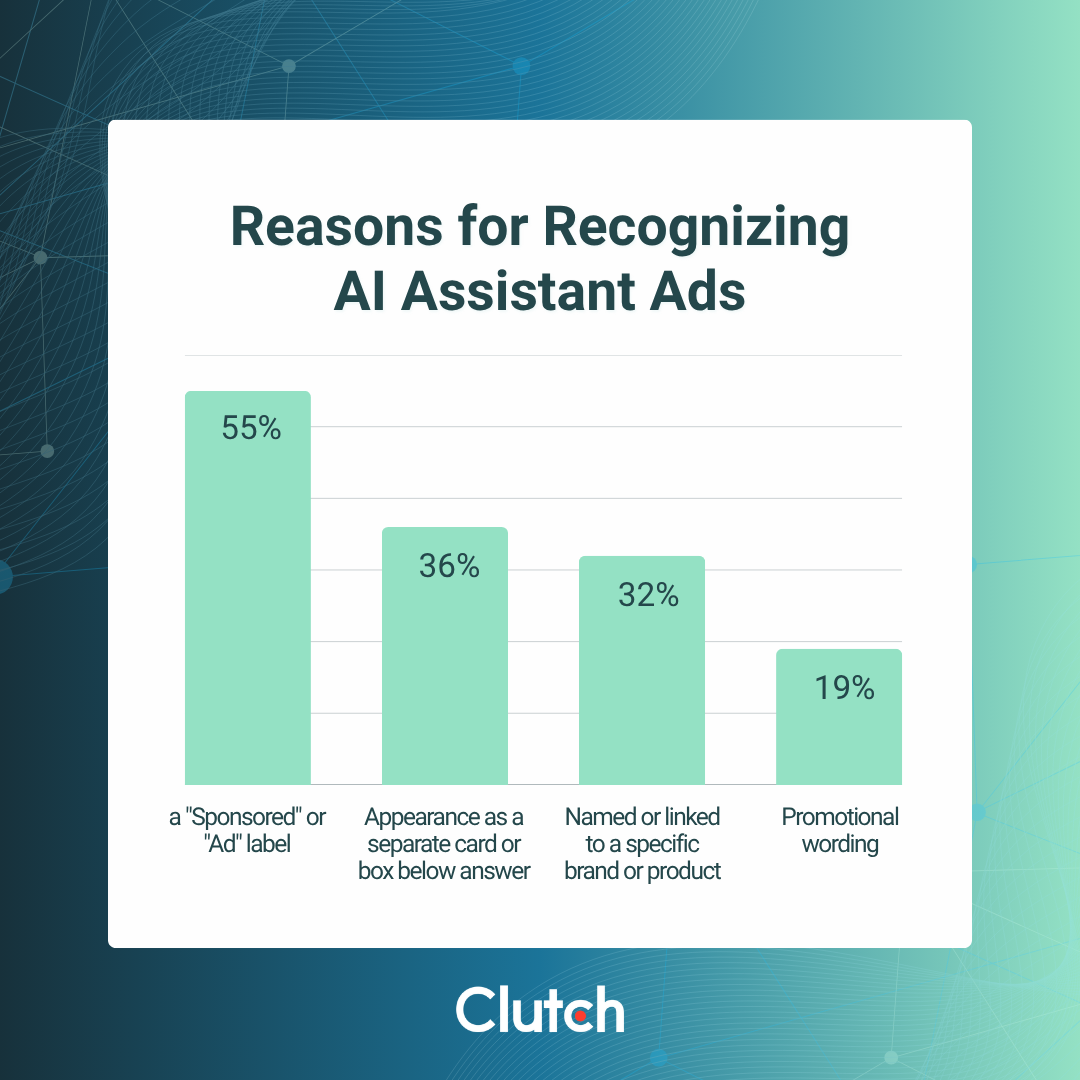
The platform controls the label and ad placement, while the brand controls the wording, the tone, and how the ad presents your brand. Promotional language gives ads away to nearly one in five users, and your team writes every word.
The label tells users they’re looking at an ad, but your own creative decides whether they trust it.
These best practices demonstrate how to advertise on ChatGPT without alienating the users you’re paying to reach. Each of these targets a specific trust gap from our survey:
Avoid creative that mimics the assistant’s voice or formatting. “Native” should mean relevant, not camouflaged. The FTC’s native advertising guidance explains the principle behind clear disclosure: People should easily recognize an ad as an ad.
Use context hints to target a specific moment of need, such as comparing options or planning a purchase, rather than an overly broad topic. Adweek spotted Best Buy, Expedia, and Enterprise Mobility among the first brands to run ads in ChatGPT, and each sells something people research before they buy.
Irrelevant or heavy-handed ads also push users out of the conversations you want to join. Seventeen percent said they’d avoid asking about shopping or product topics just to dodge ads.
According to our data, half of users (50%) said that seeing ads alongside their confidential work documents would feel unacceptable, and 38% said the same about topics involving their kids or family. Only 9% said they would accept ads in any context.
OpenAI already keeps ads out of conversations involving health, mental health, and politics. Set your own exclusions on top of the platform’s restricted topics by adding negative keywords.
Remember, 19% of AI assistant users spot ads by their promotional wording. Specifics, such as pricing, specs, comparisons, and availability, read as helpful, while superlatives all but scream marketing copy. Consider these two versions of the same ad:
The second version gives the user something to act on without asking them to suspend disbelief.
The click is where user trust gets confirmed or lost. Your landing page must match the ad’s claim and the question that triggered it. Avoid bait-and-switch offers and pages that bury the information the ad promised.
Twenty-one percent of users would turn off chat history or personalization to reduce ad targeting. Avoid creative that signals your brand knows what the user asked. OpenAI says advertisers never see users’ conversations, so ad copy that implies otherwise misleads people and obliterates trust.
Ads work best when your brand also appears credibly in organic AI answers. A sponsored placement that matches what users already see in unpaid responses doesn’t seem out of the blue. It looks consistent and natural.
Your click-through rate alone can’t tell you whether people trust your ad. Combine your performance metrics with trust-oriented signals, such as brand lift, branded search volume, customer sentiment, and landing page engagement. Then test an informational version of your creative against a promotional one, and compare downstream behavior like time on page, return visits, or conversions rather than clicks alone.
Knowing how to advertise on ChatGPT includes knowing how to determine whether your ads work. A sound AI advertising strategy treats trust as something you can measure, not just assume.
ChatGPT advertising is open to more brands than it was in February, but the channel’s value rests on user trust. If you’re weighing how to advertise on ChatGPT, start there. Clutch’s survey found that 65% of AI assistant users say ads are hard to distinguish from real answers, and 26% aren’t at all confident they could spot a paid placement.
Label your ads clearly, write them to be helpful rather than hype, and keep them out of conversations where they don’t feel right. The brands that most successfully harness advertising in AI assistant platforms will be the ones that never make their customers feel tricked.
A: The cost to advertise on ChatGPT and other AI platforms is still settling, and pricing varies by bidding model, market, and whether you buy through Ads Manager or a partner. OpenAI offers cost-per-click and cost-per-impression options. Check current information before you set a budget.
A: Logged-in adults on the Free and Go tiers of ChatGPT see ads. Plus, Pro, Business, Enterprise, and Education users do not. Free users can opt out of receiving fewer daily messages, and OpenAI restricts ads for users it believes are under 18.
A: OpenAI says that ads don’t influence ChatGPT's answers. The company also says advertisers never see their users’ chats, memories, or personal identity details, only aggregated performance data, such as views and clicks.
A: Certain business categories, such as alcohol and tobacco sales, can’t advertise on ChatGPT at all, and others, such as healthcare or finance, face light restrictions, case-by-case allowances, or stringent verification steps. The platform also keeps ads away from chats about sensitive topics such as mental health and politics. Check OpenAI’s current ad policies before building a campaign, as category rules can change.