
Task Automation: How to Cut Repetitive Work
Task automation saves time, gets work done faster, and reduces errors. Learn how to automate repetitive tasks step-by-step and how to decide what to automate.
Updated August 10, 2026

With 70% of consumers already using AI to help them shop online, the shift toward agentic commerce isn’t theoretical, but the next evolution of how shopping decisions get made.
AI assistants like ChatGPT, Gemini, and Claude have quickly become everyday companions for shopping research. Rather than browsing endless product pages, consumers are turning to AI to summarize reviews, weigh pros and cons, and surface options they might not have found on their own.
Now, with the rise of agentic commerce — AI systems capable of taking more proactive roles in shopping, from recommending products to initiating checkout — the way consumers interact with e-commerce is poised to undergo even further changes. However, growing ability doesn’t automatically mean growing trust and, ultimately, use.
Looking for a Artificial Intelligence agency?
Compare our list of top Artificial Intelligence companies near you
While 77% of consumers say they’re open to certain agentic commerce features, nearly all respondents (95%) also report concerns about AI-assisted purchasing. The tension between convenience, privacy, accuracy, and control defines the current moment in adopting AI tools for shopping.
This report examines how consumers are actually using AI in online shopping today, where confidence and trust begin to break down, and what these behaviors signal for the future of agentic commerce, AI shopping agents, and agentic AI checkout experiences.
AI shopping assistants are becoming a routine part of the consumer journey, primarily for research and comparison rather than for completing purchases. In fact, 65% of consumers have already used AI tools to research products before making a purchase, with nearly one-third (32%) using them weekly.
Notably, 14% of consumers have not yet used AI for shopping research, but are open to it. Additionally, just 21% of those surveyed said they haven’t used it and aren’t interested in it.
When asked why consumers might turn to AI for help in their shopping journeys, the top responses are grounded in everyday efficiency and deeply task-oriented:
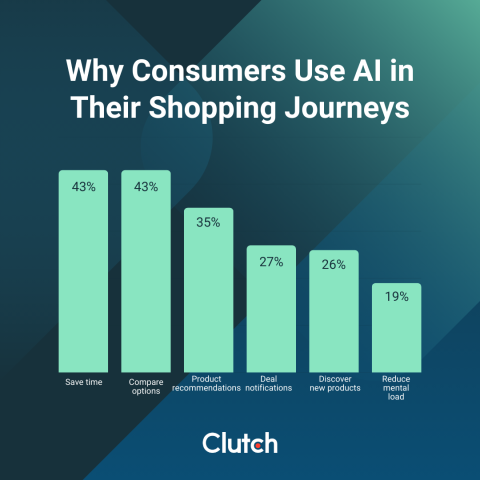
Ultimately, consumers are using AI to assist them with the foundational steps of their shopping journeys, saving both time and money as they search for the perfect product to meet their needs.
As Charlie Marchant, CEO of Exposure Ninja, explains, “Online shopping is a manual process: opening multiple tabs, comparing products, reading reviews, and going back and forth for days before making a purchase decision. Agentic AI compresses all of that into minutes.”

A top priority for brands is to improve visibility within AI assistants. As Sara Vicioso, Growth Marketing Manager of Workshop Digital, explains, “Agentic commerce works best when your offerings, pricing, availability, and policies are consistent and machine-readable. If your systems are fragmented or your messaging is unclear, the agent will struggle to act on your behalf.”

Consider partnering with a top-rated generative engine optimization (GEO) agency to ensure your products get discovered during this research phase.
When the Clutch survey for this report was distributed, the 2025 holiday season was coming to a close. With shopping behaviors heightened during this time of year, respondents were asked specific questions about their use of AI while shopping for the holidays.
Among consumers who shopped for the holidays, 34% used an AI assistant to help with their purchases. However, their feelings about the helpfulness of AI during this process were mixed:
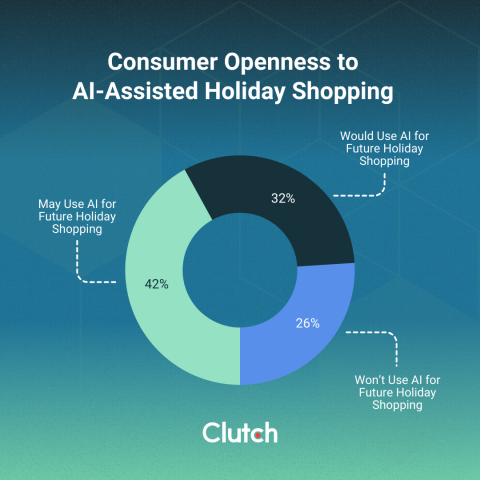
Looking ahead, 32% said they would use an AI assistant for holiday shopping in the future. Another 42% indicated they may use it in the future, suggesting that adoption is likely to grow as comfort and familiarity increase.
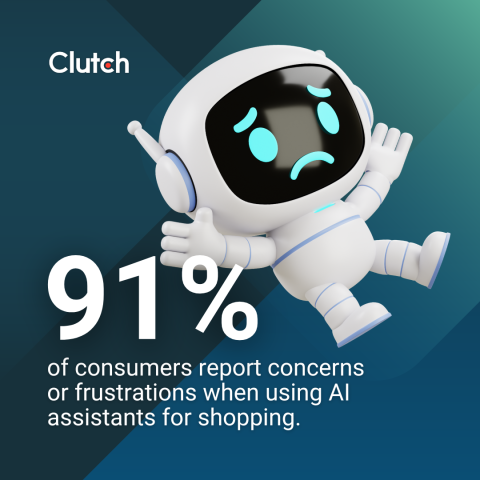
Despite growing use, trust remains a significant barrier to the deeper adoption of AI in the shopping journey. Overall, 91% of consumers report concerns or frustrations when using AI assistants for shopping.
Data and security are top worries, cited by 43% of respondents.
Additionally, 38% are wary of inaccurate or unreliable product recommendations.
Breaking down consumer trust in AI recommendations for specific products further:
The distrust for AI-recommended products mainly boils down to a few top concerns and frustrations, with 42% of respondents sharing that suggestions don’t match their taste or style, 38% receiving inaccurate or unreliable recommendations, and 34% skeptical about the AI system’s potential bias toward certain brands or products.
Certain factors can improve confidence in AI recommendations. Consumers are more likely to trust suggestions when the AI:
These findings reinforce that higher trust comes from transparency, multiple options, and actionable, verifiable information. These elements will be crucial as agentic commerce becomes increasingly widespread.
While consumer comfort with AI shopping varies widely by product category, the pattern is consistent: people are more willing to use AI when purchasing routine, replaceable, or comparison-driven items.
Everyday household essentials top the list, with 40% of consumers saying they would feel comfortable using AI to shop in this category. These purchases tend to be low-risk and repeatable, making them a natural fit for AI assistance.
Electronics and tech follow closely at 37%, indicating that consumers likely use AI to help them compare specs in this comparison-heavy category.
Mid-tier comfort levels appear across a range of lifestyle categories, with consumers being open to using AI for:
Additionally, one in five (20%) consumers say they would use AI when shopping for high-cost purchases, such as appliances, furniture, or major technology. This data shows that consumers appreciate the assistance when it comes to researching and choosing big-ticket items.
Where comfort drops off most sharply is in categories tied to personal well-being. Only 16% of consumers are comfortable using AI to shop for health or wellness products, and just 11% feel comfortable doing so for pet supplies. These categories involve higher perceived risk, more individualized needs, and a stronger desire for human judgment.
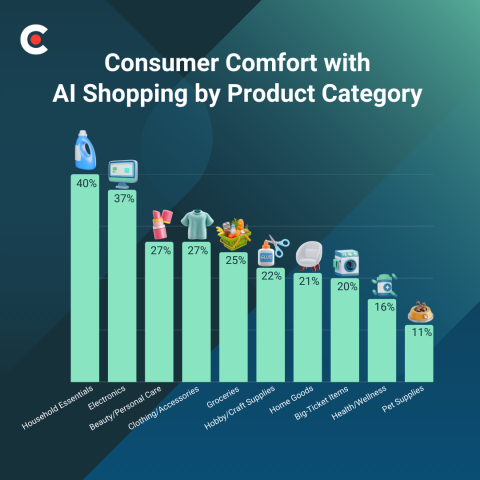
Overall, the data show that consumers utilize AI shopping assistance selectively, with it being used most often in situations where decisions are repeatable and information-driven. On the other hand, consumers rely less on AI when purchases feel personal, emotional, or high-stakes. For brands and platforms building toward agentic commerce, these category differences highlight where AI can add value today, and where trust still needs to be earned.
Regardless of which product category your business specializes in, it’s essential to optimize your website for agentic commerce sales. With AI shopping agents now browsing your site alongside humans, identifying AI interaction points, prioritizing structured product data, and designing for scannability are just a few of the changes you’ll need to make to your website to become visible in AI search results. Explore top-rated web design agencies that can prepare your website for the future of online selling.
While agentic commerce is most commonly discussed in the context of product purchases, services represent another major frontier for AI-driven assistance. Although AI-powered service scheduling is not yet widely available, consumer openness suggests significant potential for future expansion.
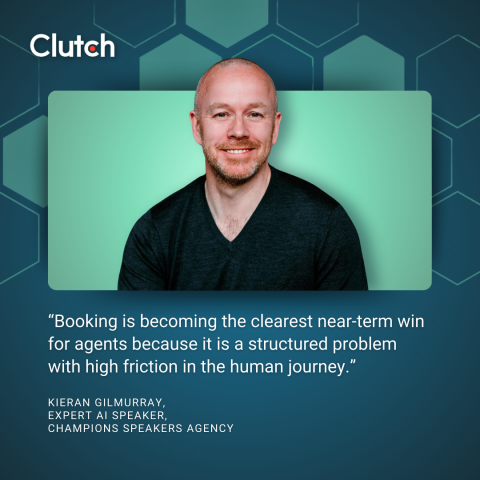
“Booking is becoming the clearest near-term win for agents because it is a structured problem with high friction in the human journey,” states Kieran Gilmurray, Expert AI Speaker, Champions Speakers Agency.
To paint a picture of what agentic scheduling looks like, Gilmurray provides an example: “A customer booking a home service could ask an assistant to find an available appointment next week after 6 pm, confirm the price upfront, apply the correct cancellation policy, and have the agent add it to their calendar. The booking is completed in one exchange rather than multiple emails or forms.”
When surveyed, more than a third of consumers (37%) say they would likely use an AI assistant to schedule services such as appointments, repairs, or classes if the option existed. Another 27% say their willingness would depend on the type of service, indicating conditional openness rather than outright resistance. At the same time, 36% report they would be unlikely to use AI for service scheduling, highlighting that trust and perceived risk still play a major role.
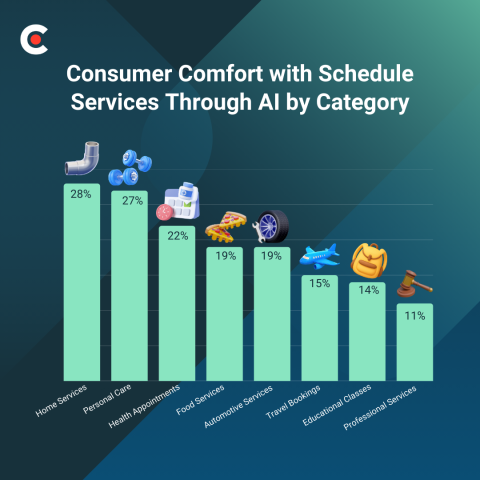
Comfort levels vary significantly across different service categories. Consumers are most open to using AI for services that are logistical, routine, or easy to verify. Home services, such as plumbing, HVAC, cleaning, or repairs, rank highest, with 28% expressing comfort. Personal care services, including haircuts, spa appointments, and fitness classes, follow closely at 27%, suggesting that convenience can outweigh hesitation when the stakes feel relatively low.
Health-related services show moderate openness, with 22% saying they would be comfortable using AI to schedule appointments with doctors, dentists, or therapists. Food services, such as reservations, catering, or meal preparation, and automotive services, like maintenance and repairs, each have an acceptance rate of 19%, reinforcing that AI is best suited when the task is transactional rather than deeply consultative or reliant on personal taste.
Comfort drops notably for services involving higher financial risk, specialized expertise, or long-term consequences. Only 15% feel comfortable using AI for travel or transportation bookings, 14% for educational or recreational classes, and just 11% for professional services such as legal, financial, or consulting work.
Across all service categories, one finding stands out: 41% of consumers say they would not be comfortable using AI to schedule or purchase services at all. This underscores a broader theme seen throughout the adoption of agentic commerce: while some consumers may welcome AI assistance, many still want to remain closely involved when decisions feel personal, high-stakes, or irreversible.
As AI capabilities expand, service-based agentic commerce is likely to grow first in areas where efficiency, convenience, and repeatability are most important. For deeper adoption, platforms will need to address trust, transparency, and control with the same care they apply to product-based AI shopping experiences.
While AI has already become embedded in many parts of the shopping journey, checkout remains a clear stopping point for most consumers. The data shows that people are comfortable using AI to inform decisions, but far less willing to let it finalize them. In fact, only 4% of consumers say they would be comfortable fully handing off the act of completing a purchase to an AI assistant.
When asked more directly about purchasing within an AI platform, sentiment remains cautious:
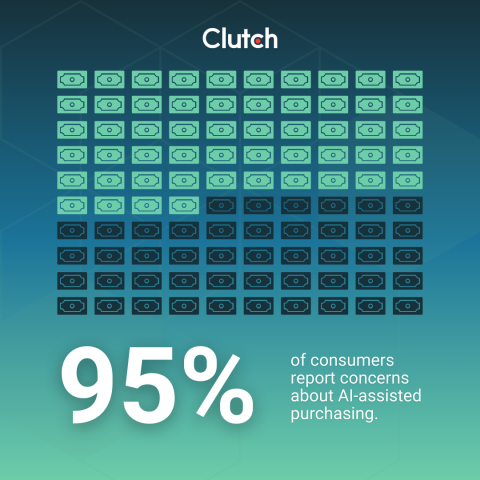
This hesitation stems from the fact that 95% of consumers report concerns about AI-assisted purchasing, and those concerns cluster tightly around issues of trust and control:
Together, these concerns reinforce a consistent theme throughout the research: consumers want to stay in control when money changes hands.
This hesitation echoes the early days of e-commerce, when consumers were hesitant to trust online checkout despite its clear convenience. Agentic checkout appears to be at a similar stage today: promising, but dependent on stronger safeguards, transparency, and user control before it becomes mainstream.
Consumers want AI shopping features that help them stay informed without removing control. The survey data reveal:
Together, these preferences indicate that consumers view AI as a supportive shopping assistant, rather than an autonomous buyer. Features that increase awareness, save time, and preserve decision-making control are far more appealing than those that act on a shopper’s behalf.
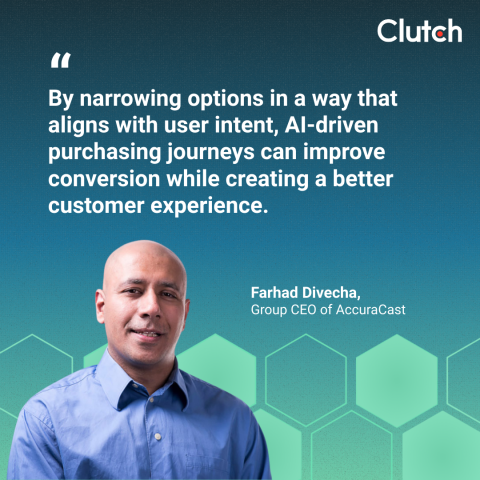
Farhad Divecha, Group CEO of AccuraCast, summarizes that agentic commerce solves “one of the biggest causes of lost sales today: overabundance of choice.” He explains, “By narrowing options in a way that aligns with user intent, AI-driven purchasing journeys can improve conversion while creating a better customer experience.”
The takeaway for brands is clear: shoppers want AI as an assistant, not an autopilot.
Optimizing for agentic commerce today isn’t about betting everything on fully autonomous checkout. It’s about positioning your brand to be discoverable, measurable, and adaptable as AI-driven shopping behaviors continue to evolve.
As Pratik Thakker, Founder and CEO of INSIDEA, advises, "Agentic commerce works best when systems are fed clean data, clear value propositions, and well-defined decision paths. Brands that focus on fundamentals early will be better positioned as AI becomes more autonomous."
Even in its early stages, agentic commerce delivers immediate strategic value. As Preston Pezzaro, Paid Media Lead at Workshop Digital, explains, “Brands embracing agentic commerce will likely enjoy a first-mover advantage ahead of those that do not by exposing their products to additional surfaces where consumers express purchase intent,” all while facing the least competition they will ever have.

Beyond visibility, early optimization helps brands gain deeper insight into how customers actually behave when AI becomes part of the decision-making process. Jason Ogden, President of Syrup Marketing, notes that value doesn’t require perfection from day one: “I don’t think this is one of those things that has to be a home run right out of the gate to be valuable for brands from day one. Our chatbot conversations, [plus] all other pre-existing analytics, paint a more robust picture of buyer behavior that we can act and strategize around.”
Together, these benefits highlight why waiting for agentic commerce to feel “fully ready” may be a missed opportunity. Brands that begin optimizing now can test, learn, and refine their approach, building stronger data foundations, improving AI visibility, and earning trust gradually, rather than scrambling to catch up once consumer adoption accelerates.
Agentic commerce is less about automation and more about better assistance. Consumers are already using AI to research, compare, and discover products, but few are ready to hand over final purchasing control.
The biggest barrier to adoption? Trust. And the brands that succeed in agentic commerce will design AI experiences that clearly explain recommendations, maintain transparency, and keep consumers in control. By focusing on helping shoppers make better, faster, and more informed decisions, brands can gradually earn confidence and lay the foundation for broader adoption of agentic commerce.
Don’t wait to catch up. Start your brand’s agentic commerce strategy today. Explore top-rated e-commerce development agencies to design and optimize AI-driven shopping experiences that build trust and drive results.
This report is based on a survey conducted on December 17, 2025, using the online polling platform SurveyMonkey. We surveyed 403 consumers in the United States between the ages 18-99 of all income levels. The respondents were 48% male and 52% female.
Participants were asked a series of multiple-choice and single-selection questions about their experiences and preferences for brand authenticity. Quotas were applied to ensure a balanced distribution across demographic segments. All respondents were required to complete the survey in full to be included in the final analysis.