What Are AI Influencers? A Guide to Virtual Creators
AI influencers abound on social media. Clutch explains what they are, why brands partner with them, and whether people can tell them apart from human...
Updated May 28, 2026

Artificial intelligence is rapidly transforming the workplace and how businesses operate. From automating repetitive tasks to coding software and generating content, AI is being used across every department.
In a new Clutch survey of 250 full-time employees, nearly 3 in 4 respondents use AI at work, indicating a large shift in how people conduct business.
While some professionals worry about AI replacing their jobs (and question the accuracy of AI outputs), many rely on AI to improve their productivity by streamlining tasks and enhancing decision-making. Ultimately, this enables workers to focus on more complex tasks and higher-value work.
Looking for a Artificial Intelligence agency?
Compare our list of top Artificial Intelligence companies near you
As AI’s impact continues to disrupt the workplace, business leaders need to focus on providing sufficient AI training and development for their teams.
Key Takeaways:
AI tools are now commonplace at work, with 74% of respondents saying they use AI at work regularly, and 43% using it on a daily basis.
This level of adoption reflects how quickly AI has become a core part of business operations. While AI has been used in the workplace for decades, it became even more prevalent in 2023 with the release of generative AI tools like ChatGPT.
Now, employees at all levels of the business use AI to automate tasks, generate content, and streamline decision-making on a daily basis.
Some teams are using it more heavily than others. IT and tech support (97%), design and creative (93%), and marketing (91%) use AI the most.
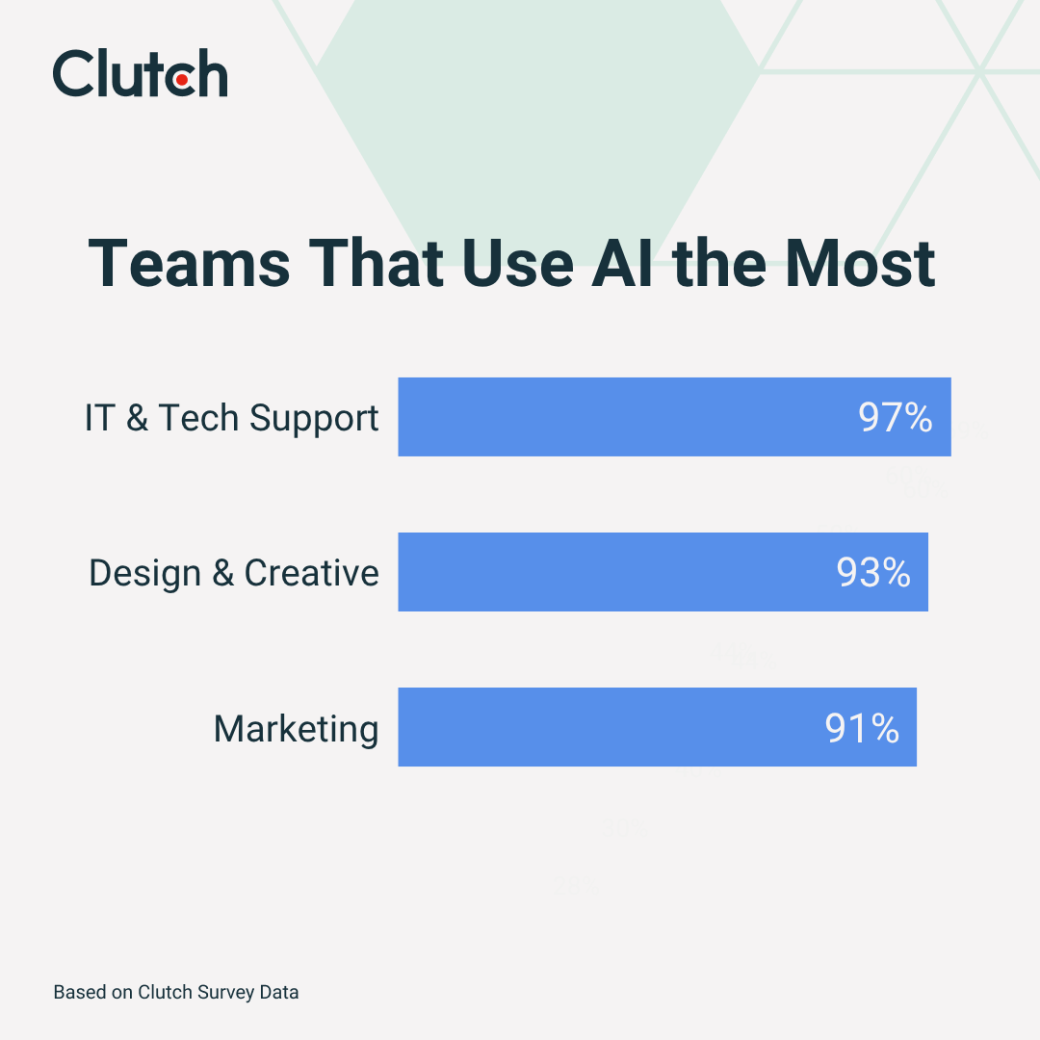
These teams often work on repetitive or time-consuming tasks that AI can complete faster and with less manual effort, making these tools especially valuable for boosting productivity.
These departments rely on AI chatbots the most, but they also depend on more task-specific tools as well. IT departments also rely on AI code generators to quickly produce code and repetitive tasks. Unsurprisingly, marketers are more likely to use writing aids, while creative and design teams are more likely to use image generators.
While there are many out of the box SaaS tools to support specific tasks, some companies also hire AI development companies to build bespoke tools. These firms are able to design, develop, and implement custom AI tools, tailored precisely to the client's specifications. These solutions integrate seamlessly with existing infrastructure, optimize workflows for specific business processes, and often provide a competitive edge.
With 60% of respondents using tools like ChatGPT, Gemini, and Copilot, chatbots are the most widely used form of AI in the workplace. This is likely because of their versatility, accessibility, and ease of use.
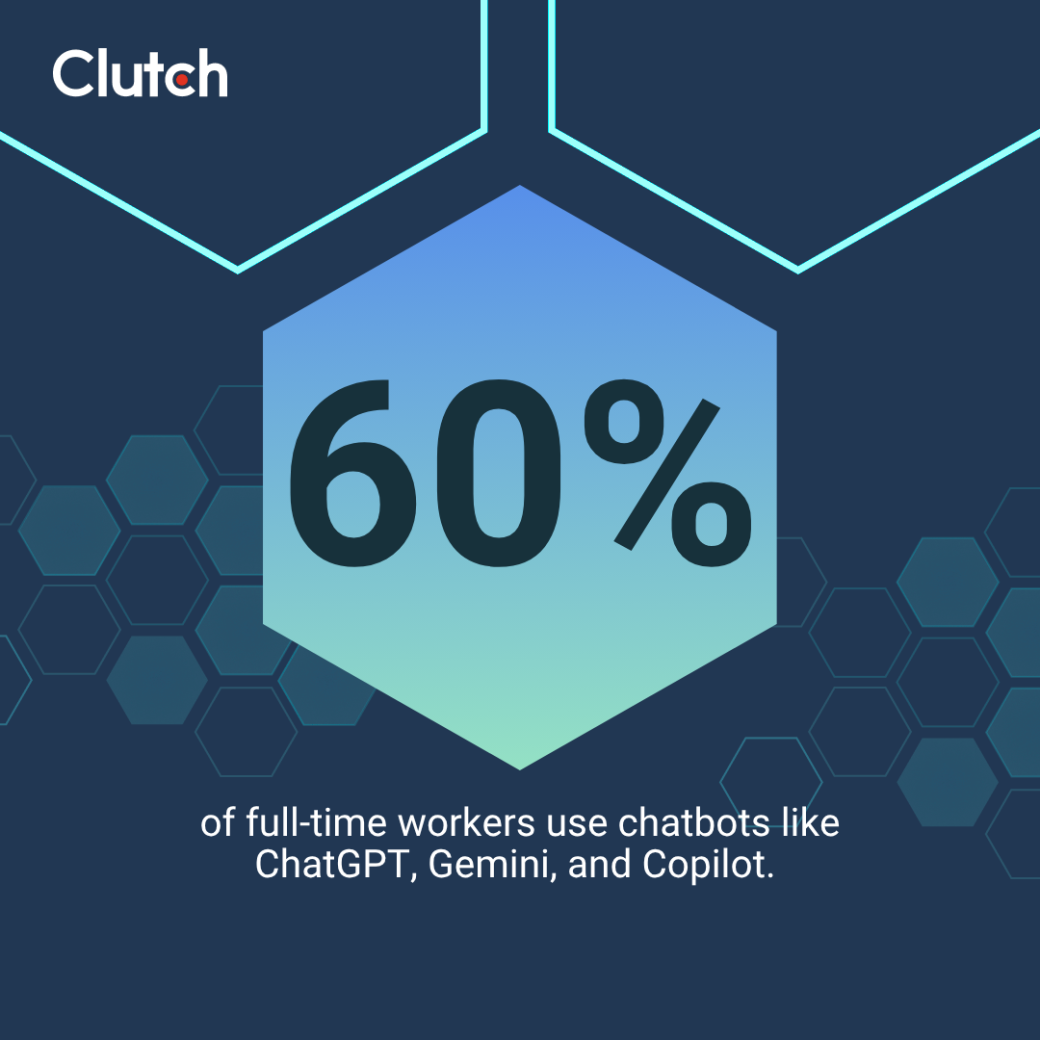
Unlike other AI tools that may require technical setup or specialized training, chatbots operate using natural language, making them approachable for most employees. Users simply type questions, tasks, or requests, and the chatbot responds with a relevant output.
This low barrier to entry means that employees can begin integrating AI into their workflows immediately, without the need for IT support or onboarding. It also makes chatbots a cost-effective and scalable AI solution for organizations of all sizes.
Across departments, workers are turning to tools like ChatGPT to help with:
“We’re using chatbots in a range of ways across departments,” says Akash Shakya, COO of EB Pearls. “Business Analysts and Product Teams use ChatGPT to write user stories, API documentation, acceptance criteria, and even simulate user interviews. Developers lean heavily on GitHub Copilot / windsurf / cursor for peer programming, unit testing, code generation, debugging, and learning new frameworks . . . Even People Ops are using it to draft policies in employee-friendly tone, screen resumes, and create onboarding kits.”
The adoption of chatbots like ChatGPT reflects a broader trend in the workplace: AI tools are empowering everyday workers to move faster, think creatively, and reduce time spent on repetitive or manual work.
It’s not without risks. As more organizations rely on chatbots, they’ll also need to stay mindful of challenges like misinformation, data privacy, and industry compliance risks. Consequently, AI training is more important than ever before.
While some professionals may have been hesitant at first to adopt AI at work, the use of AI tools continues to grow thanks to the impact on productivity. The majority of respondents (65%) believe that AI has positively impacted their productivity.
Leadership teams are on board with the shift towards AI, too: 63% of professionals say that company leadership encourages the use of AI. Between faster turnaround times, a more efficient workforce, and reductions in human errors, companies are able to grow without increasing spending.
However, some leadership teams may be overestimating AI's impact on company-wide productivity. Directors, VPs, and C-Suite executives are especially likely to believe AI has boosted their productivity, with 80% saying so — compared to just 60% of employees at lower levels.
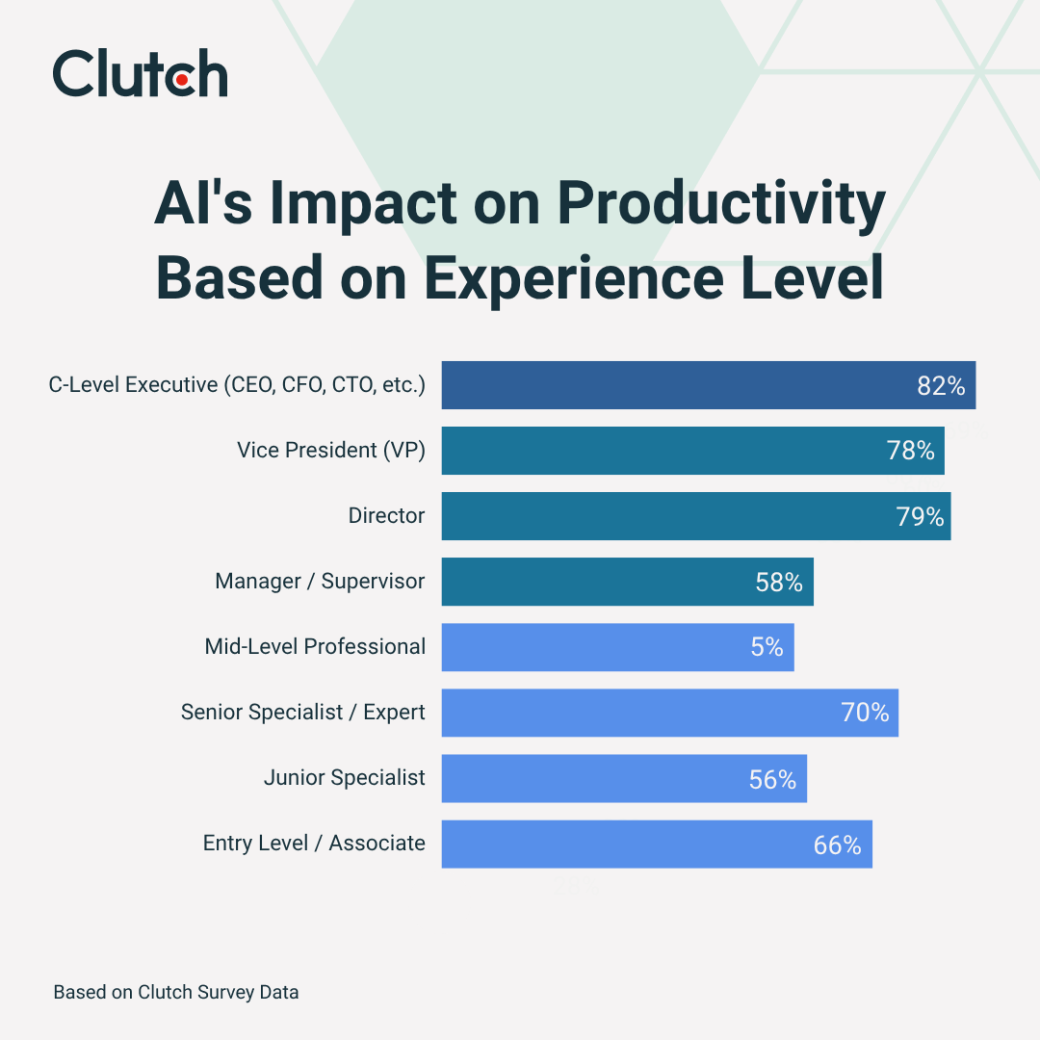
There could be many causes of this discrepancy, including how executives are using AI compared to the rest of their teams. Executives tend to use AI for strategic planning, forecasting, and data-driven decision-making, while their subordinates are more likely to use AI for more tactical tasks, like writing emails, automating reports, or organizing schedules.
“Leaders may not be overestimating AI’s potential — but they might be overestimating how well it’s been adopted by junior staff,” explains Shakya. “Senior professionals often use AI as a thinking partner or accelerator — because they know what good looks like, they can spot useful output quickly.”
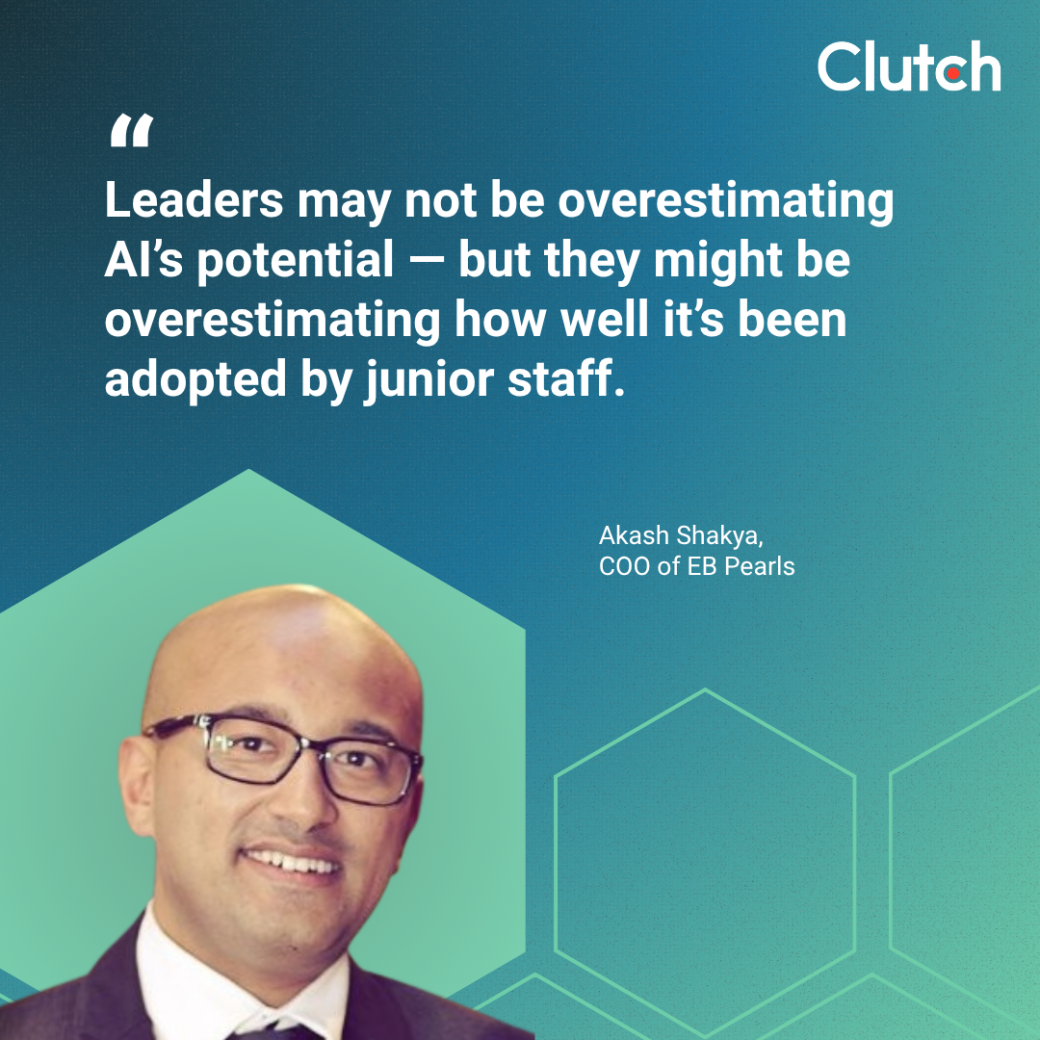
While AI may enhance the productivity of seasoned executives, it can pose a challenge for less experienced staff who may struggle with prompt engineering or identifying correct AI outputs. “Junior professionals might lack the confidence or domain knowledge to assess or edit AI output effectively, which can create friction instead of speed,” says Shakya.
Another explanation could be access to more advanced tools and AI training. In fact, those at a director level and above are nearly 1.8x more likely to have participated in formal AI training than more junior employees.
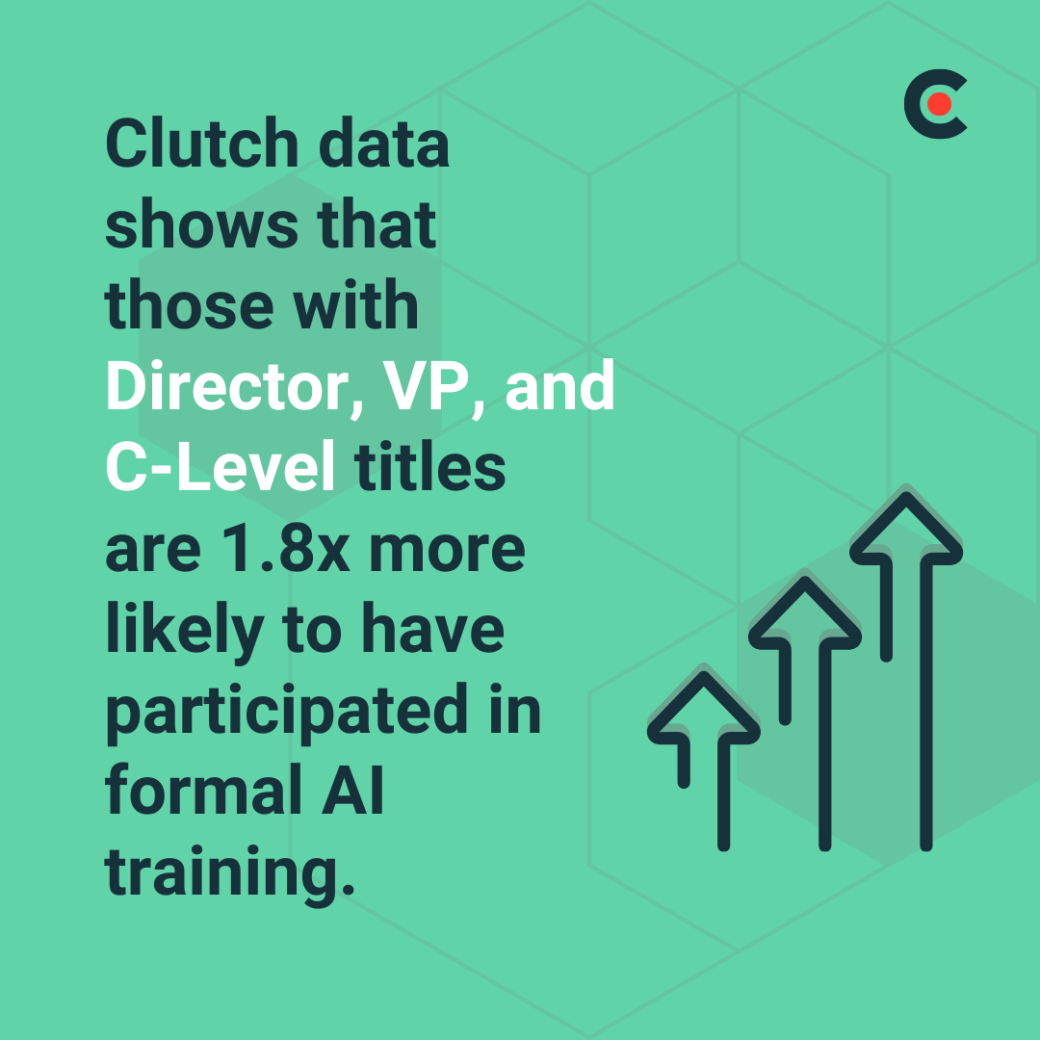
This highlights a potential training and access gap: those at the top are more prepared to use AI effectively, while junior and management-level staff may be undertrained, limiting the broader impact of AI across the organization.
Leadership teams should also be aware of this divide when making business decisions. Without a clear understanding how all teams are actually using AI and the challenges they face, business leaders may be inclined to overrely on technology, especially if it means they can cut costs. For some, this could even hurt their business rather than help it.
One of the primary concerns associated with using AI tools in the workplace is their potential to produce inaccurate or misleading information. For instance, ChatGPT-4o, one of the most accurate LLMs on the market, achieves an accuracy rate of just 88.7%. Though a significant amount of its results are wrong, 76% of respondents trust AI outputs most of the time.
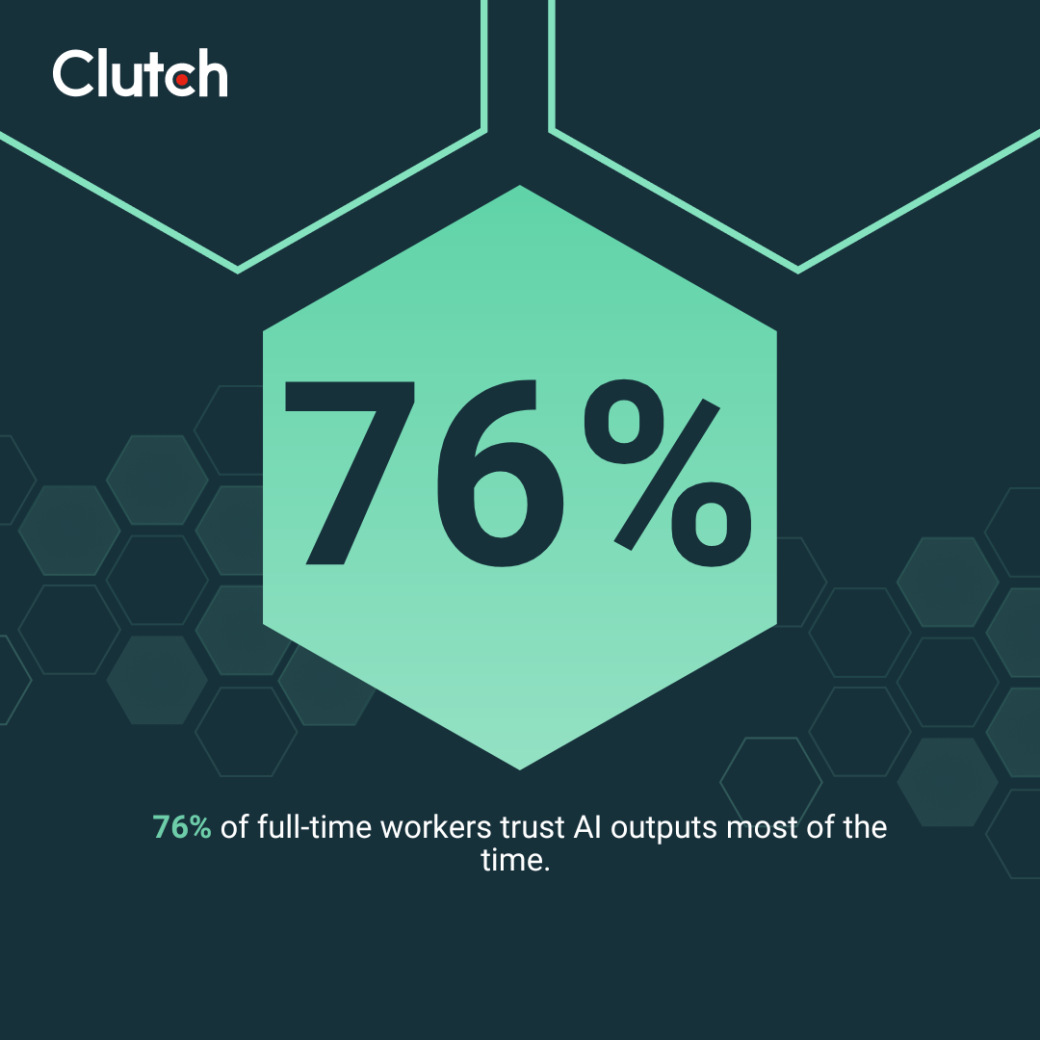
Blind trust in AI can be misguided. Relying on incorrect information can cause huge ramifications for your business, including lost revenue, damaged credibility, and even legal issues.
AI generates information based on patterns, not true understanding. Consequently, AI systems are only as fair and accurate as the data they are trained on. Meaning that if the data contains errors, outdated information, or biased perspectives, the model may repeat those flaws.
This has been seen time and time again in the real world.
For instance, Bloomberg used Stable Diffusion’s text-to-image generator to create over 5,000 AI images that reflect people in different professions. When prompted with roles like doctor, judge, CEO, or lawyer, the AI primarily generated images of white men. In contrast, when asked to create images of criminals or inmates, the model overwhelmingly produced images of darker-skinned men.
This demonstrates how AI systems can reinforce stereotypes and perpetuate racial and gender bias. If left unchecked, biased AI outputs can contribute to discrimination.
In professional settings, this also raises ethical and legal concerns. Companies that use biased AI tools in hiring, promotions, or customer service risk reputational damage, legal challenges, and loss of public trust.
With most professionals relying on AI to complete daily tasks, they should be able to understand both the opportunities and limitations of the tools they use. Employees should approach AI results with a critical eye and regularly fact-check to ensure accuracy and reliability.
The widespread trust in AI-generated outputs suggests that many may not fully grasp where these tools can fall short, highlighting the need for better training and awareness.
Despite using AI regularly, 45% of employees aren’t aware of company guidelines on AI usage, and only 33% have participated in formal AI training. This raises concerns about potentially risky practices and a lack of formal structure around these tools.
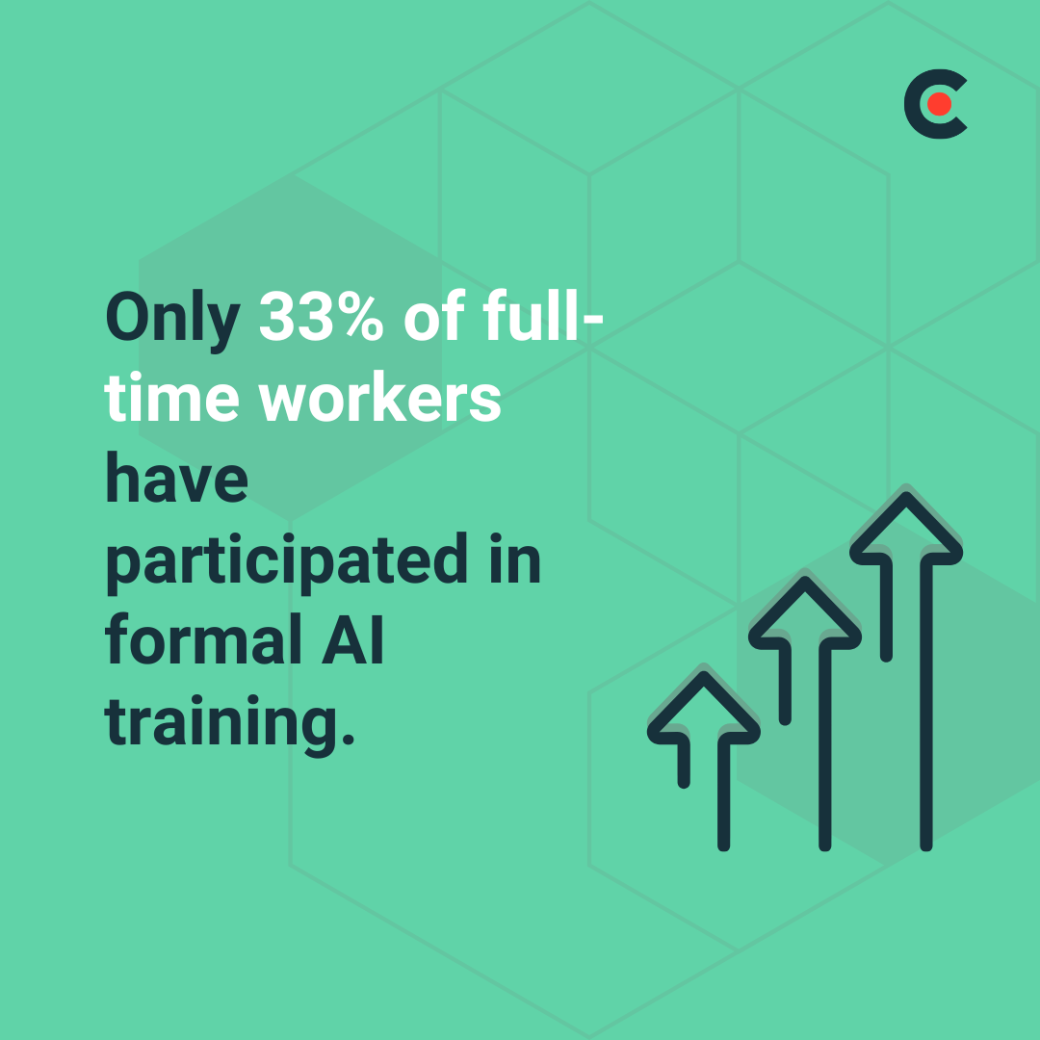
In addition to not being able to identify inaccuracies and bias, employees without proper AI training are likely experimenting with AI tools without considering data privacy concerns, compliance issues, or industry best-practices.
Without clear guidance, employees might enter sensitive information, like customer data or internal documents, into AI tools that store or share data. Employees without a lot of training may not know how to properly anonymize data, interpret privacy policies, or recognize potential risks such as phishing attempts from AI-generated content.
In regulated industries like healthcare, finance, or legal services, mishandling data like this could result in compliance violations, including breaches of GDPR, HIPAA, or other data protection laws. This can result in heavy fines, legal action, and regulatory scrutiny.
Regardless of their industry, most companies need to develop AI guidelines and policies to ensure that their team isn’t putting their data at risk.
Investing in AI training is one of the most effective ways for businesses to unlock the full potential of these tools.
When employees are trained not just in how to use AI, but in how to use it responsibly, they are more likely to apply it in ways that drive productivity and streamline their workflows. Rather than relying on trial and error, trained employees can use AI more efficiently and avoid common pitfalls such as misinformation, bias, or data misuse.
This not only enhances productivity across teams, but allows team members to find innovative ways to implement AI in day-to-day operations. Over time, this will help companies maximize the impact AI will have on their business and help them to continue to grow in an ever-evolving marketplace.
AI is no longer a novelty, and the majority of working professionals are using it regularly to streamline operations and maximize efficiency. Yet as adoption grows, many companies are failing to provide their teams with the tools they need to be successful.
To fully realize the impact of AI and avoid its pitfalls, companies must go beyond simply encouraging AI use. Instead, they must invest in clear policies, ethical guidelines, and structured training programs. This ensures employees at all levels understand how to use AI both effectively and responsibly.
By providing the right support, business leaders can create a workplace culture where AI is used ethically, securely, and effectively.
Clutch surveyed 254 professionals in June 2025 using the polling site, SurveyMonkey. We surveyed in the United States between the ages 18-99 who work full-time. The respondents were 50% male and 50% female.
Participants were asked a series of multiple-choice and single-selection questions about how they use AI in the workplace, their perceptions of AI at work, and how their company views AI. All respondents were required to complete the survey in full to be included in the final analysis.