TikTok vs. Meta vs. YouTube: How to Adapt Ad Creative for Each Platform in 2027
TikTok, Meta, and YouTube reward different hooks, lengths, and storytelling styles. This guide covers how to adapt a campaign's creative for each platform...
Updated September 29, 2026

AI is rapidly becoming part of the everyday social media experience, but consumers aren’t embracing every application equally. Clutch surveyed 601 consumers to understand where people see value in AI, where it raises concerns, and how its use affects trust in platforms, influencers, and brands.
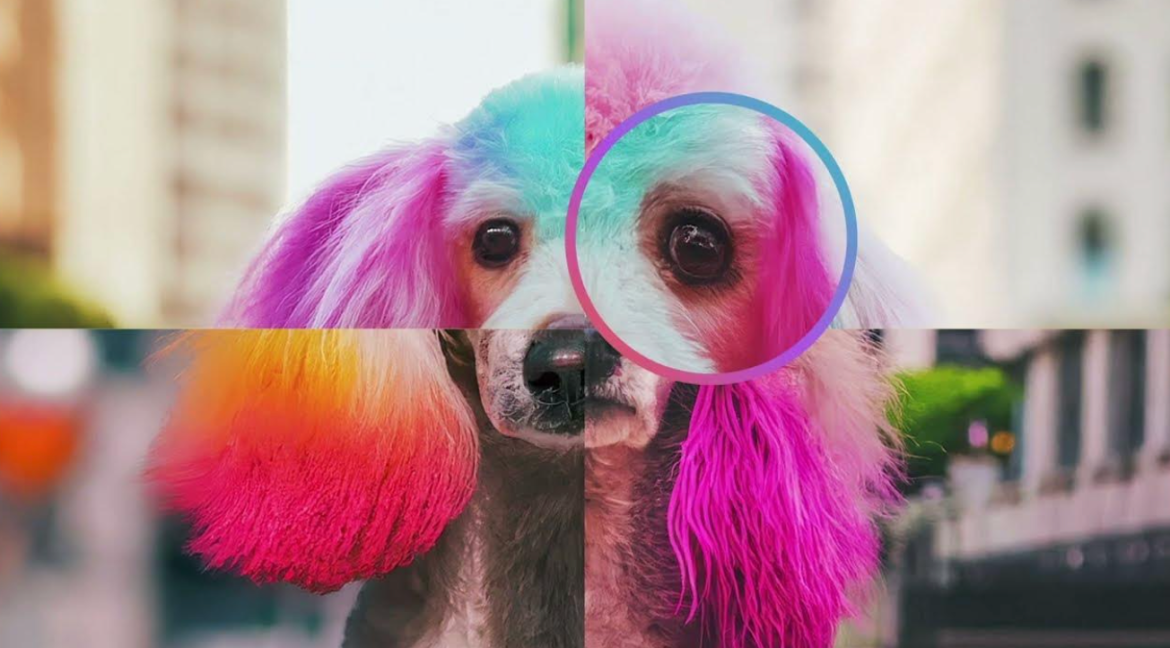
Has your Instagram feed been taken over with videos of animals dressed as humans while eating at restaurants? You are not alone.
AI is becoming an increasingly visible part of the social media experience. From AI-generated posts and images to personalized recommendations, virtual influencers, and branded content, AI is reshaping how consumers encounter and interact with content online.
Looking for a Social Media Marketing agency?
Compare our list of top Social Media Marketing companies near you
As these applications become more common, AI is emerging as a growing force in social media, bringing new opportunities for personalization and engagement while also raising questions about authenticity, transparency, and trust.
To better understand how consumers are responding to this shift, Clutch surveyed 601 consumers about their perceptions of AI use on social media. The findings show that AI is already a familiar part of the social media landscape: 86% of respondents have encountered AI-generated content, while 52% say they have a positive understanding of AI.
At the same time, growing familiarity doesn’t necessarily translate into universal acceptance, highlighting a tension between AI's usefulness and consumers’ expectations for transparency and authenticity.
This report examines where consumers draw the line regarding AI on social media. Specifically, it will explore which AI applications are accepted or rejected, how AI use influences brand perception, and where consumers expect greater transparency from companies that use AI. Together, these findings offer insight into how businesses can navigate the opportunities presented by AI while maintaining consumer trust.
Facebook is emerging as the social media platform where consumers most frequently encounter AI-generated content.
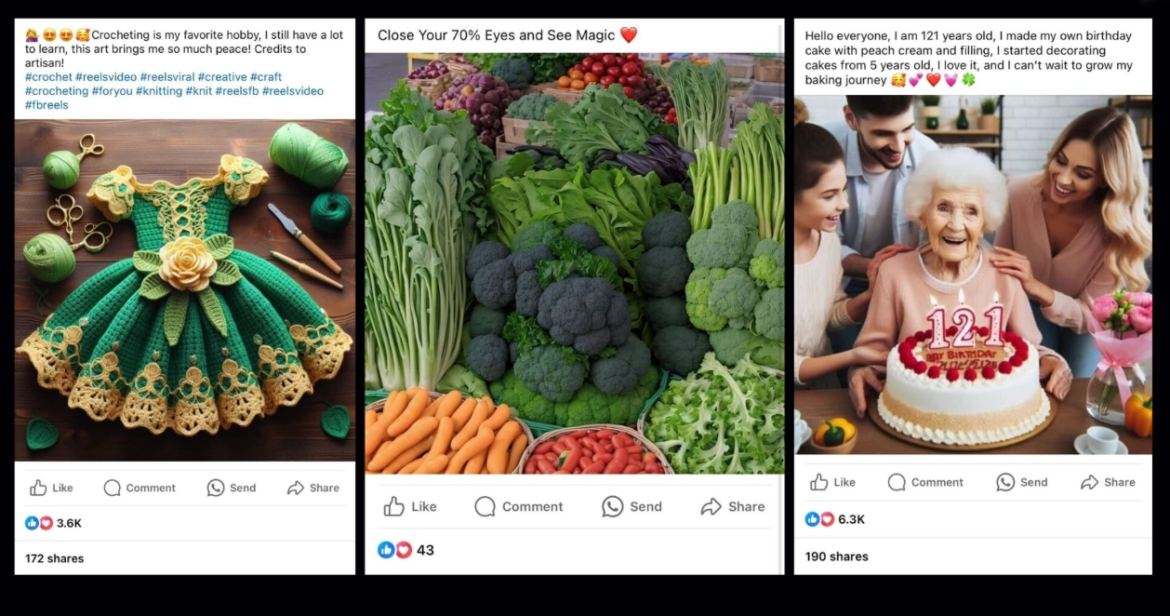
Sixty-six percent of consumers say they see AI-generated content on Facebook, compared with 44% on Instagram.
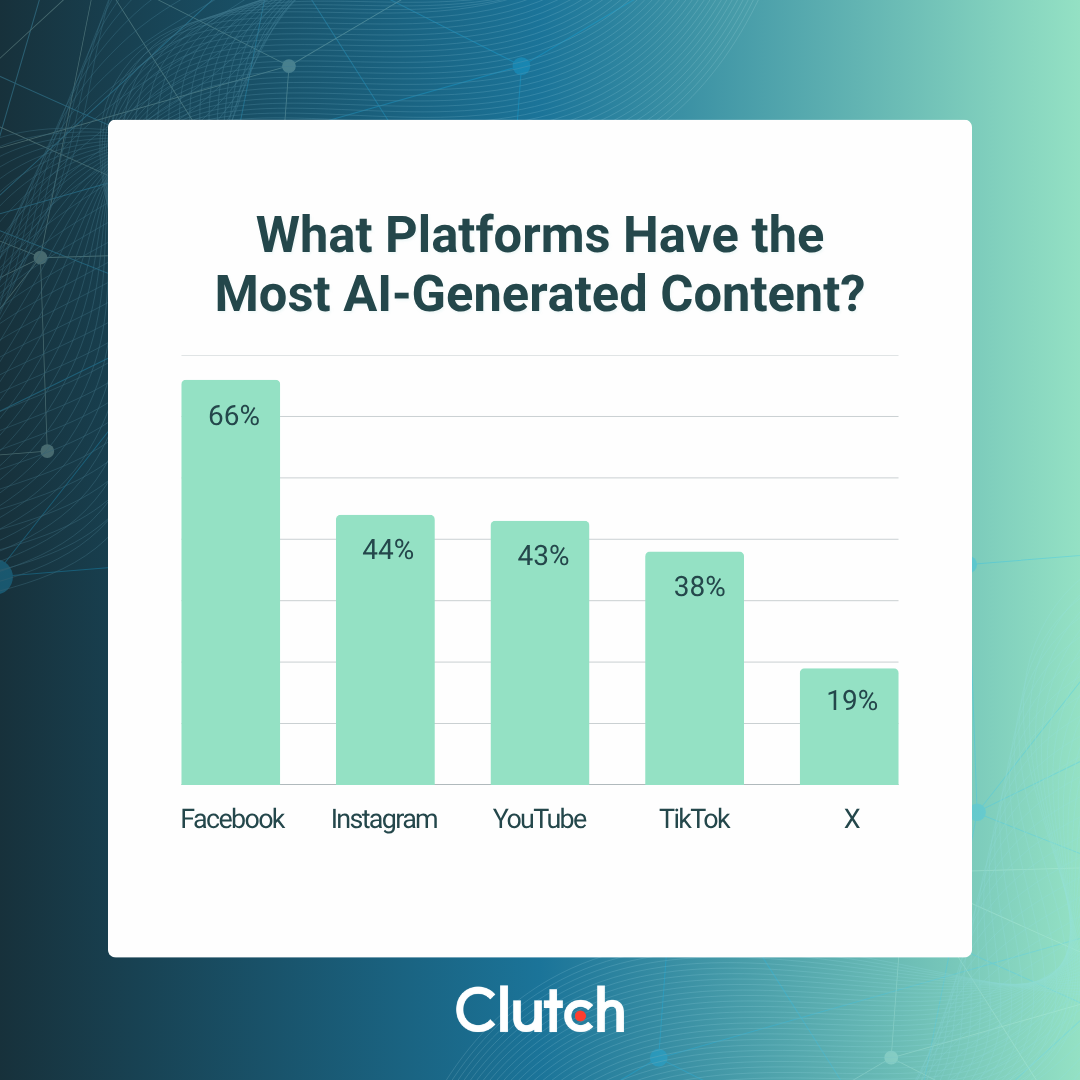
This makes Facebook an important testing ground for understanding how the growing visibility of AI is shaping the consumer experience.
As AI makes content more abundant and personalized, consumers are also becoming more aware that what appears in their feeds may not be entirely human-created. The concern extends beyond whether consumers can identify AI-generated content.
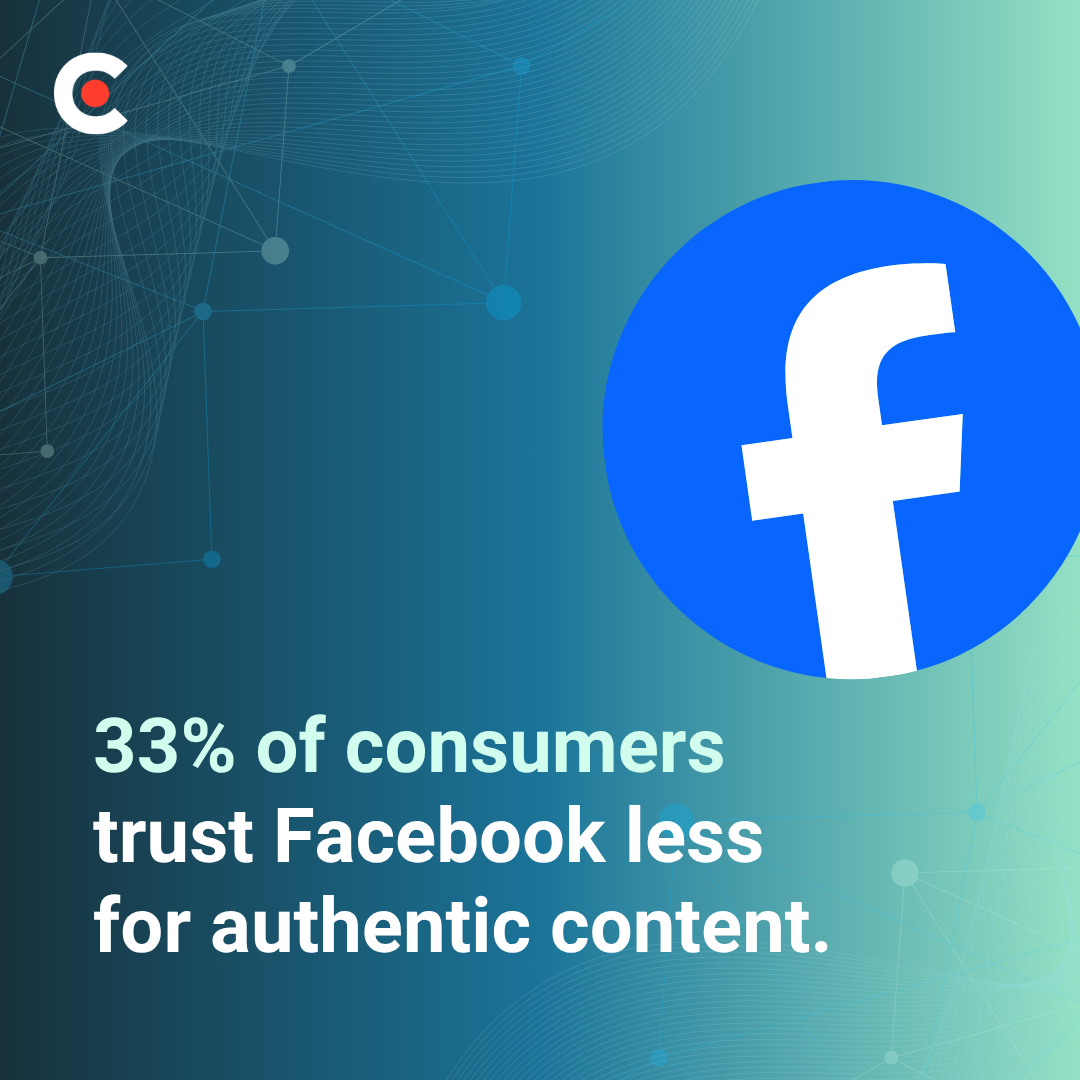
One-third of consumers say their trust in Facebook to show them authentic content has decreased, suggesting that greater exposure to AI can influence perceptions of the platform itself.
This distinction between AI-generated and authentic content could become increasingly important as consumers encounter more synthetic images, videos, posts, and recommendations, often without knowing how they were created. As AI-generated content becomes harder to distinguish from human-created content, consumers may increasingly look to social platforms for greater clarity about the content they encounter.
The shift also presents a challenge for brands. Appearing alongside or using AI-generated content may expose brands to broader concerns about authenticity, even when the brand itself is not responsible for the content consumers distrust.
As consumers encounter more AI content on the platforms where brands compete for attention, businesses need to consider not only whether AI can help them produce more content, but also whether its use affects perceptions of the broader social media landscape.
Consumers aren’t necessarily rejecting AI on social media; their response depends heavily on how the technology is used.
Educational content is one of the clearest examples of an AI use case that consumers can get behind, with 42% viewing AI positively when it is used for education.
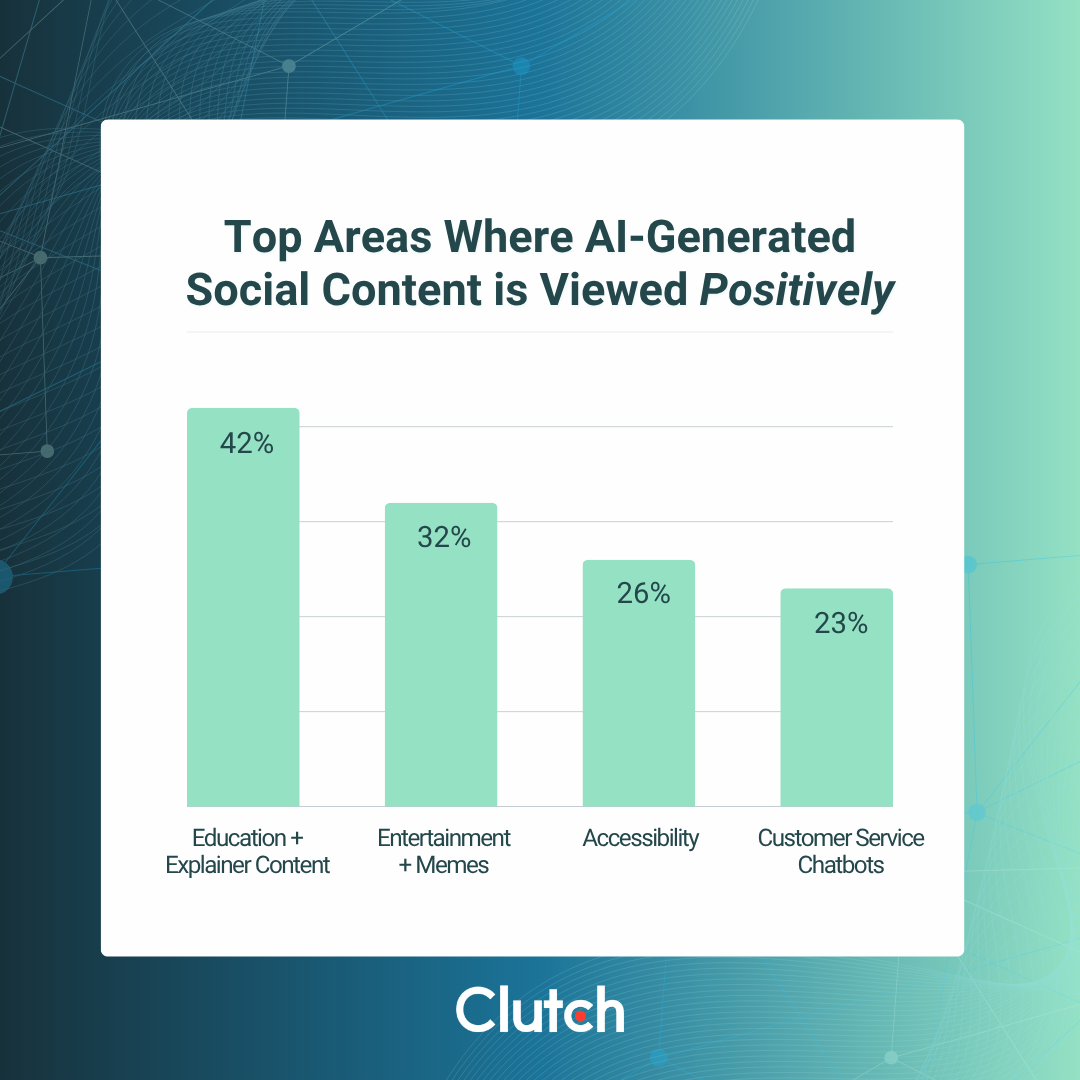
This suggests consumers may be willing to embrace AI when they see a clear benefit or added utility. Creators can use AI to break down complex topics, generate educational visuals, summarize research, translate information, or make content more accessible through captions and transcripts.
AI can also support personalized learning by adapting explanations to different levels of knowledge or helping users work through questions in real time. In these applications, AI serves as a tool for delivering or enhancing information rather than changing the underlying truth of what is being presented.
That tolerance changes when AI begins to distort consumers’ understanding of a product. Sixty-four percent say they would trust a brand or creator less if products are misrepresented using AI-generated content.
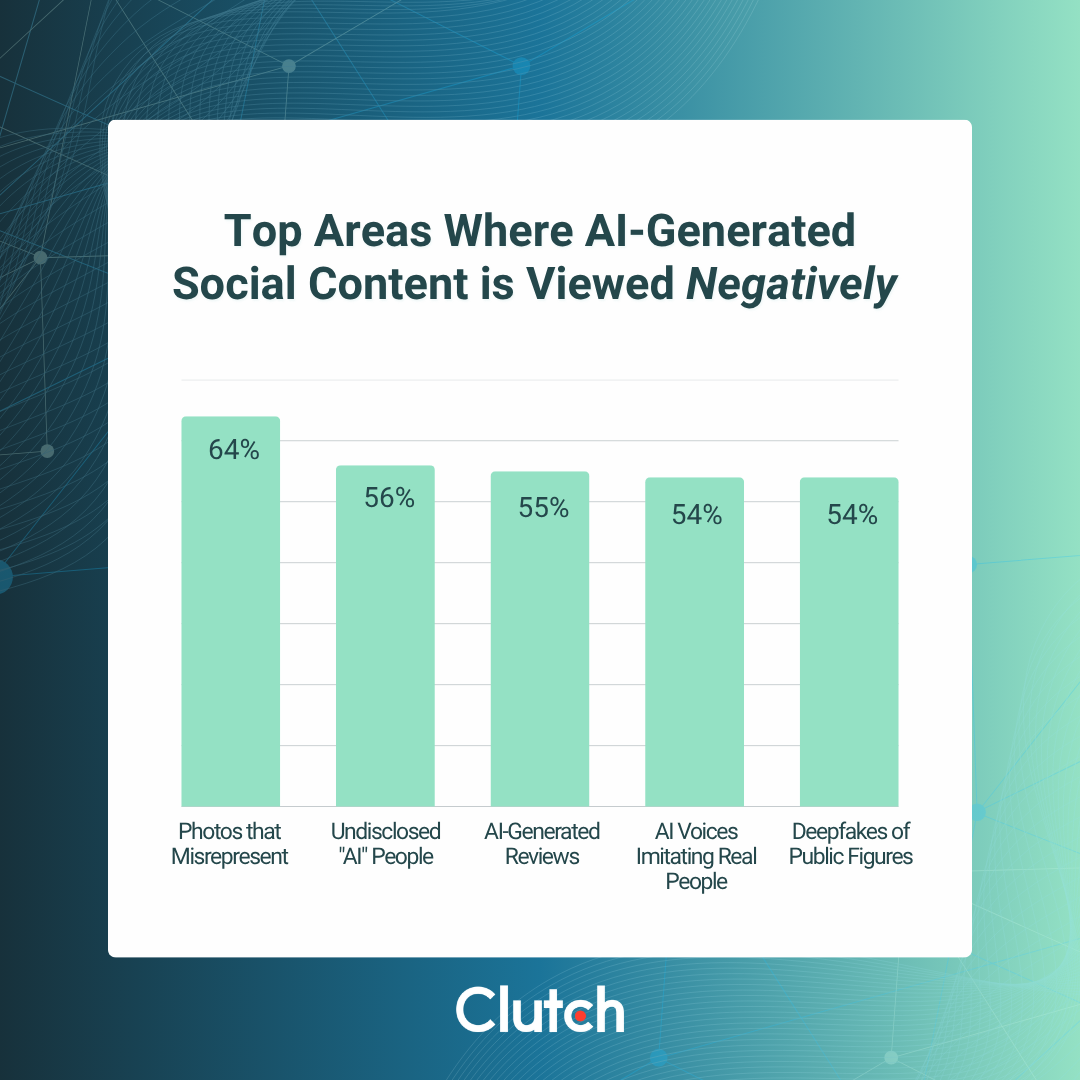
The contrast highlights an important distinction for brands: consumers may accept AI as a tool, but they are far less willing to accept it as a tool of deception.
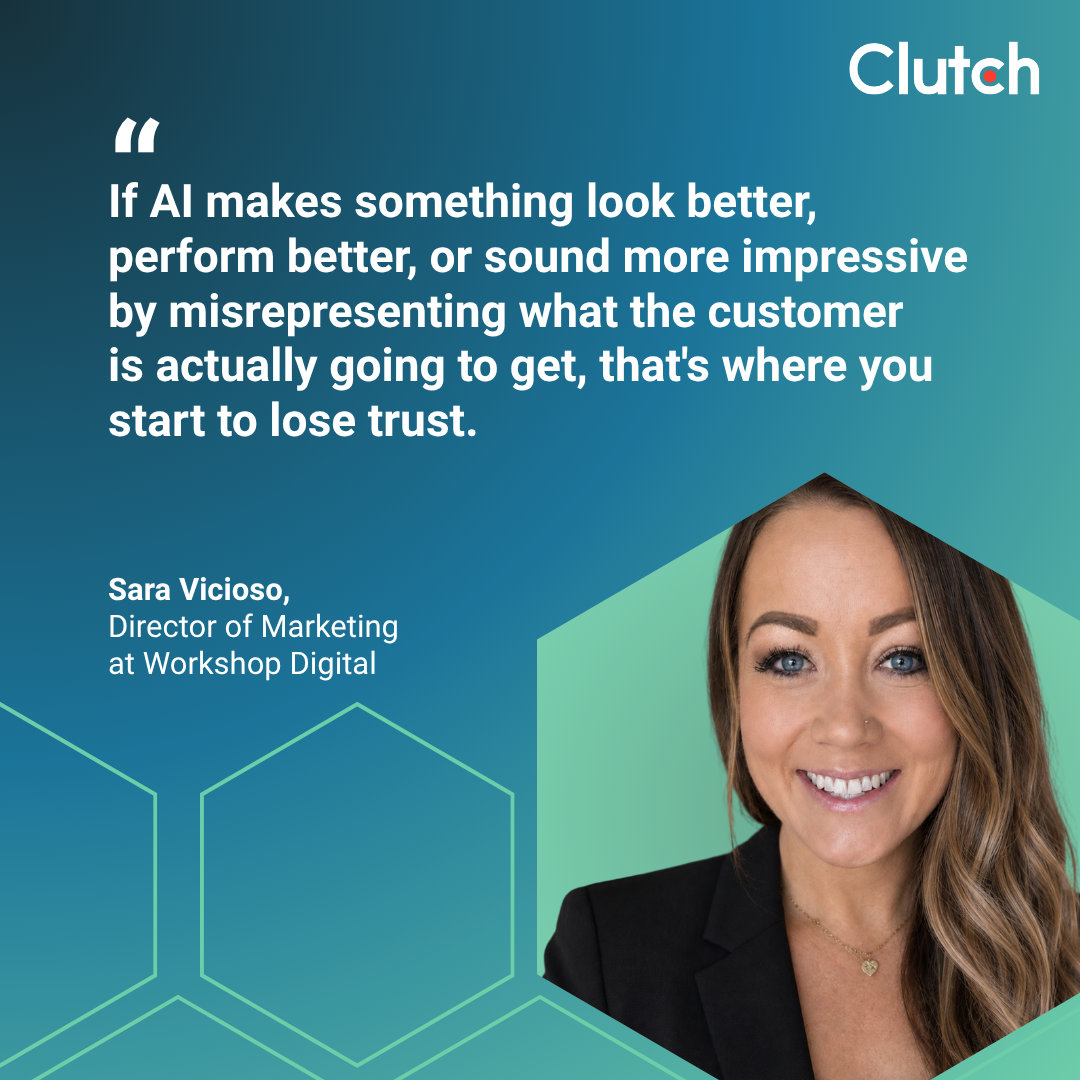
As Sara Vicioso, Director of Marketing at Workshop Digital, puts it: "AI shouldn't make a product or service look like something it isn't. We use AI pretty regularly in our work, but there still needs to be a human behind the final output... If AI makes something look better, perform better, or sound more impressive by misrepresenting what the customer is actually going to get, that's where you start to lose trust."
A recent example illustrates how quickly that line can be crossed. In March 2026, the U.K. Advertising Standards Authority upheld complaints about a paid Facebook ad for a robotic puppy.

The ads appeared to show the toy behaving like a highly realistic dog, including walking, barking, and tail wagging. The advertiser could not provide sufficient evidence to support those claims, and the ASA ruled that the ad misleadingly exaggerated the product’s appearance and functionality.
Misrepresentation can undermine more than a single piece of content. When consumers feel AI has altered what a product actually looks like or does, the technology can become associated with the brand’s credibility rather than simply its creative execution. In these cases, the problem isn’t necessarily that AI was used, but it made it harder for consumers to understand what they were actually purchasing.
For marketers, this creates a clear boundary: AI is more likely to be accepted when it adds information, utility, or value to the consumer experience, but it risks damaging trust when it changes the truth of what consumers are being sold.
Consumers are highly familiar with AI when its presence is easy to recognize. Nearly 90% are aware of AI-generated images, and 81% recognize AI-generated videos.
These highly visible applications have become familiar parts of the social media landscape, making it relatively easy for consumers to understand when AI has played a role in creating what they see.
Awareness drops dramatically when AI becomes less visible or operates behind the scenes. Only 44% of consumers are aware of AI-powered feed algorithms, and just 40% are aware of AI influencers.
"'That is so AI!' has become one of the key phrases of our time... The reality is that so much of what AI is doing is beneath the surface. The visible stuff really is the tip of the iceberg. Every digital platform or service you can think of is, to some extent, leveraging AI to make better decisions about how to perform its role, and serve you,” said Will Francis, Marketing & AI Expert.
The divide suggests that consumers may have a stronger understanding of AI as a content-creation tool than as a technology shaping their online experience.
That distinction matters because AI-powered feed algorithms can influence consumers’ exposure to content without requiring them to consciously recognize that AI is involved. A consumer may recognize that an image was AI-generated while remaining unaware of the technology that determines which posts, videos, or advertisements appear in their feed. In other words, consumers may be aware of AI at the point of creation without being equally aware of its role in determining what they consume.
AI influencers present a different awareness challenge. Because they are designed to resemble human creators, the role of AI may not always be immediately apparent.
One example is Lil Miquela, a virtual influencer with millions of followers whose fictional identity, appearance, and content are digitally created.
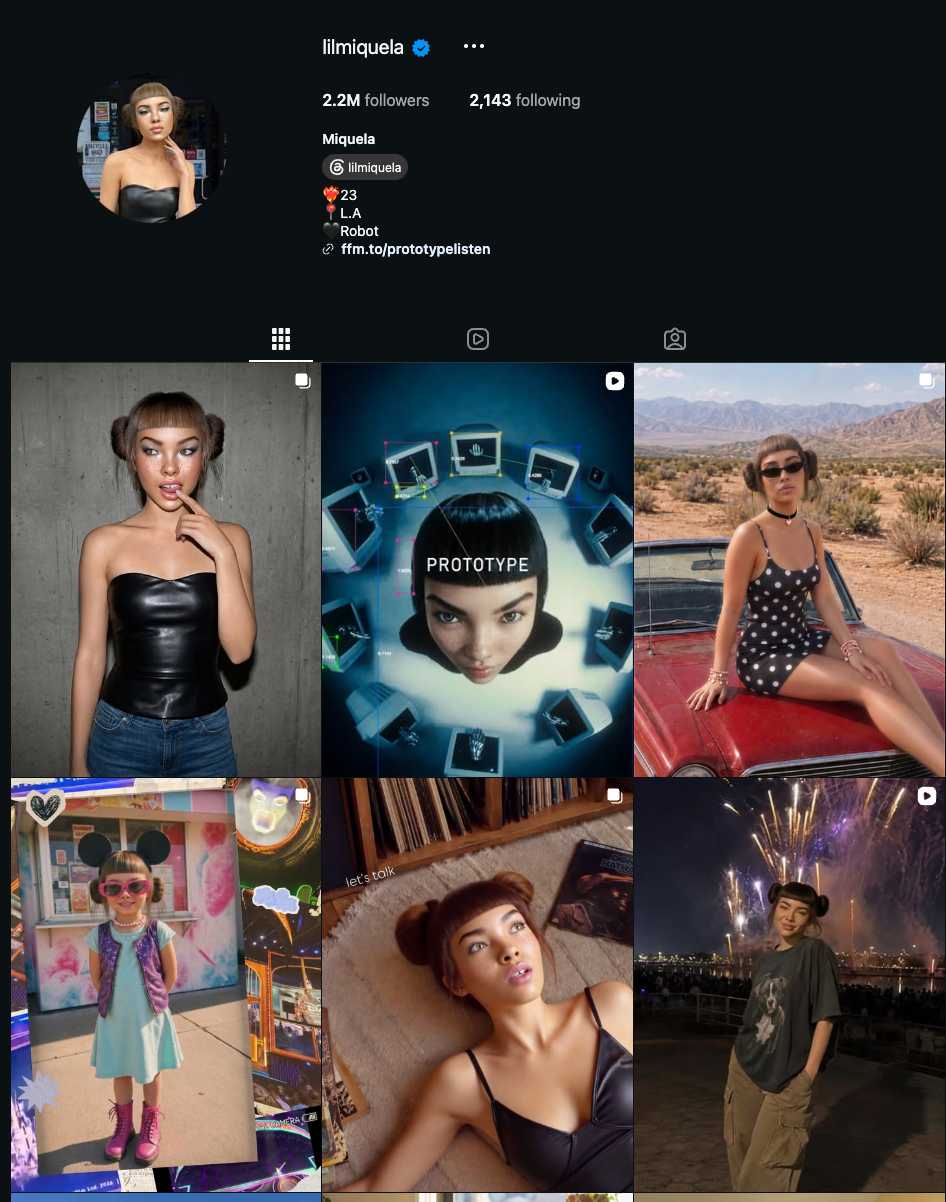
Her popularity demonstrates how AI and virtual personalities can occupy many of the same spaces as human creators, potentially blurring the distinction between authentic and synthetic social experiences.
This creates an important transparency issue for brands and platforms. The less obvious AI becomes, the more consumers may rely on clear disclosure to understand what they are actually seeing or interacting with.
As AI moves beyond content creation and becomes increasingly embedded in the systems and personalities that shape the social media experience, transparency may become just as important as awareness.
AI influencers are moving from novelty toward a more visible role in social media, but consumers are not necessarily ready to treat them like traditional creators.
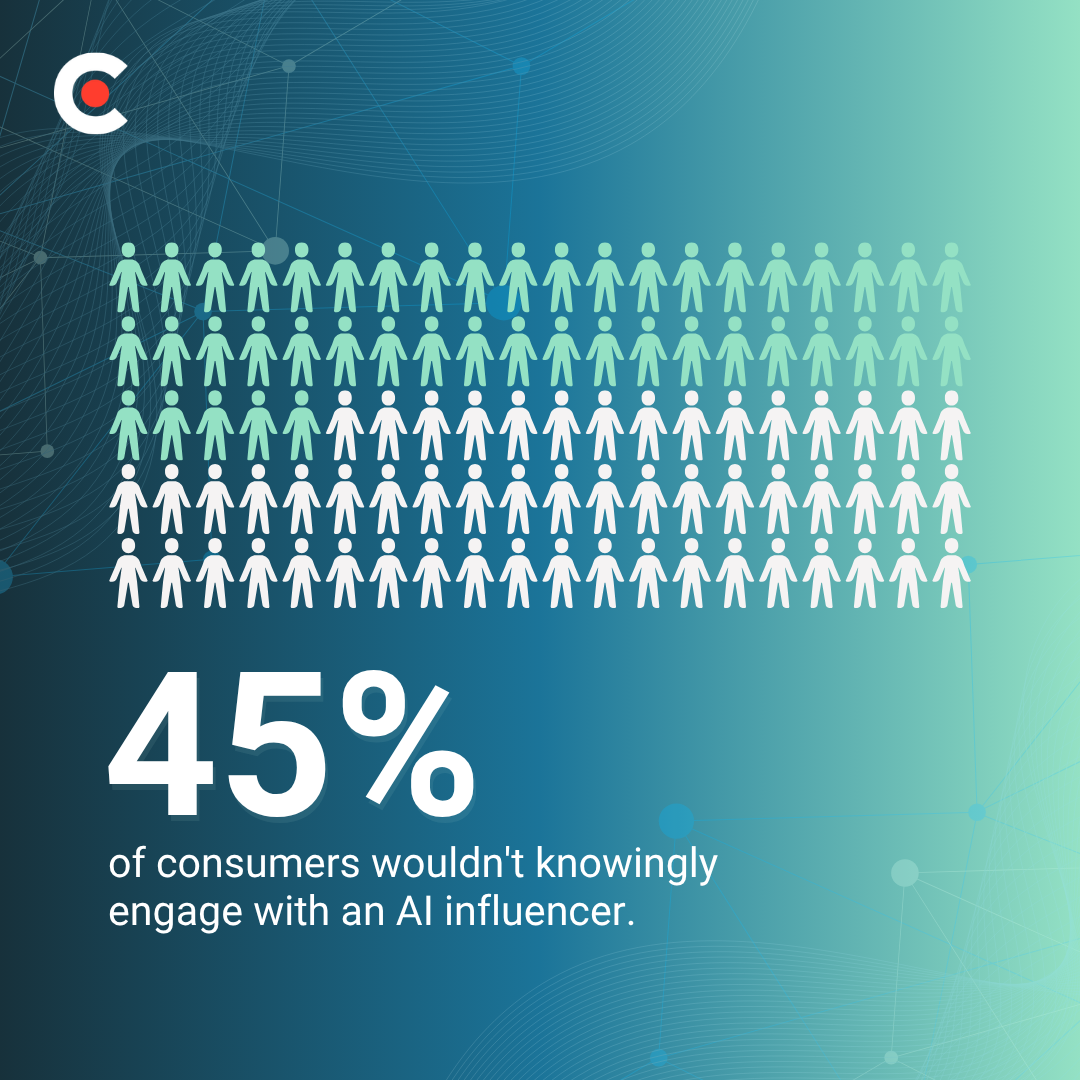
Nearly half of consumers (45%) say they would not knowingly engage with an AI influencer or trust a product recommendation from one, establishing a significant ceiling on a technology’s current appeal.
The bigger trust issue may actually be with human influencers using AI. When consumers know AI was used in a human creator’s content, 71% say they would question that influencer’s recommendation.
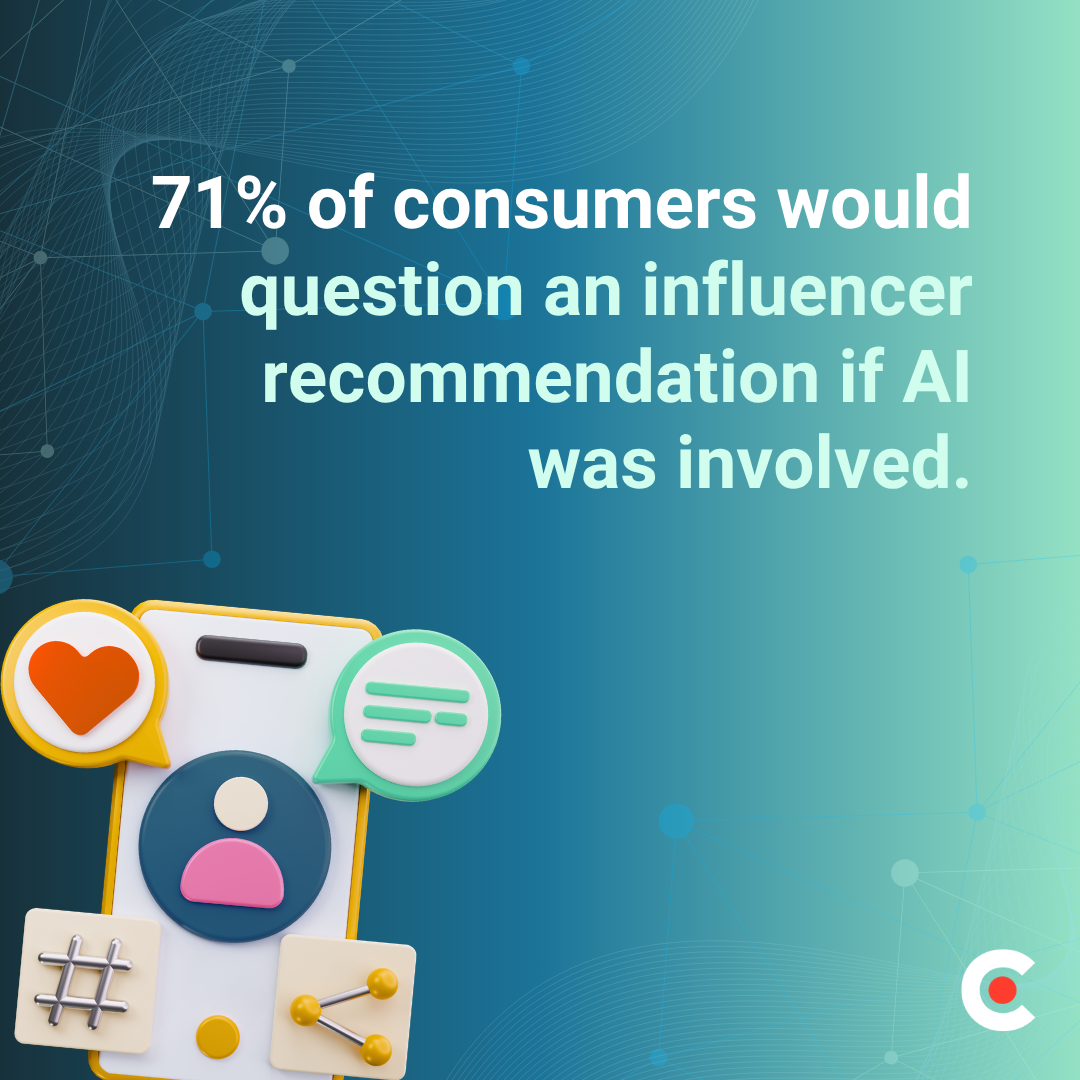
This suggests consumers are not simply asking, “Is this influencer real?” They are also asking whether AI has changed the recommendation's authenticity.
Francis continues, "That AI assistance can be in the form of AI-written scripts for videos (which I see a LOT), AI-written captions, AI-designed visuals and even AI avatars — video clones of the creator. These efficiencies sound good on paper... They will however erode that trust the audience places in you, which, regardless of your engagement rates and follower counts, is the real equity that you have invested in by creating great content."
A prominent example involves Lil Miquela, who has partnered with major brands such as Pac Sun, Prada, and Samsung.
Calvin Klein featured Lil Miquela alongside Bella Hadid as part of its “I Speak My Truth in #MyCalvins” campaign.
The ad deliberately played with the boundary between reality and fiction, bringing a virtual personality into the same advertising space as a real-world celebrity. Adweek described the campaign as a notable crossover between human and virtual influence.
The distinction is important for influencer marketing. Human creators typically bring a sense of personal experience and credibility to product recommendations. Consumers may trust that an influencer has actually used a product, formed an opinion about it, and is sharing that experience with their audience. Introducing AI into that content can create uncertainty about how much of that experience is genuine.
This connects to a broader pattern shown through this data: consumers appear willing to engage with AI in certain contexts, but trust becomes more fragile when AI affects what they believe a person or product is actually saying or showing.
As AI becomes more common in influencer production, brands and creators will need to consider not only what AI can make possible, but also what consumers may believe they are losing when it becomes part of the creative process.
The balance of trust between brands and influencers appears to have shifted. Previous Clutch research found consumers were uncertain about which group to trust for product recommendations, but our latest data shows brands now have a clearer advantage.
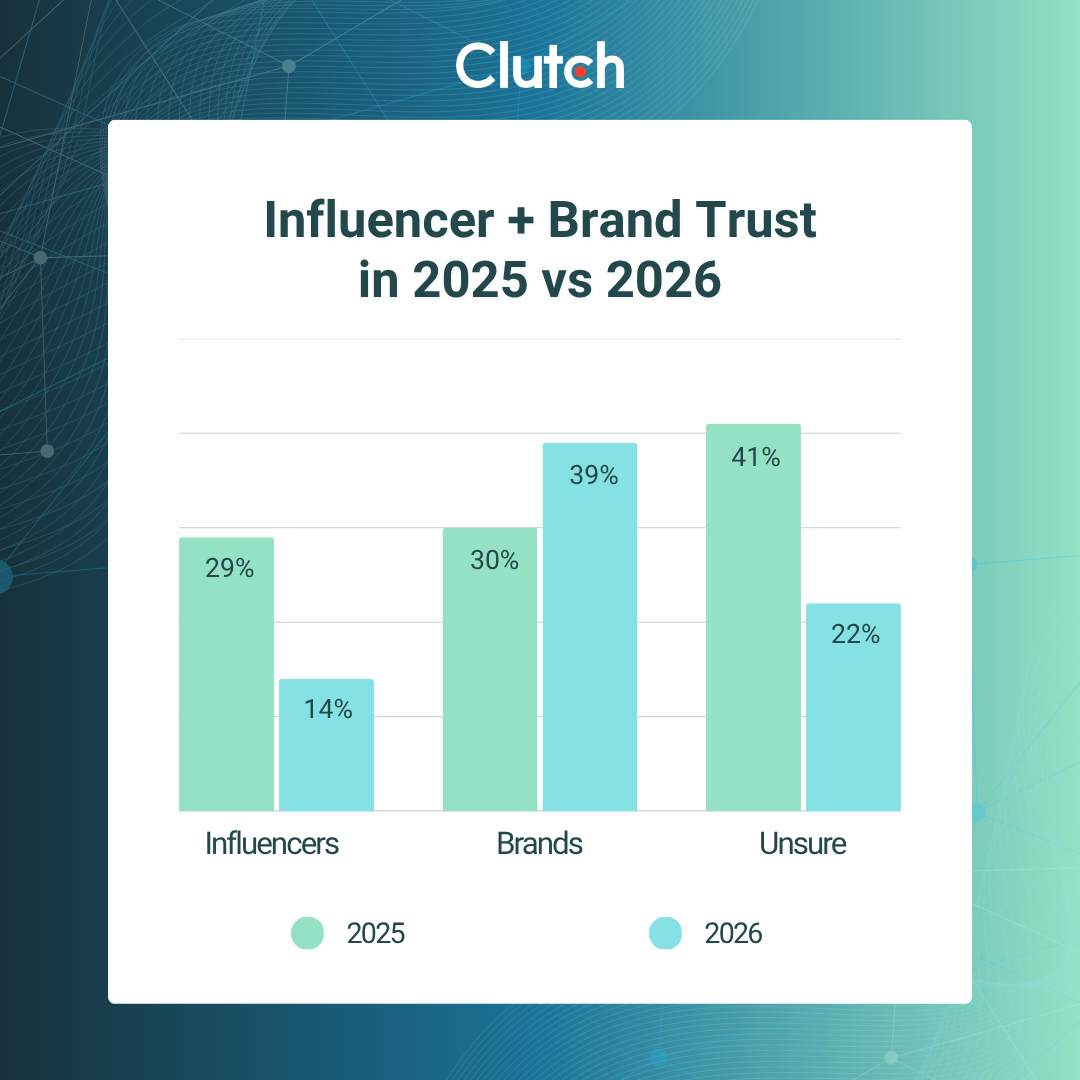
Nearly 40% of consumers say they trust brands more for product recommendations, compared with just 14% who trust influencers more.
That gives brands an important credibility advantage at a time when influencer marketing is increasingly crowded, and consumers are becoming more selective about sponsored recommendations. Yet this advantage may be more fragile than it appears.
More than half of consumers (53%) say they would be less likely to purchase from a brand they know uses AI in its social media content.
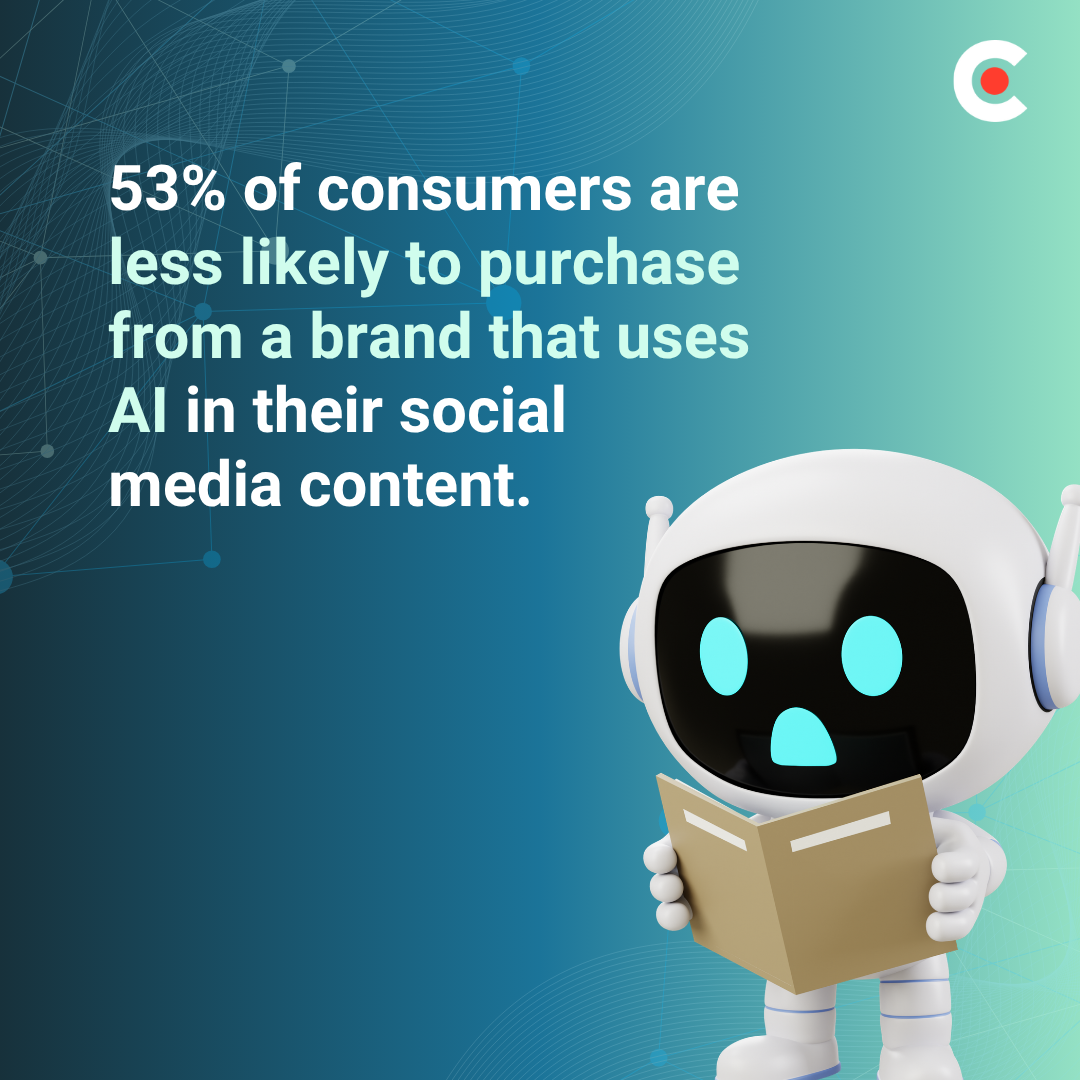
The tension is particularly important because consumers are not simply evaluating AI as a technology; they’re evaluating what its use says about the brand behind it. A brand can have greater inherent trust than an influencer and still risk losing that advantage if consumers believe AI has made its social content less authentic.
This creates a potential disconnect between what brands gain from AI operationally and what they risk losing with consumers. AI can make content creation faster, more scalable, and potentially more cost-effective, but those benefits may matter less if consumers associate its use with less authentic communication. Our data suggests that efficiency alone may not be enough to justify AI adoption in consumers’ eyes.
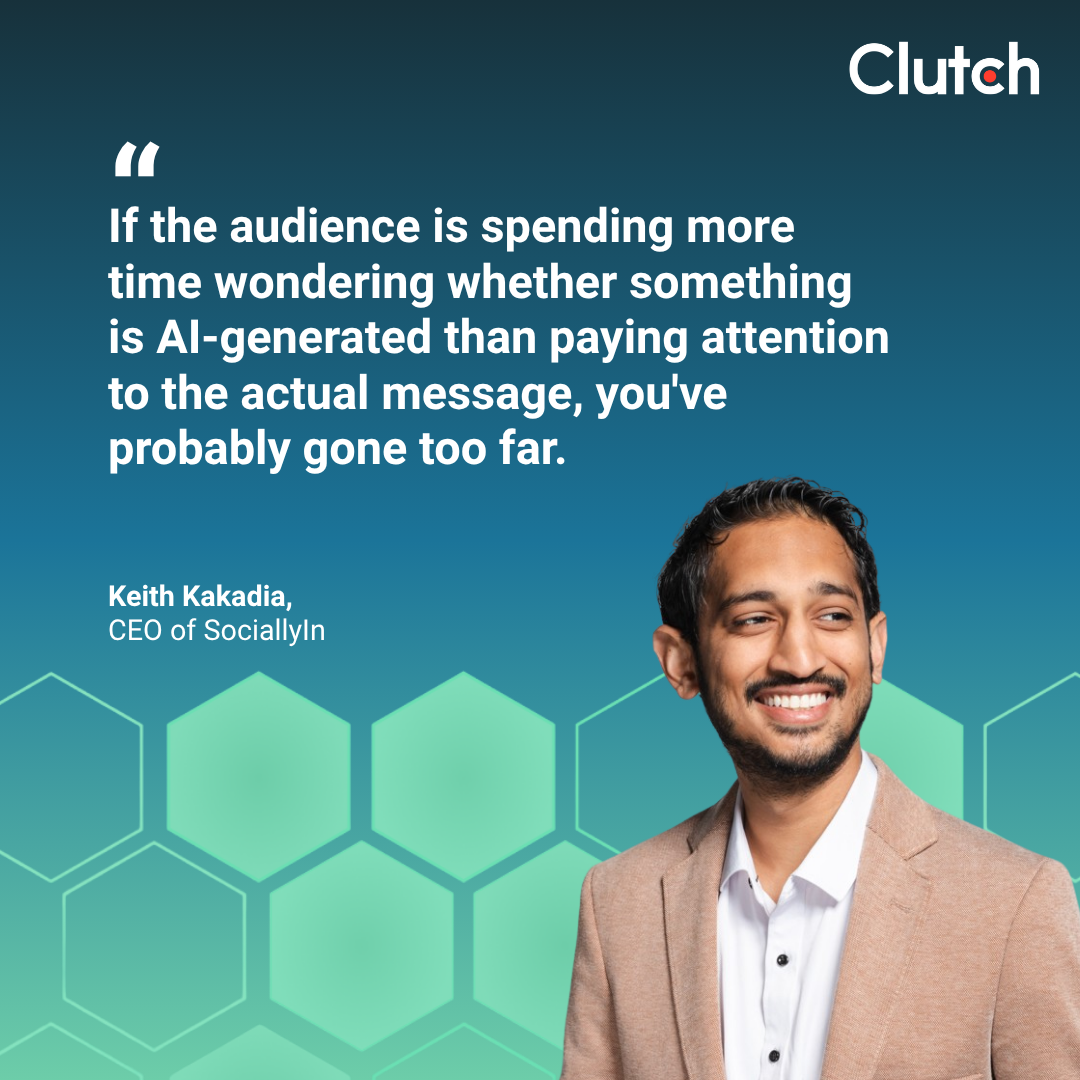
"Brands shouldn't use AI just because AI is available. Consumers don't really care what technology you used to make the content. They care if it's useful, entertaining, believable, or relevant to them,” said Keith Kakadia, CEO of SociallyIn. “If the audience is spending more time wondering whether something is AI-generated than paying attention to the actual message, you've probably gone too far."
The finding also suggests that consumer attitudes toward AI could directly affect the bottom line. If knowing that a brand uses AI makes more than half of consumers less likely to purchase from it, brands may need to weigh the potential production benefits of AI against the possibility of reduced consumer consideration and trust.
As AI becomes more embedded in social media marketing, protecting that trust advantage may require brands to be more selective—and more transparent—about how the technology is used.
As AI becomes more common on social media, consumers aren’t simply asking whether brands and platforms should use it; they’re asking for greater transparency and visibility into when and how it's used.
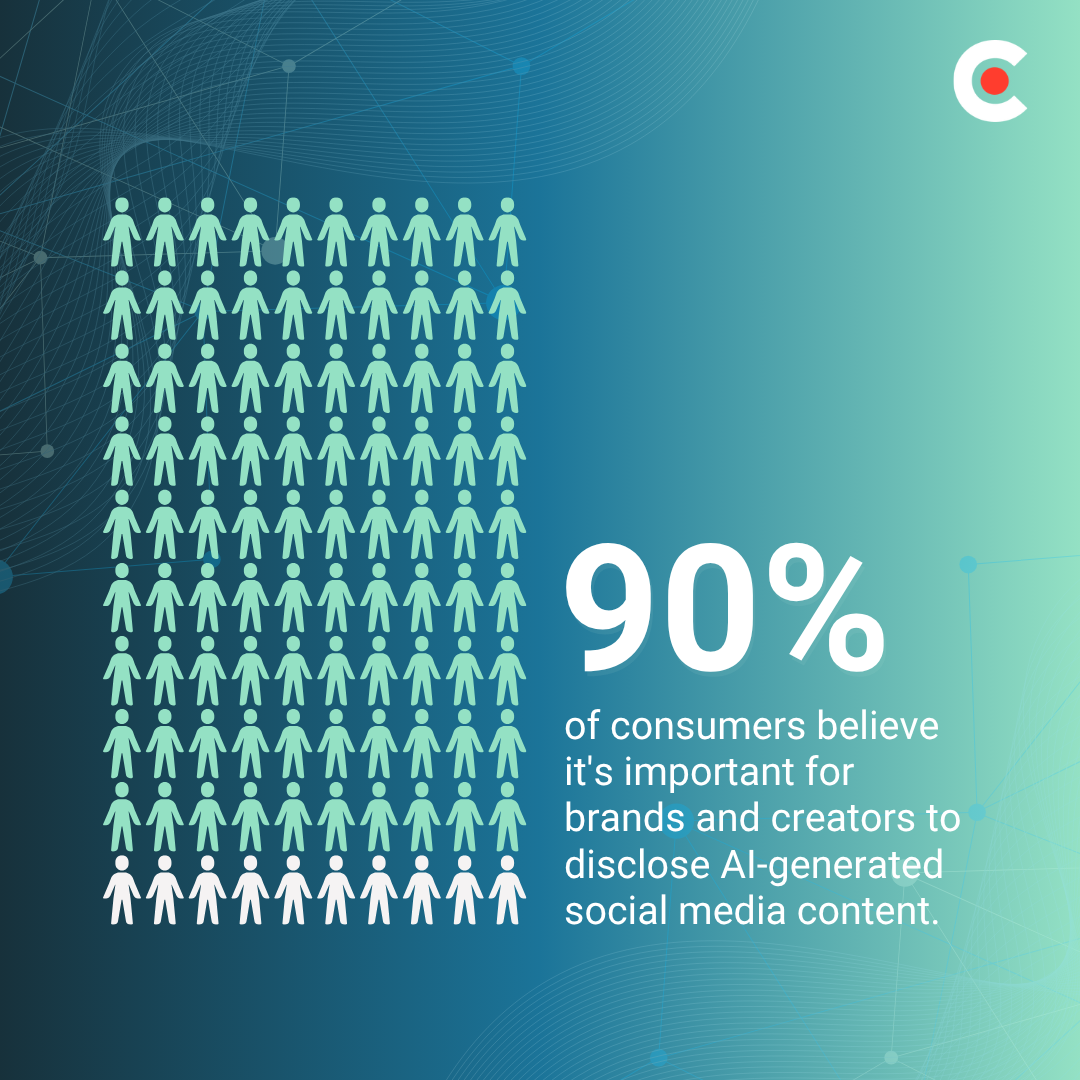
Nearly 90% of consumers say it is important for brands and creators to disclose AI-generated social media content, making disclosure less a nice-to-have and more a consumer expectation.
That expectation is particularly relevant because consumers repeatedly report encountering unlabeled AI content. Thirty percent say they have seen an unlabeled piece of AI-generated content more than 20 times in the past month.
This suggests consumers may be frequently exposed to synthetic content without the context needed to understand how it was created.
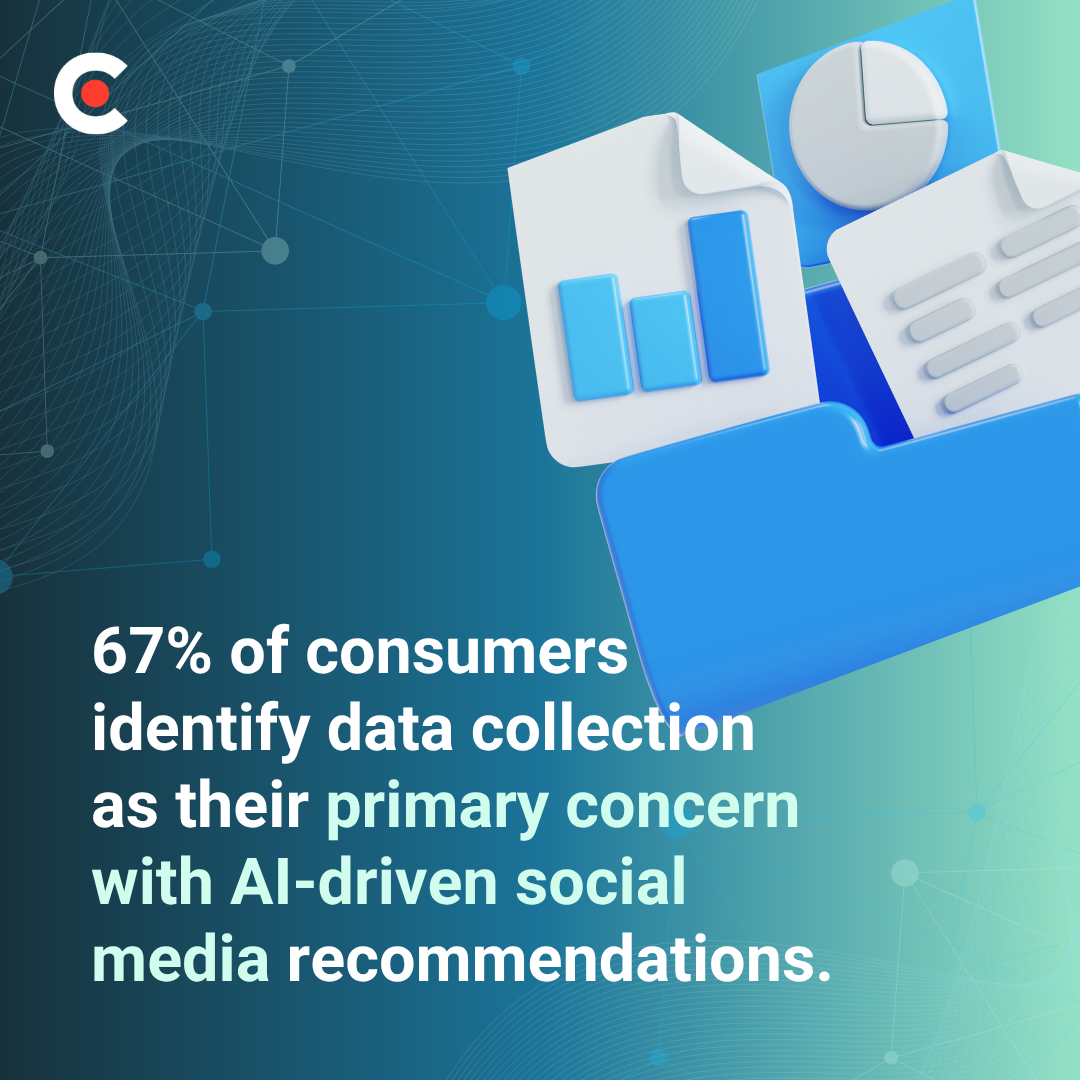
The concern extends beyond content creation to the algorithms shaping what consumers see. More than half of consumers (51%) say they’re uncomfortable with platforms using AI to analyze their activity and personalize their content. The biggest source of discomfort is the amount of information required to enable that personalization: 67% identify data collection as their primary concern with AI-driven social media recommendations.
Together, the findings reveal two sides of the same consumer: “Tell me when AI is involved” and “Tell me what you’re collecting about me.” In both cases, consumers are asking for greater visibility into technologies that can otherwise operate behind the scenes.
“As AI makes targeting more sophisticated, marketers still have a responsibility to respect consumer privacy. We may lose some measurement along the way, but maintaining consumer trust should remain the priority,” said Andrew Miller, Co-Founder & VP of Client Services at Workshop Digital.
This distinction is also important because personalization can feel useful when consumers understand its value, but intrusive when they don’t understand how much of their behavior is being analyzed to produce it. A recommendation may seem helpful on the surface, but uncertainty around the systems behind it can change how consumers perceive the experience.
For brands, disclosure can therefore serve a broader purpose than simply identifying AI-generated content.
Google now adds watermarks to all of its AI-generated content. It is a “fingerprint” invisible to people, but easy to find via a tool.
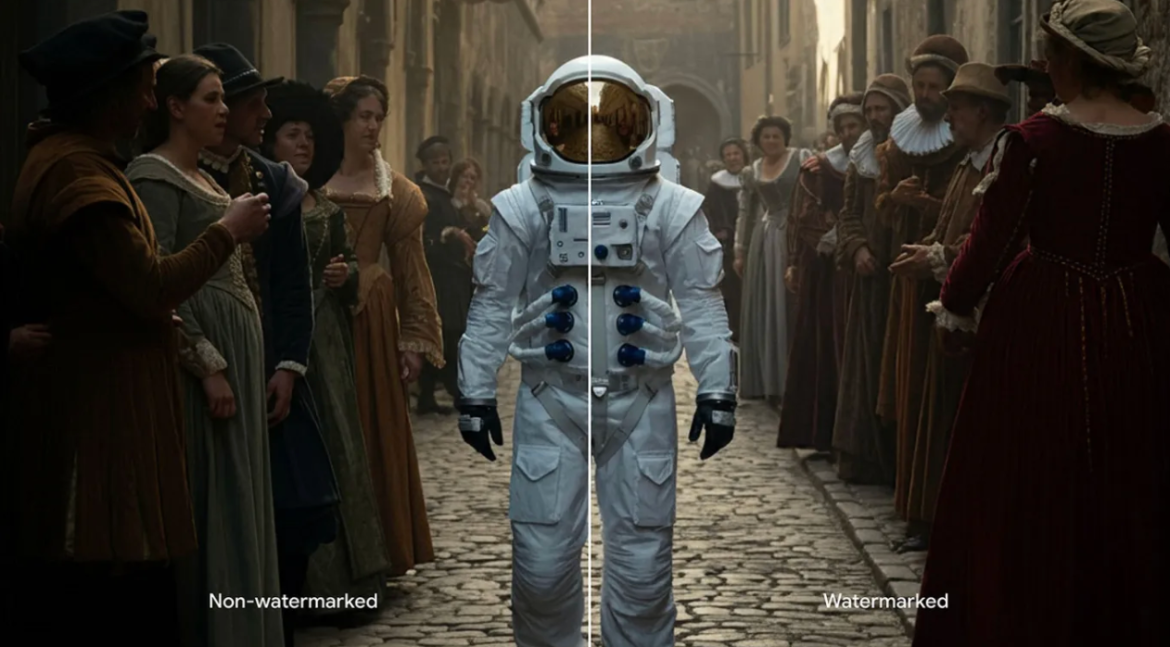
Clear labeling, whether through an AI disclosure, watermark, or visible indication, can help establish a sense of honesty and consumer control at a time when people are already questioning how much AI influences their social experiences.
Transparency may not eliminate every concern about AI, but it can give consumers greater clarity about what they are seeing, how it was created, and how their own information is being used.
Consumers are not uniformly opposed to the use of AI on social media. Instead, their willingness to engage with it depends heavily on how the technology is used and on whether that use is transparent. Consumers are receptive to AI when it provides clear value, such as supporting educational content, but their trust becomes more fragile when AI misrepresents products, obscures who or what is behind a recommendation, or operates without clear disclosure.
Our data points to the broadest lesson for brands regarding consumer trust. AI can help brands create content more efficiently, personalize experiences, and reach consumers in new ways, but those benefits can come at a cost if consumers perceive AI as replacing authenticity rather than enhancing it.
As AI becomes more deeply integrated into social media, the brands that succeed may not be the ones that use the most AI, but the ones that understand where consumers want it, where they tolerate it, and where they draw the line.
In August 2026, Clutch surveyed 601 consumers regarding their perceptions of AI and social media.
In terms of demographics, 49% of respondents identify themselves as male, with 51% reporting as female.
10% of respondents were ages 18 to 29; 38% of respondents were ages 30 to 44; 52% of respondents were 45 and older.