
How to Define Brand Values That Guide Every Business Decision
Brand values are the principles that guide company decisions, define what a brand stands for, and shape how it treats customers, employees, and partners.
Updated August 4, 2026

In the battle for engagement, marketers often overlook one of the most personal channels of influence: podcasts. This format builds loyalty through trust and connection — but those relationships can be surprisingly fragile.
You don't have an unlimited budget for influence, so it's natural to spend it on a few high-visibility channels. You might partner with a famous influencer or sponsor a branded video from a popular YouTube creator. This content may rack up plenty of views, but how many people remember it after they scroll past?
Podcasts work differently. They build relationships with audiences over hours of listening, not a few seconds of scrolling. As listeners grow familiar with a host's personality and perspective, trust grows. Over time, these connections can make podcasts more influential than traditional ads or social media posts.
Looking for a Public Relations agency?
Compare our list of top Public Relations companies near you
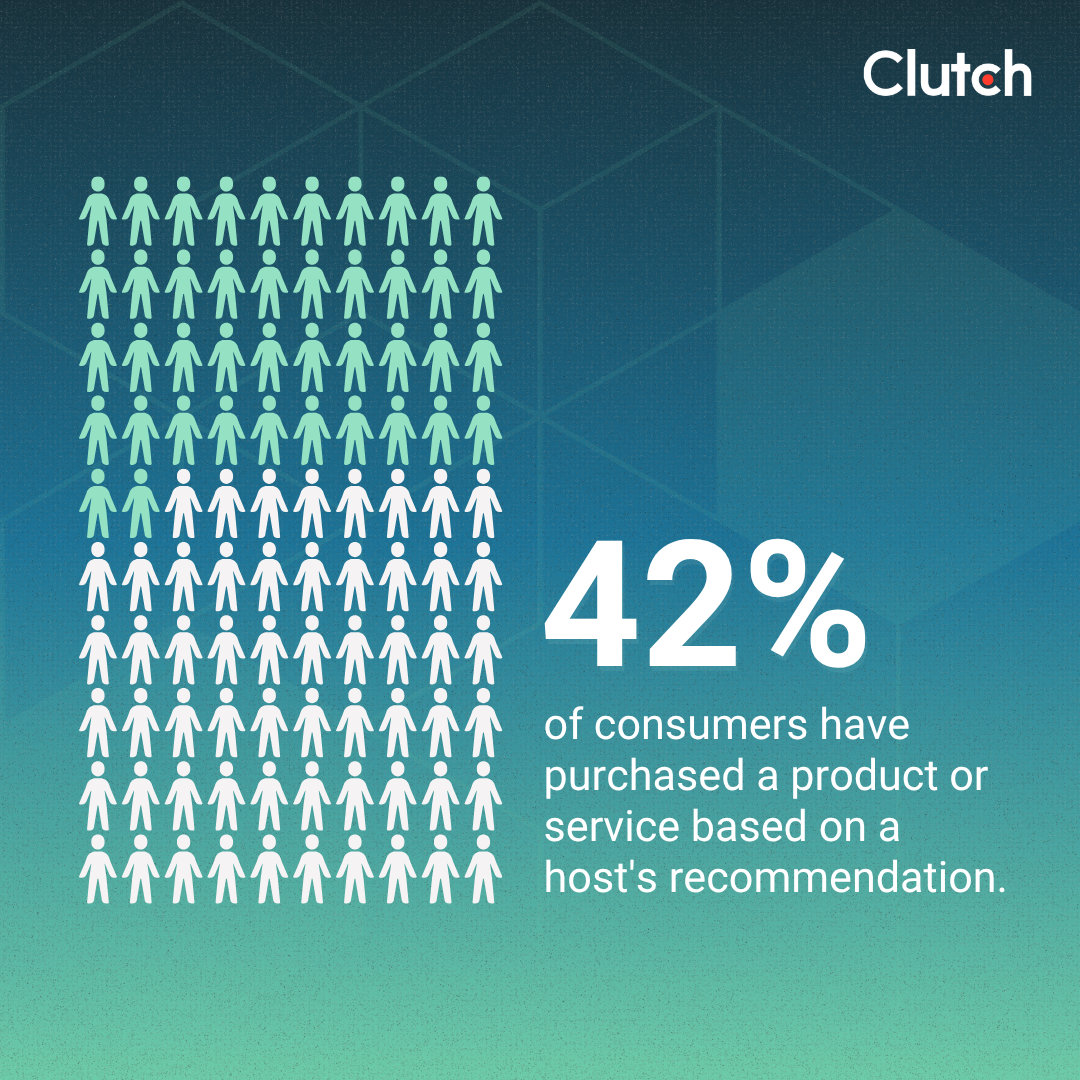
In June 2026, Clutch surveyed 412 consumers to better understand how they perceive and interact with podcasts. Our findings underscore the format's powerful influence: More than four in 10 (42%) of consumers have purchased something based on a podcast host's recommendation.
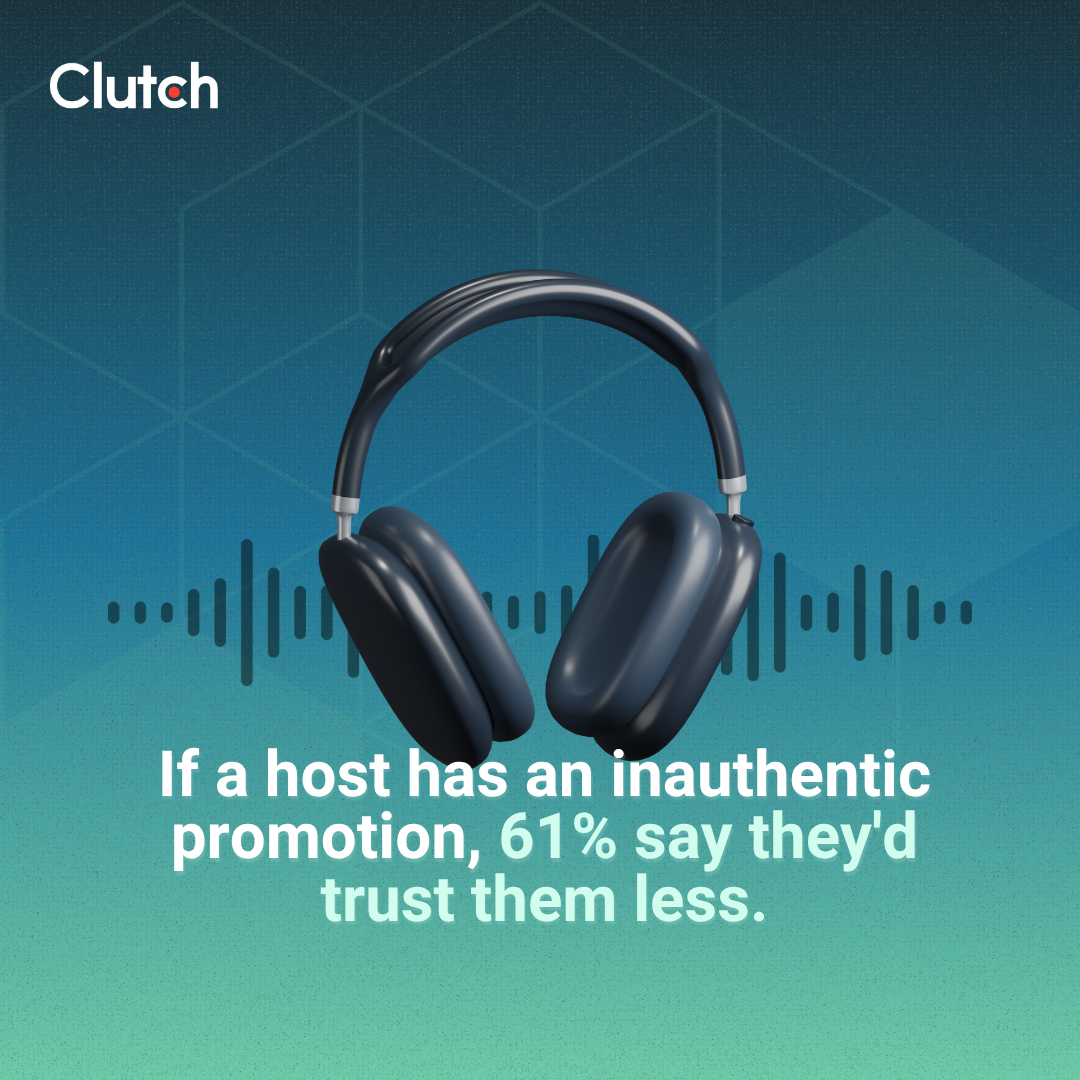
The data also shows that 59% of consumers feel a personal connection with the hosts they listen to. They're not blindly loyal, though. If a host has an inauthentic promotion, 61% say they'd trust them less.
Together, these data points explain why podcasts are such an effective channel for influence, but also where that trust can break down. Drawing on our survey data, this guide takes a closer look at how podcasts influence purchase decisions.
Podcasts encourage listeners to form parasocial (or one-sided) relationships with the hosts they follow. In fact, 59% of consumers feel personally connected to their chosen hosts.
One reason podcasts excel in this area is that they're an inherently intimate format. The host speaks directly into the listener's ear, especially if they're tuning in through headphones. This delivery can make it feel as though the audience is part of the conversation, or at least sitting in the same room.
The long-form nature of podcasts also builds familiarity. In the U.S., the average episode length for top podcasts is 64 minutes, according to Edison Research. That gives creators plenty of time to share in-depth thoughts and anecdotes.
By contrast, social media content and ads tend to be much shorter. A social media feed may only provide brief glimpses of brand and creator personalities. While users may eventually develop emotional connections, these interactions aren't as immersive as listening to podcasts.
Most podcasts are also recurring, with episodes released in regular installments. For example, fans of the Inside Trader Joe's podcast know they can tune into a new episode every other Monday. That reliability helps build long-term relationships.
People often don't think of podcast hosts as influencers, but they can have immense sway over their audiences.
According to Acast's Podcast Pulse 2025, 33% of consumers trust podcasters for product or brand recommendations. That's the same percentage who trust journalists, reinforcing podcast hosts' credibility. By contrast, only 28% trust social media influencers, while 25% trust celebrities.
Explicitly promotional content also has more impact when delivered through podcasts. The Acast report found that 60% of consumers pay attention to podcast ads, compared with only 50% for YouTube. They also view podcast ads as more authentic (45%) and memorable (44%) than ads delivered on other platforms.
The frequency of podcast listening may compound this effect. Nearly two out of three (62%) of listeners say they never miss an episode of their favorite podcast, reports Julie Matiasic, global head of sales, Tech/Telco at SiriusXM.
This regular exposure means loyal listeners may hear product recommendations more often than, say, a YouTube user who skips ads whenever possible. It also gives them more time to develop trust in the host beyond individual product pitches.
The key takeaway for brands isn't that podcast marketing provides more airtime than short-form content. It's that it allows you to rent an even more valuable asset: an existing relationship. When a consumer hears a trusted host recommend your product, they're more likely to convert.
Host-read podcast ads and recommendations often lead directly to sales. Our survey found that 42% of consumers have purchased a product or service based on a host's recommendation.
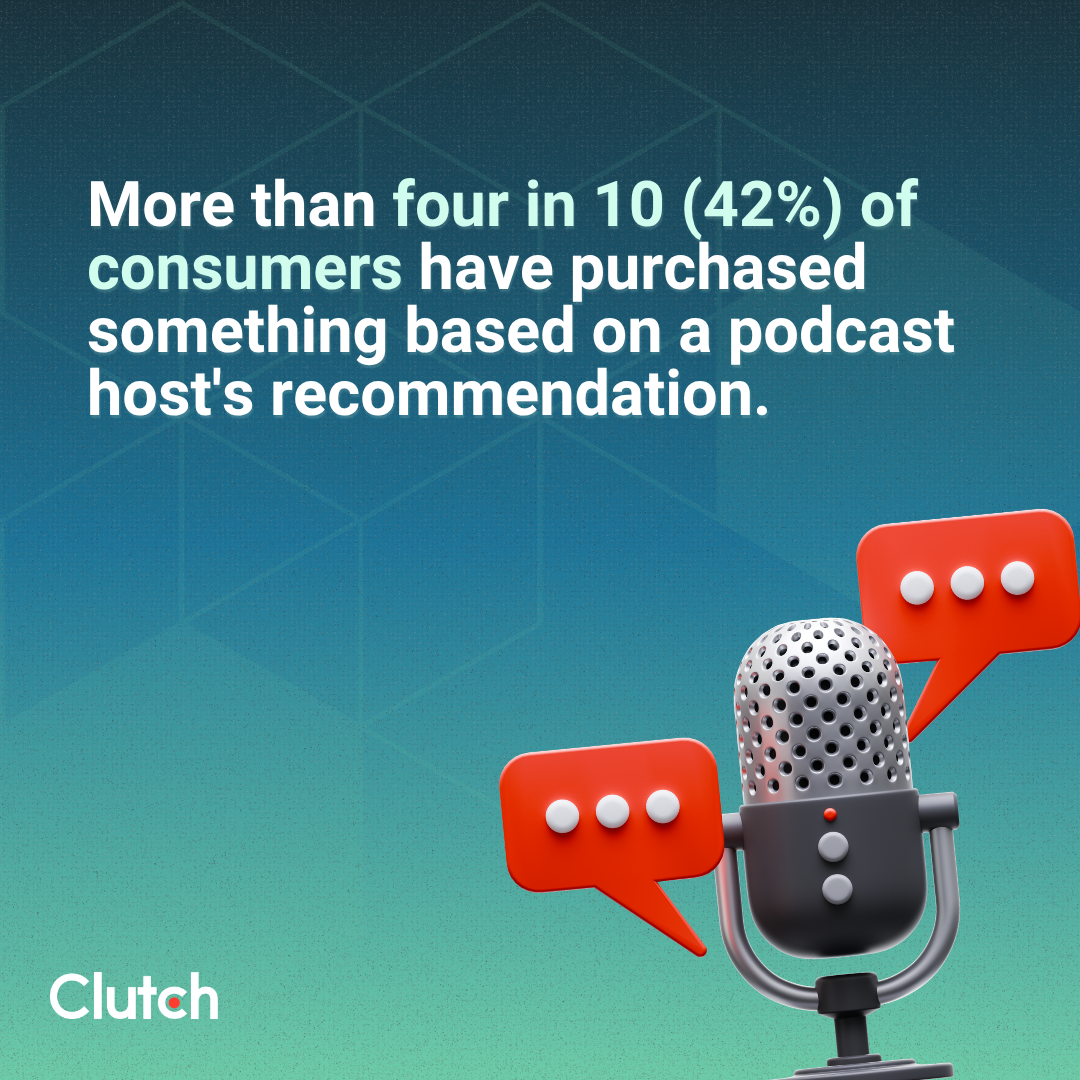
This figure is drawn from a general consumer sample, not diehard podcast fans. Only 79% of our respondents listened to podcasts at least once a month, while 21% tuned in less frequently. These statistics suggest that the medium can influence even a casual listener's purchase decisions.
Among dedicated listeners, podcast recommendations have an even stronger impact. By investing in podcast marketing, you can turn loyal listeners into paying customers. This approach can also help you connect with audiences who might not encounter your brand through other channels.
Podcasts don't stop shaping listener behavior after they make a purchase. They also influence their ongoing relationships with brands.
According to Harris Poll data, 23% of listeners visit a website or social media page after hearing a podcast ad. For example, someone who hears about your brand from their favorite host may follow your Instagram account to learn more. That initial interaction could lead to lasting engagement, even after your podcast collaborations end.
Podcast marketing can also inspire word of mouth. Acast data shows that a quarter of global podcast audiences say they have talked to family and friends about brands after listening to a podcast.
In other words, a single recommendation from a trusted host could lead to conversations beyond the original listener. That kind of organic reach is hard to get from traditional ads.
By leveraging the effectiveness of podcast advertising, you can significantly influence consumer behavior well after the first sale.
When deciding how to spend influence budgets, marketers often focus on the top of the funnel with social media channels. After all, the more people you reach, the more people you might influence, right?
That's not always the best approach, though. Sure, social creator marketing may help you get more eyes on your brand faster than a podcast. That can feel gratifying, especially if your sponsored posts get hundreds of likes and comments right away.
However, influencer marketing has lost some of its, well, influence. A 2026 Clutch survey found that only 12% of consumers trust influencer recommendations when they know the recommendations are sponsored. And nearly half (47%) don't trust influencer product recommendations in general.
By contrast, podcasts often focus on depth over reach. They may not get as many views as a viral TikTok video or sponsored Instagram post, but podcast hosts often have more trusting relationships with their listeners.
Of course, you don't have to limit yourself to one approach. Consider using social creator marketing to raise brand awareness and connect with new audiences. Then use podcasts to earn trust and win over people in the consideration phase.
If you've decided to add podcasts to your influence mix, your first choice is which type of marketing strategy to invest in.
Host-read podcast ads are endorsements voiced by the host, often within the episode itself. For instance, a host may tell an anecdote about how they used a new kitchen gadget or how an exercise bike improved their fitness. Brands often provide talking points for these ads, but the host puts their own spin on them.
This personal approach can make ads feel authentic and credible, especially if the host has built a rapport with their audience. According to the Harris Poll, 67% of listeners find host-read ads to be effective.
Programmatic podcast ads feel more like traditional ads. They're usually produced by the brand itself and can target specific demographics. For example, a fashion brand might create ads for women aged 18 to 24 who listen to lifestyle content. While these ads can be more affordable than host endorsements, they don't leverage the built-in trust between host and listener that a host-read ad might.
Some brands create branded or owned podcasts, which they fully produce. One example is John Deere's biweekly podcast On Life and Land, which shares stories about agriculture and rural life.
Similarly, the Nestlevel Podcast by Nestlé discusses the food and beverage company's global impact.
Owned podcasts can help you develop more personal relationships with your customers and grow your reputation. They may also feel less salesy than a regular ad, especially if you explore trending topics in your niche.
However, your team will need to build a following from the ground up. You'll also need to handle every aspect of production, from buying equipment to editing. That can make owned podcasts the most expensive type of podcast marketing, especially if you choose to create a video podcast instead of audio-only.
Every podcast and podcast-adjacent channel can help you promote your brand effectively, but they each have pros and cons. These considerations will help you narrow your options.
| Factor | Social Creator Marketing | Host-Read Podcast Ads | Programmatic Podcast Ads | Owned Podcasts |
| Trust depth | Low to moderate, with sponsored content often perceived as less trustworthy | High | Low to moderate | Moderate to high, depending on how effectively you build relationships with your audience |
| Reach | High, especially for popular influencers | Moderate, depending on the size of the host's audience | High | Low at the beginning but may grow over time |
| Targeting precision | High | Moderate | High | High, because you control the marketing and audience data |
| Cost profile | Low to moderate, depending on individual influencer rates | Moderate | Low to moderate | High, with ongoing production costs |
| Measurement maturity | High, with built-in platform analytics for engagement and conversions | Moderate, because it's not always easy to attribute sales to ads | Moderate | Moderate to high |
Start with the influence channels that fit your budget and help you build trust. Later, you can experiment with different types of marketing to continue growing your reach.
Trust is difficult to earn and easy to lose, especially in the podcasting world. That same intimacy that helps podcasts influence decisions can backfire if you break the audience's trust.
Our survey found that 61% of consumers would trust a host less after an off-brand or inauthentic promotion. For instance, if an environmentally conscious host suddenly raves about unsustainable meat products, listeners may feel suspicious or even betrayed.
Reduce the risk of losing trust by choosing shows based on audience fit rather than popularity. A show may have thousands of downloads per episode, but that doesn't matter if its listeners aren't interested in your brand.
Avoid micromanaging hosts, too. Explain the "why" that you want them to address, but don't insist that they read from a script. That might make their ad feel stilted or inauthentic.
It's also better to talk about products and services in an educational manner than make a hard sell. For instance, if you talk about one of your items on an owned podcast, share a customer story, or connect it to a current event. That feels more genuine than listing features or price points.
Podcasts may not always seem like an obvious marketing tool, but they can have an incredible influence. Our data shows that over half (59%) of consumers feel personally connected to podcast hosts. That trust translates into behavior, with 42% of consumers buying products or services based on a host's recommendation.
Of course, this reliance on trust also increases the stakes of podcast marketing. If consumers believe a host's recommendation is off-brand or inauthentic, they'll trust them less. Authenticity is key.
Not sure where to start? You can always call an experienced digital marketing agency. They'll help you evaluate partners for podcast sponsorships or creator programs. They can also support you as you develop your own branded content, so you build meaningful relationships faster.