
Testimonial Advertising: How to Turn Customer Stories Into Sales
Testimonial advertising uses real customer stories and reviews to promote your brand. Discover popular types and how to put this content to work.
Updated August 4, 2026

Podcast sponsorships fail in predictable ways, and you can often spot the following seven warning signs before the contract is signed.
Podcast sponsorships can be a great way to get your brand noticed. They work by tapping into something you can't create: the trust between the host and their audience.
But that’s also why they can backfire. If a sponsorship doesn’t align with the brand, it burns through that trust, and the fallout happens publicly, in real time, right where the audience is tuned in.
Looking for a Advertising agency?
Compare our list of top Advertising companies near you
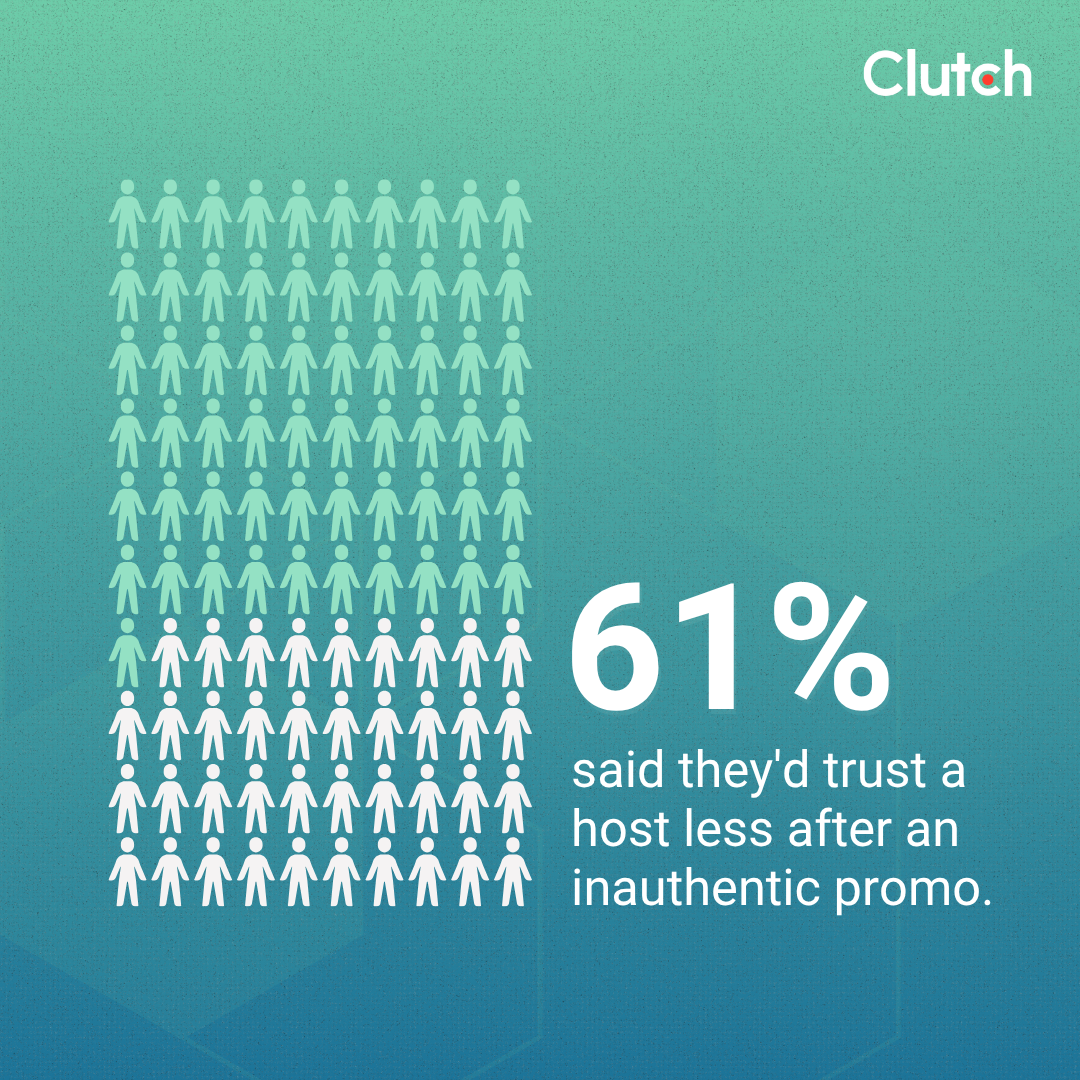
New data shows exactly how this works. In a June 2026 survey of 412 consumers, 61% said they'd trust a host less after an inauthentic promo, and 59% said they feel a personal connection with the hosts they listen to. Put together, these numbers describe what listeners reward in a sponsorship — authenticity and fit, not reach or fame — and what reliably nukes one: any promo that feels borrowed rather than earned.
Read to learn about seven podcast advertising mistakes that will backfire on your brand, written for sponsors, not podcasters.
So how do you know a podcast sponsorship will succeed or fail? Here are the top seven podcast sponsorship mistakes.
If the host can’t or won’t describe your product in their own words, the read will sound exactly like what it is: scripted copy from someone who’s never used it, delivered by someone going through the motions, whether it is video or audio.
Listeners can tell the difference every time. Clutch’s data backs this up: 61% of consumers say they’re less likely to trust a host after hearing an inauthentic promotion, and that loss of trust hits both the host and the brand.
Adam Yaeger has watched this authenticity problem play out for years. As founder and CEO of Llama Lead Gen, a digital marketing and lead generation agency specializing in B2B and SaaS growth through paid social media, SEO, and multichannel campaigns, he's spent his career helping brands tell whether a piece of sponsored content will land or just sound like an ad.
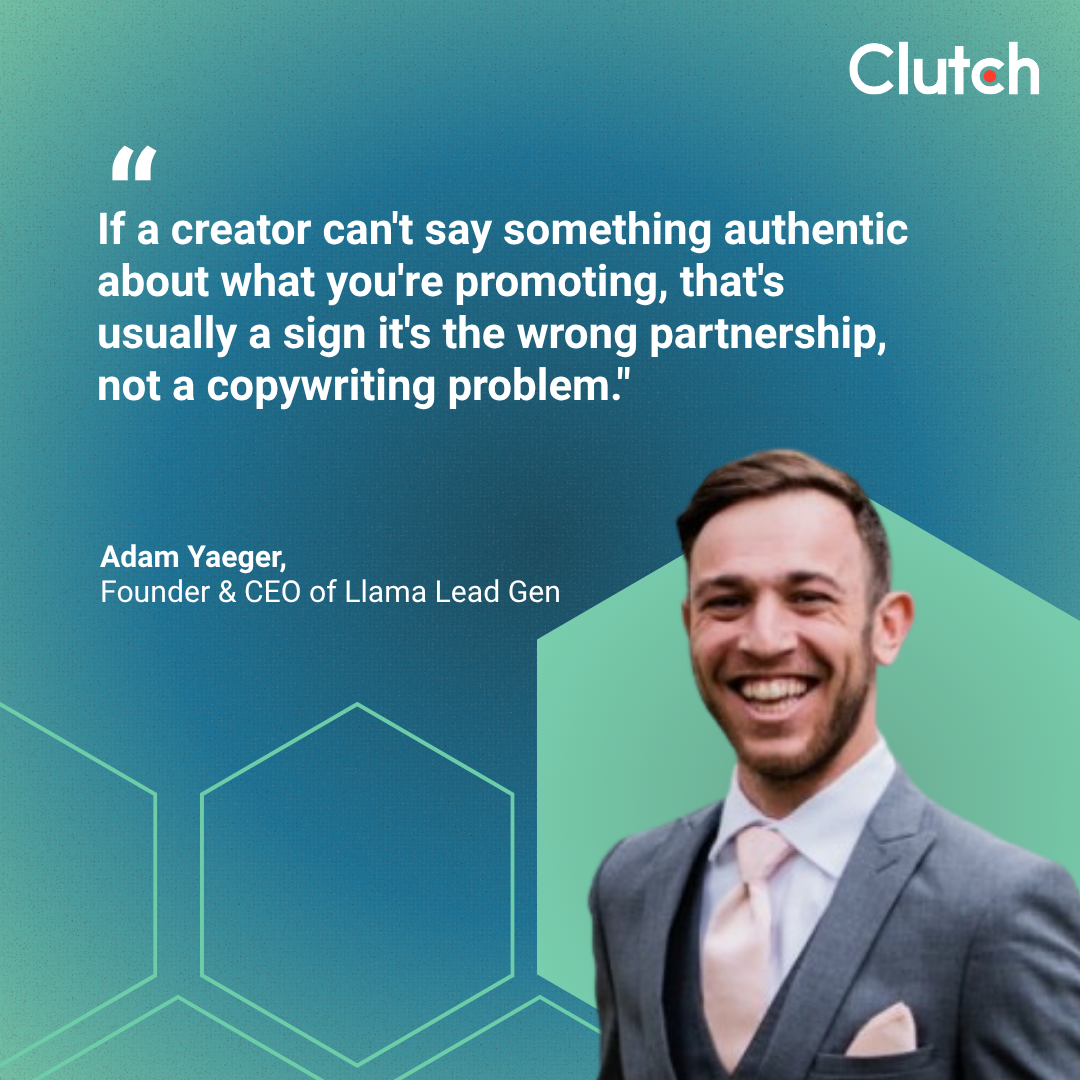
"If a creator can't say something authentic about what you're promoting, that's usually a sign it's the wrong partnership, not a copywriting problem," says Yaeger.
The solution? Ask the host to describe your product unscripted in the pitch call. If they can't do it well, they won't be able to do it on air.
Many make the mistake of assuming a show with more downloads is a better pick for sponsorship. Not always. A show with 10 times the audience of a niche competitor isn’t necessarily a better investment if few of those listeners convert.
One of the golden rules of marketing is that fit drives conversions more than reach does. So a niche B2B show with 5,000 listeners who are all decision-makers in your category will out-convert a general-interest show with 50,000 listeners who have no reason to buy from you.
To steer clear of this mistake, jot down a one-sentence description of your ideal buyer before even glancing at download numbers. Ask yourself: Does this show truly align with my brand? Who is their audience, and would they naturally be interested in what I offer? If not, move on to the next option.
Celebrity hosts can be expensive since they charge based on the assumption that fame leads to more conversions. Our data, however, doesn't support that assumption: the survey revealed that 62% of consumers say fame is irrelevant to their choice of podcast.
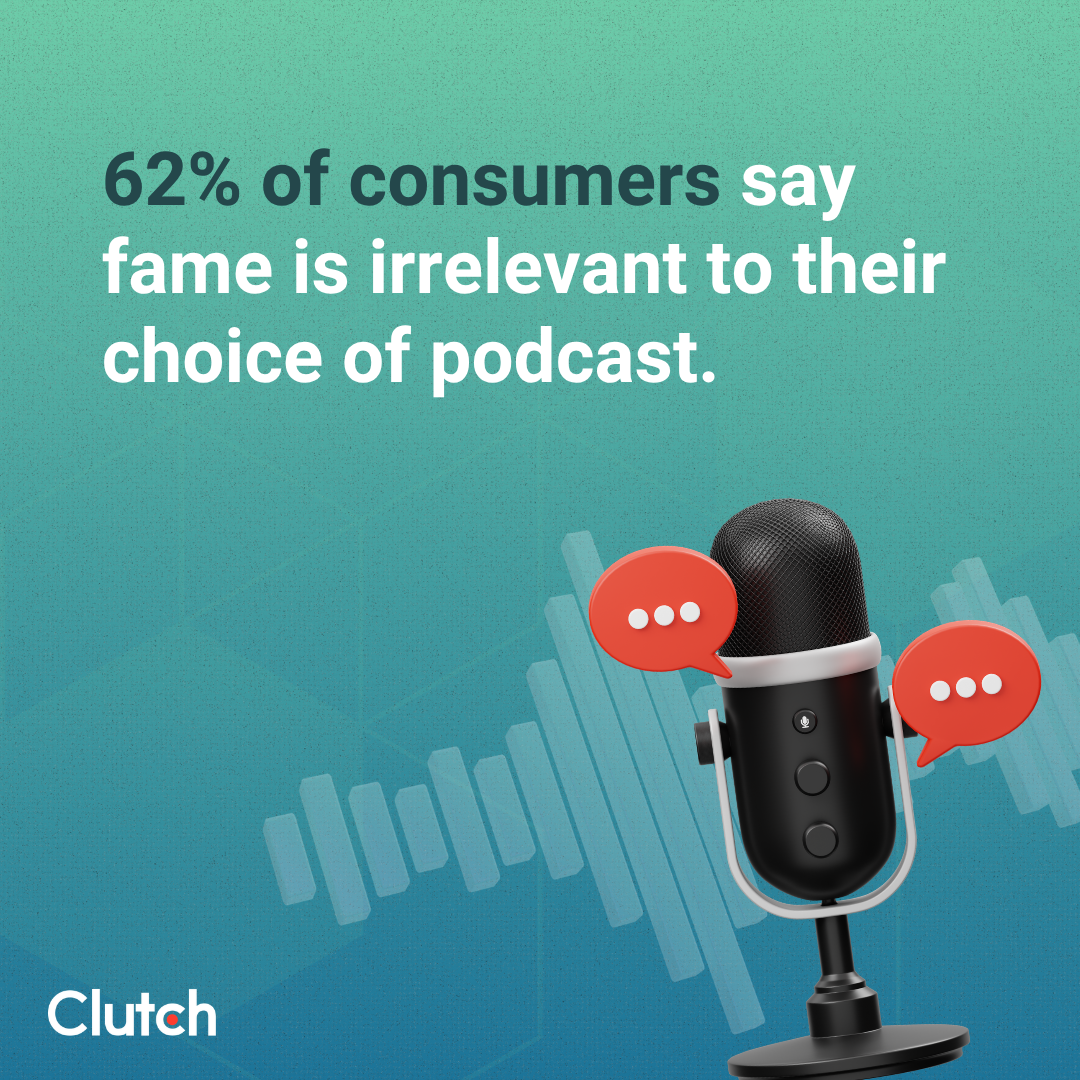
Ultimately, celebrity buys reach but not trust. To build trust, which is what actually leads to conversions, you need an authentic relationship between the podcast host and audience.
The fix is redirecting the budget line from fame to fit. Pay for a host with real authority in your industry and a demonstrated relationship with their audience.
If your product has no natural connection to the show, listeners will notice. Imagine you're listening to a comedy show when suddenly the host starts promoting HR software.
The fix here is asking yourself, "Would this host plausibly use my product or service?" before signing with a host.
If the honest answer is no, you should find someone else. A quick way to run this test is to send the host a sample of the product and ask what they'd actually say about it, unprompted. If the answer sounds like a stretch — for instance, vague enthusiasm with no specifics, or a pivot back to reading from a script — the sponsorship will sound just as forced once it airs. A host who's genuinely curious about the product will usually ask you a follow-up question before answering.
A host who takes on every category, every episode, every week isn’t helping you build trust; they’re just selling ad space. Per our survey, 59% of listeners feel a personal connection with the hosts they follow, so working with one who oversponsors can weaken that bond and hurt conversions. A more selective host, however, protects the value you’re paying for.
The fix? Check their last 3-5 episodes before committing. Count how many sponsors they’ve had and see if those sponsors are speaking to a similar audience as your brand's (without being direct competitors, of course). If too many don’t align with your category, the podcast you’re considering is probably not the best fit.
Paid social is built for immediate response: Someone sees the ad, clicks, and converts, and the platform reports back within days. But a podcast read doesn't work that way. To the listener, your sponsorship is just a name mentioned once by a voice they already trust, not a prompt to act, but a first impression that rarely moves anyone to buy.
The lift comes from repetition. Once the listener hears the same host mention the same brand across several episodes, the name stops sounding like an ad and starts sounding familiar, which is what actually drives conversion in a trust channel.
If you only judge the ability of a podcast sponsorship to lift your brand by a single episode, you're applying direct-response logic to a relationship channel. This will lead to a false negative, making your campaign look like it failed when it never had the chance to succeed.
The fix is to budget for a multi-episode flight, not a single spot, and set an evaluation window long enough to capture that compounding effect. This typically lasts weeks, not days.
This is the cheapest diligence step available, and the most commonly skipped. If no one on your team takes the time to listen to the show, they're missing out on the show's tone, audience banter, host credibility, and sponsor handling — all of which can help them decide whether a particular sponsorship is worth it. Luckily, you can pick up on all these issues just by listening to two episodes, so it’s not much of a time or energy commitment.
The fix here is to listen before you sign, and note what the host says about their other sponsors. If the host seems to go through the motions with the other sponsors, they're likely to treat you the same way. Instead, pick someone who truly feels on fire about your product or service, someone who is using or may use your offerings in the future.
Combined, the data in our latest report tells a story about podcasting. Fifty-nine percent feel connected to their hosts, and 62% don't care if those hosts are famous. That's the definition of trust: a real relationship with an audience, not whether a host has household recognition. As for the 61% who said they'd trust a host less after an inauthentic promo, that statistic reveals what ruins trust.
Ultimately, a sponsorship is a trust transaction, not a media buy. A media buy is priced on reach. A trust transaction is priced on whether the audience believes what they just heard, and that price gets set by the listener, not the invoice.
All the podcast sponsorship risks mentioned can be spotted in a potential podcast sponsorship before the contract is signed: during the pitch call, in the last 10 episodes, and in the answer to whether your product truly fits the show. That’s why you should never skip checking for these seven podcast advertising mistakes. The brands that get burned by podcast sponsorships didn’t skip budgeting; they skipped the pressure test.
If you’re looking to vet shows and set up podcast sponsorships, check out marketing partners on Clutch’s digital marketing directory. Genuine client reviews and portfolio samples can help you choose a trusted vendor who can handle your project and deliver great results.