Lead Quality vs. Lead Quantity: Why B2B Teams Are Rethinking Their Funnel in 2026
Bigger buying committees and tighter budgets are forcing B2B teams to rethink lead quality vs. quantity. Here's how top teams rebalance the tradeoff in 2026.
Updated August 4, 2026

This practical playbook teaches marketing teams how to launch their first company-owned podcast — and why audiences in 2026 are primed to listen, even without a famous host.
Podcasts have quickly become the new "it" thing — not just in popular culture, but in marketing too, evolving from experiments to an expected part of the mix. Yet for many companies diving in, the big questions remain: will anyone actually listen? Is all this effort worth it, especially when there’s no big name on the team?
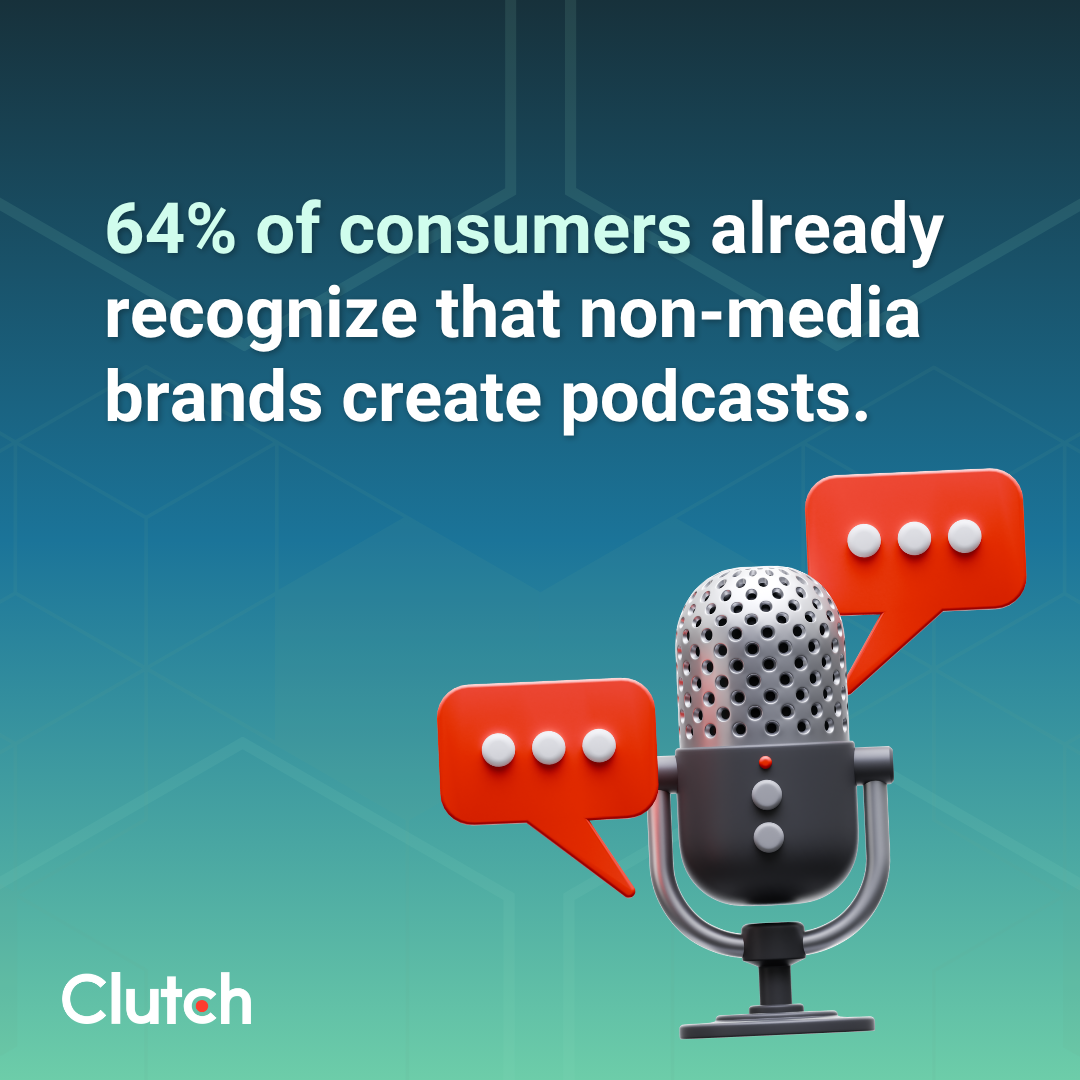
Turns out brand podcasts don't need a famous host to win listeners. In June 2026, Clutch surveyed 412 consumers about their podcast usage and found that 64% of consumers already recognize that non-media brands create podcasts, and 62% say host fame is irrelevant to their listening experience. In other words, brands don't need a celebrity face or a media background to earn listeners.
Looking for a Digital Marketing agency?
Compare our list of top Digital Marketing companies near you
This guide explores how to launch a branded podcast step by step, from setting goals to production, distribution, and promotion.
A branded podcast is a show created and owned by a company, focused on storytelling and expertise instead of ad reads. It’s like a YouTube channel, but is primarily or entirely audio, designed for on-the-go listening — whether you’re in the car or out for a jog.
A popular example is Shopify Masters.
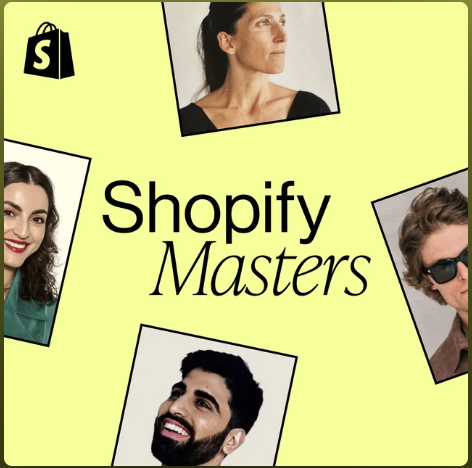
Run by none other than Spotify, this podcast features stories from founders and e-commerce experts who have launched, grown, and scaled real businesses.
Goldman Sachs also has several podcasts: Goldman Sachs Exchanges (where leaders, analysts, and investors from across the company break down the key issues affecting the global economy) and The Markets (where Goldman Sachs leaders, investors, and analysts break down the key issues moving markets).
While some of these podcasts do feature big names, don't let that discourage you. According to our data, 62% say fame is irrelevant to their listening experience, meaning the barrier to entry is expertise rather than a recognizable host. Over sixty percent (64%) of consumers are aware of non-media brands creating podcasts, which means the format is already normalized, so your audience is primed to listen without needing to be convinced.
The takeaway? Audiences are ready for your podcast, especially if you already have the entry ticket: credibility and relevance.
Start by setting goals and defining your listener. Tie the show to a marketing outcome — thought leadership, pipeline influence, brand affinity — before anything else. Define your "why" for creating the show — for example, an e-commerce platform may want to collect inspiring stories of entrepreneurs who found or developed products and marketed them to huge success, to position itself as the platform serious sellers build on.
Once you've nailed your why, sharpen it, and ask yourself: what decision should this show help your listener make? Continuing with the e-commerce platform example, the goal isn't just to inspire entrepreneurs — it's to help listeners with business ideas decide that this platform, not a competitor, is where and how they should start building.
Then, create your ideal listener profile and let it guide your choices for topic, tone, and format. For an e-commerce platform, this might be a mid-career professional with a product idea but no clear plan to launch it. That listener isn't looking for motivation, since they already have the idea. They're looking for the missing steps. Accordingly, an interview-style show featuring founders who've walked that path is the right format, because it gives them the steps directly from people who've solved the problem. In contrast, a solo-commentary show with an inspirational tone would leave the "how" unanswered.
The takeaway? Shows built for "everyone" stall, and that relevance to a specific audience is the strongest driver of engagement.
The next step is choosing your topic. Pick the intersection of what the brand credibly knows and what the audience is actively trying to figure out. Continuing with the e-commerce platform example, that could mean product sourcing strategies, not general entrepreneurship advice about chasing your passion or finding your purpose.
Host selection is next. Here, credibility and chemistry matter, not name recognition. Remember, 62% of the consumers in the Clutch survey said fame was irrelevant to their listening experience. As such, your next host could be an internal expert, executive, or practitioner — anyone who has experienced the problems your show covers.
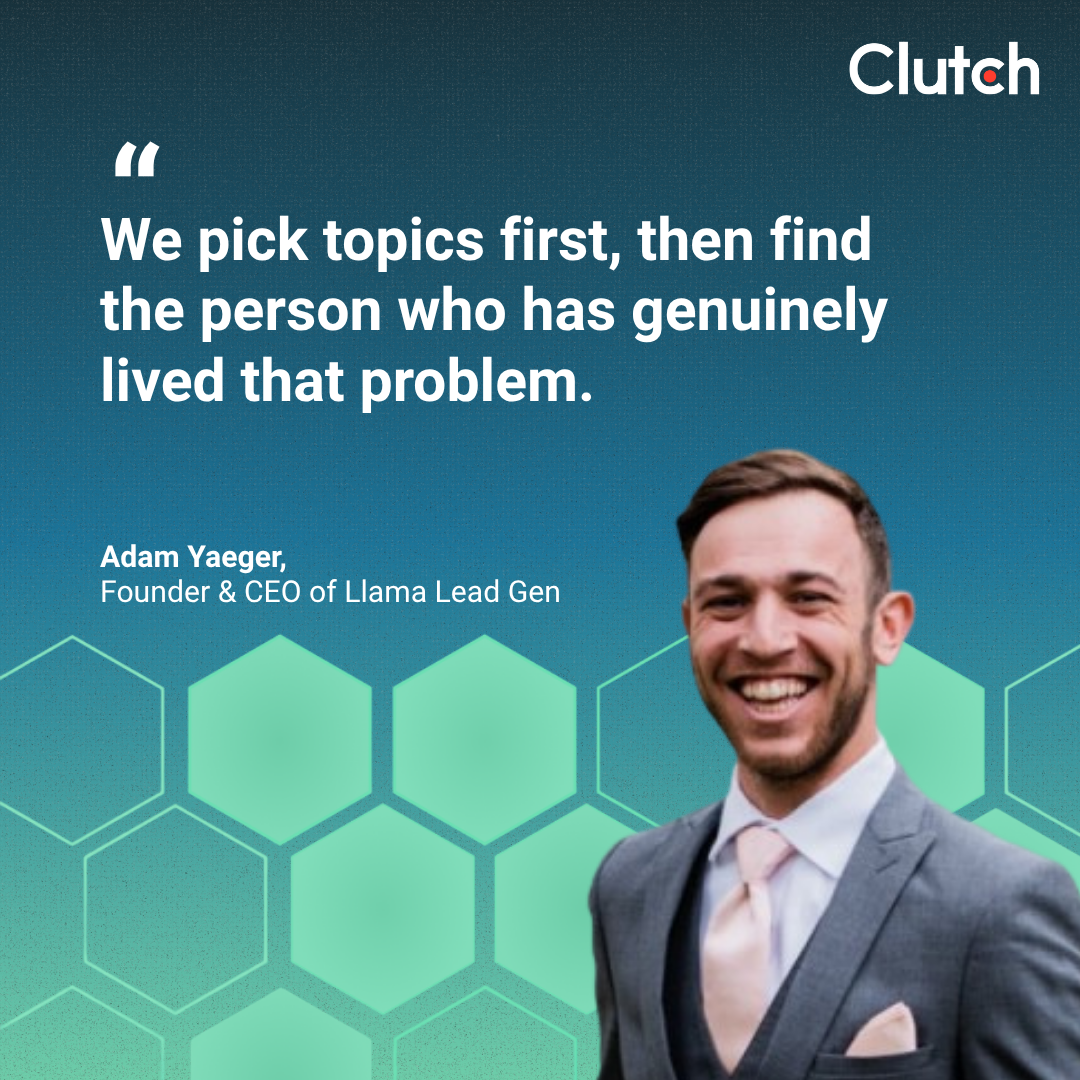
Adam Yaeger, Founder and CEO of Llama Lead Gen, does this. He says: "I book guests based on what they actually know, not who they are… We pick topics first, then find the person who has genuinely lived that problem."
Format choices also matter. Pick whichever suits the story you're trying to tell — interview shows lean on guest expertise, which works well when your strongest asset is the people you can bring on, not the host's own voice. For listeners who want a story more than a question-and-answer session, narrative shows may be a better pick, since they let you build tension and payoff over an episode rather than merely absorbing information. Finally, if your host is already a recognized voice in the industry and the audience is tuning in specifically to hear their take, consider a solo commentary format.
It’s smart to decide early whether to go with audio or video. Audio-only shows are cheaper, quicker to produce, and perfect for on-the-go listening during a walk or commute.
Video podcasts, on the other hand, are more expensive and time-consuming. However, they open the door to YouTube as a discovery channel and make it easier to repurpose clips for platforms such as YouTube Shorts, TikTok, Instagram Reels, and Facebook Reels.
Video usually delivers the biggest payoff when a guest offers something worth seeing and hearing — like a unique product that sparks in-the-moment reactions, or a take so distinctive that clips are likely to draw a significantly larger audience.
For the e-commerce platform example, audio might be enough for an episode about supplier negotiation tactics — it's dense, practical content someone can absorb while driving to a warehouse. But an episode featuring a founder who scaled a niche, beautifully-designed product to seven figures on a single viral TikTok post is a different case: viewers will want to see that product, entrepreneur, TikTok, and overall energy firsthand.
Once you've nailed down the topic, host, and format, you need to decide how the show gets made. Two paths exist: producing in-house and working with a podcast production company.
Producing in-house means assembling a small team, buying basic recording equipment, and creating an editing workflow that works for you. Overall, while it gives you more control and lower ongoing costs, it puts more work on your team's plate.
On the flip side, hiring a podcast production company means bringing in an outside team to handle everything for you. While this method is usually quicker and produces a more polished podcast, it comes at a higher price, typically ranging from $1,500 to $5,000 per episode when working with an agency.
When deciding what works best for you, think about the trade-offs, your budget, and what you’re willing to give up to get ahead. If you can afford it and need a polished look to stand out in your niche (say you’re competing with big names like Goldman Sachs), hiring an external podcast production company might be the way to go. But if funds are tight or your show thrives on quick, casual back-and-forth that could slow down with an outside team, producing in-house may be preferable.
It’s important to consider whether your production method is sustainable in the long run. Many branded podcasts stumble due to operational issues rather than content quality, so decide who’s in charge before you even record the first episode. To keep search engine results pages (SERPs) happy, you need a consistent episode-publishing rhythm. So, have a few episodes ready before launch and choose a release schedule you can maintain. For a small team of two or three, that might mean monthly episodes, while a larger team of five to seven could aim for weekly releases.
Once you’ve figured out how your show will be made, it’s time to get it in front of listeners. Start with the basics: choose a hosting platform, set up an RSS feed, and submit it to Spotify and Apple. It’s also worth uploading your podcast to YouTube — audiences often follow content across multiple platforms, so meeting them where they already are can boost views.
Then, focus on making your podcast easy to find. Think of your cover art, show notes, and episode titles as prime SEO real estate — they’re what both your audience and search engines or podcast app search bars will notice first.
Making and publishing the show is only half the job — you still need to get an audience to find it and a reason for them to keep coming back.
To do that, make pre-launch teasers to build anticipation and encourage guest-driven promotion. Once episodes are live, use AI to find the most interesting segment (10 to 30 seconds, or up to 60 if needed) from each episode, and turn it into a clip for Reels, Shorts, or TikTok posts, as well as newsletter content, so the show feeds the wider content engine.
When gauging your show's success, don’t focus on the obvious numbers. Downloads are more of a vanity metric — easy to track but not a true measure of impact. Instead, pay attention to retention, any uptick in branded searches, and direct feedback from listeners. Also, give your show time to grow: a 90-day window is too short to judge its worth. Aim to evaluate it over a 6 to 12-month period.
The takeaway here for brands is that branded podcasts compound over time. The payoff isn't instant — it's trust built episode by episode over months.
Podcasts are no longer just for celebrities or media figures discussing politics, entertainment, lifestyle, or true crime. According to our survey, 64% of consumers are aware that non-media brands create podcasts, and 62% say a host's fame has no bearing on whether they listen.
Clearly, there isn't a barrier anymore to brands launching podcasts, even if the host isn't famous. But whether they succeed depends on how well creators have thought about their target audience. A show that’s tailored to a specific type of listener is far more likely to connect than one that’s merely broadly interesting. The clearer the audience, the better the chances they’ll tune in.
Creators should also keep production consistent. A show that launches strongly but then disappears for months risks losing the audience it worked hard to attract, as listeners want to follow along regularly. With so many podcasts competing for attention, releasing episodes consistently keeps you on listeners’ feeds and in their minds.
Finally, creators should pick hosts with earned, not performed expertise, who can discuss how they dealt with certain issues — for example, a host who can speak firsthand about the actual headaches of negotiating with overseas suppliers or managing inventory during a demand spike, rather than one reciting sourcing "best practices" they've never had to apply themselves. Listeners can usually tell whether a host genuinely knows the subject or is reading from a script.
You don't need a media background or a famous host to meet these requirements. You only need a clear sense of who the show is for, a plan to keep showing up, and a genuine reason to be the one telling this story.
If you’re ready to launch your show, an experienced production partner can help make the process of developing your branded podcast strategy smoother, especially when it comes to operations. Start by checking out Clutch’s podcasting directory, where you can compare production companies side by side to find one that matches your budget, format, and goals.