Lead Quality vs. Lead Quantity: Why B2B Teams Are Rethinking Their Funnel in 2026
Bigger buying committees and tighter budgets are forcing B2B teams to rethink lead quality vs. quantity. Here's how top teams rebalance the tradeoff in 2026.
Updated September 30, 2026

The article compares five lead generation platforms based on data quality, intent signals, automation, privacy, pricing, and implementation requirements. It also highlights practical steps for evaluating platforms, preparing for changing privacy and tracking requirements, and assigning clear ownership to ensure the chosen technology delivers measurable value.
Lead generation platforms compete on four things: signals, contact data, orchestration, and privacy infrastructure. Most buyers compare feature lists.
The differences that show up after the contract is signed are the pricing model, the quality of the underlying data, and how much operational work the platform hands back to your team.
Looking for a Digital Marketing agency?
Compare our list of top Digital Marketing companies near you
Six questions to put to every vendor before the demo ends.
Data foundation: Ask where records come from and how often they are refreshed. Then ask for accuracy broken out by region, because a global average hides how thin coverage gets outside North America.
Signal quality: Intent signals decay within days. Name the person who works the daily account list before you sign. If nobody can act within 48 hours, buy enrichment instead and revisit intent when you have the headcount.
Deven Patel, Founder of Role, a hiring platform that screens and ranks inbound applicants for companies running high-volume req loads.
Patel says, "Naming the person is the step teams skip, and hiring is where that skip becomes visible. A req for someone who will own a scoring queue gets written around the tool name, which pulls in four hundred applicants who have watched a tutorial. Six weeks go by sorting them.
The postings that fill describe the work and the systems the person owns, because that is what a qualified operator screens for before applying, and operators with real platform experience are choosing between offers rather than waiting on one."
Orchestration: Map every handoff in your stack that runs through Zapier or a similar connector, then make the vendor demo those specific handoffs natively. A generic workflow demo tells you nothing about whether the middleware goes away.
Measurement: Ask whether the platform separate modeled conversions from observed ones, and whether it supports holdout groups. Without a control group, there is no incrementality test, only attribution.
Governance: Put permissions, audit trails, consent capture, and data residency in front of legal during the trial. Confirm which tier each control sits on, since vendors gate the ones that regulated buyers need behind the top plan.
Jeffrey Zhou, CEO and Founder of Fig Loans, which issues credit-building personal loans to borrowers in the states where it holds consumer lending licenses.
Zhou says, "Lending puts a paper trail requirement on top of everything marketing does, and that changes which tools are even eligible. We have to be able to show who was contacted, on what basis, and what consent was on file at the time. A platform that makes segmentation fast but cannot produce that record is a disqualified option for us. Most teams find that out during an audit rather than during the evaluation."
The pricing meter: Find out what happens when you exceed your tier mid-contract and whether unused capacity rolls over. Every meter taxes a different kind of growth, so identify which one your business relies on most. The same cost-benefit thinking applies across acquisition channels; an SEO ROI calculator, for example, can help estimate whether projected organic returns justify the investment.
6sense predicts where an account sits in its purchase cycle while the account is still anonymous, then tells marketing and sales to act on the estimate rather than wait for a form fill.
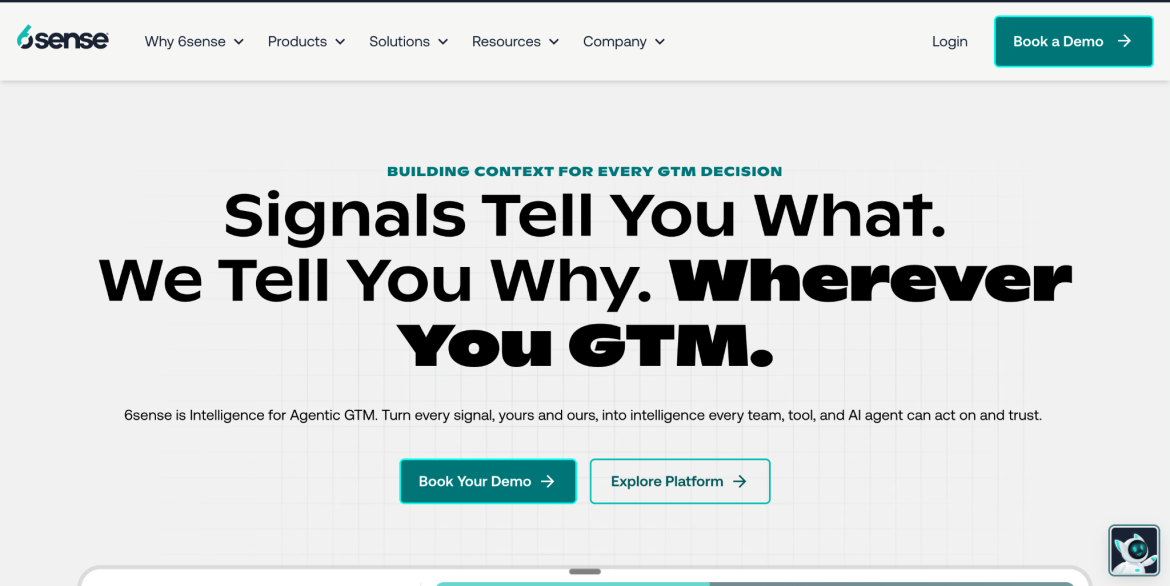
It is built for buying committees that complete most of their evaluation before contacting a vendor.
Enterprise and upper mid-market teams with six-figure deal sizes, a defined target account list, and an ops person whose job includes maintaining the models.
Custom. Buyer reports put contracts from the mid-five figures to well into six figures, with mid-market teams commonly landing around $50,000 a year.
Most B2B teams adopt the free CRM early, accumulate two years of records in it, and buy automation on top of the data that already lives there.
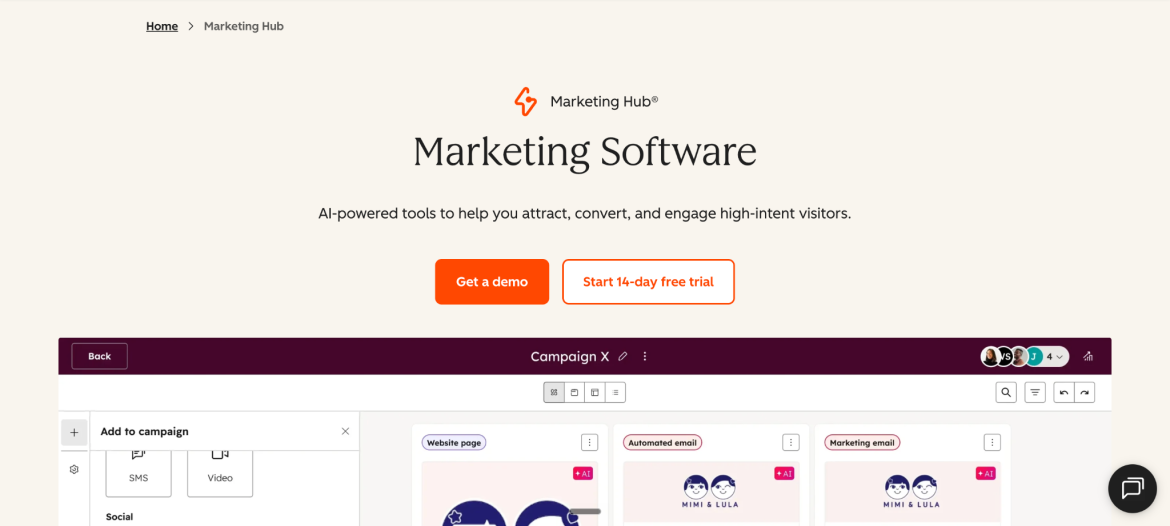
By then, migrating costs more than upgrading.
Small and mid-sized B2B teams that want marketing, sales, and service on one record set, and that can absorb the Professional jump when Starter runs out.
Free CRM, Starter at $20 per seat per month, Professional at $890 with three Core Seats, Enterprise from $3,600 with five.
Professional drops to $800 on annual billing, and Starter is currently discounted to $7 per seat for new customers. Onboarding is required and costs $3,000 for Professional and $7,000 for Enterprise. Extra seats start at $45 and $75.
Apollo is the first purchase for most teams building outbound from scratch. It undercuts enterprise data vendors by a wide margin and puts prospecting, sending, and calling behind one login.
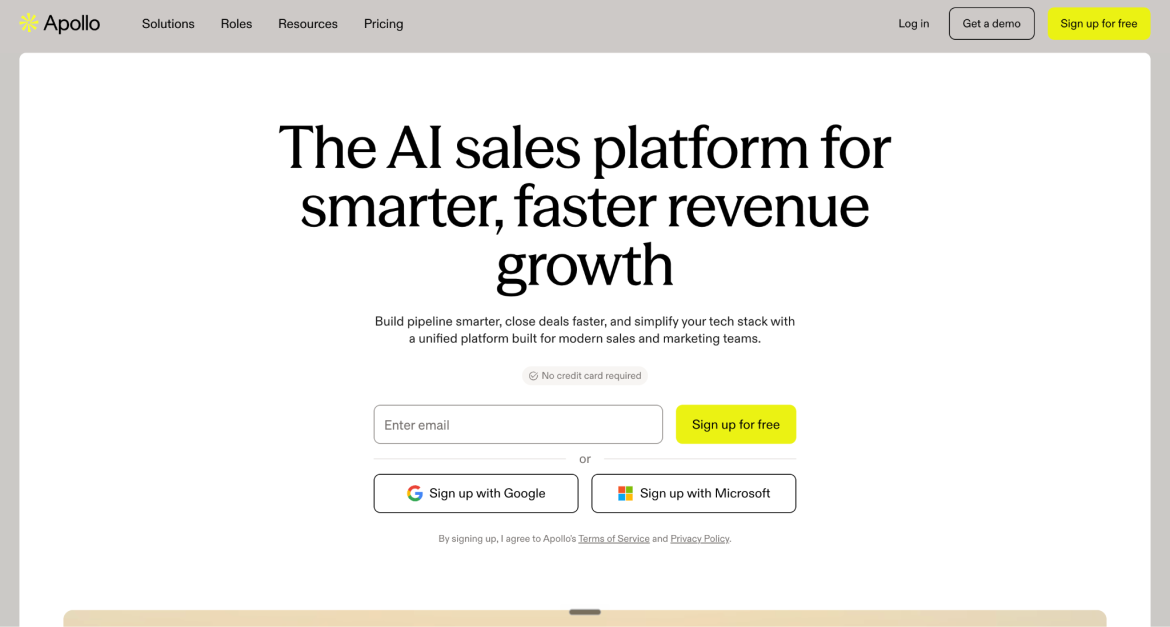
The trade-off it makes to hit that price is verification.
SMB and mid-market teams running email-led outbound in North America who will run their own verification step before each send.
$49, $79, and $119 per user per month on annual billing across Basic, Professional, and Organization, plus a usable free plan. Monthly billing adds roughly 20 percent.
Clay sells acces to other companies’ data. A cell queries one provider, then the next, then the next, until something returns, so coverage comes from multiple sources rather than a single vendor.
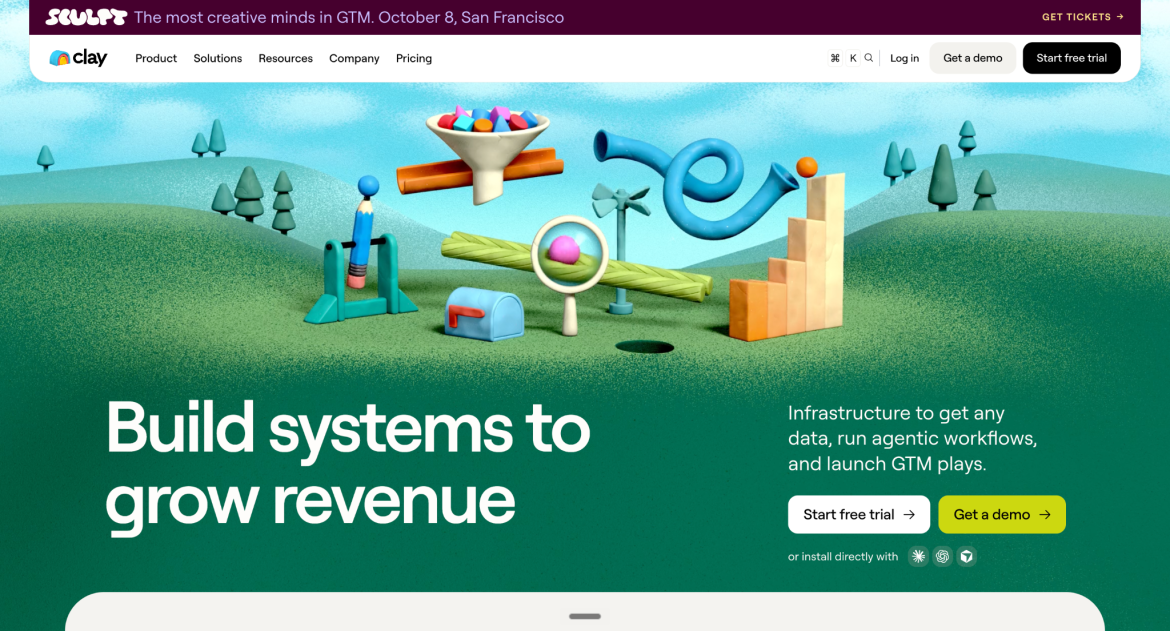
Growth or RevOps teams with a dedicated operator who can build and maintain tables, and enough list volume to justify consolidating several point tools.
Launch at $185 per month, Growth at $495, or $167 and $446 on annual billing. Billing separates Data Credits for marketplace lookups from Actions for platform work.
LiveRamp exists so that two organizations can match and compare their customer data without either side handing over records.
There is no prospecting layer, so outbound teams pair it with a separate GTM data platform and pay for both.
Enterprises running partner or co-marketing programs, and regulated brands that cannot move raw customer data but still need to match and measure against a partner's.
Custom. Fixed fees are invoiced quarterly in advance, variable fees are invoiced monthly in arrears, and CPM overages apply when you exceed contracted volumes.
Five things to settle before the contract, not after.
Audit Consent Mode: It is now the single control for Google Ads cookies and IDs collected through the Google tag on linked Analytics properties. A misconfigured setup degrades Ads data silently: performance drifts down, and no error appears. Check it against your consent banner and against the IAB Europe TCF in the EEA or UK.
Alistair Hinchliffe, Product Manager at GetTerms, which generates privacy policies, cookie policies, and terms and conditions for websites and SaaS products.
Hinchliffe says, "The consent banner and the privacy policy usually get set up at different times by different people, and they drift apart. A team adds an enrichment vendor or a visitor identification script, the tag goes live, and the policy still lists the tools from two years ago. When you audit Consent Mode, pull the list of cookies your site sets today and check that each one appears in your cookie policy with its purpose. Any new platform that loads a script on your site needs a policy update before it goes live."
Move collection server-side: Safari, Firefox, and Brave block third-party cookies by default, which leaves roughly a fifth of global traffic outside client-side measurement.
Kellon Ambrose, Managing Director at Electric Wheelchairs USA, an online retailer selling power wheelchairs and mobility scooters direct to customers.
Ambrose says, "We sell to older buyers and to families purchasing on behalf of a parent, and a good share of that traffic arrives on browsers that strip tracking by default. For a long time our reporting made those sales look like they came from nowhere, so we were underfunding the channels actually producing them. Moving collection server-side did not win us new customers. It showed us which spend had been working the whole time."
Ask about the retired APIs: Google retired roughly ten Privacy Sandbox advertising APIs in October 2025, including Topics and Protected Audience. Find out which vendor features relied on them and what replaced them.
Model twelve months of the meter: Project your actual contact, seat, or credit growth against the tier you plan to buy.
Set a kill condition: The success threshold, the review date, and the number that ends the pilot, all defined before it starts.
Every platform here assumes someone owns it. 6sense needs a model owner, Clay needs a table builder, and HubSpot needs someone managing contact tiers.
Teams that buy without that person get the invoice, and none of the output.
Travis Lambert, General Manager at Central Oregon Heating, Cooling, Plumbing & Electrical, which runs HVAC, plumbing, and electrical service crews across central Oregon.
Lambert says, "We bought software twice before we admitted nobody on staff had time to run it. Both times the person who championed it was already doing a full job, and the tool became something they touched when everything else was done, which is never. What finally worked was bringing in someone outside to set it up and train two people on it properly. The cost of that was smaller than the two years we spent paying for a system nobody opened."
If the role does not exist internally and hiring for it will take two quarters, an agency is the faster path. Clutch publishes verified client reviews for B2B marketing and demand generation firms, filterable by budget, location, and specialty.
Shortlist there the way you shortlist software: two or three candidates, the same brief, a defined pilot.