
How to Delegate: A Step-by-Step Guide for Agency Owners
Learn how to delegate effectively as an agency owner — what to delegate first, how to hand off work without losing quality, and the hiring sequence that...
Updated May 28, 2026

The business world is in constant flux, and staying ahead of the curve is crucial for small and medium-sized businesses (SMBs). Understanding current trends, anticipating future challenges, and making informed decisions are the keys to sustainable growth.
Yet, with limited resources and increasing competition, SMBs often struggle to access the right data to guide their strategies. To help SMBs navigate these challenges, Clutch partnered with Drive Research, a global market research firm, to survey 500 SMB decision-makers across industries to uncover the factors shaping 2025:
By leveraging real-world data and insights, the 2025 Small Business Growth Playbook helps business leaders make smarter, more confident decisions. Whether you’re refining your budget, exploring new partnerships, or optimizing these insights will provide the clarity and direction needed to navigate the challenges ahead.

These insights reflect the stated priorities of SMBs as they strategize for 2025:
By embracing AI, outsourcing, cybersecurity, and operational efficiency, businesses are positioning themselves for sustainable growth in a competitive market.
Growth and profits are always top-of-mind for SMBs, but additional priorities are catching up. The key focus areas for SMBs include:
The near-equal emphasis on enhancing customer experience and operational efficiency signals a significant shift toward a more holistic picture of success.
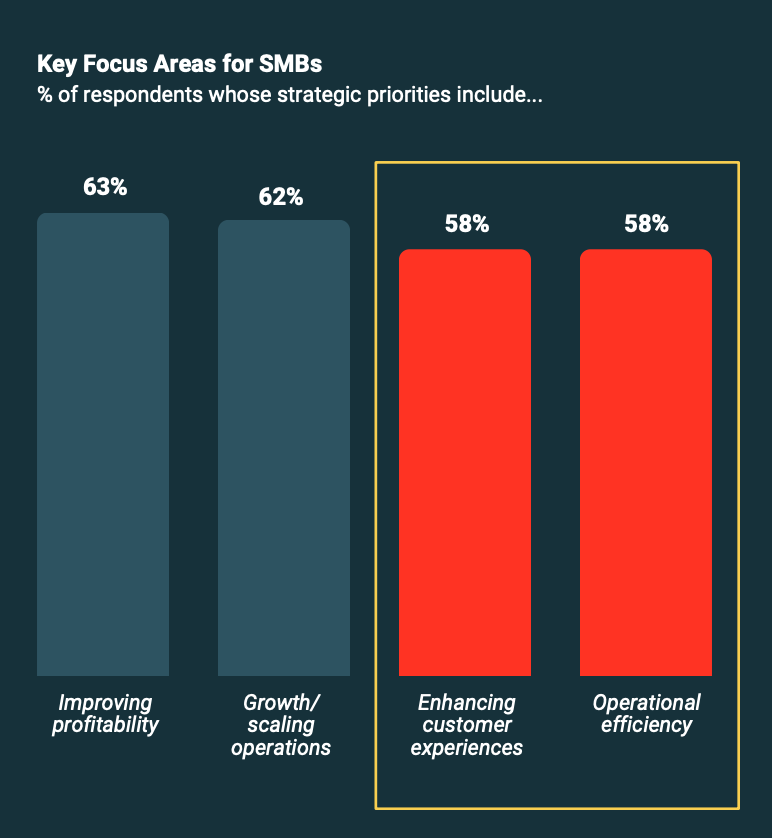
SMBs now understand that customer experience and operational efficiency aren't just support functions, but critical for long-term success:
When asked how leaders of their organization plan to achieve their goals for 2025, the top response from SMB decision-makers was leveraging new technology such as AI.
Actionable Takeaways:
Learn More: "10 Ways to Take Advantage of Technology in Your Business".
SMB decision-makers are entering 2025 with a high degree of confidence in their businesses. This sentiment signals a strong business environment where companies anticipate new opportunities, expansion, and advancements in their industries. In fact, over 4 in 5 SMB decision-makers express optimism about both growth and innovation in the coming year.
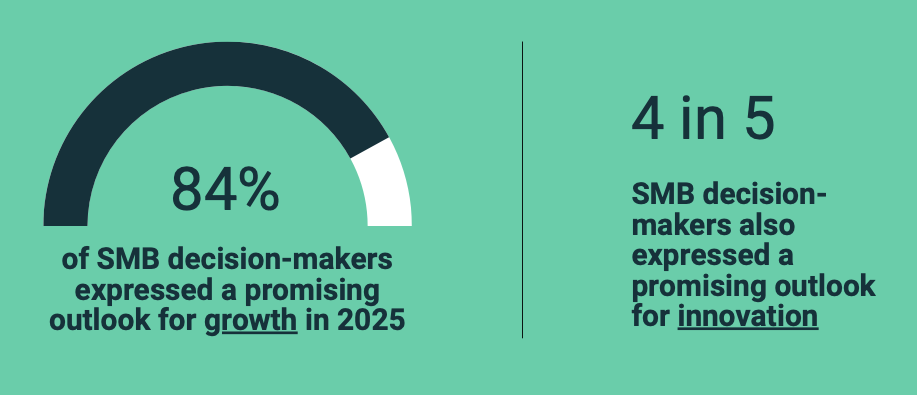
While SMBs are optimistic about growth and innovation, they also recognize key challenges ahead. Nearly half (48%) of decision-makers cite economic uncertainty as their top concern for 2025.
Simultaneously, AI adoption is seen as a major hurdle by 44% of SMBs surveyed.
This dual challenge requires careful navigation. While economic worries may prompt cautious spending, strategic AI investments are crucial for long-term competitiveness. Additionally, targeted support and resources will be vital for overcoming both economic headwinds and the complexities of AI implementation. Practical applications and talent development will be key to successful AI integration.
Actionable Takeaways:
Additional Reading: "How to Best Leverage B2B Services Through Economic Downturn".
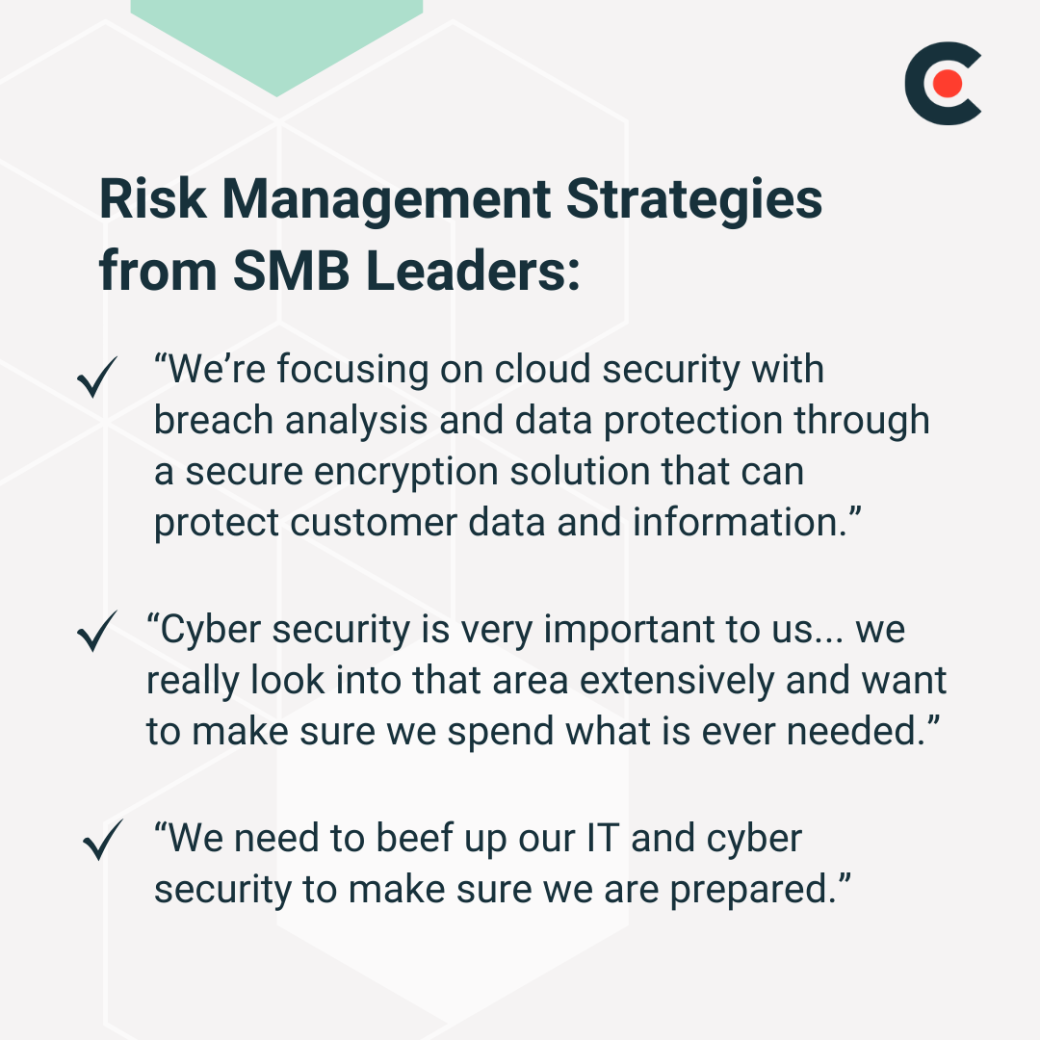
Cybersecurity and data security stood out as the most common risk management strategies mentioned by SMB decision-makers for 2025, making it now mission-critical. With 61% of decision-makers seeing it as crucial for growth this year, it's a core business need.
This focus on cybersecurity reflects growing concerns about data breaches, cyberattacks, and regulatory compliance, as SMBs recognize that even a single security incident can have significant financial and reputational consequences. With cyber threats evolving rapidly, businesses can no longer afford to take a reactive approach; instead, proactive security measures are essential.
By prioritizing cybersecurity, SMBs can mitigate risks, protect sensitive data, and build trust with customers and partners.
Risk Management Strategies from SMB Leaders:
Actionable Takeaways:
Outsourcing is not just a cost-cutting measure—it’s a strategic tool that enables businesses to access specialized expertise, improve operational agility, and focus on core growth initiatives. 84% of SMBs are currently outsourcing at least some of their operations to external providers, consultants, or agencies.
Looking ahead to 2025, our research reveals that 70% of SMB decision-makers anticipate increased reliance on external partners.
Marketing and advertising are poised to be a key area of focus, with nearly half (45%) of SMB decision-makers anticipating outsourcing these functions. This likely reflects SMBs' struggle to keep up with evolving marketing technologies and access specialized talent without the overhead of in-house teams. This targeted outsourcing approach allows them to optimize resources, enhance marketing effectiveness, and grow your business.
Learn More: "How to Successfully Outsource Your Marketing Efforts in 2025".
AI is another key focus area, with 47% of SMBs prioritizing outsourcing those efforts. Technology (43%) services are also high priorities, reflecting a broader trend of leveraging external partners.
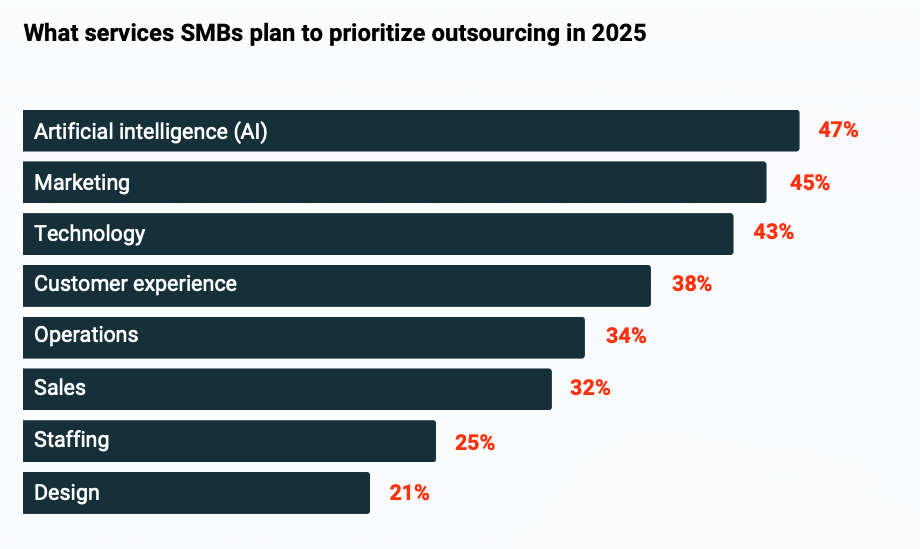
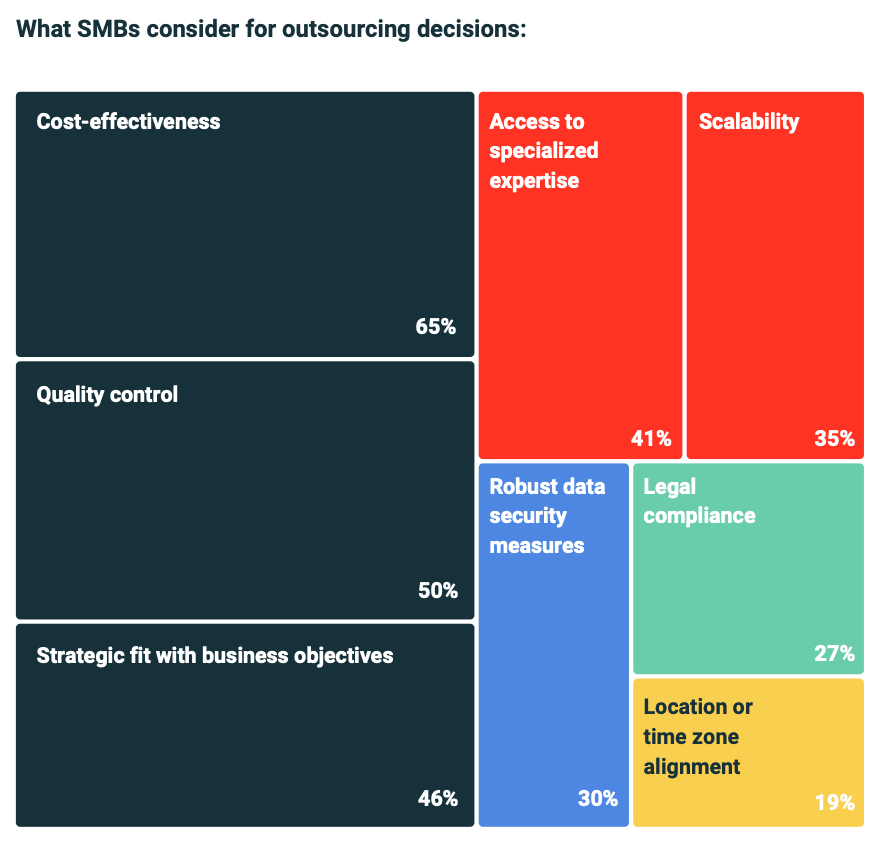
While 65% of SMBs prioritize cost effectiveness in outsourcing, other factors still carry a lot of weight. Other key considerations also play a significant role:
With at least 40% of SMBs weighing these additional factors, outsourcing partners must take a balanced approach—demonstrating affordability while showcasing strategic value.
When SMBs select service providers, consultants, or business partners, clear and consistent communication emerges as the most important factor, with 81% of decision-makers emphasizing its significance. This underscores the need for transparency, responsiveness, and proactive engagement from external partners.
The most important factors for SMBs when choosing service providers and consultants are:
Actionable Takeaways:
As SMBs navigate 2025, decision-makers are strategically aligning their growth plans around three key pillars:
The rapid evolution of technology is reshaping how businesses operate, with cybersecurity, data analytics, and AI emerging as essential tools for efficiency, security, and competitive advantage. Simultaneously, SMBs are adopting flexible workforce strategies, balancing internal hiring with outsourcing to meet their evolving needs.
This forward-looking approach is reinforced by a strong sense of economic optimism, with the majority of SMB leaders expressing confidence in the broader market. This optimism is fueling investment in technology and talent, positioning businesses to scale operations, enhance productivity, and mitigate risks.
Technology is at the core of SMB success in 2025, with cybersecurity (61%), data analytics (52%), and AI (51%) leading as the most critical growth drivers. The heightened focus on cybersecurity reflects increasing concerns over data protection, regulatory compliance, and cyber threats. Meanwhile, data analytics and AI adoption signal a shift toward data-driven decision-making and process automation.
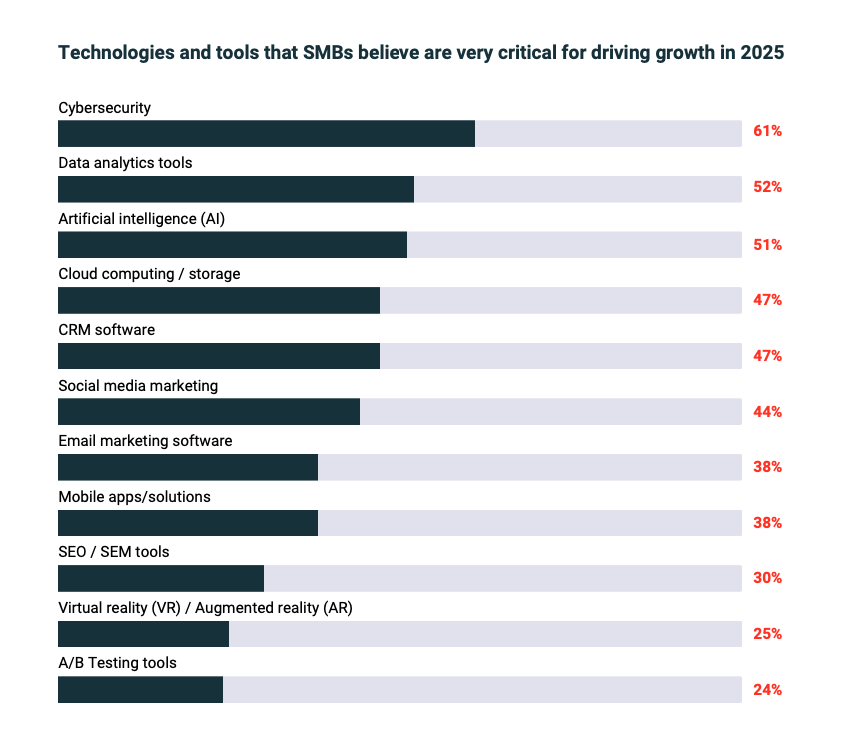
Generational and company size trends further highlight AI’s role in business growth — Gen X and younger leaders, along with SMBs with more than 50 employees, are more likely to view AI as essential. This suggests that larger and more tech-savvy organizations are embracing AI for efficiency and competitive advantage.
Actionable Takeaways:
SMBs are facing increasingly complex operational demands, including specialized tasks in areas like IT, marketing, finance, and customer service. Outsourcing allows them to access expertise and resources that may be too costly or difficult to maintain in-house.
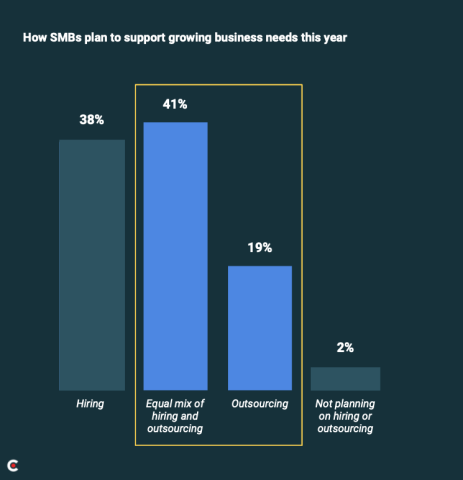
In 2025, 3 in 5 SMBs will rely on outsourcing to support growing business demands. Leveraging outsourcing will put them in a better position for sustainable growth and success. This trend is likely to continue as businesses seek to optimize their operations, enhance their competitiveness, and navigate the challenges of a dynamic global marketplace.
Actionable Takeaways:
Additional Reading: "Types of IT Outsourcing: What Does Your Business Need?".
Despite economic uncertainty, 72% of SMBs view the economic climate positively, with only 10% feeling that the economic climate was negative going into 2025. This widespread confidence is a key driver behind increased investments in technology, workforce expansion, and strategic growth initiatives.The majority of SMBs are approaching the year with a forward-thinking mindset, ready to seize new opportunities and expand their market presence.
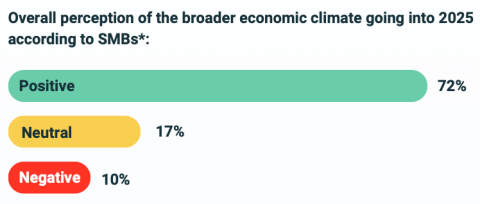
This optimism is translating into concrete business actions. Many SMBs are prioritizing digital transformation, adopting AI, data analytics, and cybersecurity tools to enhance efficiency and competitiveness.
Actionable Takeaways:
The 2025 Small Business Growth Playbook report gives tons of industry insights from SMB-decision makers, but if you walk away with anything, we hope it’s these next steps:
Clutch is committed to making the B2B buying process more transparent, connecting businesses with the ideal partners to fuel their impact.
This report embodies that commitment, offering actionable intelligence to support your strategic planning and drive success in the evolving marketplace.