Lead Quality vs. Lead Quantity: Why B2B Teams Are Rethinking Their Funnel in 2026
Bigger buying committees and tighter budgets are forcing B2B teams to rethink lead quality vs. quantity. Here's how top teams rebalance the tradeoff in 2026.
Updated August 4, 2026

Podcasts have moved from a niche way to pass the time to a daily habit, and that shift is changing how brands earn trust and drive sales. Clutch surveyed 412 consumers who listen to podcasts to find out what keeps them tuning in, how they’re splitting time between video and audio, and why authenticity is what actually moves them to buy.
Podcasts have evolved from a niche format into a mainstream media channel, reaching more consumers than ever before. Industry research shows podcast listening continues to climb, with monthly podcast reach hitting a record high in 2026, evidence that the medium’s growth is far from slowing.
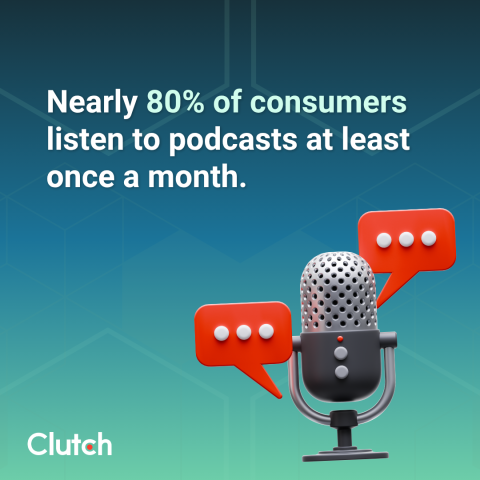
To better understand how consumers engage with podcasts today, Clutch surveyed 412 consumers in June 2026 about their listening habits and perceptions of the medium. Our findings reinforce podcasting’s widespread appeal: nearly 8 in 10 consumers (79%) listen to podcasts at least once a month, while almost half (48%) say they listen more today than they did a year ago.
Looking for a Digital Marketing agency?
Compare our list of top Digital Marketing companies near you
For businesses, these trends point to a growing opportunity. For example, L'Oréal's "This Is Not a Beauty Podcast” reached over 42 million people. The six-episode series, hosted by Isabella Rossellini, topped charts and drove strong brand perception lifts.
As podcasts become a more consistent part of consumers’ routines, they offer brands a unique way to build trust, increase awareness, and influence purchasing decisions through host-read advertising, sponsorships, and branded content.
This report will explore how consumers discover, consume, and respond to podcasts – and what those behaviors mean for brands looking to invest in the channel.
Content is the biggest driver of podcast listening. While podcasts fit seamlessly into consumers’ daily lives, listeners are ultimately motivated by topics that capture their interest.
In fact, 62% of consumers say they’ll listen to a podcast if the topic is interesting, making relevance the strongest factor influencing engagement.
Podcasts have also become a natural companion throughout the day. Nearly half of consumers (45%) listen while commuting or driving, and 40% tune in while relaxing.
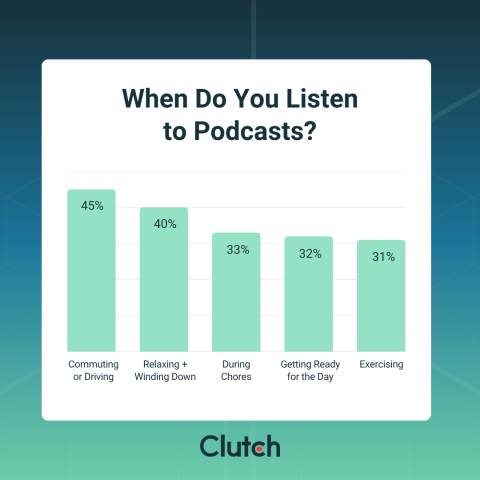
These findings suggest that podcast listening spans both productive and leisure moments, giving creators and brands multiple opportunities to reach audiences when they’re engaged and receptive.
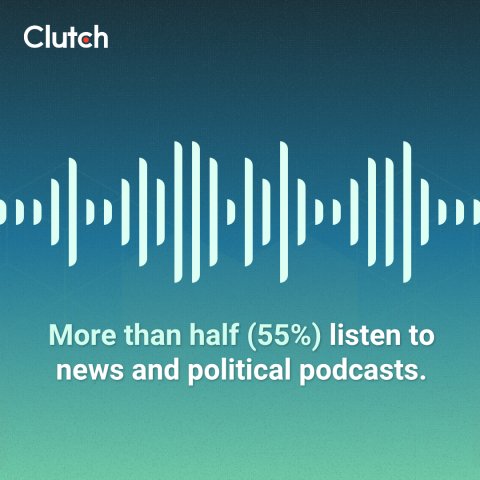
Consumers are also turning to podcasts for more than entertainment. More than half (55%) listen to news and political podcasts, highlighting the medium’s growing role as a trusted source of information, commentary, and in-depth discussion.
As listeners increasingly seek context and expert perspectives, podcasts continue to fill a unique space that traditional media often cannot.
"I only listen to a podcast episode if it seems to solve any of my existing problems — I don't care about the host initially. Currently, I mostly listen to 'The Edward Show' by Edward Sturm because he's an SEO expert, and I learn and practice SEO after listening to him,” said Aditya Gaur, Founder of FinanceXAditya.
The most successful podcast strategies aren’t built around broad appeal; they’re built around relevance.
Whether sponsoring an existing show or producing original content, brands that align with topics their audiences genuinely care about are more likely to capture attention, build credibility, and foster long-term listener engagement at convenient moments.
Podcast listening is no longer limited to audio. Today’s audiences are consuming podcasts across both video and audio platforms, choosing the format that best fits their preferences and the moment.
While YouTube is the most-used platform across consumers (30%), Spotify follows closely behind (27%), signaling that listeners are more loyal to the content they enjoy than to any single platform.
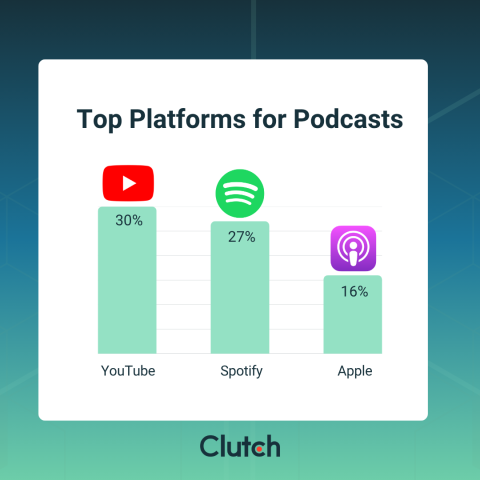
This flexibility is reflected in how people consume podcasts overall. Nearly 4 in 10 consumers (39%) say they listen to podcasts across both video and audio channels, demonstrating that audiences are moving seamlessly between formats rather than treating them as separate experiences.
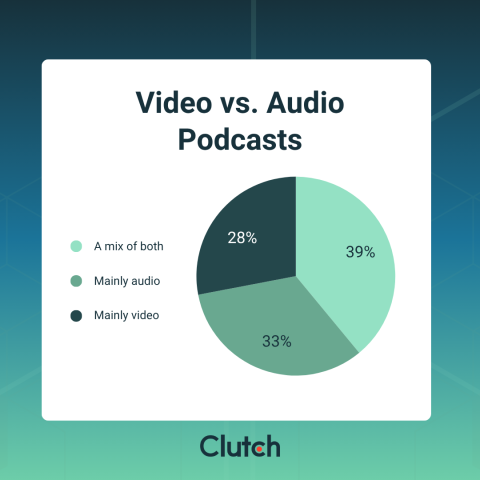
Whether watching a video podcast at home or listening to the audio version while commuting, consumers are adapting their habits to fit their daily routines.
The growing popularity of video podcasts has also changed how audiences engage with creators. Visual elements, facial expressions, and on-screen interactions create new opportunities for storytelling and audience connection, while audio-first platforms remain essential for listeners who want the convenience of hands-free, on-the-go consumption.
Brands should no longer think of podcasts as an audio-only marketing channel.

Adam Yaeger, Founder & CEO of Llama Lead Gen, hosts Lead Gen in the Wild, a B2B marketing podcast that is disturbed across YouTube, Spotify, and Apple.
"We record everything with video in mind now, not audio first with video as an afterthought. That changes how we think about pacing, visual cues, and how a guest sits and reacts on camera, since a clip has to work on its own outside the full episode…., said Yaegar. “The format shapes the content now — it's not just a repurposing exercise anymore.”
Developing podcast content and advertising that works across both video and audio platforms allows businesses to reach audiences whenever they prefer to consume content, expand their visibility across multiple channels, and create more opportunities for meaningful engagement.
Consumers are increasingly receptive to podcasts created by brands, and they’re placing more value on the content itself than on celebrity hosts.
Nearly two-thirds of consumers (64%) are aware that non-media brands produce podcasts, suggesting that branded podcasts have become an established part of the podcast landscape rather than a novelty.
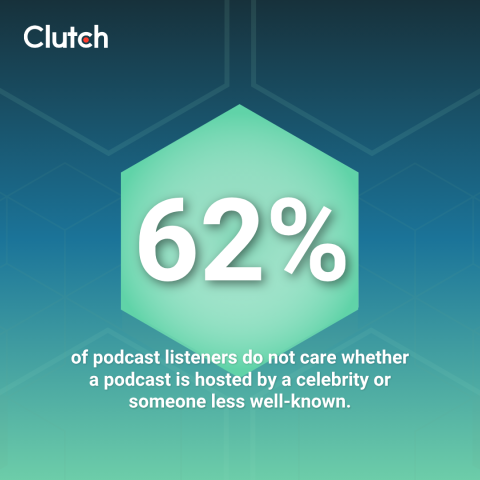
At the same time, fame isn’t a primary factor in what people choose to listen to. Nearly two-thirds of consumers (62%) say they don’t care whether a podcast is hosted by a celebrity or someone less well-known.
Instead, listeners appear to prioritize compelling conversations, unique perspectives, and subject-matter expertise over name recognition alone.
Brands don’t need a celebrity to launch a successful podcast. Consumers already recognize businesses as legitimate podcast creators and are open to listening when the content offers meaningful insights or expertise.
Emilio Garcia, Managing Partner of Boundify, says their content strategy relies on relevance rather than personality or entertainment.
“Every episode is designed to help someone make a better decision or gain a valuable insight,” said Garcia. “We've found that consistently solving real business problems builds a more valuable audience than relying on recognizable guests alone. Great guests are a bonus, but useful conversations are the goal."
Organizations with a clear point of view and valuable knowledge to share have an opportunity to build trust and engage audiences without the added cost or complexity of celebrity partnerships.
Trust is one of podcasting’s greatest strengths, and one of the biggest reasons the medium influences consumer behavior.
Nearly 6 in 10 consumers (59%) say they feel a personal connection to the podcast hosts they regularly listen to, underscoring the uniquely personal relationship that podcasts foster through long-form conversations and consistent engagement.
That connection has a measurable impact on purchasing decisions. More than 4 in 10 consumers (42%) have purchased a product or service based on a podcast host’s recommendation, demonstrating that trusted hosts can influence audiences in ways that traditional advertising often cannot.
However, that influence depends on authenticity. A majority of consumers (61%) say they would trust a podcast host less if they promoted a product or brand that felt off-brand or inauthentic.
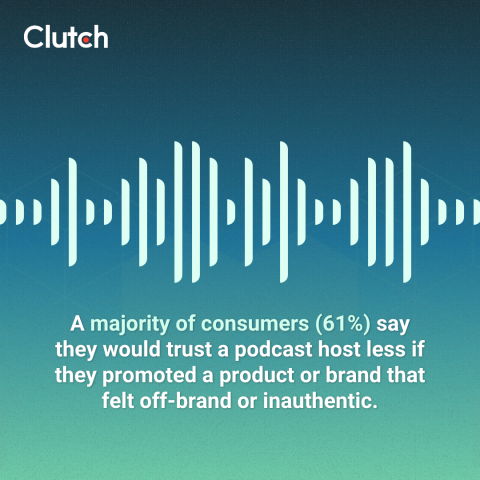
While listeners are open to sponsored recommendations, they expect hosts to be selective and endorse products that genuinely align with their interests, values, and expertise.
"When a host reads something as a straightforward, scripted ad, very little changes for me — I tend to tune it out the same way I would any commercial. But when I hear a host talk about a sponsor organically, like it's genuinely woven into the conversation and sounds like something they actually use or believe in, I'm a lot more interested in what they have to say,” said Justin DeBron, an avid listener of The Armchair Expert.
Podcast advertising is most effective when it feels like a natural extension of the host’s voice, not when it sounds like a scripted sales pitch.
The founders of Basecamp use their podcast “The Rework Podcast” to discuss their unconventional business philosophies and remote work insights, attracting a dedicated following of entrepreneurs and managers who admire their approach.
Brands that partner with creators whose audiences and values align with their own are more likely to build credibility, inspire action, and preserve the trust that makes podcast marketing so influential in the first place.
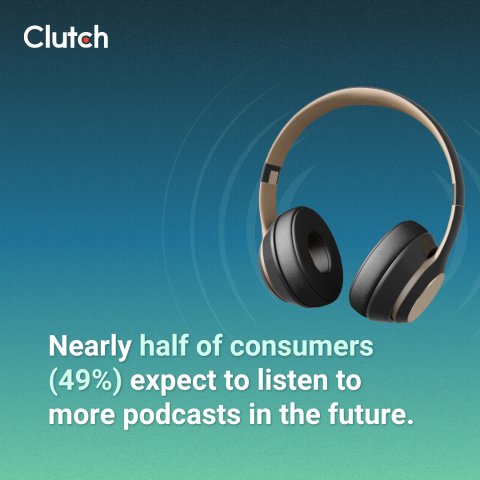
Podcast listening is poised to continue growing. Nearly half of consumers (49%) expect to listen to more podcasts in the future, reinforcing the medium’s continued momentum and its increasing role in how people consume information, entertainment, and branded content.
Despite growing interest in artificial intelligence across media, consumers still value the human element that defines podcasting.
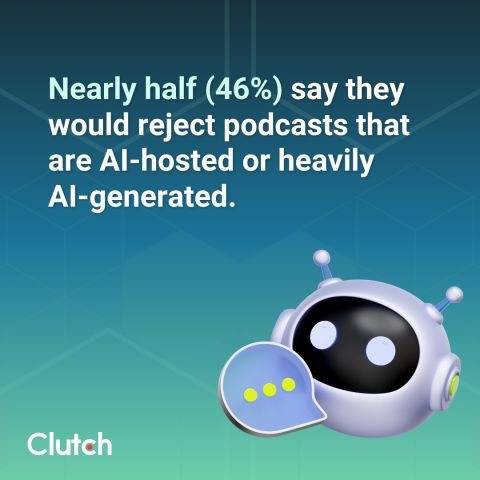
Nearly half (46%) say they would reject podcasts that are AI-hosted or heavily AI-generated, suggesting that authenticity remains a key expectation for listeners.
While AI may help streamline production or enhance workflows, audiences continue to look for the personality, expertise, and lived experiences that human hosts bring to conversations.
That distinction is already playing out in practice — 34% of new podcasts now use AI tools at some point in production, whether for transcription, editing, or show notes. But that adoption is happening backstage, not in the host chair, which aligns with what our data show: consumers are fine with AI supporting the process, as long as a real person is still the one talking to them.
"As short-form AI-generated content becomes more repetitive, people will look for deeper, more authentic conversations. Long-form content gives brands an opportunity to show how they think, not just what they sell. That is much harder to fake,” said Lutfi Aydeniz, CEO of Fascinatid.
These findings reinforce what has made podcasts successful from the beginning: genuine voices and authentic relationships. As the medium evolves, technology may change how podcasts are created, but listeners still want content that feels personal, credible, and distinctly human.
As podcast audiences continue to grow, brands have an expanding opportunity to build meaningful relationships with consumers. However, success will depend on preserving the authenticity that listeners value most. Rather than replacing human voices with AI, brands should use technology to support content creation while ensuring the real expertise, personality, and trust remain at the center of the listening experience.
Podcasts work because they’re built on real human connection, and that connection translates directly into business results. Listeners tune in for content that interests them, not for famous names. That personal connection to the hosts drives real purchases, as long as that recommendation feels genuine. And even as AI reshapes other corners of media, listeners are clear that they still want a person on the other end of the microphone.
For brands, there are a few clear priorities:
Podcasts aren’t just another advertising channel. They’re a relationship-building medium, and the brands that treat them that way will be the ones that earn lasting listener trust.
In June 2026, Clutch surveyed 412 consumers about their podcast usage and overall thoughts about the medium.
In terms of demographics, 47% of respondents identify themselves as male, with 53% reporting as female.
10% of respondents were ages 18 to 29; 33% of respondents were ages 30 to 44; 58% of respondents were 45 and older.