Lead Quality vs. Lead Quantity: Why B2B Teams Are Rethinking Their Funnel in 2026
Bigger buying committees and tighter budgets are forcing B2B teams to rethink lead quality vs. quantity. Here's how top teams rebalance the tradeoff in 2026.
Updated July 1, 2026

This article explores how digital agencies can reduce the environmental impact of their products throughout the entire lifecycle using sustainable development practices, greener infrastructure, and measurable reporting.
Sustainability in a digital agency rarely looks like what people picture when they hear the word.
There's no smokestack. No tailpipe. Nothing you can point a camera at and say, there, that's the problem. It lives somewhere else, in the weight of a homepage and in how long a dead microsite keeps running because nobody got around to switching it off.
Looking for a Digital Marketing agency?
Compare our list of top Digital Marketing companies near you
This article is about where a digital product actually burns energy across its lifecycle from ideation through retirement and what an agency can do about it at each stage with leaner code, greener hosting, smarter design choices, and the certifications and metrics that prove it's working.
Every digital product moves through the same rough arc, whether anyone names it out loud or not:
Sustainability runs through all five stages, not just the visible ones.
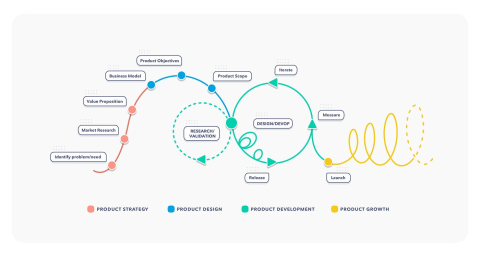
That's where most teams get it wrong: they treat it as a deployment problem, a hosting choice, something to fix once the build is live. By then, half the damage is already baked into the architecture.
The challenges here are specific to software in ways that don't map cleanly onto a factory floor. Code accumulates. Content libraries balloon. Third-party scripts get added for one campaign and never removed.
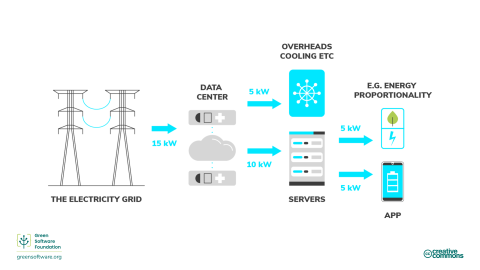
It's tempting to think of digital work as immaterial: weightless, clean, just bits moving around. It isn't. Every API call, every uncompressed image, every database query, every CI build job turns into energy somewhere, on a server, in a building, drawing from a grid with its own carbon intensity.
That footprint splits into three places worth checking separately: how much energy the work itself burns, what's physically sitting behind it, and what happens once a product reaches the end of its life.
Inefficient code and heavyweight assets increase CPU workload and data transfer, which directly translate into power draw across devices, networks, and data centers.
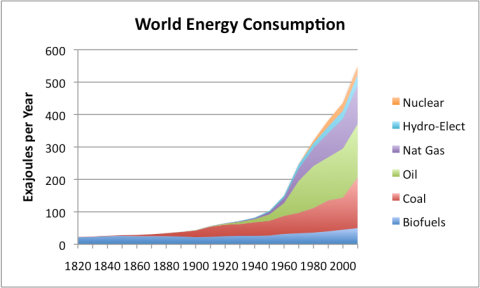
A bloated JavaScript bundle isn't just a UX problem; it's a server burning more than it needs to, on every page load, multiplied across every visitor that month. Lean code and sensible hosting are among the few levers that appear in both the carbon ledger and the performance budget simultaneously.
Footprints don't stop at the cloud. Local dev machines, test devices, on-prem gear sitting in a closet somewhere, it all counts.
The same question shows up anywhere physical inventory is involved: how much sits idle versus how much actually gets used, whether that's server racks or businesses moving wholesale apparel at scale.
Cloud infrastructure isn't automatically clean either. Regions differ wildly in carbon intensity depending on the local grid, and always-on resources burn energy around the clock, whether anyone shows up or not.
Several agencies have already published their work on this:
End-of-life here means data deletion and archival policy, infrastructure decommissioning, e-waste handling for hardware still sitting in the office, and knowledge transfer to prevent a future team from rebuilding something that already exists but is forgotten.
Certified recycling programs like R2 and e-Stewards exist for exactly this.
Knowing where the footprint lives only matters if it changes what gets built. Here's where that actually shows up, starting with the cheapest fix in the entire list.
This is the cheapest place to start, and most teams already have most of the tools.
None of these changes are especially glamorous, but together they reduce energy use every time the product runs. Small engineering decisions made early tend to compound over the lifetime of a product.
Choose regions with strong renewable mixes or high carbon-free energy scores rather than defaulting to whatever's closest to the team.
Daniel Apke, Founder of Land Portal, works in real estate and land investing education, where location decisions carry consequences most people don't fully weigh going in.
He says, "In real estate, you don't get to undo a location decision easily. The same logic applies here, just at a different scale. Choosing where infrastructure physically lives carries consequences for years, and most teams treat it as an afterthought instead of a decision with real weight.
The agencies getting this right are starting to ask the same question land investors have always asked: what does this location actually cost us long-term, not just today."
Google publishes region-level carbon data specifically to support this kind of decision through its Region Picker.
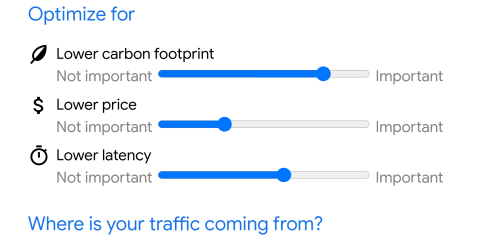
Provider tools make the emissions side measurable rather than theoretical: the Azure Emissions Impact Dashboard, the AWS Customer Carbon Footprint Tool, and Google's own sustainability dashboards all surface numbers that previously required a consultant to estimate.
Design decisions carry more weight here than most teams give them credit for.
Lightweight interfaces and energy-conscious visual systems load faster for the person on the other end and draw less power across every layer between them and the server.
Here are a few examples of switch choices:
Even something as small as a dark theme can reduce power draw on OLED displays, Google has noted as much for Android devices.
Tools alone don't change behavior. A team can roll out every available green checklist and still revert to old habits within a quarter if nobody actually cares about the outcome.
What sticks is education that reaches everyone, so sustainable thinking becomes a default assumption rather than a separate checklist item bolted onto a project plan.
Short show-and-tells help. Pairing a designer with an engineer on a shared performance budget is more effective. Celebrating the small wins, even the boring ones, keeps the habit alive past the initial enthusiasm.
Bring clients into this conversation early, not after the build is already live. Offer carbon-aware options during scoping, just as the budget and timeline are discussed.
Explain plainly how a performance budget lowers hosting costs, helps SEO, and improves the experience a user has, three outcomes a client already cares about, sustainability or not.
Eric Yohay, CEO and Founder of Outbound Consulting, advises marketing and business teams on how to structure client conversations before a project ever starts.
He says, "Most agencies wait until something's already a problem to bring it up with a client. Sustainability conversations work the same way. If you're not putting it on the table during scoping, you've already lost the moment where it actually changes the build.
Clients don't push back on this as often as people assume; they just need someone to ask the question first."
The W3C's emerging Web Sustainability Guidelines provide a shared vocabulary for setting these expectations without having to start from scratch every time.
Numbers matter more than language here. Stakeholders have heard enough vague claims about "going green" to be skeptical by default, and unverified statements about environmental impact lose credibility the moment someone asks a follow-up question.
Publish short, regular updates, what was measured, what improved, what's next. Skip the long-form sustainability report nobody reads.
Tie results back to outcomes the client already values: faster load times, lower infrastructure spend, better accessibility scores.
Client testimonials and case studies do more work here than any internal report ever will, and a sales team can share them honestly without slipping into overpromising.
This is where the work gets genuinely interesting, not just responsible.
AI can spot inefficiencies in infrastructure and code that would take a human engineer weeks to track down manually, a heavy function buried three layers deep, an oversized asset nobody noticed because it loaded fine on a fast connection, a slow query quietly draining compute on every single page load.
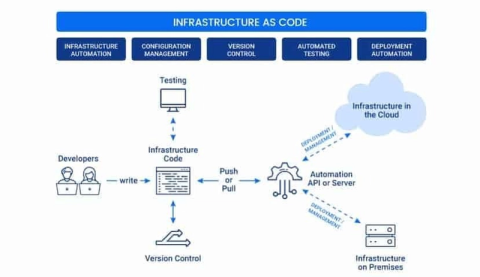
Paired with blockchain-based audit trails for transparent accountability, this creates a feedback loop that keeps an agency honest about its actual impact instead of its assumed one.
Even the small moves help here. Serverless functions that scale to zero. Carbon-aware build pipelines. Neither requires tearing down an existing architecture — just trimming the idle waste sitting inside the one already running.
Budgets are tight. Roadmaps are already overcommitted. Change feels risky when the team is barely keeping up with the backlog as it is.
The honest answer is to start smaller than feels satisfying, one or two achievable initiatives, partnered with people who already know the terrain, and let the early wins build enough momentum to justify the next round.
Write the gains into policy once they're proven, or they evaporate the next time someone's in a hurry. Default image formats. Asset budgets. Region selection criteria. Lifecycle rules for storage. Sunset checklists that actually include data deletion, not just a server shutdown.
No moonshot required. One product, one region, one metric, measure it, learn from it, share what you found, then repeat with the next one.
That's the entire playbook, run enough times in a row that it stops feeling like a separate initiative and starts feeling like how the work gets done.