
Why Your B2B Outbound Emails Never Reach the Inbox (And What It Costs You)
Your B2B cold emails might be landing in spam, not inboxes. Learn how to check placement and the 4 fixes that actually move the needle—not copy edits.
Updated July 7, 2026

Consumer attention online is shifting fast. To understand what actually earns a reader's full attention in 2026, Clutch partnered with Compose.ly to survey 444 consumers about how they read online — what they finish, what they skip, and where AI tools fit into their journey.
The way people consume content online is changing faster than most marketers can keep up with. AI overviews now answer questions before users ever click a link. Short-form video has trained audiences to evaluate content in seconds. And the long-running debate about shrinking attention spans has shifted from anxious speculation to operating reality, with every headline competing against a one-tap exit.
In partnership with Compose.ly, Clutch surveyed 444 consumers in May 2026 about how they actually engage with online content.
Looking for a Content Marketing agency?
Compare our list of top Content Marketing companies near you
The data reveals a central tension. Most consumers (80%) read 1 to 15 articles in full each week, indicating that reading is far from dead. But 52% of consumers skim headlines before deciding whether to read at all, and only 32% say they read most online articles fully. Consumers are reading, but they’re just brutally selective about what earns their full attention.
For content marketers, that selectivity reshapes the math of every piece they publish. Page views matter less than completed reads, and reach matters less than whether the right person stays to the end.
This report will explore how, where, and why consumers engage with online content in 2026, and what it means for content marketers navigating an AI-mediated discovery landscape where the click is no longer guaranteed and attention has to be earned line by line.
Before content marketers can think about what to write, they have to understand the conditions under which readers are reading. Those conditions shape everything downstream — paragraph length, headline strategy, publishing cadence, even which channels are worth the investment. The data shows a consistent picture: consumer attention happens on small screens, in off-hours, in a personal-not-professional headspace.
For B2B marketers, that picture matters more than it might first appear, because the buyer researching your software or service in 2026 is the same consumer skimming a news article on their phone — and they bring the same habits, expectations, and exit triggers to both.
The smartphone is the default screen, with 73% of consumers most often using it to read online articles or consume content.
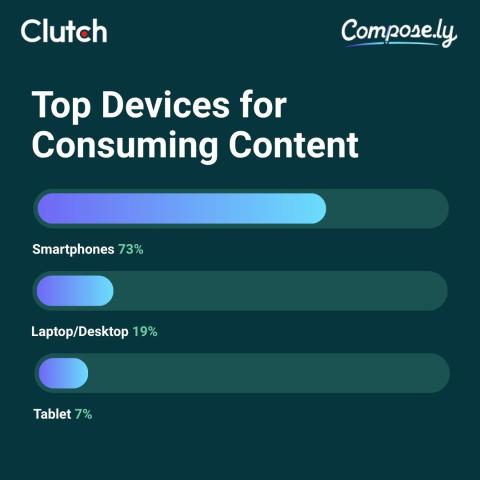
Laptops and desktops come in a distant second at 19%, with tablets at 7% and smart TVs barely registering. In practical terms, that means most content is being read in short windows, with one thumb scrolling.
For B2B marketers, the implication is uncomfortable but worth confronting: even the whitepapers, case studies, and long-form thought leadership designed for a desktop reader are increasingly opened on a phone first. If it doesn't render well or scan quickly on mobile, it doesn't get read — regardless of how technical the buyer or how high the deal value.
Evening is the new prime time for content, with over half (52%) of consumers saying they consume online articles or videos in the evening (5 pm-10 pm) – the largest single time block.
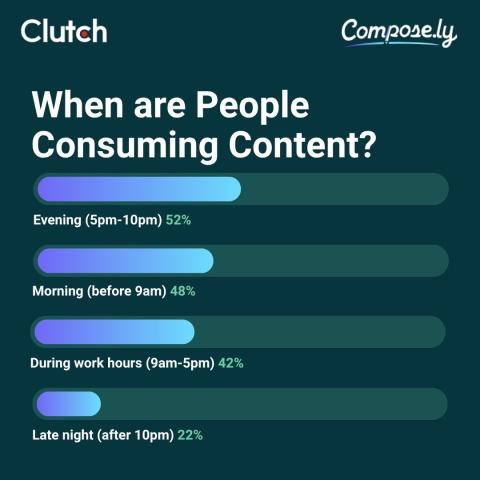
Morning consumption (before 9 am) is close behind at 48%, and 42% find time to read during work hours. The takeaway is that your blog post isn’t just competing with other articles. In that evening window, it’s competing with Netflix, TikTok, group chats, and whatever else fills a reader’s downtime.
Consumers are also reading in a personal, not a work, mindset. Nearly half (47%) say they primarily use the internet for personal interests and entertainment, compared with 28% who mostly use it for work or professional purposes, and 26% who report a mix. This matters more than it first appears, as it is key to meet people when they’re in the right mindset.
The buyer who downloaded your report at 8pm isn't reading it like a procurement document. They're reading it like the article they read right before it and the one they'll read right after.
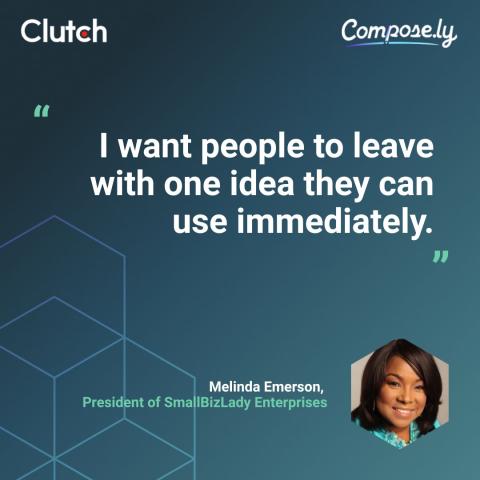
"I structure content for mobile consumption — shorter paragraphs, clear subheads, and bullets when appropriate. Every piece of content should be easy to scan while still delivering real value," said Melinda Emerson, President of SmallBizLady Enterprises. "In the evening, people have limited mental bandwidth, so I work hard to make content engaging, practical, and actionable. I want people to leave with one idea they can use immediately. That's how I win attention and keep my 42% open rate in a world full of distractions."
Mobile-first design isn’t a best practice; it’s an operating condition. Every piece of content, regardless of the framing, should be written for someone who is at least partly in a personal headspace, on a phone, with a thumb already hovering over the back button.
If smartphones and evening windows set the stage, the next question is what actually earns the read once a consumer arrives. The answer is consistent across contexts: consumers finish content that promises a defined payoff before they start.
For marketers, this is the question that determines content ROI. Volume is easy to produce. Completion is what earns trust, drives action, and justifies the investment.
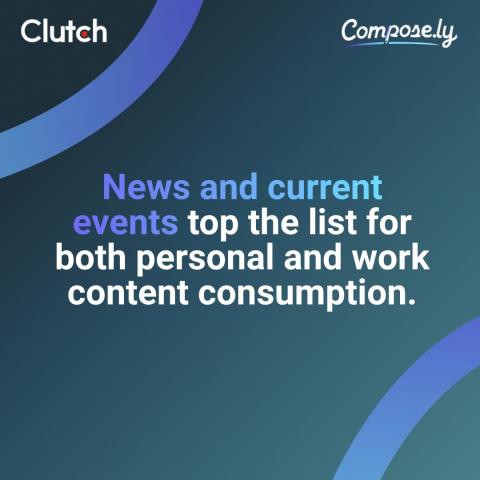
When asked what types of content they engage with, news and current events top the list for both personal (70%) and work (57%) consumption.
When the question shifts to which format consumers are most likely to read in full, how-to guides take the top spot for business use (40%) and personal use (37%).
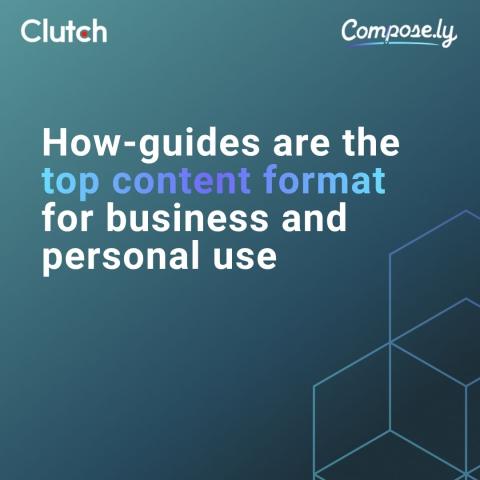
The common thread between the two is utility. News and how-to content share a trait that almost no other format does as cleanly: a clear, defined payoff stated up front. A news article promises “here’s what happened,” and a how-to promises “here is how to do this specific thing.” In both cases, the reader knows what they’re getting before they invest attention.
The use cases differ, but the underlying promise doesn’t. On the personal side, news consumption tends to be habitual as readers can check in on the world and current events as part of a daily routine. How-to content serves a situational need, like a recipe, a home repair, or a “how do I cancel this subscription” moment. For work, news likely shifts to more industry-specific reading while how-tos tilt toward tutorials, software walkthroughs, and skill-building guides.
Beyond the clear payoff, how-to content is built for the way consumers actually read in 2026. The structure is scannable, ensuring readers can jump to the step that matters and skip any that they already know. Readers walk away with the value they came for.

"Utility-first content should be 90% of content creation, especially for lead generation — there is very little room for long-form or long-winded content. Buyers are inherently self-centered and are primarily attracted to content that is immediately helpful to them,” said Jeremy Durant, Business Principal of Bop Design. “Utility-first content like FAQs will also be most helpful for GEO, since most AI searches are very specific, granular questions."
Format should follow the reader’s task, not the writer’s preference. The instinct to reach for a clever narrative hook or an evergreen listicle isn’t necessarily wrong, but if completion is the goal, the safer bet is structural: lead with the payoff, build for scanning, and then let the readers take away what they need.
Consumer preference for format varies. When the goal is a quick answer, 45% of consumers prefer a short written summary or snippet.
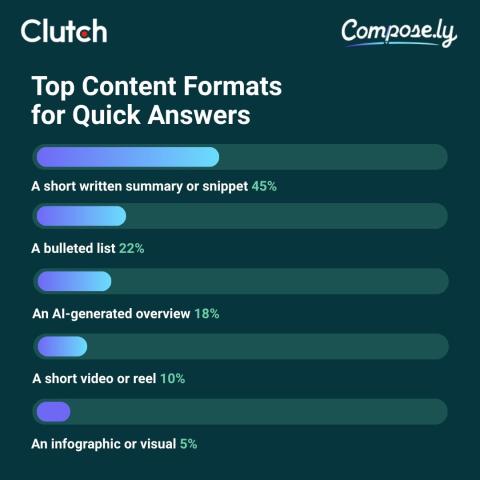
Bulleted lists come next at 22%, with AI-generated overviews, short videos, and infographics following.
The pattern is consistent: when consumers want fast information, they want formats that get them in and out quickly. A snippet respects the fact that the question is small.
But the preference flips when the intent changes. When consumers are asked what format they prefer when they want to deeply understand a topic, they will choose a long-form article (35%).
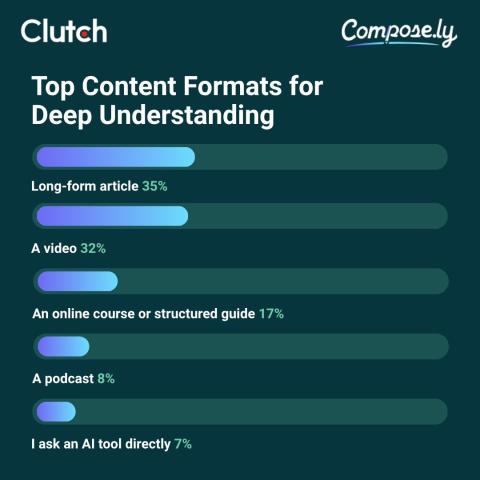
The same audience that wanted a snippet now wanted depth that signals authority. Long-form articles and videos both perform well for the same reason. Even though they take different forms, they communicate effort, context, and a willingness to take the topic seriously, which is what readers are looking for when they actually want to learn something.
Our data shows that if a reader lands on a piece that is 1,000+ words, nearly half say that the main deciding factor to keep reading is if it is a topic they care about.
Headlines, intros, and structure matter, but they matter on top of a baseline. Marketers and writers can’t manufacture interest in a topic that a reader doesn’t care about.
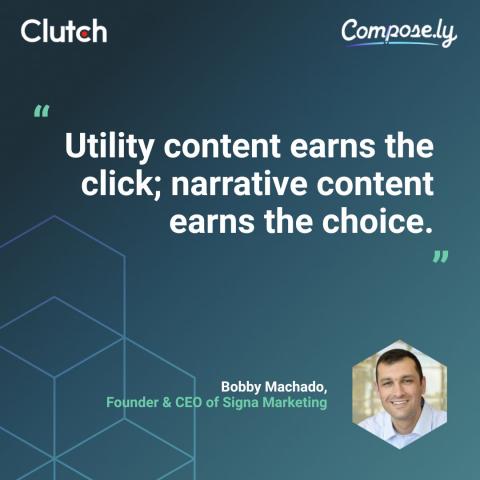
“Utility content earns the click; narrative content earns the choice,” said Bobby Machado, Founder & CEO of Signa Marketing.
Stop asking if a piece of content should be short or long, but start asking about the reader. What is their intent? The mistake isn’t choosing the wrong format, but it’s in trying to make every piece serve every purpose.
It’s tempting to read the rise of video as a death sentence for written content, but our data tells a more interesting story: video isn’t replacing reading, but it’s reshaping how readers find what they eventually read.
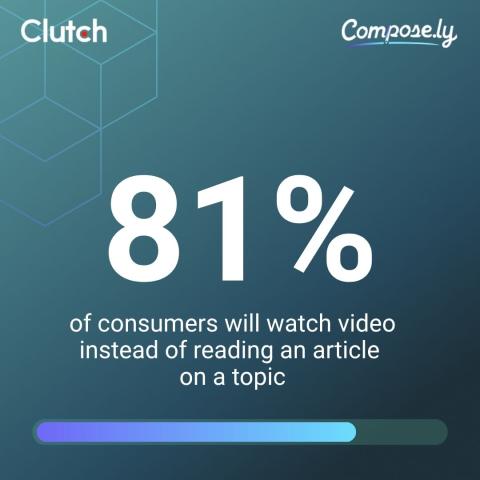
Most consumers (81%) say they’ll watch a video instead of reading an article on the same topic at least some of the time.
Video has clearly become a first-choice format for informational needs, but which needs? 72% of consumers choose videos over written content for how-to or tutorials. Product reviews (39%) and news (39%) also lean video, alongside entertainment and pop culture (37%).
Youtube dominates as a discovery platform for informational or educational video content, with 65% of consumers naming it as their go-to.
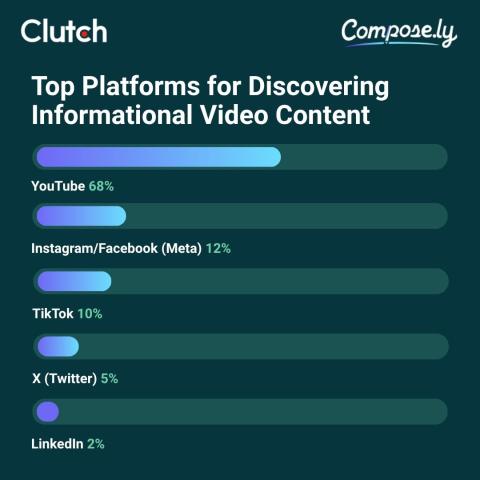
Youtube’s lead isn’t just about scale, but intent. Consumers go to YouTube the way they go to Google: with a question they want answered. The other platforms surface video in a scroll; YouTube surfaces it in a search.
An extremely important finding is what consumers do after the video ends. Seventy percent of consumers have watched a short-form video on a topic and then gone looking for a longer article to learn more.
A short-form video doesn’t end the journey; for most consumers, it starts one. The clip surfaces a topic, sparks interest, and creates a question the video itself wasn’t long enough to answer. The article is where that question gets resolved.
The implication is to stop treating video and written content as competing investments as the brands that build for both will have the advantage with their audience.
The conversation around AI and content has been shaped by a single anxiety: that AI tools will replace the article entirely. Our data suggests that something more specific is happening: AI is replacing the search step, not the reading step.
Nearly 70% of consumers (68%) have used AI tools (like ChatGPT, Gemini or Claude) instead of reading articles or blogs to get more information.
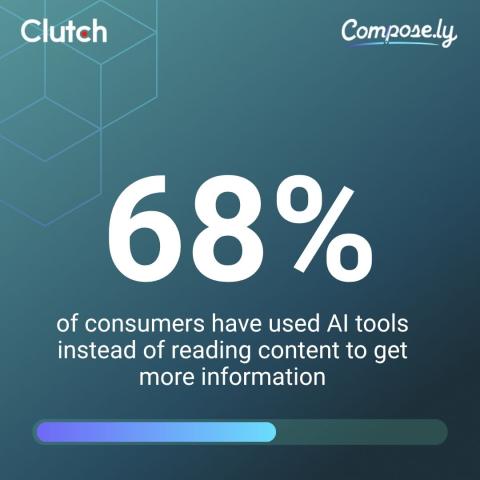
But the ceiling on AI satisfaction is where the story gets interesting. 56% of consumers say a search result’s AI overview or featured snippet satisfies their need without clicking into an article, but only when they just need a quick fact or definition.
AI wins the quick fact, but loses the deeper read. AI overviews and featured snippets are best understood as a discovery layer, not a content layer. They answer the question "what is X" — but they rarely answer "how do I do X in my specific situation," "is X right for me," or "what should I do next." Those questions still send consumers to articles.
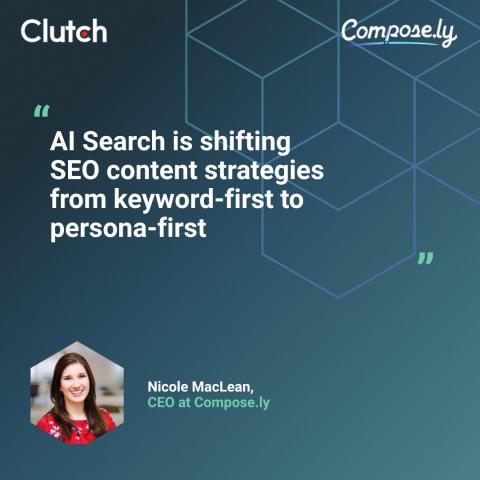
"AI Search is shifting SEO content strategies from keyword-first to persona-first," says Nicole MacLean, CEO at Compose.ly. "It's more important than ever that brands invest in an intentional and consistent content strategy for their website. But instead of creating large quantities of basic, top-of-funnel content, marketers should focus on authoritative, quality, mid-to-bottom funnel content."
Quick-fact traffic is no longer a reliable measure for businesses, so content teams should optimize for the new content era.
It’s clear that consumers are using AI tools more than ever to find information, but the trust is lacking.
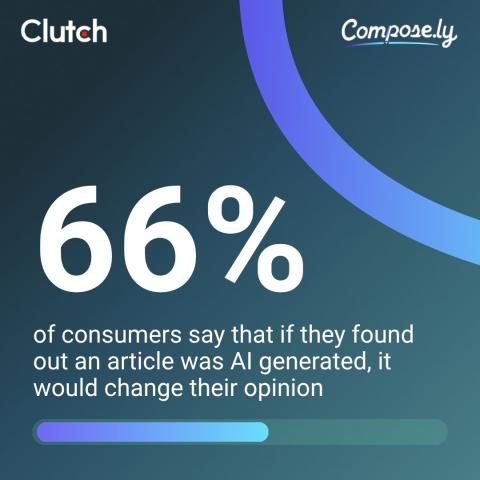
Our data found that 66% of consumers say that if they learned an article was written entirely by AI, they would read less of it.
The reasons become clearer when you look at what makes them most likely to trust a piece of content.
Nearly 40% of consumers point to a publication they recognize when it comes to trusting content.
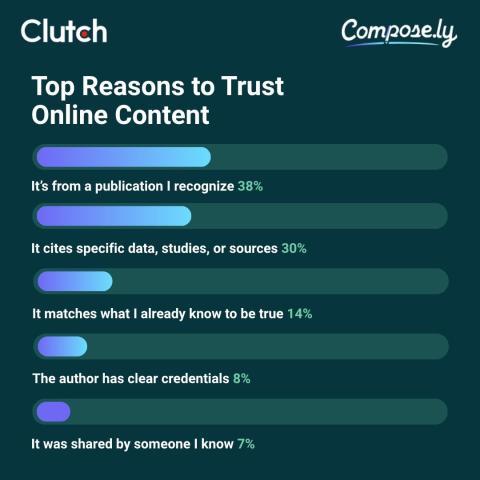
Only 3% trust content because it appeared near the top of their Google results.
AI-written articles struggle with brand recognition, sourcing, and credentialed authorship. The trust signals that consumers value the most are precisely the ones AI-generated content has the hardest time producing convincingly. This is where depth quietly becomes credibility as a long, well-sourced human-authored article carries trust markers that AI struggles to replicate.
In an internet flooded with AI-generated articles, the brands that invest in named bylines, sourced reporting, and editorial reputation are buying the things consumers say they actually trust. AI can produce more content faster. It can't produce the trust markers that earn the read from everyday consumers.
After using an AI tool to research or learn about a topic, 80% of consumers go read a full article to learn more at least some of the time.
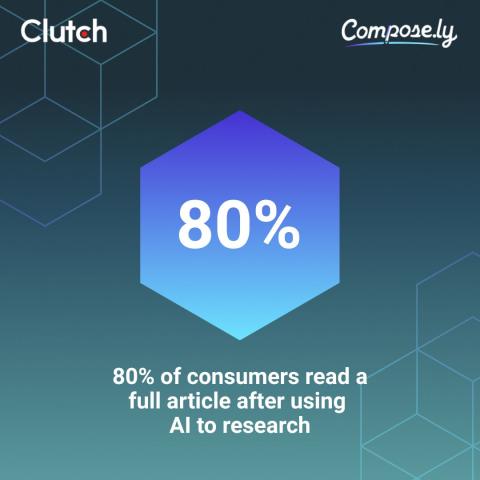
The AI tool didn’t end the journey; it just shortened the early stages.
The number climbs higher when the stakes do. When consumers use an AI tool to help with a purchase decision — "best X for Y," "X vs. Y," "what should I buy for..." — 83% then go read a full article or review to verify before buying.
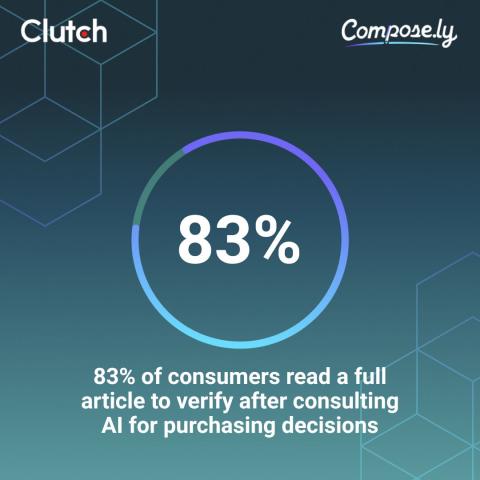
The article is no longer the first stop on the journey. It's the verification layer at the bottom of an AI-shaped funnel. AI tools narrow the field; full articles close the decision.
That repositioning is good news for the marketers who invested in serious content. It's bad news for the ones who optimized for top-of-funnel snippet capture. Quick-answer traffic is increasingly going to AI, and a lot of it isn't coming back.
But the high-intent traffic is still arriving on articles, and arriving warmer than ever. They’ve already done their research; they’re just looking for final confirmation.

“AI can help users compare options quickly, but it also creates doubt. People still want to check the reasoning — whether a company understands the problem, whether the evidence is real, and whether the recommendation survives closer inspection. Good verification content is specific,” said Jérôme Bergerou, International Director at Accuracast.
The brands that win in 2026 won't be the ones producing the most content. They'll be the ones writing the article that consumers turn to after AI has already weighed in — the one that earns the read at the exact moment a purchase decision is being made. Full-length content isn't dying. It's moving down the funnel, and getting more valuable as it goes.
Consumer attention is scarce, but it isn’t dead. The same readers who skim headlines before deciding to click are the ones reading full articles to verify a purchase, finishing how-to guides on their phones during the evening commute, and following short-form videos to long-form pieces that actually answer the question.
What’s shifting is where attention lives, not whether it exists. AI tools and short-form video are pulling the top of the funnel into spaces marketers don’t fully own, while the bottom is getting more valuable. Depth, sourcing, recognizable bylines, and human authorship aren’t holdovers from an older era of content; they’re trust signals for consumers.
The content teams who will win in 2026 and beyond will be the ones who design for selective attention rather than fight it. They’ll treat AI and video as discovery layers that bring qualified readers to their doorstep, not as threats trying to steal the click. They will also invest in the deep, sourced content that consumers actually turn to when the decision matters.
In May 2026, Clutch surveyed 444 consumers about their online content consumption habits.
In terms of demographics, 52% of respondents identify themselves as male, with 48% reporting as female.
13% of respondents were ages 18 to 29; 30% of respondents were ages 30 to 44; 57% of respondents were 45 and older.