
Why Your B2B Outbound Emails Never Reach the Inbox (And What It Costs You)
Your B2B cold emails might be landing in spam, not inboxes. Learn how to check placement and the 4 fixes that actually move the needle—not copy edits.
Updated May 29, 2026

Stories matter in content marketing, but so do the people who tell them. Discover how to pick the right voices for your brand so you can create more powerful content with insights from Donald C. Kelly, the founder & CEO of The Sales Evangelist.
Picture this: You notice that your dog’s breath smells awful, so you Google "dog dental care tips." One article is written by a veterinarian and mentions scientific studies. But the next one is filled with advice that seems impractical and even pseudoscience-y. By the time you finish, you’re wondering if the author has ever even owned a dog, or if they’re just a random content creator.
As more businesses invest in content marketing, the chorus of voices online has swelled. But as this scenario shows, content is only as strong as the person behind it. The right speaker — someone who’s authoritative and informed — can create content that actually resonates with customers. By contrast, the wrong voices might miss the mark entirely, or just churn out a lot of mediocre content.
Looking for a Content Marketing agency?
Compare our list of top Content Marketing companies near you
“Every company should create some form of content, yes — but not everyone needs to hop behind a mic,” observes Kelly. In other words, who manages your content production is just as important as what they say.
Learn more from Donald C. Kelly, the founder and CEO of The Sales Evangelist, on setting yourself up for success by choosing the right storytellers for your brand.
Everyone has a personal voice. It’s easy to spot someone from the Midwest, for instance, when they use phrases like “ope!” or ask for “pop” instead of “soda.” And your fun-loving Gen Z intern probably uses more emojis than a reserved 50-something sales rep.
On the other hand, most businesses aim to have a consistent brand voice. This is a recognizable personality that a brand presents across all platforms, from billboards to Instagram. While individual content producers can (and should) bring a little personal flair to their work, they should always match the brand voice.
Take Clutch for example, the B2B reviews platform focuses on publishing thought leadership articles produced by its marketing team and experienced industry professionals to bring invaluable content to browsers. These producers focus on providing insightful and data-driven content to help businesses navigate the B2B space.
Choosing content creators who fit your brand voice builds trust and recognition with your audience. They always know what to expect when they view your content, as though your brand is a trustworthy friend. Plus, a consistent voice helps your content stand out in the virtual ocean of articles and videos.
Content production requires hands-on attention from different team members and producers. Even if you only dip your toes in a few marketing channels, the amount of content you need can add up quickly. For example, a weekly blog post and daily social media posts would total over 400 pieces of content a year — not exactly a one-person job.
Properly allocating content creation tasks for different types of content also requires you to identify the right person to work on particular forms of content.
Kelly shares his team’s experience assigning tasks and identifying the ideal people to create content “We’ve had situations like this: Jack, the marketing director, comes up with a killer concept for a podcast. The idea’s solid—but Jack might not be the best person to host. And that’s okay.
“Maybe Mary on the team has the voice, the energy, the charisma—that “it” factor to be a great host,” he adds. “Identifying the right person to carry the brand voice makes a huge difference.”
Here are a few types of content producers to consider for your team.
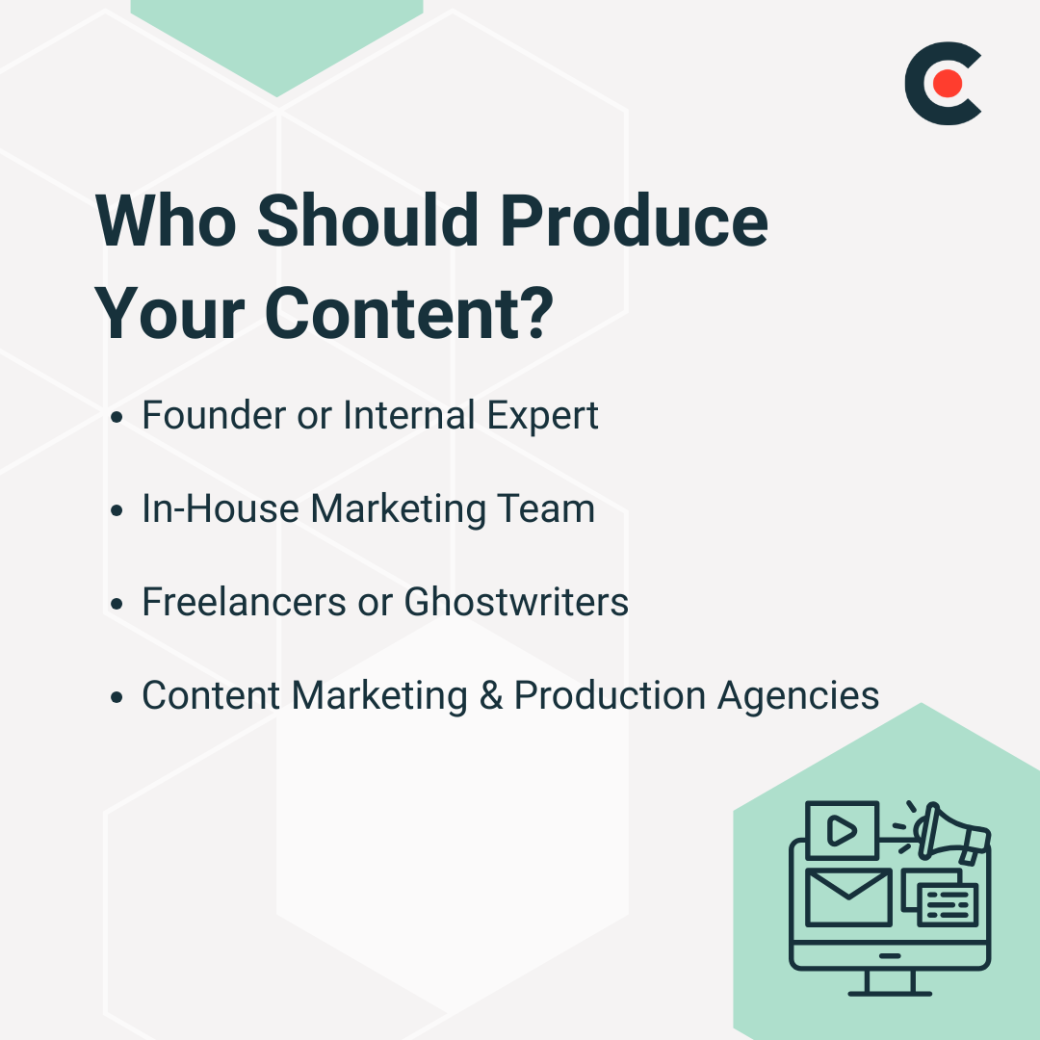
The best people to handle your content production may already work for your business. After all, your leadership team probably has unique insights that your customers would be interested in hearing.
Content created by these thought leaders can be incredibly persuasive, especially in the business-to-business (B2B) world. According to a 2024 Edelman-LinkedIn survey, 90% of B2B decision-makers are more receptive to marketing from companies that consistently publish strong thought leadership.
Here are a few more benefits of relying on internal experts:
However, your founder or leadership team may not have enough time to consistently produce content. And just because someone’s an expert in, say, engineering or payroll software doesn’t mean they’re a talented writer. That means you may need to spend a lot of time editing and revising their drafts to prepare them for publication.
Traditionally, many companies have hired full-time or part-time marketers to manage their content production. These in-house employees work exclusively on your campaigns and become deeply familiar with your brand.
Building a marketing team has many advantages, including:
Of course, a dedicated marketing staff is a big investment. Salaries, benefits, equipment — it’s expensive, to say the least. Plus, it takes time to hire experts, so you can’t scale up content production overnight.
Sometimes, businesses only need sporadic content — a few blog posts in January, an Instagram campaign in February, and so on. Hiring freelancers or ghostwriters lets you pay for content whenever you need it.
Here are a few pros of outsourcing your content production to freelancers:
It takes time for freelancers to learn your brand voice, though. And most professionals have multiple clients, so they may not be available if you need a last-minute press release or video.
Content agencies have full-fledged teams, making it easy to scale production. They also handle all the hiring and talent management.
However, agencies often charge high prices for this convenience. It makes sense: you’re essentially hiring an entire external marketing team. Their creators may also lack in-depth knowledge of your industry, requiring you to fact-check and edit their content.
Before choosing your content production team, consider your audience’s interests and needs. This shouldn’t be a big mystery. Your customers are already talking about what they care about online, so just listen to them.
During our interview, Kelly advises brands to listen to their audiences by leveraging community forums and social media platforms. He explains “Nobody’s leaving detailed reviews or forum posts unless they care—whether it's out of frustration or need. That’s gold.”
“Use that real-world language and those real-world problems to build your content strategy,” he adds as he elaborates how marketers can maximize their findings. “Because when you do, you’re not guessing—you’re delivering what your audience is already searching for.”
Platforms like Quora and Reddit often contain a wealth of information. Pay attention to any recurring topics and concerns that you can address in your content. For instance, you may notice that people frequently ask for software recommendations on Reddit.
You could join these conversations by hiring authoritative creators to produce listicles, such as “10 Best Platforms for X.” How-to guides and tutorials can also help you engage potential customers.
At this point, you have at least a general idea of what type of content you want to share. These best practices will help you find the right producer to kickstart your campaign:
With a little patience, you can find your Goldilocks content producer who fits your brand perfectly.
As you research content creators, avoid these common mistakes:
The more effort you put into the hiring process, the more likely you are to pick a creator you truly love.
Content production isn’t just about using the perfect keywords or chasing trendy topics. The most successful businesses choose the right people to tell their stories. That means investing in experts who really get your audience and adapt to your brand voice.
Of course, content creation doesn’t take place in a vacuum. You should also look for producers who are eager to collaborate with your marketing, sales, and product teams. By avoiding silos, you can develop genuinely valuable content that helps you achieve your big-picture goals.

Donald C. Kelly, is the Founder and CEO of The Sales Evangelist, helping create business development and growth strategies for small and mid-sized businesses.