
Why Your B2B Outbound Emails Never Reach the Inbox (And What It Costs You)
Your B2B cold emails might be landing in spam, not inboxes. Learn how to check placement and the 4 fixes that actually move the needle—not copy edits.
Updated March 11, 2026

In a world of recycled and AI-written content, customers crave original data and research. Stand out and build your brand's credibility with a proprietary research program.
When AI went mainstream, the content race kicked into high gear. Suddenly, marketers could research, write, and edit content in minutes instead of hours or days. But that speed comes at a cost: originality. As brands churn out more marketing materials, it's harder to stand out and say something fresh. That means traditional channels like blogs and social media have lost some of their impact.
With proprietary content, you can offer analysis and data that your audience can't find anywhere else. This content is based on original research that your brand owns. For example, you might interview neurosurgeons about a trending medical technology and compile their responses into a white paper. This original data is becoming more defensible and authoritative — it carries more weight than generic content because it's backed by credible and unique evidence.
Looking for a Content Marketing agency?
Compare our list of top Content Marketing companies near you
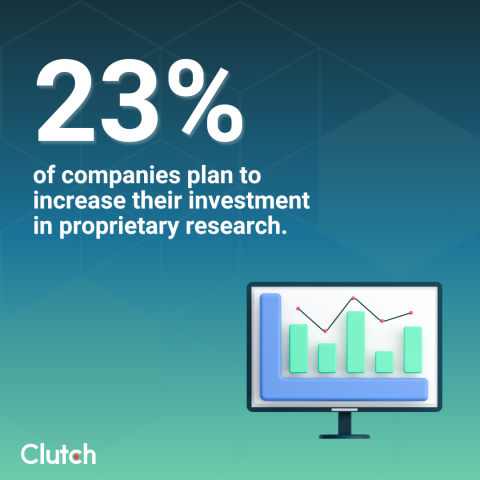
Clutch teamed up with Conductor to survey 459 marketing professionals who create content, gathering their thoughts on content marketing in the age of AI. The findings show that 23% of brands plan to increase investment in proprietary research, and 27% of respondents believe this approach will improve visibility with large language models (LLMs).
This guide explores the benefits of proprietary research and shares practical tips for building your own program.
Proprietary research is exclusive knowledge and data that your brand produces. You own these ideas, which helps position your business as an expert. It also gives you more influence by allowing you to take the lead in industry conversations.
This type of research takes many forms, including:
Don't panic if some of these techniques are outside your comfort zone. Many companies outsource proprietary research to research firms or consultants. One example is the software firm Workhuman, which often partners with Gallup to study workplace trends. This approach lets you tap into the expertise of data analysts and other professional researchers.
Traditional content marketing focuses on curating content rather than producing original data. If you're writing a blog about education technology, you might include statistics from a scientific article or a quote from a teacher's LinkedIn post. None of that is your own research, though. You're just gathering other people's work to support your narrative.
Proprietary research is different from dataless thought leadership. Experts often share anecdotes and personal experiences on social media and podcasts. However, they usually don't provide original or verified data. You might wonder if that CEO's hilarious sales story is just a one-off or speaks to an important or emerging trend.
As more brands rely on AI, generic content like this has become interchangeable and easy to copy. On LinkedIn, for example, over half of long-form posts are generated by ChatGPT and other AI tools. Many follow similar formats, with em-dashes and choppy sentences. They also rehash the same buzzwords — such as the infamous "delve" — and surface-level ideas.
Search engines look for novel and high-quality content, so these copy-and-paste posts often get bumped down the results pages. Not to mention, they may also annoy users who've already scrolled past 20 similar posts.
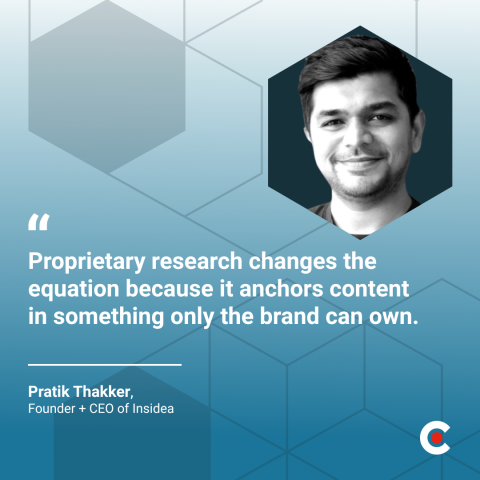
"Proprietary research changes the equation because it anchors content in something only the brand can own," explains Pratik Thakker, Founder and CEO of Insidea. Exclusive content based on original, first-party data helps both humans and search engines notice your company.
As a marketer, you already understand the importance of citing credible sources. With proprietary research, your brand becomes that authoritative source. It positions you as an expert knowledge producer, not a curator.
Journalists and industry peers often rely on proprietary research for their own content. For example, reporters at Livewire and Help Net Security cite a recent Clutch survey about wearable technology. These references bolster Clutch's credibility by signaling that tech experts value its research. The articles also backlink to the original report, driving more traffic to Clutch's site.
Search engines value citations, too. If other reputable sites link to your proprietary research, it shows that they trust and value your ideas. That can boost your rankings, which in turn leads to more traffic, more citations, and so on. It's a snowball effect that builds up your authority.
Improved answer engine optimization (AEO) is another benefit of proprietary research. When users search for information with LLMs and AI-powered search engines, algorithms prioritize verifiable, unique data. Say, for example, a Google user looks up "percent of companies investing in agentic commerce." The AI Overview may display statistics from white papers and surveys. It also links each source, so the user can read the full reports themselves. Your actual report might rank on page three of the search results, but appearing in the AI Overview catapults you to the top of the rankings. As more content vies for the number one spot, this competitive edge can have a huge impact on your traffic.

LLMs also source original research. If you ask ChatGPT to define agentic commerce, it searches the web for authoritative, relevant sources. It might provide these sources with inline citations or generate a list if you ask where it got the information. As a result, 27% of respondents in our survey believe that proprietary research can help their brand appear in AI results.
Producing proprietary research takes more time than using AI to churn out a listicle or searching for other people's studies. However, it's often worth the investment, especially if you don't treat it as a one-off piece of content.
Focus on evergreen topics, not trends that will fade from memory in a year or two. In the tech industry, cyberattacks remain a constant threat. CrowdStrike takes advantage of this by publishing an annual Global Threat Report. The company fills these reports with original data and threat analyses that you can't get from competitors or AI generators. Journalists and tech experts use this proprietary research to learn about cybersecurity trends and the latest defenses.
Regular updates also keep proprietary research fresh and relevant. If you survey 300 women about how they shop for jeans, you could expand the study by surveying an equal number of men. For a more historical perspective, analyze how women's jean preferences change over time. With these tactics, you can build on your existing research instead of constantly starting from scratch.
And don't be afraid to recycle your proprietary data into different types of content. For example, you could take that survey about women's shopping habits and turn it into:
Adapting a single piece of research across platforms allows you to reach different audiences. Fashion-loving consumers may enjoy listening to expert opinions on a podcast. Meanwhile, a dense white paper with in-depth statistics might appeal to retailers looking to better understand the industry. In both cases, you're building your reputation as an authority with valuable research to share.
Proprietary research usually doesn't directly translate to more sales, but that doesn't mean it's not accomplishing anything. This type of content marketing grows your influence and helps you become a go-to resource.
One of the biggest benefits is increased visibility at the top of the funnel. At this stage, potential customers are searching for solutions or trying to learn more about a topic. They may turn to an LLM for advice or to search engines for statistics.
Proprietary research helps you hook and guide these intrepid explorers. It also establishes your expertise in a neutral, non-promotional way. If your audience decides to invest in a product or service later, your brand will be at the top of their mind. Many brands are investing in this content now to stay ahead of brands that haven't caught on to AEO yet.
Consider this scenario: A skilled nursing manager, frustrated by chronic staffing shortages, turns to Claude, an AI assistant, for resources. It shares a link to the 2025 Aline State of the Senior Living Survey Results. After the manager reads this proprietary data, they realize their hiring challenges aren't unusual. They decide to try the company's software to analyze staffing trends in their facility and get recommendations for hiring more staff. If Aline hadn't shared this research, the manager may never have discovered their products.
Proprietary research also opens doors with the media. When journalists need a quote or statistic, they'll look for evidence from reputable sources. If your company consistently shares high-quality research, they might reference you or even reach out directly in the future. These connections help raise awareness of your brand and improve your reputation as an industry mover and shaker.
This research also allows you to provide more value. Users appreciate exclusive, well-researched content from real experts. When you serve them content they can't get anywhere else, they're more likely to come back for more.
Shorter sales cycles are another possible perk. Proprietary data builds immediate trust, which can help nudge customers through the awareness and consideration phases. Instead of convincing them that you have stellar products and services, you can let your research do most of the early talking.
You don't need to hire a team of scientists to produce proprietary research. There are plenty of feasible ways to add this kind of content to your roster.
Start by choosing one or two types of data that you can gather without splurging on fancy tech. Many companies start with affordable survey software, such as Jotform and SurveyMonkey. These tools let you quickly create and send out questionnaires.
Use surveys to research behaviors, preferences, and trends. If your company sells dog treats, you could survey pet owners about their favorite ingredients or their pets' allergies. If you specialize in EdTech, ask teachers about their biggest classroom frustrations. These kinds of simple surveys don't require much data analytics knowledge to interpret. They're also easy to repeat, so you can track trends over time.
Interviewing subject-matter experts is another common approach. Ask leaders in your field if they'd be willing to share their perspectives on a trending topic or pain point. Look for common themes or gems of wisdom in this qualitative data and share them with your audience.
Social listening can also produce valuable data. Tools like Meltwater and Sprout Social let you track how people talk about your industry on social media. For example, you might analyze Reddit complaints to identify pain points and share your findings in a white paper.
The stakes are high for proprietary research. Sloppy or unverifiable data will only hurt your reputation, so tread carefully. Follow these best practices to make sure your research is valuable:
As you map out your proprietary research, steer clear of these common pitfalls:
As AI tools get better at producing generic content at lightning speed, proprietary research will become even more valuable.
As Thakker puts it, "In a world flooded with synthesized information, original insight becomes the strongest differentiator." Customers and the media gravitate toward brands that produce unique, authoritative, and helpful insights rather than just summarizing other people's ideas.
Get started by reframing your content strategy as an insight strategy and drafting your first survey. By focusing on producing fresh knowledge, you can position your brand as an indispensable resource that AI can never replace.