
Why Your B2B Outbound Emails Never Reach the Inbox (And What It Costs You)
Your B2B cold emails might be landing in spam, not inboxes. Learn how to check placement and the 4 fixes that actually move the needle—not copy edits.
Updated March 11, 2026

AI is revolutionizing how marketing teams approach topic research, but the technology works best when combined with human expertise. Our practical framework shows you how to use AI to identify content opportunities while your team maintains control over strategic decisions.
Marketing teams are under constant, increasing pressure to pump out consistent, high-performing content. To keep up using conventional methods, you’d need to assign a dedicated content creator. Traditional topic research is time-consuming, and its often reactive nature can leave your team a step behind.
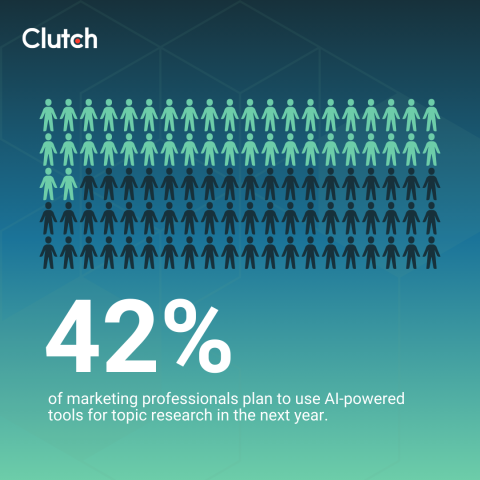
Thanks to modern technology, there is a better way. According to recent research by Clutch (in collaboration with Conductor), 42% of the 459 marketing professionals surveyed plan to use AI-powered tools for content topic research in the next year.
Looking for a Content Marketing agency?
Compare our list of top Content Marketing companies near you
That’s why our team has created this step-by-step guide, which provides a framework for applying artificial intelligence for smarter, more relevant topic discovery.
The expanding capabilities of AI are transforming topic research in a variety of ways.
Just a few years ago, most content teams relied on manual keyword research and covert visits to their competitors’ blogs. This approach worked when publishing once or twice a week felt ambitious.
Now, companies publish daily. Some publish multiple times per day. With the old research methods, it’s impossible to keep up.
AI-powered research tools can crawl your competitors’ content, scan social media conversations, track search trends, and find gaps in real time. What used to take a researcher three days now takes three minutes.
Speed isn't the only advantage of AI. It's also able to spot patterns across massive datasets that would be impossible for a human to catch in the same time frame. Sure, a human might eventually notice the pattern after months of observation, but AI can identify it immediately.
AI can work continuously. Set up the right tools, and they'll monitor trends, track competitor activity, pick out patterns, and flag emerging topics 24/7.
Automation also removes the tedious parts of topic research, such as pulling search volumes, organizing keywords into clusters, identifying related questions, and checking for content gaps.
With these tools handling the everyday tasks, your team can focus on strategic work, such as deciding which topics align with your goals, finding an angle to differentiate your content, and planning how each piece fits into your marketing strategy.
Companies are rethinking their approaches to content strategy. Instead of creating content based on what their competitors publish, they're using AI to identify opportunities before the competition does by seeking out real audience questions and concerns.
The companies that do it well understand that AI is a tool, not a replacement, for their research teams. They use AI to gather intelligence, but humans make the final decisions. This gives these forward-thinking brands a leg up: producing relevant content quickly while maintaining human depth and editorial quality.
Using AI for content research (and getting it right) requires a structured process.
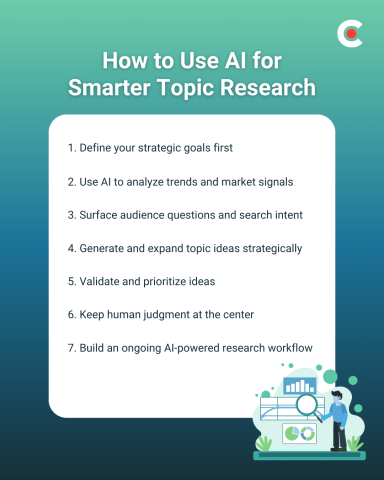
Our seven-step framework strikes the perfect balance between automation and human thinking:
Before you ask AI to find topics, you need to understand what you're trying to accomplish. Your goals should determine your content topics, such as:
Really home in on your target audience segments. "VP of Marketing" isn't specific enough; try "VP of Marketing at mid-sized B2B SaaS companies who are evaluating marketing automation platforms." The more specific you get, the better the AI can find relevant topics.
This stage still needs human direction. AI can suggest topics all day long, but only humans can decide which topics align with your business priorities. A tool might find that "how to choose a CRM" gets 10,000 monthly searches, but that's useless if your company doesn't sell CRMs. Set the parameters, and let AI work within them.
With goals in place, put AI to work by analyzing the market, using tools to track your industry’s trending topics, monitoring your competition’s content strategies, and picking out seasonal patterns or growing conversations.
For trend discovery, AI can scan various sources to find emerging topics. The idea is to create content while the topic is hot but not yet saturated.
Competitive analysis is much more efficient with AI. Tools can analyze your competitors' content libraries and identify unmet needs. They might show you that three competitors have written about a specific topic, but none have covered a particular angle or use case — and there’s your opportunity.
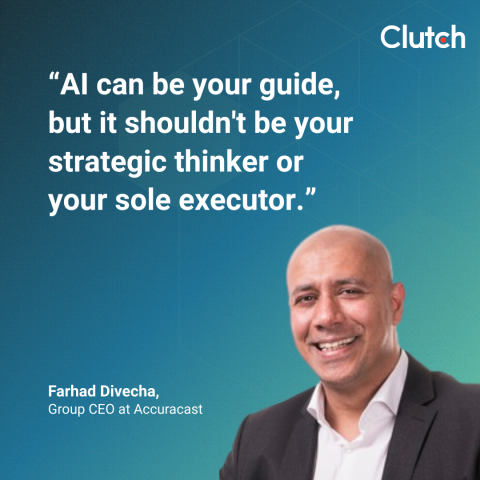
However, human judgment is still essential. "AI can be your guide, but it shouldn't be your strategic thinker or your sole executor," cautions Farhad Divecha, Group CEO at Accuracast.
In other words, AI can show you what's happening, but at the end of the day, your human team should decide what to do about it.
Questions from real users propel some of the highest-performing content. When people enter search queries, your authoritative answers can capture their attention and earn their trust.
AI is excellent at sniffing out your audience’s specific questions. Use AI tools to scrape questions from forums, social media, review sites, and search engines, and then group those questions into themes. You'll often find that dozens of specific questions actually boil down to a few core concerns.
From these groups, AI can categorize the questions by search intent and help you decide which topics line up best with your business goals.
Use AI to generate and expand your topic ideas. Start with seed topics and let AI suggest variations and related subtopics.
Coming at a topic from a unique angle will differentiate your content. If several articles already cover a concept, AI might help you find a way to tackle it that hasn’t been done. The more specific and relevant the topic is to your audience, the better.
At this stage, start thinking about your article outline. AI can suggest logical headers and section topics based on what often performs well for similar topics. That information can guide your outline.
AI can help prioritize your list of possible topics based on search volume, competition level, potential traffic, and other data points.
You can’t rely on search volume alone. A more specific keyword with 5,000 monthly searches and low competition might outperform an oversaturated keyword with 20,000 searches and 50 competitor articles. Or a given topic might have great search numbers, but if it attracts the wrong audience, you’re wasting time, even if the high search volume is tempting.
Business value goes beyond hit counts. Some topics might not drive massive search traffic, but they attract exactly the right prospects. An article might get only 200 monthly searches, but if those 200 people are decision-makers within your target audience, it can be more valuable than a piece with 10,000 generic searches.
AI can score and rank topics based on multiple factors, such as search volume, keyword difficulty, audience relevance, product or service alignment, and competitive opportunity.
Before moving forward, it’s best practice to review the AI rankings and apply your human judgment. Remember, you don’t have to accept what AI says as gospel.
AI is useful, but it has its limitations, such as:
"AI is good at surfacing patterns, related questions, and competitive gaps," says Jack Hayes, Managing Director at Champions Speakers Agency. "Humans decide what matters, what is defensible, and what aligns to the buyer."

Relying too heavily on AI can negatively affect your research direction and the overall quality of your content. That's why humans need to remain involved in each step of the process.
Everything changes. That includes markets, your competitors’ content, your audience’s needs, and search trends. Topic research shouldn't be a one-time endeavor. It’s best to build a repeatable workflow into your process so you’re always working with current research.
Based on your goals and specific circumstances, think about:
Always document your workflow so you can repeat it. Create templates for research reports, set criteria for topic selection, and stick to an approval process. Now you’re well on your way to producing consistent, high-quality content.
You’ll want to steer clear of these often-seen errors while using AI for content research.
Here are some common mistakes to avoid:
The biggest mistake teams make is opening an AI tool and asking it to suggest topics without any strategic direction. This results in random suggestions without context. Some might be relevant, but most won’t. AI needs constraints and direction to be useful.
Think about what you’re trying to accomplish, who you’re trying to reach, and what topics align with your business goals. With the right strategic information, AI can be a much more powerful research tool.
AI makes mistakes. It might suggest topics with inaccurate search volume data or miss important context about why a topic is trending. It could recommend topics that seem relevant but don't actually align with search intent.
"The biggest mistake I see teams make is letting AI drive direction instead of supporting it," says Pratik Thakker, Founder and CEO of Insidea.

Treat AI suggestions as a starting point, but verify the data, test the assumptions, and apply context that AI can't understand.
A topic might have excellent search volume, but if the search intent doesn't match your content type, you'll fail. Someone searching "project management software free" probably isn't ready for a 3,000-word enterprise buying guide; they’re looking for a quick list of free tools to scan.
AI can analyze search results and determine which types of content actually rank. Are the top results listicles, how-to guides, white papers, or product comparison pages? Match your content format to what search engines expect and what users actually want.
AI’s great at suggesting topics, but it can't replace deep industry expertise or the human experience. It can find opportunities and direct your research, but human experts should provide the insights and experience that create content people find valuable.
When you balance AI and human input, you can create genuinely authoritative content that readers trust and search engines reward.
AI has transformed topic research and content creation. Forty-two percent of teams planning to invest in AI research tools are doing so because they get it: this is the new normal.
However, AI itself doesn’t give you the competitive edge. That comes from combining this technology's analytical power with human intuition. AI can find patterns, surface questions, and suggest topics, but it still needs human intervention. Human content teams need to apply their strategy expertise and, most importantly, make the ultimate judgment calls.
Smarter topic research isn't about automation. It's about better decision-making. With a healthy balance between AI and human thinking, your team can create content that outranks your competitors.