
Podcast SEO in 2027: How to Make Business Episodes Findable
Learn how transcripts, question-led titles, structured data, and guest links help business podcasts get found on YouTube, Apple Podcasts, and Google.
Updated January 21, 2026

Large Language Models have made content creation faster than ever—but they’ve also created a new problem: sameness. Reading this sentence would surely have you question whether it is AI-written or human-written. The big hyphen is a clear indicator of an AI-written sentence, but does it matter?
It actually does. As search engines evolve (Google has its AI mode), genuinely useful content that sounds human, contains accurate information, and is easy to understand has become a necessity. However, in the race to dominate the market, businesses often rely on LLM models to generate content more efficiently. That sometimes leads to robotic, inaccurate, and unsatisfactory content (not always the case).
To keep speed and quality, a comprehensive analysis is crucial. If you are using LLMs for content creation, you must ensure that your content appears more human-written. Read ahead to learn how.
Looking for a Content Marketing agency?
Compare our list of top Content Marketing companies near you
AI-generated content that sounds robotic feels dull & it actively degrades content performance. For example, when readers sense a page lacks personality or intent, they quickly disengage, which increases bounce rates and reduces dwell time. Over time, this erodes brand trust and credibility, especially in competitive niches where clarity, authority, and differentiation are crucial, such as healthcare, finance, and enterprise IT, where audiences expect the expertise of an experienced IT consultant rather than generic explanations.
Now, humans evaluate content subconsciously before they process facts. Factors like tone, sentence rhythm, emotional cues, & signs of lived experience influence whether content feels trustworthy or skimmable.
Coming to the key point: the importance of AI-generated content sounding human. Search engines evaluate your content based on modern ranking systems. These systems reward authenticity signals, such as:
“LLMs work best when they’re guided by real human intent. Content written only to satisfy algorithms often sounds polished but hollow—search systems now reward depth, context, and usefulness over perfection.”
— Founder, bfj.digital
If the content satisfies these signals and aligns with Google’s E.E.A.T. guidelines, it can be a measurable competitive advantage.
Humanizing your content is crucial because search engines prefer updated, context-rich, high-quality content. Not only search engines, but around 30% to 50% of people worldwide can tell if the content is AI-generated. Here are the ways to turn your LLM-assisted content into a human version.
The first step is to consider the LLM model as a human. Talk to it like a human. Make sure your prompts are contextual, detailed, and conversational. Clearly define who the reader is, what they are worried about, and the decision they are trying to make. For example, write this for a founder who is confused by conflicting advice, skeptical of hype, but curious about practical solutions. The same approach applies to creative tasks, such as crafting AI prompts for logo design, where context and intent drive more useful, human-like results.
That is an effective prompt that clearly outlines the required context. It provides the LLM with a psychological anchor, guiding vocabulary, pacing, and empathy, which help the content rank better and genuinely serve the reader.
This is where tools like Walter AI fit naturally into the workflow. Rather than just relying on a single prompt, Walter helps teams structure human intent, reader mindset, level of skepticism, decision-making context, and brand.
The legal expert recommends how their law firm integrates real human intent into their content: “We used to adopt a 'human-in-the-loop' (HITL) workflow, where AI helps with drafting and analyzing content, but human lawyers provide the final oversight, judgment, and personalization.”
Here is another example to understand better: “Explain this cloud security concept for a mid-level IT manager who is cautious about vendor claims, wants practical implementation steps, and needs to justify decisions to their team.”
"Large language models don't sound human by default. Their behavior reflects intent encoded through data annotation. When that intent mirrors real human decisions, such as what matters, what doesn't, and why, the output feels grounded rather than generic."
— Joel Wolfe, HiredSupport
By guiding the LLM and including genuine human input in edits, you can quickly produce content that resonates with readers. This enhances authenticity and meets audience needs, creating a more engaging experience.
The second way to humanize your content using LLMs is to turn it into a conversation. LLMs excel at simulating dialogue when prompted correctly. Several effective techniques include:
These formats introduce natural pacing and varied sentence structures. The same principles apply directly to live chat software, where LLM-driven responses must feel conversational and adaptive in real time rather than scripted or transactional.
"Live chat tests language models under pressure, requiring LLMs to interpret intent quickly and adapt tone in real time where they prioritize clarity and empathy over polished phrasing."
— Athena Vale, TrustChat
Furthermore, explaining a concept in a dense paragraph, you can prompt an LLM model to present it as a short exchange between a curious reader and a subject-matter expert. That helps convert abstract explanations into relatable reasoning.
Analyzing competitors is essential for developing a comprehensive strategic insight. Using competitors’ reviews can help identify common themes, such as their benefits, values, frequent complaints, and areas for improvement.
Analyzing their social interactions and engagement can provide valuable insights into how effectively they meet customer needs. You can identify areas where they excel at addressing inquiries and pinpoint unanswered questions.
By gathering their website copy, you can uncover their positioning, audience, and target niches using case studies. The Wayback Machine can help you analyze how their messaging has evolved. Job postings can indicate their strategic priorities or areas for testing.

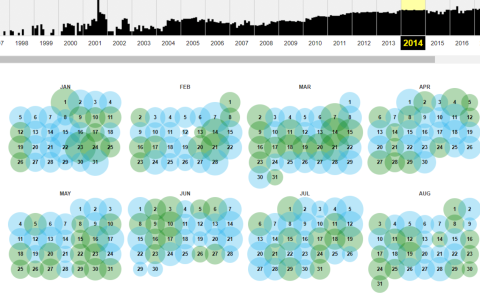
Once we understand their positioning, we can compare it to ours to detect similarities and differences.
If you have analyzed LLM-generated content, you will notice a fine detail. The content is well-polished and follows a universally agreeable flow, which search engines do not consider a trust signal. Because this content lacks practical experience and counterarguments, it is not regarded as human-written.
Now, what to do here?
If you want to make your content more human, you must introduce bias in it, acknowledge trade-offs, and present nuanced opinions shaped by experience. For example, you can prompt the LLMs to critique their own output or add counterarguments. A prompt such as “Explain where this advice might not apply” can prompt the LLM to reason contextually.
These techniques can break the pattern of generic explanations and introduce depth that can serve as direct trust signals. It also demonstrates original thinking and a deep understanding of the domain.
One of the best features of LLMs is their ability to process large amounts of data quickly and identify trends and patterns. Many businesses lack a data team capable of doing this, so using an LLM is a viable alternative for gaining insights more efficiently. By using LLMs, businesses can analyze data quickly and make informed decisions that drive growth. Before uploading data to the LLM, choosing the right crawler tool ensures you collect accurate and relevant customer feedback efficiently.
You can review customer feedback by uploading raw data to the project and using your LLM to generate SQL queries to analyze and organize your data.
When you have your raw data organized and you’re using the LLM to make queries, you’re more likely to get real insights that can help your business. This approach will guide you to useful information rather than lead you on a wild goose chase.
Here is a simple guide on what you can do:
BigQuery is generally free, unless you're handling extremely large datasets. Pair programming with an LLM can help you navigate SQL easily.
Next comes the editing part & mark our words: it is inevitable. Editing is essential once your LLM is done writing content for you. Here is how you can do it.
Write the whole content piece first. As LLM models are masters at human-style editors, you can humanize your content in several ways:
Besides, you can also use targeted editing prompts, such as “Rewrite this to sound like a practitioner explaining this to a peer, not a textbook.” Such a prompt can shift your LLM’s voice from academic to experiential.
While humanizing content is critical, there are some things that you must avoid:
If you want to add tone, storytelling, or flair to the content, you must not overdo it. It can dilute the message and reduce scannability.
In technical or decision-driven content, forced casual language can undermine credibility. Therefore, don’t add humor that doesn’t fit the topic.
Humanized content must align with your established brand tone. A mismatch creates confusion and weakens brand trust across touchpoints.
Don’t rely on AI detectors. These detectors follow different algorithms and do not measure usefulness or engagement. Reader behavior, such as dwell time, scroll depth, and feedback, is more reliable.
Humanization is not a one-time thing. As search engines mature and AI models are updated, your content also requires ongoing refinement to align with audience expectations, search systems & content goals.
Writing content with LLM models can save your time, that’s true. However, it comes at a cost that can significantly undermine your brand's credibility and online presence.
However, if you focus on proper humanization, you can achieve better results by investing a little more time—the core of humanization: deep, context-based, and conversational communication with LLM models.