
How to Delegate: A Step-by-Step Guide for Agency Owners
Learn how to delegate effectively as an agency owner — what to delegate first, how to hand off work without losing quality, and the hiring sequence that...
Updated May 29, 2026

In this interview, Donald C. Kelly, The Sales Evangelist, covers how to prepare for sales pitches and the importance of understanding the specific needs and priorities of the decision-makers. He highlights the value of his social media presence, particularly on LinkedIn, in establishing credibility and generating business opportunities.
In this video, you’ll learn:
Search for industry-leading sales outsourcing companies on Clutch. Read client reviews to find the perfect partner for your upcoming social media project.
So thanks for joining me today, Donald. Why don't you give me a quick overview of how you got into the sales evangelist and what you guys do?
Donald C. Kelly (01:00): Well, I appreciate that, and thanks so much for allowing me to be on here with you guys today to do this. I'll give you a quick backstory.
So the story started back in 2013. I did a podcast that was focused on sales—just me talking—because I had tough times with the companies that I was working with and didn't necessarily have direct sales guidance. All of them didn't have sales enablement like they do now, so I had to go to the school of hard knocks. One of my buddies saw what I was doing. I'd gotten some training from one of the final companies I went to, and they just had a great setup—but he saw what I was doing.
He's like, you should create a podcast. I was like, what is that? He's like, Internet radio. Anyways, I listened to him and started The Sales Evangelist podcast back then, and the podcast started to gain attention. People started to listen to the show. And then I remember the first person to reach out when I launched was Jose Diaz. Jose was somebody that I knew in my network, and he needed some help with sales and marketing. So I started just coaching him on the side—$300 a month, once a week. Met with him and his wife, and I thought I was hot stuff at that point. I was making money in my full-time sales job, but it was cool getting something from the side gig.
But then Destiny came around, and then Katie, and then Martin—these random people that found the podcast. And then, by 2015, I got a sponsorship deal with Prezi.
They were doing Prezi for business back then, and they were running stuff on NPR and picking podcasts, and I was one of the podcasts they picked. It was pretty amazing. By that point, I started realizing, Tim, that there was a business potential opportunity here. We started creating content in the sense of training courses and started delivering those, and just coaching, consulting, and giving these sales training workshops. I left my full-time gig, and that developed into a business. And now we serve clients across the globe—literally created content in English and Spanish—and also we assist teams with SKO, SKUs, and small organizations as consultants that we go in and help them.
So that's the organization we built, and I’m fortunate to be a LinkedIn influencer and in partnership with Salesforce and also with HubSpot.
I want to hear how you prepare for a pitch. How much research do you do? What do you prep? And as we're thinking about our agency owners, they're all doing pitches all the time, what are the things you look for to sort of help you prepare for the pitch?
Donald C. Kelly (04:17): Yeah, so let's clarify. Ideally, we've already done the cold outreach, got the appointment, and now we're going to pitch, right? Disco. The first thing I’d say—I'm literally going through a playbook right now with a client—is it’s not about what you pitch but who you pitch to. This is critical. Most times, when I work with agencies or teams, they’ve got a generic pitch they feel works for everyone.
We call this the blindside challenge. Say I sell CRM solutions. My general pitch might be: “This helps you be more productive, efficient, and avoid Excel.” That’s fine, but it's obvious. Most prospects already see that—like seeing through a car windshield. But what about what’s in their blindside? That’s what makes the pitch more effective: the things they’re not paying attention to.
So I might say, “65% of agency owners who implemented a CRM saw their average deal size go from $3,200 to $5,500 per month.” That’s insight—something not immediately obvious but impactful.
Then, tailor that insight to the person. A CMO and a CRO care about different things. In The JOLT Effect, Matt Dixon talks about indecision. People hesitate because they don’t want to risk making the wrong choice. They want to know how the decision helps them.
So I research the CRO role—maybe even use ChatGPT—and find out what their core responsibilities are. If they hit those, they succeed and look good to leadership. My blindside pitch focuses on that. If I’m pitching a CRO, I’ll talk about revenue impact. If it’s a CMO, I’ll highlight time savings or campaign efficiency.
Also, prep by talking to people in the org—like junior marketers or sales reps. They don’t have decision-making power, but they’ll tell you what’s really going on. Then you can tailor the pitch with that real-world intel.
You’re not “marrying” the junior folks—you’re marrying David or Mary, the CMO or CRO—but you’re using insights from the team to craft a blindside challenge that’s lean, focused, and directly relevant to them. As a natural byproduct, it helps the whole organization.
Hopefully that makes sense—I know I got a little excited there!
The other thing I always find with salespeople is they do struggle to understand what a C-level person really cares about. And I love that little ChatGPT trick. Everybody should just do that, right? Just understand what are the things that's going to make this person successful, right?
Donald C. Kelly (09:46): You come in sounding like you can have a conversation on what matters to me as a CRO or A CMO, I'm going to converse with you and I won't see you as an order taker.
Talk to me about this concept you posted about the best time to get a sale is right after you close one. I want to hear your perspective.
Donald C. Kelly (10:24): It’s so true, right? There’s something that happens to us—our confidence just becomes so much stronger. I’ll give a simple example. Back in middle and high school, when I wasn’t dating anyone, my confidence was low. But as soon as I started dating someone, it felt like everyone wanted to date me. I’d think, “Come on—where were you six months ago, Amber?” That’s just how it works. People want what they can’t have. You give off a different level of confidence.
I remember this clearly from when I did door-to-door security sales in college. I was knocking on doors in Indiana, Missouri, Memphis—wherever. And one thing I noticed was when I closed a deal, and then knocked on the next door, I often got another sale—or two more in the same neighborhood.
What changed? Not the people. They were always there. The 20 doors before that first sale didn’t say no because they weren’t home—they said no because I assumed they’d say no. So I gave them a weak pitch: “Hey, we’re in the neighborhood, blah blah blah.” But after a win, I’d go to the next house and say, “Hey Tim, we just helped the Johnsons next door. They wanted more security—they just had a kid.” I believed in what I was offering. I knew it wasn’t a scam. It was solving a real problem.
So I wasn’t desperate. No more commission breath. I’d already made $400—I was walking into that next pitch with confidence, knowing it could turn into $800. And that confidence made all the difference.
The same thing happens with phone prospecting. When my team books an appointment, I’m like, don’t stop now. Go make another call. You’re riding this high. Don’t let the fairy dust wear off. You can celebrate later—right now, use that confidence. You don’t sound desperate. You’re sharp, certain, and people can’t say no to that.
Alright, so let's talk about your social media presence. What role does it play in the process? Is it good for acquisition? Is it good for closing? Is it good for credibility or all of the above? What does it do for you?
Donald C. Kelly (13:45): Both. I was talking to someone the other day about different social media platforms. I told them, “You can take email away from me, maybe even the phone—not the phone, but you could take email, Insta, TikTok, Facebook—definitely take Facebook. But do not take LinkedIn. That is my money spot. Absolute money.”
From early on in sales, people always said, “You should network,” but no one ever really taught us what that meant. LinkedIn became that for me—networking that actually worked.
Now, tying this into content—there are two pieces: LinkedIn content and podcast content.
Here’s the secret I’ve discovered. People ask me, “How much money has the podcast generated for you?” And honestly, I can’t give a monthly number, Tim. It’s hard to measure because there’s so much that goes into it.
But I can tell you this: As a direct result of the podcast, I got a book deal. A textbook deal. I’ve got two textbooks in over 90 universities with my co-author. I became an influencer with LinkedIn, with HubSpot, and others. Some of that is hard to monetize directly, but it’s real.
And what happens over time is someone listens to my podcast as a junior rep. Five years later, that person becomes a manager—and they bring me in to train or coach their team. That’s money.
So first, content builds credibility—for me, especially on LinkedIn and the podcast. Second, it keeps me top of mind. And third, it brings direct business. Every month, people reach out: “I heard your podcast, I follow you on social—can you help us with this?”
One strategy I use is simple: when someone connects with me on LinkedIn, I send a personal message—nothing automated. Something like, “Hey Tim, thanks for connecting. Out of curiosity, what prompted the connection?”
People say, “I listen to the podcast.” And now we’re in a dialogue. I’ll send a voice message: “How’d you find the show?” They’ll say they’re trying to improve cold calling, and I’ll share a tip. That might turn into, “Do you guys offer training?” And now we’re talking business.
So yeah—the podcast and the content I share on LinkedIn build credibility, work while I sleep, and open up direct opportunities. Hopefully that answers the question.
Alright, so let's segue this into, so Clutch works with agency owners. Mostly marketing agency owners, tech agency owners, and other professional services firms. Whether you're a small agency or mid-size agency, maybe you're the owner, maybe you're a senior leader, how much of this is realistic for someone to replicate?
Donald C. Kelly (18:03): So here’s something I’ve been thinking a lot about. I was having a convo the other day, and it’s something that’s been itching at me: everyone wants “scalable,” right? Everything’s about scale. But here’s the issue—I’ve found that without creativity, scalability often turns into spam.
Let me explain. I can build a sequence that tells you: Step one, connect on LinkedIn. Step two, engage with their content. Step three, send an email, then follow up with a phone call. Anyone can do that. That’s the science. But the art is knowing when to skip a step.
Just last week, someone booked an appointment with me—and he didn’t send one email or make a single phone call. It worked so well, I’m dropping a podcast episode on it next Monday. Now, am I going to tell everyone to stop emailing and calling? Absolutely not. But the principle is this: he grabbed my attention, started a relevant dialogue, and that led to a meeting.
That principle—relevance—can be built into any structure. So yes, this can be replicated across agencies. But if you want to prospect effectively, it takes time. That’s why I recommend two levels of prospecting: Tier 1 and Tier 2.
Tier 1 prospects are highly qualified. If I’m selling to agencies, I might look for someone new in their sales role—maybe a new Sales Manager, Director, or VP. That alone narrows the pool. Then I’ll layer in behavior—are they sharing content on LinkedIn? If so, that’s a great signal. I can find all of this through Sales Navigator.
If there's intent data—like end-of-year budget shifts or contract cycles—that’s another layer. They don’t need the full trifecta, but if they check two of those boxes, I’ll prioritize them.
I’ll then focus on 30 Tier 1 accounts for the next 30 days. I’ll aim to reach three contacts per account: maybe the CEO, Marketing Director, and Sales Leader—since these aren’t massive orgs.
Tier 2 is different. These prospects still fit my ICP, but maybe they’re not new in their role, or less active online. I’ll target them at higher volume with outreach that speaks directly to the challenges their role typically faces. But my hyperfocus is going to my top tier folks.
It sounds like what you were saying in the first part of that is you got to have the talent to pull it off. You don't just get on there and expect a podcast to work, right? It’s not a formula, right? Either you have to have the personality or you, you've got to have such great insights or something unique, otherwise you're just in the ether.
Donald C. Kelly (22:14): Let’s back up for a second. I was referring earlier to cold outreach, but yes—when it comes to podcasting, absolutely. We actually produce content for other brands too. It was one of the early pivots we made—we launched a podcast production company and started helping organizations build out their own shows.
But here’s the thing we learned really quickly: not everyone should start a podcast. Every company should create some form of content, yes—but not everyone needs to hop behind a mic.
We’ve had situations like this: Jack, the marketing director, comes up with a killer concept for a podcast. The idea’s solid—but Jack might not be the best person to host. And that’s okay. Maybe Mary on the team has the voice, the energy, the charisma—that “it” factor to be a great host. Identifying the right person to carry the brand voice makes a huge difference.
Then there’s the content itself. It’s not just about cranking out episodes. It’s about creating stuff people actually want to listen to. So here’s a tip we give our clients: Go check Reddit.
Go browse the forums, the threads, the conversations. See what people are really talking about in your space. Or dig into G2 reviews—look at the complaints, the pain points, the raw feedback.
Nobody’s leaving detailed reviews or forum posts unless they care—whether it's out of frustration or need. That’s gold. Use that real-world language and those real-world problems to build your content strategy. Because when you do, you’re not guessing—you’re delivering what your audience is already searching for.
Let's go to our rapid fire questions. What’s your go-to podcast?
Donald C. Kelly (23:52): My favorite one is Business Wars. And then after that is Business Movers. Similar type of pod. Then How I Built This with Guy.
One thing that people who maybe don't know you that well would be surprised to learn about you?
Donald C. Kelly (24:16): I'm Jamaican and so I lived on an island with wonderful seafood all around me and then moved to Florida. We're pretty much almost an island. Wonderful seafood all around me and I don't like seafood. As a kid we had to clean the fishes and just one day it was just kind of like, I don't want this anymore.
Most memorable moment for you so far in your professional career?
Donald C. Kelly (24:47): There's many, but I'm probably going to go with this one. When I got the book back in the mail from the publisher, it was something that no one in my family has ever done and it was a huge feat. I was able to write a book, and getting that was the next level.
Where can people find you?
Donald C. Kelly (25:16): Yeah, no surprise here. The best place to find me on LinkedIn and connect with me. Send me a message, tell me that you heard me here on the podcast Clutch, or if you just drop the message ‘clutch,’ I know exactly what it is and we'll start conversing. I promise you I won't sell you anything unless you desire. I won't hold it away from you.
Well, I appreciate you doing this. This is an awesome conversation.
Donald C. Kelly (25:44): I appreciate it. And one more thing I would just tell folks. Tim, I know you guys probably do this, but it's like, I dunno if you did this as a kid, your parents tell you something, you're like, “yeah, yeah, yeah.” But then your friend's mom tells you the same thing and you're like,” this is a genius.”
So I will tell you guys this as a podcaster. Tim and his crew are making amazing content and this is free for you. All they ask is that you take this one link and you share it with somebody else that could benefit from it. It will go. It'll be such a huge difference when you can just share that naturally. And if you haven't done so, leave a review or share something about it because it goes a long way for a podcast host. So please, if you do that for them, I know they'll love it.
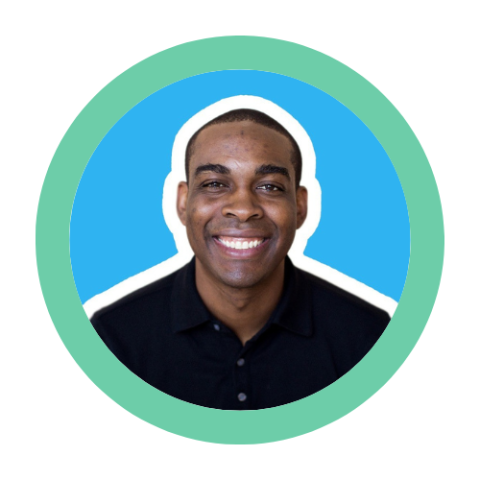
Donald C. Kelly, is the Founder and CEO of The Sales Evangelist, helping create business development and growth strategies for small and mid-sized businesses.
Interviewed by: Tim Condon, CRO at Clutch