Lead Quality vs. Lead Quantity: Why B2B Teams Are Rethinking Their Funnel in 2026
Bigger buying committees and tighter budgets are forcing B2B teams to rethink lead quality vs. quantity. Here's how top teams rebalance the tradeoff in 2026.
Updated May 28, 2026

A unique, authentic, and consistent brand voice is imperative for engaging audiences and standing out from the competition. That said, brand voice discovery can be a challenge without the right strategies. Learn from Dorien Morin-van Dam, owner of More in Media, how businesses can leverage collaborative onboarding and text analysis to discover and develop your brand's true voice.
Brand voice is a crucial element of a business's marketing strategy and an integral facet of growth. As the public face or persona of a brand, a brand's voice is its calling card — the image consumers have of a company that influences whether or not they feel aligned with a brand and, ultimately, whether they move from consumer to customer.
Brand voice is also an influential way of distinguishing a company in the marketplace, especially in digital environments like social media. A good brand voice is authentic, relatable, and unique. When consumers encounter your messaging, they immediately recognize it as coming from you, not your competitors.
Looking for a Digital Marketing agency?
Compare our list of top Digital Marketing companies near you
Brands work hard to discover and develop their voices and even harder to establish them as their public persona. The good news is that many tools are available to help you navigate the brand voice discovery process and develop a public face that aligns with your values, mission, and business goals.
Dorien Morin-van Dam, owner of More in Media, gives her opinion on collaborative onboarding and text analysis for developing a brand’s voice.
Browse our list of the top digital marketing companies on Clutch.
Collaborative onboarding is the practice of involving multiple people from an organization in the process of orienting new hires.
Traditional onboarding approaches typically match new hires with a single veteran employee. This one person is responsible for guiding the new hire through the onboarding steps, answering their questions, and acclimating them to the work environment.
Collaborative onboarding follows a slightly different template. New hires still work closely with an individual veteran employee, a “buddy” who acts as a point person to answer questions, show them around the workplace, and introduce them to other employees. This person may also distribute onboarding materials, such as the employee handbook and relevant paperwork. However, instead of restricting onboarding activities to the new hire and their point person, collaborative onboarding includes other company stakeholders — other veteran employees, higher-level executives, and representatives from departments across the company.
The process can vary depending on the needs of specific organizations but in general, collaborative onboarding involves the following components:
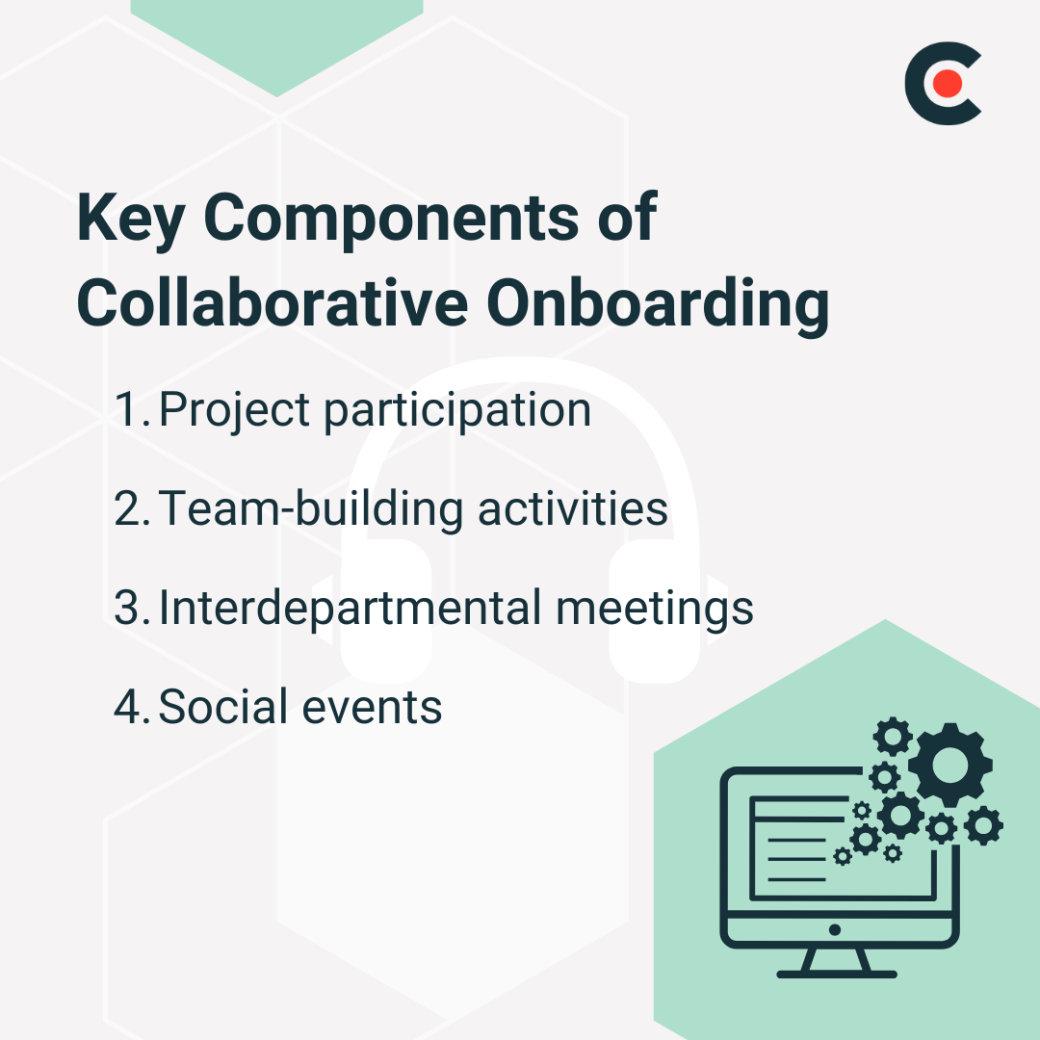
Collaborative onboarding poses several benefits to employees and companies alike. It often allows new employees to be integrated into the new work environment more quickly than those who experience traditional onboarding. When they aren’t siloed to a specific department or unit during their earliest days and weeks, new hires can immediately make introductions with a wider network of colleagues. This allows them to feel welcomed and supported by their new colleagues, which makes them more engaged, increases job satisfaction, and even improves morale in the workplace.
Employees develop a comprehensive understanding of the company from their very first days on the job. In addition to the orientation they receive to their own primary department, they meet with and shadow colleagues from other units. This provides insight into the interlinked dynamics from various departments and promotes widespread knowledge sharing across the company.
For a brand that is still in the process of discovering its voice, collaborative onboarding is especially beneficial because it:
You may be wondering how brands can use collaborative onboarding to streamline and improve brand voice discovery. Just as the collaborative onboarding process can vary from workplace to workplace, so can the specific methodologies used to involve new employees in brand voice discovery. A few common ways include:
Text analysis refers to the process of processing text data and analyzing it to derive information and insights, which brands can use to inform important decision-making. Manual or traditional approaches to text analysis require people to read and interpret various documents. However, text analysis is more commonly performed with computers and, increasingly, can be optimized with the help of AI technologies. Language models are trained to read and interpret human-written documents, extract information, and translate that information into actionable insights that inform business processes.
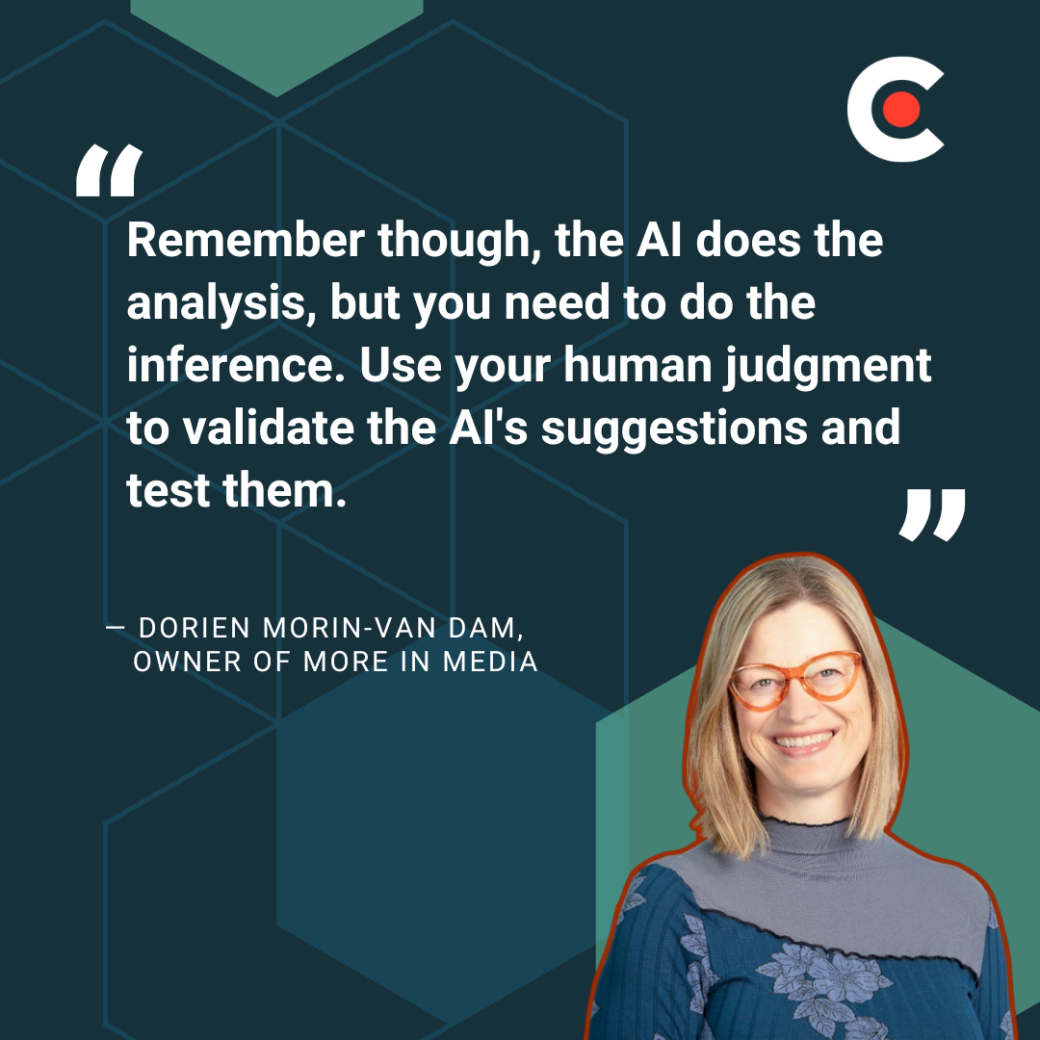
“AI tools are game-changing for voice analysis, but here's the right way to use them: First, ensure clients have their own internal chatbot or system - never put client data in public AI tools,” Morin-van Dam advises. “Remember though, the AI does the analysis, but you need to do the inference. Use your human judgment to validate the AI's suggestions and test them.”
Text analysis applies to a wide range of digital and analog document types, including internal documents and memos, social media content, emails, product reviews, and customer reviews. A range of text analysis methodologies may be applied to analyze texts, such as:
New technologies and tech innovations have drastically changed text analysis. In particular, AI technology has made the process faster, more efficient, more accurate, and more valuable to businesses. Large language learning models (LLMs) — the name given to artificial intelligence systems trained to understand human language and "read" and analyze text data written by humans — are capable of processing, summarizing, analyzing, categorizing, and collating data at speeds far beyond human capability.
When applied to vast data sets over periods of time, AI-powered systems ensure consistency in voice text analysis, guaranteeing, for example, that the same words are extracted across data sets. They also narrow the margin of error, making it far less likely that words or analysis subjects have been overlooked. Finally, programs that are driven by AI can leverage the technology for text summarizations to translate data into more comprehensive insights.
The text analysis process generally happens like this:
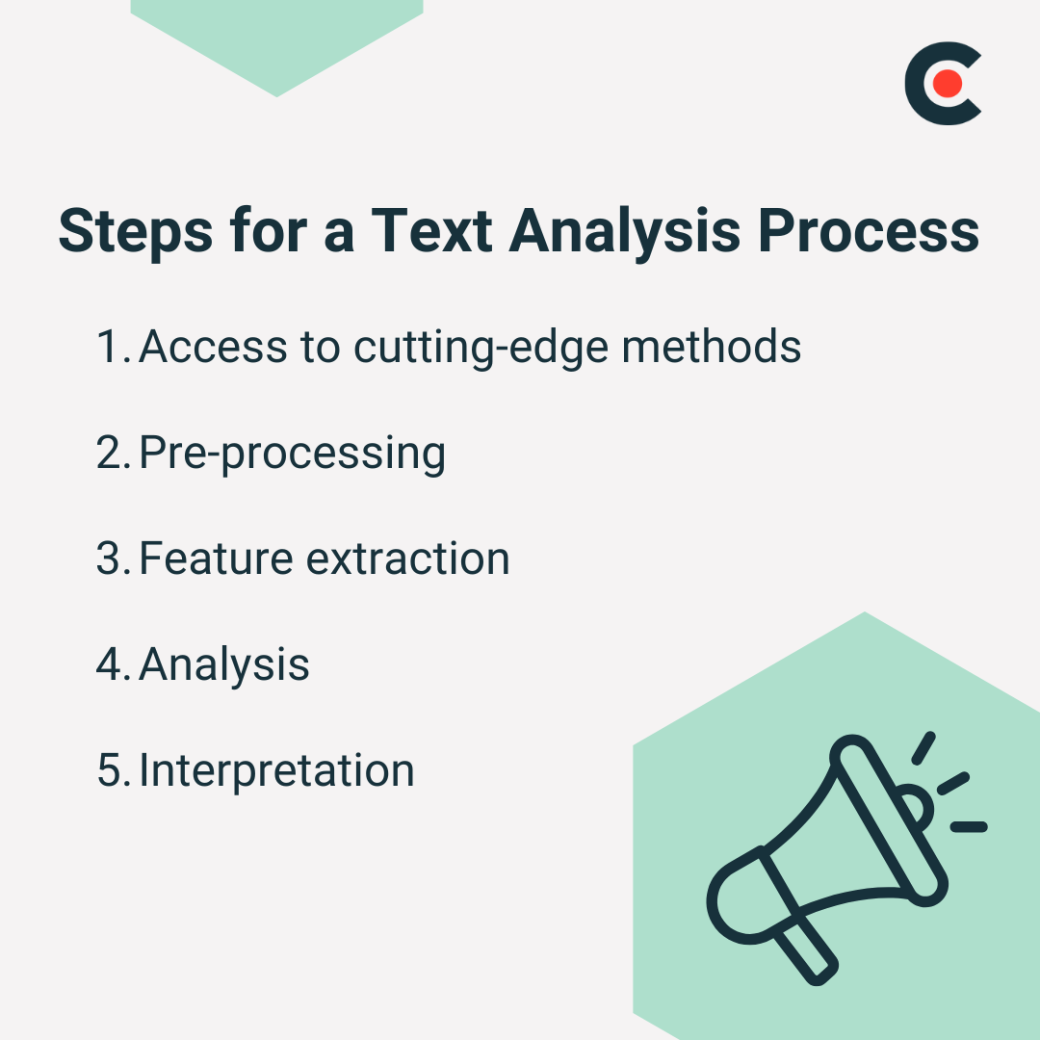
Those conclusions and insights derived from text analysis have various ramifications for the process of brand voice discovery.
For example, analyzing consumer-generated data to extract sentiments or keywords associated with your brand can produce information that cues you into audience perception by revealing how people talk about your brand, especially on digital platforms like social media. Are consumers enthusiastic about your brand? Or are they airing their grievances about a disappointing product, lackluster service, or negative customer service experience?
Similarly, text analysis can provide insight into how specific marketing strategies or products impact your target audience. This can help you determine whether a new marketing campaign impacts brand perception in intended ways or whether a newly launched product is aligned with your audience's needs and preferences.
Testing is an integral aspect of the brand discovery process. Marketing testing reveals the brand attributes that have historically had a positive influence on your target audience, while consumer test methods like A/B testing can reveal how consumers are currently perceiving your brand.
“Your KPIs should align with three things: your goals, your budget, and your resources. You can have ambitious targets, but without the team or budget to support them, you need to be realistic,” Morin-van Dam highlights when determining which metrics businesses should monitor. “Start by measuring any growth - daily at first, then weekly - and adjust based on what's working.
Of course, testing is only as valuable as the metrics you're considering. When it comes to brand voice, some of the most important key performance indicators (KPIs) to track are:
In the age of AI and other technological innovations, tools like collaborative onboarding and text analysis are more efficient, accurate, and valuable for voice discovery than ever before. They can also monitor important metrics like engagement, conversions, and brand awareness.
While there's no strict formula for discovering your brand's voice, several strategies can help you develop a voice that resonates with your target audience. Leveraging the power of these tools can enhance the discovery process and improve ongoing efforts to maintain an effective brand persona.

Dorien Morin-van Dam is a social media strategist, organic social media specialist, trainer, community manager, and keynote speaker. She has been a social media professional for over 10 years and is a Certified Social Media Professional and Agile Marketer. Dorien, often recognized on-stage by her signature orange glasses, has experience in a multitude of industries from local B2B and B2C clients to national and international brands.