
Podcast SEO in 2027: How to Make Business Episodes Findable
Learn how transcripts, question-led titles, structured data, and guest links help business podcasts get found on YouTube, Apple Podcasts, and Google.
Updated July 7, 2026

Every content guide says it's all about the headline, but new Clutch data shows readers care even more about the topic.
Content teams often spend hours rewriting and debating headlines. You may add a pun, delete it, try something more straightforward, and delete again. It can feel like everything hinges on those 10 or so words.
In reality, readers care much more about what your content is about than how you frame it. In May 2026, Clutch partnered with Compose.ly to survey 444 consumers about how they decide to read online.
Looking for a Content Marketing agency?
Compare our list of top Content Marketing companies near you
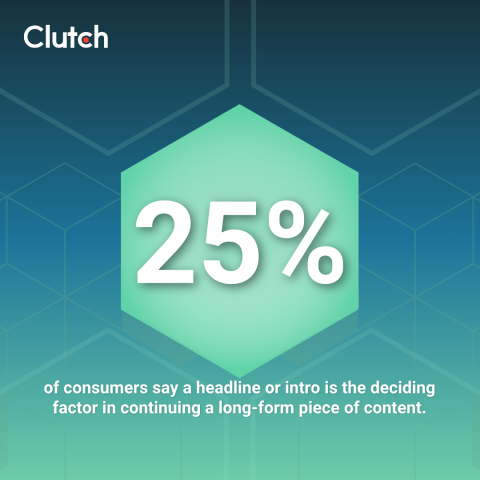
Almost half (49%) of respondents said that when they land on a long-form article (1,000+ words), their interest in the topic determines whether they keep reading. 25% say a compelling headline or intro is the deciding factor.
If you want readers to stick around, audience targeting matters more than clever copywriting. After all, someone who doesn't care about your topic probably won't keep reading, no matter how masterful your wordsmithing is. This guide breaks down how to write engaging content that people will actually finish.
Headlines aren't totally irrelevant. Our survey found that 52% of consumers skim them first, but only 25% use the article title to decide whether to read content. Nearly twice as many (49%) say topic relevance is what keeps them reading.
In other words, a great headline can earn clicks and get readers through the first paragraph or two. However, it can't sustain their attention if they aren't genuinely interested in the topic.
Marketers often conflate earning a click with engaging readers, but the two aren't the same. Even the most intriguing headlines can't convince consumers to spend time finishing a piece of content, especially if it's longer.
For instance, a busy parent might eagerly click an article titled "5 Amazing Side Hustles To Grow Your Savings." If it mostly talks about investing strategies, though, they'll probably exit quickly.
That's an issue because marketers usually place calls to action further down in the content. If visitors only read the first sentences, they won't see your invitation to schedule a demo or check out your products. You might end up with hundreds of clicks but few sales.
It's also not an efficient use of resources. Every piece of content takes time to research, write, revise, and edit. The last thing you want is for people to almost immediately bounce when they click it.
Don't spend all your time polishing your hook. Instead, take the time to research your audience to make sure they're genuinely interested in your topic.
As a marketer, you've probably spent a lot of time on craft. You can spin up a dozen funny or attention-grabbing headlines for any article. Once you get into the content itself, you know how to hit all the notes: an anecdote here, a persuasive CTA there.
Of course, none of that can replace genuine interest. For your audience, relevance isn't just a garnish. It's the delicious margarita that makes people keep sipping, not the writing itself.
In fact, 17% of readers who quit an article say they did so because the content "wasn't what I expected." Sure, outrageous clickbait or clever but misleading headlines get immediate attention. However, they often lose readers the moment the content doesn't meet their expectations.
For example, a headline might make grand promises, such as "10 Foolproof Ways To Clean Your House." If the article offers only basic advice, like vacuuming every day, readers will probably leave disappointed. They want foolproof hacks, not tips they've already heard from their mom.
Other times, the mismatch is less obvious. A headline may frame an article as a practical guide, but it's actually a long-winded opinion piece. Or maybe a blog post promises to teach a quick recipe, then includes elaborate instructions with 13 ingredients. In either case, readers will likely leave when they realize the content doesn't match the hook.
So what are readers actually looking for? Often, they want content that directly answers a question or solves a problem.
"Buyers are inherently self-centered and are primarily attracted to content that is immediately helpful to them," explains Jeremy Durant, Business Principal at Bop Design.

That goes against the advice you'll find in most "how to keep readers engaged" guides. They usually lead with headline formulas and hooks. Your high school English teacher probably told you something similar — but you weren't writing for customers then.
Again, that doesn't mean headlines don't matter at all. You still need to capture the reader's attention and tell them what your content is about. After all, people are less likely to click generic headlines like "Dog Training 101" or "Top 10 Tents" that aren't addressing their specific needs. They're also not attracted to blatantly sales-y headlines, such as "Why You Should Buy More Shoes."
The data is clear, though. Headlines matter less than standard marketing advice assumes, and they're never more important than actual relevance. That means you can safely put all the copywriting tricks you've learned for headlines on the back burner — at least when you're brainstorming topics.
For the best results, focus on understanding your audience's needs. This might involve surveying customers or monitoring which web pages get the most traffic.
Metrics like time on page can also show how people actually engage with your pieces. Use these findings to create more targeted content. For instance, if people spend the most time on your how-to guides, prioritize practical advice.
Of course, good writing still matters, especially as more low-quality AI-generated content floods the internet.
As the data shows, 25% of readers say they care about the headline and intro, and 10% value subheadings that provide structure. These elements are still meaningful, but they come second to the content itself.
Use craft to amplify your piece's relevance, not substitute for it. Once a reader is drawn to a topic, the headline, introduction, and a scannable structure determine whether they commit. These elements also influence how much people consume.
Our survey also reveals what doesn't move the needle. Only 7% of respondents said trust in the author or publication keeps them reading, while 5% focus on visuals and 3% on perceived length. That suggests if the topic fits a reader's needs, they're willing to take a chance on an unfamiliar author or work through a dense article.
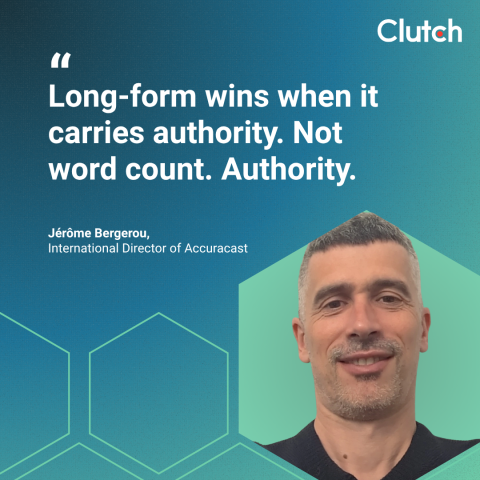
As Jérôme Bergerou, International Director of Accuracast, puts it, "Long-form wins when it carries authority. Not word count. Authority."
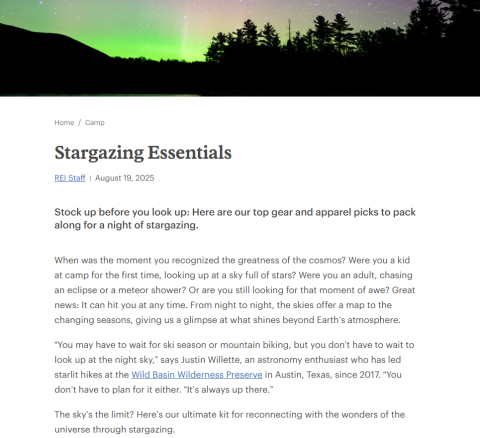
REI is one company that consistently uses simple, descriptive headlines to bring in its audience. For instance, the headline "Stargazing Essentials" sums up the post without fluff or flourishes. When readers click through, they find a straightforward gear guide with detailed explanations of why each item improves stargazing.
Clutch's data can help you figure out what to prioritize when writing for your target audience. Remember that the win comes when people read your content, not just click on it. Otherwise, everyone would simply write three-sentence articles.
These tips will help you master targeting and connect more with your readers.
Get started by researching your audience's pain points and interests. Look at a variety of data sources, such as:
You should also consider how your readers' intent may change over time. For example, someone considering adopting a puppy may want advice on choosing a breed or puppy-proofing their home. Once they've brought their new pet home, they might gravitate toward product recommendations.
Of course, the content that best suits your audience's needs isn't always easy to rank for. Maybe they're not using popular keywords, or they're asking ChatGPT instead of Google.
Don't stress too much about search engine optimization, especially when you first start content targeting. It's better to create tailored content than to produce irrelevant pieces that rise to the top of search results. If your content truly interests readers, it's more likely that they (and AI) will find it.
Resist the urge to reel readers in with sensationalized or exaggerated headlines. Clickbait titles might persuade them to click on your content once or twice, but you'll quickly lose their trust.
Instead, stick to the facts. Headlines should always accurately reflect the content, so readers know exactly what to expect. That doesn't mean they should be boring, though. You can still use eye-catching keywords and descriptive language to attract readers.
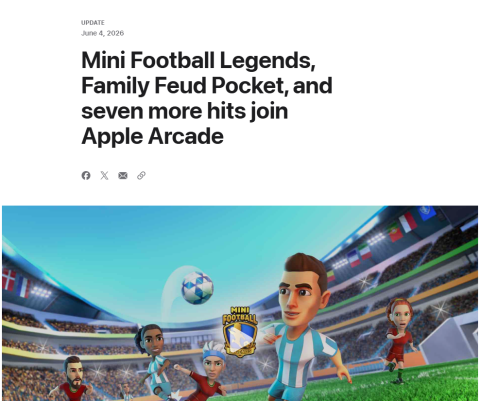
Here's an example from Apple's Newsroom: Mini Football Legends, Family Feud Pocket, and seven more hits join Apple Arcade. Readers immediately know that the article is about nine games coming to Apple Arcade. The headline also mentions two specific titles that may excite Family Feud and football fans.
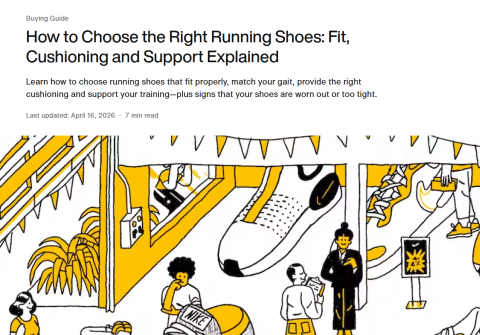
Meanwhile, a recent Nike blog post featured the headline How to Choose the Right Running Shoes: Fit, Cushioning, and Support Explained. The phrase "how to" immediately signals that it's a helpful guide for choosing running shoes. After the colon, the headline highlights three specific criteria that readers should consider. Introducing the core topics gives the audience enough context to decide whether they want to read more.
Accurate and informative titles like these will help prevent the unwanted surprises that cause 17% of readers to leave.
Once you understand what your readers want, it's time to let your writing skills shine. Hook them immediately with a statistic or anecdote. Like the headline, your introduction should clearly set out the premise of your content.
A strong structure will also encourage readers to finish your content. Organize paragraphs into sections with descriptive headings and subheadings. Bullet points and lists are other common ways to make content skimmable.
Visuals are another simple way to engage readers. Maybe a step-by-step process would be easier to understand if you turned it into an infographic. Stock photos can work to emphasize the ideas, as long as they're not too generic.
You don't need to brainstorm 10 clever headlines every time you write content. They're not what makes people keep reading, and they've never been the main event anyway.
As the data shows, 49% of readers keep consuming content because they care about the topic, compared to only 25% who stay for the headline.
The teams that win readers in 2026 are the ones that embrace content targeting. They start with the audience and the topic, then let the craft do what it's good at: telling authentic stories.