
How to Define Brand Values That Guide Every Business Decision
Brand values are the principles that guide company decisions, define what a brand stands for, and shape how it treats customers, employees, and partners.
Updated June 4, 2026

Targeted ads aren’t as effective for every age group. This article breaks down how each generation experiences online ads, the formats they trust, and how brands can adapt their strategies to drive more conversions.
Targeted advertising lets brands send personalized ads that match the needs, interests, and shopping habits of certain groups. In theory, this makes it easy to reach the right person at the right time and drive sales, but recent data shows that age impacts the effectiveness of targeted campaigns.
Younger people, like Gen Z and Millennials, see so many ads every day that they often ignore them or see them as fake, while Boomers are more likely to interact with sponsored posts or direct messages because they are used to traditional ads.
Looking for a Public Relations agency?
Compare our list of top Public Relations companies near you
To succeed in 2026, marketers need to tailor their strategies for each generation.
To learn more, Clutch surveyed 408 consumers in May 2026 about their brand discovery habits. The results showed that brands using the same targeted ads for all age groups are wasting money and missing out on better results. Marketers should adjust their approach for each generation.
This article breaks down how each generation responds to different types of ads. You’ll find out what kinds of ads work for each group, what gets them to take action, and how you can adjust your ad budget for better results.
When you scroll through social media platforms, the ads you see fall into three categories: relevant, annoying, and imperceptible. Users' perceptions of ads largely depend on their ad tolerance.
Ad tolerance is the amount of ad content a user will respond to before withdrawing from or turning against it. When you go on social media, you’re likely to see a variety of different forms of advertisements, including:
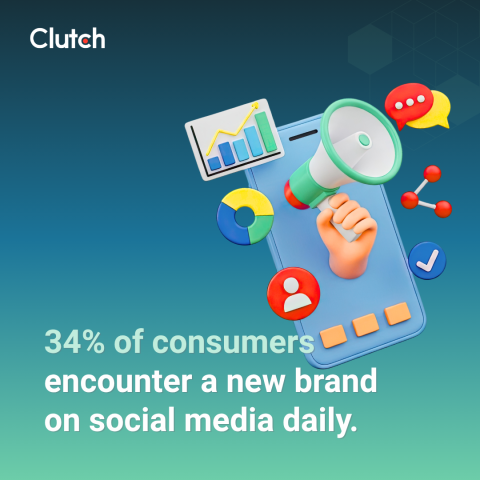
Tolerance shouldn’t be mistaken for exposure. Our survey found that 34% of consumers encounter a new brand on social media every day, meaning that no matter the generation, users are constantly seeing ads. For brands, this means their advertisements will appear, but they must capitalize on that to build trust.
To gauge an individual’s ad tolerance, it’s important to step back and look at the broader picture. Each generation’s ad tolerance correlates directly with the media environment they experienced in their younger years.
For example, Gen Z grew up with ad-blockers and creator disclosures. Millennials were around to witness the rise of digital ad targeting. Boomers spent their formative years trusting established broadcast and print media.
By understanding each generation, brands can present their products to a more receptive audience.
Social media influences buying across all generations, but the platforms and how they experience advertising differ. For Gen Z and Millennials, Instagram and TikTok top 38% each for discovery. On the other hand, Facebook, the only current platform with a meaningful Baby Boomer presence, reaches 29% of the generation.
While specific social media platforms attract users from different generations, they also shape how they tolerate and interact with ads. Platforms featuring scrollable text and picture feeds incorporate ads differently than long-form video platforms, which often leads users to perceive ads as either relevant or as interruptive to their experience.
For example, in TikTok’s fast-paced scrolling environment, an ad that interrupts the flow of creator content comes across as disruptive to a Gen Z user and is likely to be ignored. However, a Boomer scrolling through their Facebook feed may find a targeted ad that appears between posts to be relevant and helpful.
Mike Danford, Growth Optimizer at Adverio, has seen how social media’s format is quietly winning with younger audiences. He says, "I have a paid YouTube Premium account that removes ads, yet my feed is still full of creators posting content with shopping links. It's a reverse ask: the creator doesn't push, the viewer asks ‘where can I get that?' and follows a non-invasive affiliate link. Pull, not push."
This is an essential point. Younger generations are not rejecting advertisements outright, but they are rejecting interruptions. The formats that win over this group blur the lines between influencer entertainment and shopping.
Maximizing your advertising effectiveness and driving sales through social media platforms means taking the time to customize your strategies for each generation's preferences. This is a data-backed framework of how each generation responds to ads online:
Across generations, 42% cite positive reviews and 39% cite friends and family as the top drivers of conversion. While there are differences in how generations receive social media advertisements, trust always wins out. The key distinction is how advertisers package that trust.
While different generations view and experience ads differently, a successful ad campaign for any age group hinges on one thing: third-party validation. A targeted ad on its own rarely leads to a sale. What determines an ad's success is often what happens after they click. When a targeted ad leads to a product page with strong reviews, it’s much more likely to convert than a generic page lacking social proof.
Repetition is also a key to getting users to make purchases from advertisements. It may be even more important than the ad's creative execution.
Valentina Chiriacescu, Chief Commercial Officer at Ecommerce Today, says: "Passive scrollers rarely buy on the first encounter; they buy on the fourth or fifth. Conversion is a byproduct of familiarity more often than people admit."
The repetition of advertisements and brand exposure leads to familiarity. This tactic works especially well with the older generations. Having grown up with sponsored posts and traditional ads, Boomers convert more readily with this pattern recognition.
Repeated exposure is effective for younger audiences as well. However, that familiarity builds through video integrations, UGC content, product mentions, and creator-brand collaborations.
No matter how effective ad repetition is, an unproven product won’t convert like one with third-party validation.
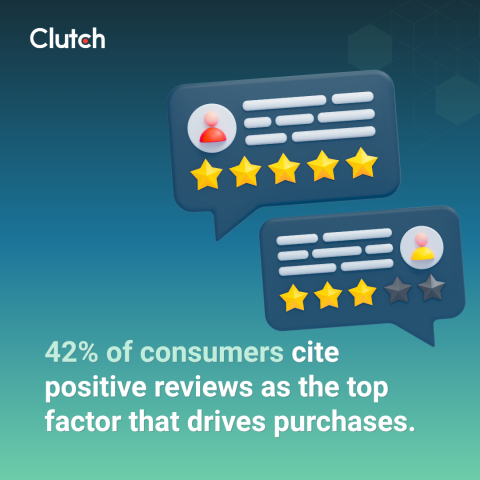
Our survey finds that 42% of consumers cite positive reviews as the top overall factor driving them to purchase from a newly discovered brand. This shows that social proof is the undisputed cross-generational equalizer. While targeted ads can generate attention and exposure, positive ratings close the sale.
With a better understanding of which forms of advertisements suit each generation, the easy takeaway is not to use the same creatives for all ages. However, it’s equally important not to focus on one age group and ignore the rest.
One way to make segmentation easier is to divide ad types by social media platforms. While there isn’t an exact generational divide among platforms, data shows that users on specific platforms tend to skew toward certain generations. Data from Statista shows how the following major platforms break down by generation:
No matter the social platform and generation, the digital advertising playbook is largely the same. Tom Bukevicius, Principal at SCUBE Marketing, states: "Social creates demand, search captures it, and retargeting reinforces it."
While this is true, it’s important to understand that each generation moves through the funnel at a different pace. For example, it takes longer to create demand through targeted ads in younger audiences. Older audiences, on the other hand, often move on to the second stage much faster.
Understanding the distinction between how each age group processes ads and moves through the digitized funnel is important because generational ad tolerance isn’t a fixed trait. It constantly changes as new platforms, ad formats, and AI-discovery tools emerge and evolve. Brands that actively monitor online and AI advancements with a flexible mindset will adapt faster to shifting consumer behavior than those who remain locked into a single playbook.
Targeted advertising should be a key element to every marketer’s strategy in 2026, but it shouldn’t be applied universally across age groups. Targeted ads land differently depending on which social users see them. The brands that resort to a one-size-fits-all campaign will burn through their ad budgets with little to show for their efforts.
Advertising isn’t a stagnant industry and will continue to change. In 2026, AI is reshaping discovery. Our data shows that 47% of respondents see AI as the biggest future force in advertising. However, the adoption of AI-assisted discovery divides sharply by age, with 57% of Gen Z and Gen X embracing it compared to only 13% of Boomers.
Our data concludes that fragmentation isn’t just about channels. It’s about how each generation receives the advertisement and message once they’re there. Younger audiences increasingly respond to UGC and creator integrations that minimize interruptions to their content consumption. Meanwhile, older generations remain responsive to the direct-response messaging and traditional ads that they experienced growing up. However, all audiences still rely on social proof to validate purchasing decisions.
Brands that stay flexible and keep their ad strategy open to new technologies and techniques are the ones that will remain relevant over time and across audiences.