
Testimonial Advertising: How to Turn Customer Stories Into Sales
Testimonial advertising uses real customer stories and reviews to promote your brand. Discover popular types and how to put this content to work.
Updated February 14, 2026

Ad blocker usage keeps climbing, meaning you need ad experiences that people actually welcome. This guide provides a practical playbook to increase your impact despite ad blockers.
Brands don't need another reminder that ad reach is fragmenting. You see it in your dashboards every week: CPMs climb while viewability and completion rates bounce around. What's changed is the audience's willingness and ability to simply opt out.
Ad blockers are reshaping how people experience the open web and streaming. And the consumer signal is blunt. In a recent Clutch survey of 453 consumers, nearly 30% said they'd pay for ad-free experiences, depending on price. That's a clear vote for better experiences over more impressions.
Looking for a Advertising agency?
Compare our list of top Advertising companies near you
So the question isn't whether ad blocker usage will continue to rise. It's how you adapt your digital advertising strategy with ad blockers in the mix.
In this article, we'll look at how to upgrade your marketing through quality content, native and contextual formats, and privacy-minded targeting. Discover how to ensure your ads are actually seen and, more importantly, welcomed.
You may have already felt the effect: More users filtering ads, more inventory hidden from your standard buys, and more paid subscriptions siphoning attention away from interruptive placements.
While advertising and ad blocking have both existed since the earliest web browsers, the difference now is the scale and the consumer motivation behind avoiding ads. Before implementing tactics to circumvent this, it helps to understand why people are opting out and what that means for your ad media mix.
When people block ads, they're pushing back on intrusion, not marketing per se. The usual suspects come up in survey after survey:
Given these issues, it's understandable that third-party sources estimate global ad blocker usage at 30–33%. Blockthrough estimated 912 million active ad-blocking users as of Q2 2023, nearly half on mobile. That same report estimated $54 billion in publisher revenue was at risk in 2024 due to ad blocking.
Users also escape ads by paying to skip them. This premium subscription growth tells the rest of the story:
These are large, ad-free zones where your traditional ad inventory doesn't exist.
Screen time continues to rise. People want fewer interruptions during work, streaming, and gaming sessions. That fatigue amplifies the intolerance for loud, heavy ad experiences and pushes users toward options that minimize distraction, whether that's Premium tiers, "ad-lite" bundles, or ad filtering.
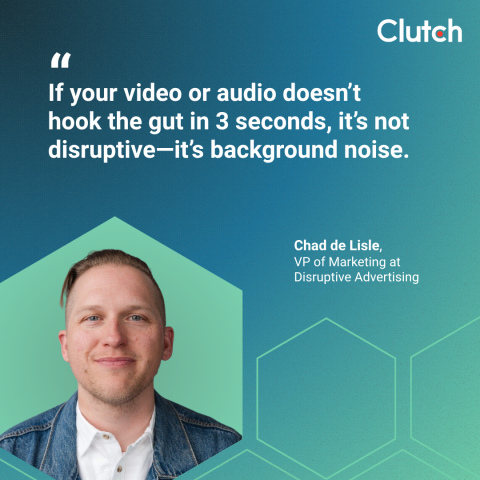
"Most brands are screaming into the void with content that sounds like an ad from a mile away. Skippability isn’t about format—it’s about energy. If your video or audio doesn’t hook the gut in 3 seconds, it’s not disruptive—it’s background noise," said Chad De Lisle, VP of Marketing at Disruptive Advertising.
This is the creative moat you control. Win the first three seconds, and the rest of the funnel gets easier.
Retargeting never recovered from its creep factor. Add years of data breaches and opaque data brokers, and you get a public primed to block.
Apple's ATT (App Tracking Transparency) reset attribution on iOS. A growing number of reports tie ATT to lower ad effectiveness and revenue for publishers reliant on cross-app tracking.
On the web, Google has paused full third-party cookie deprecation in Chrome but continues to ship Privacy Sandbox features and strengthen tracking protections. Such changes blunt legacy targeting even without a hard cutoff. The signal is clear: You can't count on old IDs or old tactics.
As a result, brands now face a smaller pool of ad-exposed users and heavier competition for every impression that survives the filter. The only sustainable path is to make ads that people actually want to see.
Not every ad gets the cold shoulder. That nearly 30% are willing to pay for ad-free experiences implies 70% are negotiable if you give them a fair trade-off.
So what earns a shot at attention?
You see this in platform choices. Users migrate toward freemium models that balance monetization and UX with reasonable ad loads, smarter targeting, and perks for signing in.
Netflix's rapid ad-tier growth, YouTube Premium's push, and Spotify's dual-engine approach (ads + subscriptions) all point to the same thing: The problem isn't advertising, it's bad advertising. If your ads help a user do or discover something, they are less likely to opt for an ad blocker.
The media plan you ran three years ago won't carry you now. You need to rebuild for consenting audiences and high-signal creatives. Here's how to advertise with ad blockers in the mix.
Make your brand's content the thing users seek out, not the thing they avoid:
In short, if the content isn't good enough to win organic attention, it won't perform when amplified via ads, either.
As ad blocker usage increases, native and contextual ads become your reliable reach. In practice:
There's a reason publishers like The Guardian introduced an Ad-Lite paid option alongside fully ad-free tiers. It formalizes the idea that lighter, in-context ads are more acceptable and gives users a path to being present even when personalization is declined.
Treat privacy as a product requirement, not a compliance checkbox. You can start by collecting data that people are willing to provide. Newsletter signups, gated tools, and communities with real perks are excellent ways to do so. When someone declares their own interest, you can segment cleanly and communicate without the creep factor.
Put your bets on creatives that earn attention and contextual placements inside platforms where advertising is native to the experience.
You don't have to call it an ad for it to perform like one. What matters is that a qualified buyer chooses to engage:
Together, these are the blueprint for a consent-first web. Do more of that, and ads feel like value add-ons, not interruptions.
Ad blockers are a symptom of a deeper demand for relevant messages and lighter experiences. Users will always find ways to avoid low-value exposure. Your edge comes from building content and ad experiences people opt into, because they learn something or feel confident moving forward.
Digital advertising challenges don't have to cancel out your marketing efforts. If you recalibrate your approach toward value, context, and privacy, your media dollars will work harder with less waste, and your brand will earn a reputation for being useful rather than intrusive. That's the kind of signal buyers notice.
The brands that commit to this shift will continue to grow, even as classic ad reach erodes. Choice beats coercion every time.