
How to Define Brand Values That Guide Every Business Decision
Brand values are the principles that guide company decisions, define what a brand stands for, and shape how it treats customers, employees, and partners.
Updated June 4, 2026

While online shopping has become a major way to purchase, in-store retail still plays a major role in product discovery. Learn how brands are connecting interest in a physical item with the trust signals needed to close a sale.
A middle-aged woman pushes her shopping cart down an aisle of her local grocery store. She stops and briefly scans over an array of pasta products before picking one up. After turning the package over in her hands a few times, she sets it back on the shelf and continues on her way.
Moments like this happen millions of times each day. Yet, for most brands, the reason why a potential customer notices their product, considers it, and then walks away remains a mystery.
Looking for a Public Relations agency?
Compare our list of top Public Relations companies near you
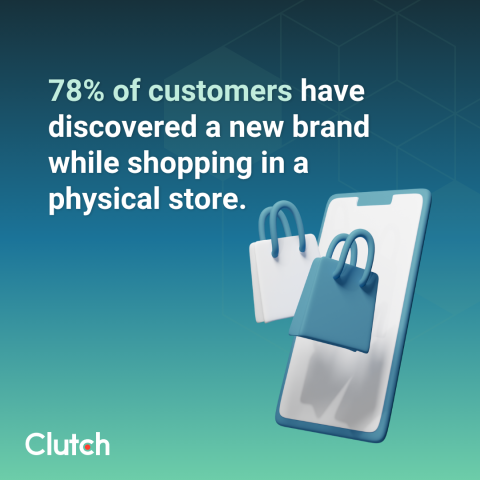
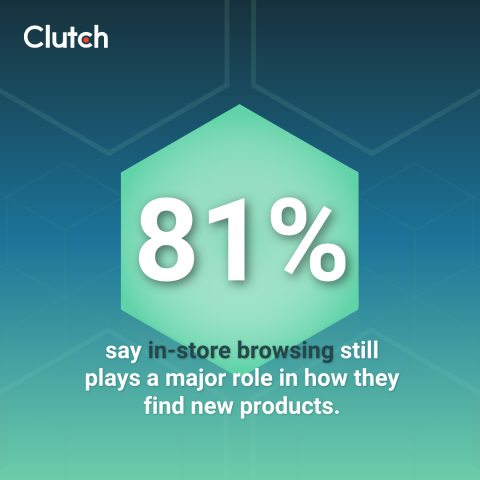
While online marketing is all the rage in 2026, the store shelf remains one of the most active discovery channels in commerce. Clutch’s May 2026 survey collected responses from 408 customers. It found that 78% of customers have discovered a new brand while shopping in a physical store, and 81% say in-store browsing still plays a major role in how they find new products. However, discovery is only one piece of the puzzle.
Without the array of online tools marketers have at their disposal, it’s a challenge to build enough trust to convert interest into a purchase in a physical store. This article helps brands understand the in-store purchase barriers that shape the average shopper’s 15-second decision to either place an item in their cart or put it back on the shelf.
As noted previously, our data showed that 78% of customers discovered a new brand in a physical store, and 81% said in-store browsing influenced their discovery of new products. However, it’s important to distinguish that these figures don’t represent purchases. While brand awareness may be thriving in brick-and-mortar stores, the trust needed to finalize the sale is largely absent.
When shoppers find a new product online, they can quickly look up reviews and recommendations with a few clicks. This gives them the validation they need to decide the product is worthwhile. In a store, the process isn’t as convenient. While it is possible for shoppers to pull out their phones and do a Google search or phone a friend, it’s far easier to just move on to the next product. Because of this, brands must establish trust fast enough for shoppers to make a split-second decision in the shopping aisle.
Fran Jakubowicz, CEO at Sunhouse Marketing, shares some thoughts on the legitimacy retail confers, saying: "There's something that happens when a consumer touches your product, sees it merchandised well, and encounters it in a curated context. It confers legitimacy that no paid social ad can replicate at the same cost. Physical presence signals that you're real, established, and that someone with taste already vetted you."

Holding a physical item and realizing that it has a place on the shelf doesn’t automatically translate to shoppers trusting the product. They’re still seeking the same trust signals they would look for online. In-store, physical items just have fewer surfaces to communicate this on.
Before determining how you can build enough trust for an in-store shopper to buy your product, you need to know what’s keeping them from it. Once a shopper stops and notices your brand, you face several obstacles. These are the four most consistent barriers that cause shoppers to walk away:
Any single or combination of these barriers results in a missed opportunity. Brands that can solve these trust issues at the shelf can turn in-store discovery into a sale. Those that can’t lose out to other items a few feet away.
Our data found that positive reviews are a major driver of sales today. According to the survey, 42% of consumers said positive reviews were their top factor in making a purchase. Coming in second was trusting the recommendations of family and friends at 39% when discovering a new brand.
In the past, shoppers without quick internet access were more likely to trust the items and messaging they saw on the shelf. However, consumers today have become conditioned to seeking quick verifications that guide their purchasing decisions. While the store shelf exists in both timeframes, recognizable branding and strong packaging were enough to drive sales in the past.
Online shopping means the consumer can quickly access multiple sources of verification, such as search engines, reviews, recommendations from social media, and messaging friends, to build enough trust to buy a product. If that same consumer is in a store, the packaging must convey that trust. Some products may be enough to make customers curious enough to take out their phones and spend 30 seconds searching. However, most shoppers don’t plan to spend their entire evening in the store and won’t spend their valuable time validating each item online.
Ultimately, the trust needed to facilitate a purchase doesn’t change whether someone is shopping online or in-store. If a shopper is curious about your product enough to scroll through online reviews only to find that they’re mostly negative or non-existent, they’re going to set it back down and move on.
Making the right strategic decisions can increase trust in physical locations, and it begins with packaging. Packaging protects your product from the elements and guarantees a positive customer experience. It also creates a first impression, displays crucial information, and starts to build trust.
Thirty-two percent of respondents to our survey agreed that packaging or eye-catching displays grab their attention and introduce them to a new brand while shopping in-store. Knowing how to wrap your product in high-trust packaging can make or break your business. Some of the things you must communicate include:
CEO of TOYBER, Michael Toyber, highlights the psychological impact of physical presence, saying: "Smart brands understand that a physical space isn't a store, it's a stage."

This is true of the physical store itself and applies, in miniature, to a package. No matter how small a product is, the packaging acts as the brand’s stage in a setting where nothing else is supporting its pitch.
When it comes to packaging, you can’t expect to convert shoppers by only going halfway. Products that catch a shopper's eye but don’t carry the trust signals are just wasted attention. When shoppers are intrigued enough to pick something up, they’re looking for a signal that gives them confidence to add it to their cart.
Besides packaging, there are other ways to easily bring shoppers the validation they need to buy a product. One of the most underused tools for closing the in-store trust gap is a physical-to-digital bridge. Here are some great options to integrate with product packaging:
Brands that stop viewing in-store discovery and online verification as separate events will be a step ahead of their competitors. These events are both parts of the same sales funnel. If you’re not making moves to control both surfaces, you’re going to lose sales after you’ve already paid for discovery.
Another tried-and-true method to close the in-store trust gap is taking the risk out of the first purchase. When a shopper picks up an unfamiliar product and must decide whether to try it, they have to weigh the price with no prior experience. However, giving them a deal makes it a low-stakes decision, and they’re more likely to take a chance on it.
Some of the best ways to facilitate a first in-store purchase include:
Reframe your mindset so you’re not just trying to move items off a shelf. Instead, think of it as manufacturing a low-risk discovery moment. By doing this, it’s easy for the shopper to take the first step, and the positive online trust infrastructure can then take over.
Packaging can provide the visual cues needed to draw a customer’s attention. However, brands can take this a step further by focusing on displays and validation. The way the store displays the product can act as an endorsement from the retailer, adding additional trust signals. Here are some things to focus on:
Jakubowicz agrees that display and merchandising play a huge role in credibility, stating: "Even a pop-up, a boutique wholesale placement, or a strategic retail partnership changes how a consumer perceives you."
This idea is why digital brands can invest in retail even if the margins aren’t as great. When you have a well-thought-out physical shelf presence, the visibility itself can be a strong trust signal.
Because the online validation infrastructure exists, brands can’t entirely solve the in-store conversion issue at the shelf. In the majority of cases, it’s solved within 30 seconds of a brand catching the shopper's attention and them turning to their phone.
In 30 seconds, a shopper can conduct enough compressed research to make a confident purchasing decision. They can quickly use AI bots, search engines, social media, review sites, or personal recommendations with a few quick taps to influence their choice.
Valentina Chiriacescu, Chief Commercial Officer at E-Commerce Today, commented on the discovery-and-trust channel that physical retail actually represents: "The brands that get this right stop measuring physical as a sales channel and start measuring it as a discovery and trust-building channel. Don't judge a pop-up by same-day sales. Judge it by branded search lift, email signups, and online conversion bump in that geography over the following months."

In essence, a physical item with strong packaging and placement might not sell if a quick online verification check returns nothing. On the other hand, brands with weaker shelf presentation can still erase doubt if they dominate online spaces with positive reviews and recommendations.
Brands that successfully navigate the discovery-to-purchase gap in physical retail stores often follow these same four principles:
These four trust levers are the same ones that shoppers look for everywhere else. Making sure all your bases are covered in stores will help you convert shoppers more effectively and improve your ROI.
Noticing a product and buying a product aren’t the same, and brands that understand this will have a much easier time converting potential buyers into customers. The issue isn’t about packaging, placement, or price alone; it’s about completing a verification process quickly. Investing in trust signals, both in-store and online, will help you get more shoppers to add your product to their cart with confidence.
As new technology emerges and old technology improves, in-aisle verification checks become faster, and AI-driven discovery makes an online presence essential. Brands that want to sell products in brick-and-mortar stores must step back and look at the big picture. The shelf is no longer an isolated channel, but a branch that depends on the brand’s online presence.