
How to Define Brand Values That Guide Every Business Decision
Brand values are the principles that guide company decisions, define what a brand stands for, and shape how it treats customers, employees, and partners.
Updated June 4, 2026

Influencer marketing is one of the most dominant forces in advertising today, but visibility alone doesn’t guarantee sales. New data from Clutch’s May 2026 survey shows how effective brands are using influencers and how social proof and AI tools are fitting into the mix.
No matter where you look online, you’re bound to see creators pushing brands and products to their audiences. While these influencers are using their reach to introduce new brands to consumers at unprecedented levels, their persuasive power is almost nonexistent at the moment of purchase.
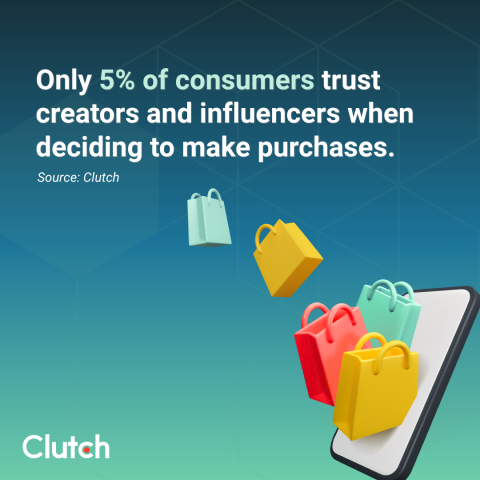
Clutch conducted a May 2026 survey to gain insights into today’s consumer discovery and purchasing behavior. It found that 10% of consumers credit creator videos for checking out a new brand, and 22% have purchased an item because it was trending on social media. However, 5% of those surveyed said those same creators were their most trusted sources when they decided to buy.
Looking for a Public Relations agency?
Compare our list of top Public Relations companies near you
In short, brands that enter influencer partnerships expecting them to guide their audience through the entire sales funnel are misreading the data and wasting their budget. Creators must be seen as discovery engines, not as closers.
This article breaks down how creator content and brands can work together effectively and what else campaigns need to actually convert.
In 2025, the global influencer marketing industry reached its highest level to date, nearly $33 billion. This staggering amount shows how prominent creators have become in today’s advertising industry.
The results of our latest survey support these claims. It found that 10% of consumers say creator videos are the content most likely to make them check out a new brand. At first glance, this 10% figure may sound underwhelming. However, it accounts for nearly a third of the 32% of consumers who said that they first discovered their most recent brand on social media. The survey also found that 22% have purchased a product because it was trending on social media or in the news.
Another stat that shows the increase in brand exposure online is that 34% of consumers say they encounter a new brand on social media every day. This means that over one-third of modern brand discovery occurs on social media feeds. The majority of this exposure comes from creator-led content rather than from company accounts and posts, creating a new type of opportunity.
Traditionally, advertisers push their brands in front of their target audience through pop-ups, banner ads, commercials, or other sponsored placements. While these methods have worked in the past, newer generations find them disruptive and annoying as they interrupt their experience.
Marketers have since pivoted to use a pull dynamic for their campaigns. In this type of marketing, social media users choose the content they want to consume based on the influencer or topic. When the brands partner with creators to integrate their products into the content, viewers become interested in the brands and seek out the products themselves.
The discovery power of creators is undeniable, but in some ways, they’re not the complete package. Our data found that only 5% of consumers point to influencers as their most trusted source. In contrast, 39% identified family and friends as their go-to source, and 42% say they trust positive reviews the most. This means positive reviews outpace influencer trust levels by 8-to-1 as a purchase driver.
The hard truth is that the same creators who drive discovery often lose authority at checkout. Looking at the full picture, while 10% of those surveyed pointed to influencers as the source of their discovery, only 5%, or half that amount, trust them when making a purchase.
This gap shouldn’t be too surprising. Social media users are savvy enough to realize influencers are being paid by brands to push their products and services. Sitting through these advertisements is fine, as they serve as a barrier to their entertaining content and often alert them to brands they were unaware of. However, when it comes time to spend their hard-earned money, they look for real validation from sources that aren’t financially tied to the brand.
An interesting development is how AI is changing the way we see this relationship.
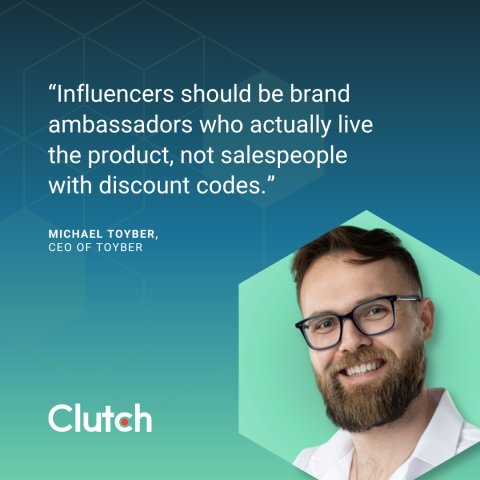
Michael Toyber, CEO of TOYBER, explains: "It doesn't care about follower counts. It scans for real people talking about real experiences. That's exactly why the influencer playbook needs to change. Influencers should be brand ambassadors who actually live the product, not salespeople with discount codes."
Toyber means that as more people turn to AI for product suggestions, companies will need fewer influencers giving generic product pitches. Creators who are actually enthusiastic about the product and use it naturally in their content will become much more valuable.
Data taken from our survey shows that 22% of consumers have bought something because it was trending. This stat contradicts the idea that only 5% of those users trust influencers. However, a closer look at trends helps explain how both can be true.
Influencers alone don’t create and control trends. Trends depend on social proof from peers to establish value. One influencer alone can’t catapult a brand’s popularity unless others follow suit as well. Once people begin to see validation from multiple sources beyond creators, such as friends, family, and others in public, they will view the trend as authentic. This consistency creates urgency to participate in the trend without placing all your trust in a single source.
CEO of ScaledOn, Iulia Vasciuc, says: "The job of a trend is to buy you attention, not revenue. If you're relying on trending content for new customer volume, you don't have a marketing strategy, you have a lottery habit."
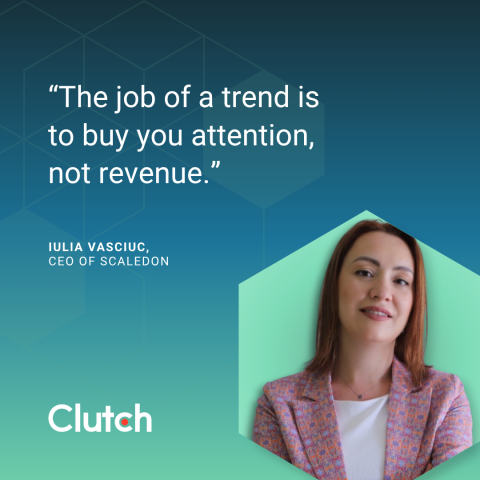
Her point is that many brands tend to misunderstand what trends accomplish. While trends can drive sales, relying solely on viral momentum without a broader marketing strategy will eventually lead to failed campaigns.
Creators can be the spark that brings attention to a new brand. However, because trends depend on a broader array of social proof, there’s no guarantee that the trend will take hold. Because of this, marketing departments that invest heavily in influencer campaigns without understanding that the conversions are usually peer-driven may end up wasting their budgets.
Brands that see creator partnerships as a complete marketing system are doomed to fail. Marketers must map the entire customer journey and place creators at the right stage to maximize their impact.
The greatest strength of creators is introducing a brand to a new audience. Their content makes it easy to demonstrate its practical use and how it fits into the average person’s life. This can start or nurture a trend, generate shareable content, and feed the top of a longer sales funnel.
It’s equally important to recognize where creators often underperform: at the bottom of the funnel. When it comes to closing first-time buyers, influencers don’t command the same level of trust that family, friends, and positive reviews do. Experienced marketers will direct toward third parties for validation at this point to drive conversions.
Understanding this balance can make or break marketing budgets. To be successful, brands must invest equally in creator partnerships and customer validation, such as generating positive reviews and building offline social proof. Those that pour money solely into influencers risk funding awareness campaigns that competitors with better trust infrastructure can take advantage of.
It should be apparent that strategic creator partnerships in 2026 need to be more than having a top creator use your product in their content and expecting them to carry users through the entire customer journey. Brands must treat creators as a discovery engine that feeds into a clear handoff instead of a self-contained campaign.
By leveraging three structural shifts, you can ensure your brand gets the most out of its creator partnerships. This strategy aligns with how younger consumers are shopping today: discovering through creators, getting validation through reviews, and making a purchase after repeated exposure.
Creator content needs to align with the right part of the sales funnel. Influencers do a great job of introducing a product, piquing curiosity, and getting users to engage. This exposure sets the tone for future purchasing decisions but doesn’t translate into actual sales. Once the influencer has hyped up the target audience, shift their focus to product pages, reviews, and retargeting to drive purchases.
It’s often tempting to blow your whole budget on a mega-creator like Mr. Beast, thinking that once the word is out, you’ll have more sales than your company can process. However, in reality, this isn’t a great strategy. Partnering with a creator who actually uses the product and genuinely believes in it comes across as authentic and results in a much better campaign.
Toyber notes how AI-driven discovery systems are reinforcing this idea by rewarding authenticity over reach, saying: “It comes from people with 800 followers who post because they genuinely love something. No brief, no contract, no coupon code. Just a real, slightly cringe-y person telling their small corner of the internet why something worked for them."
Because general audiences have grown accustomed to their favorite creators incorporating sponsored ads into their content, they've become better at distinguishing when creators are just getting a paycheck. Likewise, viewers can recognize when a brand connects with creators who know and use the product.
How you measure the success of creator partnerships is also a key element of an effective strategy. Looking solely at last-click conversions can skew results and misrepresent the creator’s impact. Instead, measure creator content by mid-funnel signals. Look at the analytics for branded search lift, save-and-share rates, and email sign-ups to get a clearer picture of the actual creator ROI.
Social media has reshaped modern advertising on its own in many ways. However, the rise of AI tools is pushing the boundaries of creator brand discovery even further, especially with “AI influencers.”
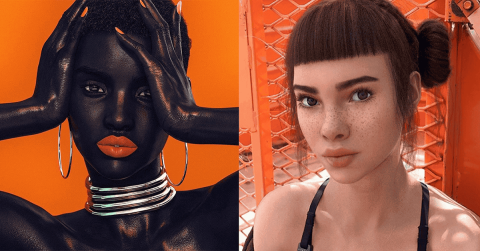
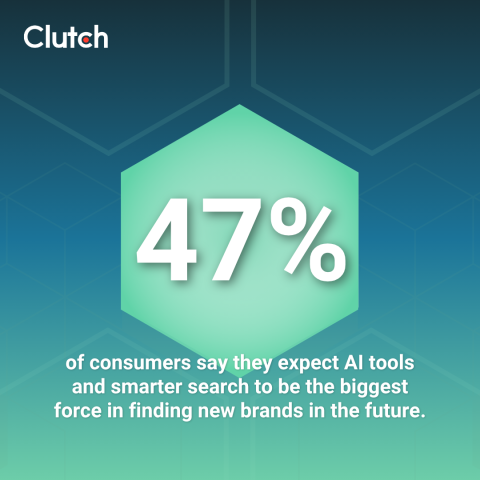
Of those surveyed by our team, 47% said they expect AI tools and smarter search to be the biggest future force shaping how they discover new brands. As more consumers rely on AI bots, assistants, and recommendation engines for their products, exposure to new brands will be less about a creator’s reach and more about overall public sentiment.
AI’s growth changes how brands should approach creator partnerships. AI doesn’t prioritize the creator with the largest audience and parrots their sponsored message. Instead, it looks at the broader discussion surrounding a brand and the consumer experience. This shift means YouTube comment sections, Reddit threads, review platforms, and forum discussions are beginning to take center stage. When a consumer prompts an AI tool for a product recommendation, they’re getting answers based on broader conversations as opposed to a single endorsement.
This doesn’t mean creator partnerships are becoming irrelevant. As AI continues to develop, brands that connect with authentic influencers who generate organic conversations about their products will reap major benefits. Positive audience engagement around a brand or product will compound into AI-discovery visibility, doubling ROI for brands that prioritize authenticity versus campaigns that lean on creators with massive reach and yield one-off impressions.
Ultimately, brands that approach creator partnerships the right way as a tool for discovery and exposure will have continued success even as AI moves further into the spotlight.
Our recent survey shows that using creators as discovery engines at the top of the funnel is extremely effective. However, the further down the funnel the customer goes, the less influence the creator has. The gap between the 10% of consumers who point to influencers as the way they discover new brands and the 5% who say they trust the creators enough to make a purchase isn’t a problem to solve. Instead, it’s a feature that sharp marketers design around.
The questions shouldn’t be how to get your influencers to convert better. It should be about how you guide newly interested consumers from creator content to your review, recommendation, and trust infrastructure to close sales.
As AI-driven discovery tools continue to improve and consumers become more skeptical of what algorithms are feeding them, the brands that treat creators as part of a larger trust-building system are setting themselves up for better outcomes down the road.