
How to Define Brand Values That Guide Every Business Decision
Brand values are the principles that guide company decisions, define what a brand stands for, and shape how it treats customers, employees, and partners.
Updated April 23, 2026

Marketing teams have always aimed to build brand recognition, from the green Starbucks logo to the McDonald's "I'm lovin' it" jingle. But it's not just about building familiarity with humans anymore. AI search tools also need to recognize businesses...
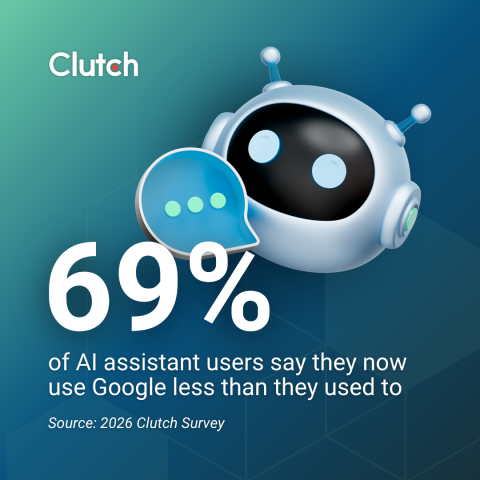
Clutch surveyed consumers to find out how AI is changing search habits. Of those who use AI assistants, 72% use them daily. Nearly a third (32%) choose AI over Google when they need information, and 69% use Google less than before.
Looking for a Public Relations agency?
Compare our list of top Public Relations companies near you
Like a person, AI can only recommend what it already knows. When a customer asks AI about a product, service, or category, it suggests brands it trusts. But it can only do that if it has enough context.
Keenan Beavis has seen this shift firsthand. He's the Founder of Canadian AEO Agency Longhouse and the author of AnswerMapping: Become the Answer AI Recommends. He explains, "To stay relevant, business leaders have to move beyond traditional rankings and focus on becoming the definitive answer that AI and large language models (LLMs) trust and recommend."
This guide breaks down how brand recognition has changed as more people turn to AI search first and why it matters. It also shares practical strategies for helping your business show up in AI recommendations.
What is brand recognition? Traditionally, it's how easily customers can recognize a business by its name, visuals, or messaging. For example, if you spot a pair of sneakers with a swoosh symbol, you probably know they're from Nike.
As AI search expands, so has the definition of brand recognition. It now includes how familiar AI is with your brand, and how confidently it can represent you. Suppose your company specializes in orthopedic shoes for children. If a parent asks an AI assistant for recommendations, it may not mention your brand if it doesn't know enough about it — even if you're the best fit.
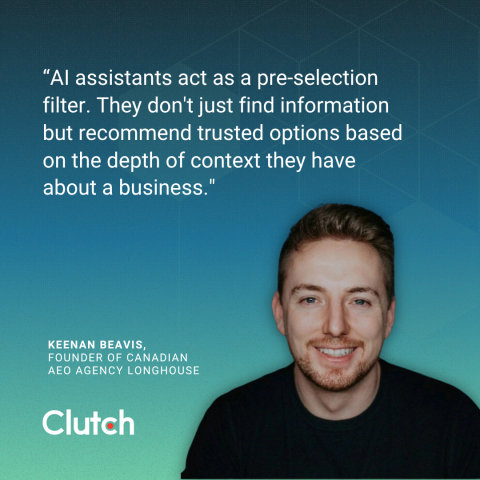
“AI assistants act as a pre-selection filter," Beavis observes. "They don't just find information but recommend trusted options based on the depth of context they have about a business."
Brand recognition has always influenced whether customers choose you. Now it also influences whether AI surfaces you in the first place when customers search for products and services.
Businesses used to view brand recognition purely as a marketing metric. If people could identify your company based on a clever slogan or color scheme, you could celebrate. These days, recognition also determines whether you show up in AI search.
"The biggest risk is being ignored by the tools people are actually using to make decisions, such as ChatGPT, Perplexity, Microsoft Copilot and Gemini," explains Beavis.
AI assistants don't deliberately exclude brands, but they tend to pass over businesses when they don't have strong context.
Beavis continues, "In my own experience with Longhouse Branding & Marketing, despite our awards, incredible reviews, and top rankings, ChatGPT initially did not include us in top ten lists because the AI simply did not know enough about us in a way that made it feel confident."
AI systems use their own algorithms, so you can't spoon-feed them information about your brand. Focus on consistent messaging and earning citations from other sites. These signals help AI assistants understand what you do and decide whether to represent your brand when customers come looking.
People connect with brands through emotional connections and firsthand experiences. Maybe you crave sugar every time you see the blue Oreo packaging, or you automatically grab Angel Soft toilet paper when you spot its cute baby logo.
Of course, AI can't feel nostalgia or any other emotion. It relies on context and outside information to understand businesses. These tips will help you increase brand recognition in AI search.
Customers often skim an unfamiliar brand's website and reviews before they purchase. Likewise, AI vets companies by collecting information from multiple sources, including:
When all these sources have consistent information, AI can recommend your brand more confidently. However, inconsistent or outdated data could lead to misrepresentation.
For example, a directory might mention a product that you no longer sell. If searchers ask about similar items, AI could point them to your brand. Or, if it's not confident, it may not surface your business at all — even for products you actually sell.
Audit your brand's presence by searching for it across every major platform. Make sure that each source contains an accurate and consistent business name, description, services, and messaging.
Clarity matters, too. Beavis says, "The most useful websites are structured like reference libraries, not cleverly worded digital brochures." Use clear definitions and avoid wordplay that AI may not understand.
An excellent marketing campaign is often enough to win over customers. AI is more discerning. Instead of taking your brand at its word, it checks other sources for validation.
It prioritizes third-party mentions from authoritative, often-cited sources. As Beavis puts it, "AI confirms authority by checking for relevance, organization, uniformity, trust signals, and evolution."
These trusted resources often include customer reviews, but they're not all created equal. AI favors detailed reviews that describe specific problems and how your brand solved them. This specific feedback provides more context than generic star ratings.
AI also consults directories, industry publications, and press coverage. These resources build trust and directly influence how AI represents your brand. If an outdoors magazine spotlights your hiking app, your brand may appear the next time someone asks ChatGPT about camping essentials.
Marketers have played the search engine optimization (SEO) game for decades. It often involves predicting the keywords that customers search for and weaving them into content. That's why business websites often include slightly clunky phrasing like "best Chicago tire repair shop." Search engines use these keywords to match users to relevant content.
On the other hand, AI looks for content that directly answers the user's question, even if it doesn't use the exact same keywords. It favors clear language and easy-to-scan structure.
You can meet these expectations by building your content around the six root types of questions: who, what, when, where, why, and how. For example, a tire repair shop's blog may include headings like "What To Do If You Get a Flat Tire on the Highway."
Organize this content into focused, easily digestible sections. It's much easier for AI to cite a concise paragraph than to extract answers from a meandering blog post. You should also lead each section with a direct answer, such as, "If you get a flat tire on the highway, immediately turn on your hazard lights and slowly pull over to the shoulder." That way, both AI and distraught drivers can quickly locate essential information.
FAQ pages and well-structured service pages are especially useful for building brand recognition. AI can pull ready-made answers from this content, so it's more likely to reference your brand.
AI algorithms gather information about brands across the entire web. If you only focus on owned channels like your website, you may not gain enough visibility to show up in AI search results.
Contributing guest posts is one way to raise awareness of your brand and strengthen your reputation. Look for reputable sites in your industry that accept pitches from outside experts.
For example, Scott Waldyn, an SEO Account Manager at JumpFly, recently contributed an article on striking-distance keywords to the Clutch blog. Authoritative content like this makes it more likely that AI tools will reference JumpFly when people search for related topics.
Directory profiles and industry features also increase recognition. If you're launching a new product, try publishing a press release that journalists can share in industry publications. If you own a restaurant, set up a profile on Yelp and encourage customers to write reviews.
Investing in third-party content gives AI more opportunities to encounter your brand. Each authoritative source adds more context, helping AI better understand your business. As its confidence grows, it may mention your brand more often in search results.
Just make sure that every source describes and cites your brand the same way. If one site references your company as "a top senior living software firm" and another says it's "a tech company for retirement homes," AI may not make the connection. Consistency is key.
Do you know what ChatGPT says about your brand? How about Microsoft Copilot or Perplexity? If the answer is no, you're not alone. Most businesses don't actually know what AI systems are saying about them or if their descriptions are accurate.
Start with a simple audit. Ask popular AI assistants about your business, your category, and your competitors. Here are a few example questions you can use:
Pay attention to where your brand appears and where it's missing. Suppose your business offers two similar services, but AI only recommends it for one type. Adding more context to your website could help you gain recognition in both categories.
Look for inaccuracies, too. If AI shares incorrect information about your brand, it may be drawing from an outdated source. Try asking it to cite its sources, or plug relevant search terms into Google. For example, a directory might incorrectly describe a commercial painting company as a "home renovation business." By correcting these details, you'll make sure AI has appropriate context.
After you finish your initial audit, get in the habit of tracking brand mentions across authoritative sources. Tools like Google Alerts can help you spot these references quickly. Skim them for accuracy, and reach out to the creators if they get something wrong. Even minor fixes can go a long way to gaining AI confidence.
You should also monitor reviews on key platforms, including Google Reviews. If the quality or volume of this feedback drops, reach out to customers and encourage them to leave reviews.
And don't forget to keep testing AI systems. Regularly ask questions in your category to see if and how your brand appears. Use these experiments to brainstorm fresh content.
AI systems don't decide which brands to surface at random. They rely on information shared by reputable sources.
Here's what that looks like in action:
The goal is to build an online ecosystem of correct, credible, and consistent information about your brand. More mentions equal more opportunities for AI (and humans) to discover you.
Google and Bing aren't going extinct any time soon. However, AI has opened new ways for customers to discover products and services. That's great news for brands in competitive industries. Even if your content doesn't appear on the first page of traditional search results, it can still show up in AI answers.
Investing in brand recognition is the key to AI visibility. The most accurately represented businesses have consistent descriptions and clear positioning. They're also widely cited, allowing AI to draw from many sources.
For businesses looking to build a brand that AI trusts and customers recognize, partnering with a branding agency is a strong starting point. Get started by researching branding experts with proven track records in your industry.