
How to Measure SEO Success When Traffic Declines
Organic traffic is down, but is your SEO failing? Learn which metrics show real SEO success when AI Overviews and zero-click searches are reducing clicks.
Updated February 18, 2026

AI is changing how people search for information online. What does that mean for your SEO strategy? These five tips explain.
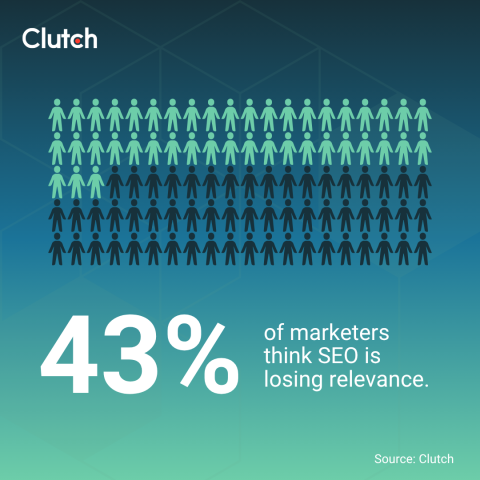
We’re entering an uncertain era of search. According to new Clutch data, 43% of marketers think SEO is losing relevance, but 33% believe it’s more important than ever. The field has become divided over the trajectory of SEO in the age of AI.
Looking for a SEO agency?
Compare our list of top SEO companies near you
The key question for many teams is whether to continue investing heavily in SEO or to shift strategies to prioritize AI-driven overviews, LLMs, and zero-click searches. But you don't have to choose one over the other.
Your SEO team can still deliver substantial value for the company. It may just need to rethink its approach to do it. This is a time period in content and ads where Google is losing market share and user habits are evolving.
This guide is designed to help SEO teams make the transition with five strategic responses to these trends. So, let’s get into it:
Historically, content ranked on platforms like Google by featuring the right keywords. They are becoming less important in the age of AI overviews. Tools like Google’s Search Generative Experience and Bing Copilot favor intent and context over literal phrasing.
For example, you might sell accounting software and write SEO blogs with keywords like “best accounting software.” These pages become less relevant as users increasingly get their answers from AI summaries. They consider the user’s true intent, infer the context, and sometimes cite sources as part of these answers.
For SEO teams, this means optimization is becoming more than a chase for high-volume keyword rankings. In the emerging era, the content that performs best will be the content that understands and addresses users' motives and expectations most effectively and clearly.
So, the question becomes how to identify and address user intents more directly. Here are four strategies to get you started:
The key takeaway is that SEO is becoming less about targeting specific keywords and more about delivering real value to users.
Google and other search platforms are shifting from directing traffic elsewhere to trying to keep it on site. This means zero-click searches (where users get their information from the AIO and do not click on any search results) should continue to climb. It also means you’ll need to rethink how you optimize content. Here’s how.
First, the structure of your content will need to evolve. AIOs value clarity and formatting highly.
You can give your content a better chance at being featured in AIOs by:
For AIOs, search engines look for structured answers and highly scannable content that’s easily interpreted and summarized.
AIOs also favor content that demonstrates EEAT, or Experience, Expertise, Authority, and Trustworthiness. That means updating content to feature author bios with credentials tied to real profiles, like LinkedIn accounts.
You should also show editorial transparency, noting when articles are updated, who reviews them, and what data they’re based on. As much as you can, try to reference original research and verified sources, too. Linking to these instead of aggregator blogs will make your content appear more reliable.
Finally, SEO teams will need to shift to alternative metrics for measuring outcomes. The new KPIs aren’t just site visits or clickthrough rates; they’re visibility in results synthesized by AI. This is still an emerging field, and results can be difficult to track, but try to measure:
The key takeaway is that zero-click searches are rising, but that doesn’t necessarily mean you get zero value from them. If your SEO team optimizes for AIOs, it can still generate visibility and traffic, even if it looks different from how it has in the past.
AIOs tend to favor sources they view as highly authoritative — often, more than those that answer the user’s question most directly. This has further implications for your content strategy moving forward.
For one, you’ll want to start building topical depth through content clusters. These show that you understand a topic deeper than competitors who only address it through a single blog. That can mean:
It’s also worth finding ways to elevate your authors’ credibility. When the writer has consistent bylines across industry sites, it tells AI that they have a high reputation in the field. That can make inclusion more likely, even if your on-page content remains the same.
Other tips for boosting your content authority scores include:
The key takeaway is that modern search engines are evolving into reputational networks. They’ll increasingly favor content from respected voices and brands. So, it’s worth investing in building your content authority and trust today.
Cross-team collaboration is also becoming more important in the age of AI SEO. Instead of having one team create content and another track its performance, you may need to unify all teams under a single shared strategy.
For example, UX groups can improve structure and linking, while content helps you develop the right tone for authority and inclusion in AIOs. Developers can also play a role by maintaining structured data and following emerging standards like JSON-LD or IndexNow.
Finally, partner with your marketing and analytics teams to tie the visibility you’re getting to revenue. That may mean creating new internal dashboards or developing an internal system for AI lead tagging.
Finally, traditional metrics like rankings and click-through rates no longer capture the full impact of your SEO strategy. AI-driven search is changing the way visibility is created. Here’s a closer look at what that means for your tracking and reporting.
First, older models assume a linear user journey from search to conversion. AI creates a layered experience instead, where discovery, engagement, and conversion can occur across multiple platforms or even simultaneously.
To account for this, start using multi-touch attribution to account for conversions assisted by your inclusion in AIOs. You may also want to prioritize viewership metrics to help you value the exposure you’re getting, even if it doesn’t always lead to direct traffic.
Combine these with qualitative insights around brand sentiment and search share to understand how your influence is evolving beyond traditional KPIs.
There are also some new metrics you may want to start tracking in the evolving AI search landscape. These include:
Consider which KPIs fit the best for your business as you take on this new approach.
One of the challenges of this new way of tracking performance is that results are less linear and harder to connect to marketing spend. To combat this, executives may need to translate SEO performance into business language more often.
For example, instead of referencing click-through rates, your CEO might talk about the impact a shift in content strategy is having on the discovery pipeline. Sharing visuals and trendlines can help these conversations land more consistently.
AI hasn’t replaced SEO, but it has changed how your company should think about it. In the next era of search marketing, intent matters more than keywords, and authority will play a massive role in your visibility.
You can start making the shift today by auditing how AI systems view your brand. You may also want to revamp older content to make it more visible and useful for AI crawlers. If you’d like some help with this process, partnering with an agency that specializes in AI optimization could be a good move.