
How to Measure SEO Success When Traffic Declines
Organic traffic is down, but is your SEO failing? Learn which metrics show real SEO success when AI Overviews and zero-click searches are reducing clicks.
Updated June 19, 2026

AI SEO content is digital content created or enhanced with artificial intelligence to improve search rankings and performance. As AI adoption accelerates, marketers are weighing its role against Google’s guidance, which clarifies that AI use is acceptable as long as quality standards are met. With search engines scaling content faster than ever, businesses need strategies that balance efficiency with credibility.
This guide explains how to use AI tools responsibly to streamline workflows, avoid common pitfalls, and boost visibility. By the end, you’ll know when AI can help — and when human expertise makes all the difference.
Compare our list of top SEO companies near you
AI is now built into how Google delivers results.
Looking for a SEO agency?
Compare our list of top SEO companies near you
In May 2025, Google explained how its new AI experiences — including AI Overviews and AI Mode — fit into Search. The message echoed its long-standing guidance: What matters is that the page delivers unique, people-first information that feels valuable and trustworthy, with or without AI.
Google’s post spelled it out — AI can play a part in the process, but the end result has to be original and satisfying to the visitor. That means the heavy lifting AI provides, whether that’s clustering keywords or sketching out a draft, still has to go through human review. Teams need editors to check the facts, adjust the voice, and decide what’s worth publishing.
AI tools might seem unnecessary if you’ve already built a strong content pipeline. Some marketers even hesitate to involve them at all, worried that “robot writing” will weaken their work. In practice, though, AI support is less about replacing writers and more about removing bottlenecks.
Efficiency gains. Even simple steps like outlining or editing can take hours when repeated across dozens of pages. AI helps cut that time significantly. Jasper’s 2025 State of AI in Marketing survey found that 78% of adopters saw a productivity boost, often freeing marketers to focus on strategy and creativity instead of mechanics.
Keyword insights. With Google’s frequent updates, keyword intent shifts quickly. AI-driven research platforms can cluster thousands of search terms, surface semantic variations, and highlight which queries map to user intent. That makes keyword targeting less guesswork and more data-backed planning.
Scalability. Human teams have a natural ceiling. AI lowers the barrier for volume by producing first drafts or expanding outlines across multiple formats. Instead of 3 articles a week, the same team might shape 10–12 usable drafts — with editors focusing on refinement and brand alignment.
Consistency in quality. AI doesn’t tire or miss details in the same way people do. It can flag grammar slips, check readability, and apply formatting rules across large libraries of content. Used in review mode, that creates a baseline of consistency that speeds up publishing. Still, AI can stumble on facts, which makes human oversight essential.
Brand voice adaptation. With training, AI tools can learn a company’s tone and even take on different personas. That flexibility helps maintain consistency at scale, but it takes time to develop and still requires human review to catch nuance and context.
Multilingual support. Many AI platforms can draft in multiple languages, opening the door to markets that once required dedicated translation teams. While human review is still essential, this feature makes international SEO efforts more feasible for mid-sized businesses.
Predictive optimization. Some tools now suggest edits based on live ranking data, predicting which phrasing or structural changes could improve a page’s performance. This forward-looking feedback helps teams test and adjust faster.
Featured snippet potential. By analyzing common question formats, AI can flag which sections are snippet-eligible and suggest structured responses. That increases the odds of securing top placement in SERPs beyond the standard link.
Together, these advantages make AI less of a novelty and more of a practical resource. The challenge isn’t whether to use it, but how to pair its strengths with human oversight so content remains both scalable and trustworthy.
While artificial intelligence has plenty of benefits, it’s not perfect — no technology is. It can create new risks that can hurt both rankings and brand trust if left unchecked. Here are a few potential drawbacks to including AI in your SEO strategy:
With strong editorial processes (fact-checking, clear version control, and documented human review), these risks can be managed. The key is to use AI as an assistant, not a replacement.
AI works best when it’s part of a structured workflow, and not used as a shortcut. The steps below show how to integrate AI across the main stages of SEO content production, from keyword discovery through quality review, while keeping brand voice and credibility intact.
Finding the right keywords is still the foundation of SEO. AI tools help by clustering related keywords, sorting them by search intent, and flagging gaps competitors may be missing. A simple prompt such as “List long-tail queries about sustainable packaging, grouped by informational vs. transactional intent” can return a clear set of starting points. Editors then decide which clusters matter most for the brand.
Once you have clusters, AI can map them to topic ideas and outline drafts. Tools are especially useful for ensuring coverage of user intent. For instance, recommending sections that answer Google’s “people also ask” questions. The key is to treat AI output as a draft framework, not a final plan. Editors should perform independent research and refine outlines so they match both SEO goals and audience needs.
AI drafts can speed up the writing stage, but they rarely sound like your brand on the first try. Teams often use a “de-AI” checklist to confirm facts, remove stiff phrases, add citations, and make sure the tone matches existing content. Some organizations assign an editor to own voice governance across all AI-assisted drafts.
AI tools can assist with the details that boost rankings, like drafting meta tags, checking on-page formatting, or suggesting schema markup. Some platforms even test headline variations or snippet-friendly answers to improve visibility. Human oversight remains essential, but AI can provide data-driven options that speed up experimentation and reduce the guesswork in A/B testing.
The last step can’t be automated; it needs to be done by a human. Every draft needs fact-checking, plagiarism review, and a documented sign-off. Version control in tools like Google Docs, a CMS, or project software shows how content evolved and confirms human oversight was part of every major decision.
Different tools excel at different stages. Use lightweight AI assistants for keyword clustering and outlines. For drafting, choose platforms that let you train style guides or upload brand-specific data. For optimization, lean on specialized SEO software that integrates with analytics. Treat tool evaluation as part of the workflow, not an afterthought — the right mix can prevent over-reliance on a single platform.
AI platforms vary widely in what they do best. Organizing them by function makes it easier to see where each one fits into your workflow.
Grammarly Business
SEO teams today often juggle two paths: a traditional, manual approach and one that folds AI into the workflow. However, adoption is already trending towards mainstream with over 56% of marketers using generative AI in their SEO workflows.
Neither is automatically better — the differences show up in speed, scale, and the level of oversight required. Manual processes give more control over originality and nuance, while AI-assisted approaches help teams publish faster but add new checks around accuracy and compliance.
| Step | Manual Workflow | AI-Augmented Workflow |
| Keyword Research | Manual SERP reviews and spreadsheets; tailored but time-intensive. | AI clusters keywords, classifies intent, and surfaces long-tail opportunities. |
| Content Briefs | Strategists build outlines from scratch; highly customized. | AI drafts briefs in minutes; strategists refine for brand voice and accuracy. |
| Drafting | Writers create content line by line; slower but more creative control. | AI generates first drafts; editors revise for tone, structure, and facts. |
| Optimization | Manual metadata, headers, and formatting adjustments. | AI suggests meta tags, snippet formats, and A/B test options. |
| Review / QA | Full human edit for accuracy, tone, and compliance. | Human review is still essential, plus governance checks to confirm oversight. |
| Time | Slower; campaigns can take weeks. | Faster; drafts in hours or days. |
| Cost | Higher labor costs, minimal tool spend. | Subscription fees, but reduced drafting time. |
| Risks | Bottlenecks, burnout, higher costs at scale. | Hallucinations, duplicate phrasing, compliance gaps. |
Traditional workflows still shine in thought leadership and industries where expertise, nuance, or regulation demand tight human control. AI-assisted workflows work best for scaling content libraries — blog networks, product descriptions, or knowledge bases — where speed and consistency matter more than one-of-a-kind prose.
Most teams start small. They test AI in early stages like keyword clustering or outline generation, then expand to drafting once governance guardrails are in place. Adding checklists, version histories, and reviewer sign-offs keeps quality intact and gives stakeholders confidence that human oversight is built into the process.
AI can make SEO work faster, but the results depend on how it’s managed. The strongest teams let AI handle routine tasks while people stay in charge of quality and credibility.
Teams see the most benefit when they use AI for keyword clustering, quick outlines, or draft metadata, then rely on editors to check facts, shape tone, and keep the brand voice consistent. Before publishing, it helps to run every piece through a short set of human checks.
Progress should be measured with hard numbers — traffic growth, keyword rankings, on-page engagement, and business outcomes such as sign-ups or sales. Regular check-ins help confirm that the tools are improving speed without lowering standards.
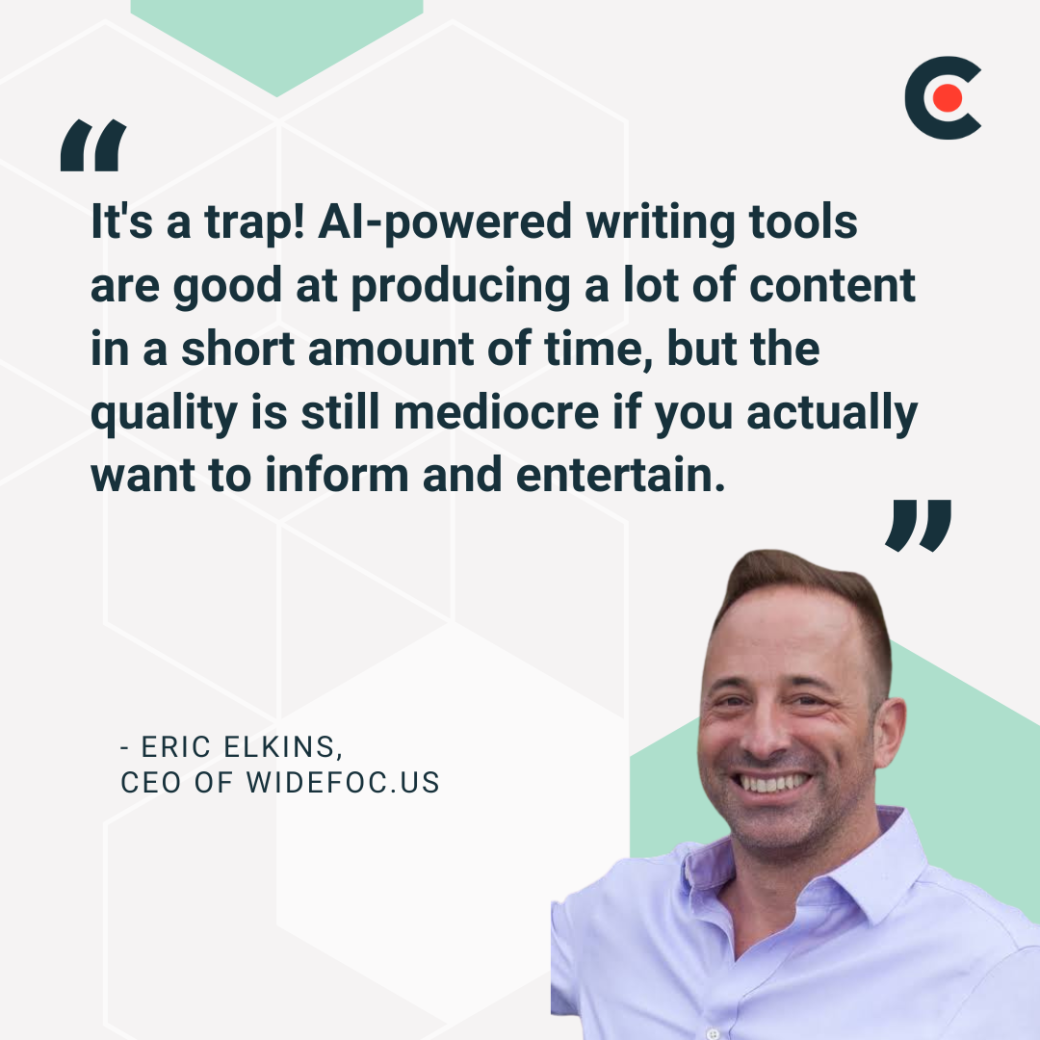
As Elkins observes, “It's easy to get sucked into the simplicity and speed of content creation, but a strong human hand needs to read everything generated by these tools for quality, accuracy, voice, and delight.”
AI fits best in areas that call for scale, like product pages or FAQs. Human writers are still essential for original analysis, thought leadership, and any content where expertise carries weight. For more information, check out Google’s AI features documentation and Clutch’s guide on AI in Google Search.
Yes — if it meets the same standards of quality. Google’s guidance makes clear that content is evaluated on usefulness, originality, and trustworthiness, not on whether AI was involved. Pages that provide unique value, cite reliable sources, and follow Google’s AI features documentation can rank alongside human-written work.
AI is good at sorting large keyword lists into patterns that would take hours to do by hand. It can group terms by intent — whether people are researching, comparing, or ready to buy — and surface related queries you might miss. A marketer could, for example, ask a tool to sort solar-related searches into buckets like “cost questions,” “installation process,” and “local providers.” The output isn’t final; it gives you a map to refine based on real search behavior and your business goals.
Maintaining consistency requires human guardrails. Most teams rely on brand style guides, reusable prompt templates, and reviewer checklists to catch tone and terminology issues. AI can also be trained to reflect brand voice and even adopt different personas, but that process takes time and still requires quality checks. Approval workflows in a CMS or project tool help ensure every AI-assisted draft receives a final human edit before publication.
Featured snippets reward content that answers questions quickly and clearly. That usually means starting with a direct response within the first sentence, followed by supporting context. Adding structured data, like FAQ or HowTo schema, improves the odds of being pulled into results. Some AI tools can draft snippet-style answers or test phrasing, but accuracy has to be checked line by line. Many teams also run simple experiments: swap headers, tighten definitions, and watch which version wins placement.