
AI Assistant Ads vs. Google Search Ads: Which Do Users Recognize as Paid?
AI search advertising is growing rapidly. New Clutch data reveals how users recognize and trust AI assistant ads compared with Google search ads.
Updated November 10, 2026

Google might have changed how your content ranks or is prioritized by introducing AI. Still, one strategy remains strong and relevant: link building. Even today, if you have valuable backlinks and brand mentions spread across the web, you are likely to be seen as authoritative by Google and LLMs.
Now, let’s talk about HARO and a ranch-style SEO strategy. HARO, short for Help a Reporter Out, is a platform that lets B2B businesses and experts pitch hyper-specific subtopics directly to journalists, bloggers & trade writers. Subject-matter experts can accept requests for topic-based commentary, expert reviews, etc. to gain a valuable mention & even a backlink.
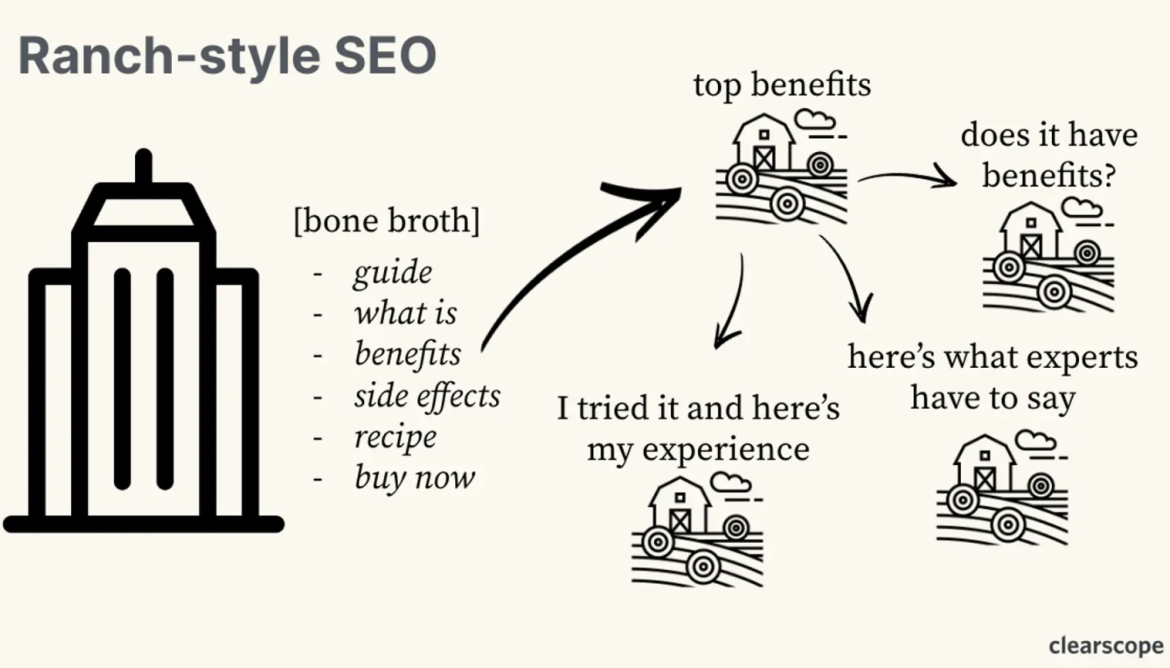
A ranch-style SEO strategy breaks down a massive, single-page article into an interconnected web of granular, intent-specific articles spread horizontally across your site. In this blog, you will learn how B2B businesses can build links with HARO alternatives using the ranch-style SEO strategy.
Looking for a SEO agency?
Compare our list of top SEO companies near you
Why are we talking about HARO alternatives and not HARO?
When HARO shut down, many marketers lost their favorite shortcut to press coverage. However, the need for authoritative backlinks didn’t disappear. For B2B brands, links from trusted industry publications still affect a lot of aspects, like:
The good news: Newer expert-quote platforms offer more targeted opportunities, and with the right content structure, they can deliver higher-quality links with far less noise.
Ranch-Style SEO is an excellent content strategy that spreads your coverage across many focused, intent-driven pages rather than concentrating it in a single giant guide. Bernard Huang coined the term in 2021, and it contrasts with the Skyscraper Technique, in which a single, exhaustive post aims to outrank competitors for a broad keyword.
Picture a wide ranch instead of a tall tower. Rather than a single 5,000-word guide to B2B link building, you publish separate pages on specific topics: pitching journalists, writing expert quotes, measuring link quality & more. Each page answers one need thoroughly, with original insight and firsthand experience.
Unlike traditional SEO, which focuses on search volume and keywords, the Ranch-Style approach focuses on search intent and topic relevance. The main goal is to build original, unique content that delivers real-time experience, shows subject-matter expertise, and offers relevant search perspectives.
This structure also supports link building. Every focused page gives journalists a precise, citable destination & internal links pass the authority you earn across the whole cluster. Pair that with expert-quote platforms & your outreach has something specific worth linking to.
HARO's closure was a major blow for many businesses. Its closure also led businesses to look for better & more selective expert-quote platforms. Instead of sifting through a daily flood of broad queries, businesses can now filter opportunities by topic, industry, and publication type. This not only saves time, but also improves your hit rate.
This shift favors B2B brands. Trade publications, industry blogs & niche newsletters want specific expertise, such as a CFO explaining procurement trends or a SaaS founder breaking down churn. And more. As a result, journalists covering these topics often struggle to find credible sources, so a well-matched answer stands out.
The payoff for experts and B2B brands is not just a single backlink. Each placement can earn you:
Here are my favorite HARO alternatives that are best for B2B businesses:
There are many other alternatives, but you can consider these to build an effective link-building strategy. Even with these platforms, if you want more media coverage, do it yourself and make direct contributions. This approach will help you build long-term relationships and control your pitches for specific publications.
Overall, HARO alternatives offer B2B businesses partnership opportunities with relevant & niche-specific journalists & bloggers that can boost online visibility.
You're already familiar with HARO alternatives; now let’s learn how to build links with a ranch-style SEO strategy.
By definition, you must break a pillar topic into subtopics that your business owns. These could include B2B payment automation, AI integration in business, or ERP workflow optimization.
Next, break this topic into 8 to 15 granular subtopics tied to buyer questions, such as
With these topics broken down, you can match platform keywords. They can also help you pick the most niche, relevant expert for backlinks & sharing content ideas. Each subtopic becomes a future page & a potential pitch angle. For example, a B2B finance brand could break business credit into focused articles covering EIN-only business credit cards, employee spending controls, and credit limit requirements.
Each article answers a distinct buyer question and gives journalists a specific resource to reference. If producing 8 to 15 in-depth pages is too much for your in-house team, professional writing services can help you scale the cluster without diluting quality.
Focusing on narrower topics helps you better match users’ search intent. Google rewards high-quality content that directly addresses that specific intent.
The next step is the most important one. You must set keyword alerts on your chosen HARO alternative platforms—for example, B2B payment, payment automation, ERP integration, content automation, etc.
That lets experts and B2B business owners answer only queries that fit a subtopic they can support with real expertise.
Skipping off-topic requests helps you:
With quality backlinks, original data & established credibility with journalists, you can build healthy, long-term partnerships.
Before you pitch your expertise to any journalist or blogger, publish a focused page for that subtopic. Include aspects like
“Build the page before you pitch, not after. When a journalist uses your quote, they need somewhere useful to send readers. A page that answers one specific question with real numbers from your own original research gets linked far more often than a homepage. That same page is also what AI tools like ChatGPT tend to cite later.”
— Georgi Todorov, Founder of Create & Grow
You can also support these with custom process diagrams or branded visuals, both of which are quick to create using an AI image generator. That gives journalists a precise, citable destination and a clear sense of your expertise, instead of a generic homepage. This signals authority and makes them far more likely to link.
Make your answer easy for a journalist to quote. If you use AI to draft your pitch, you can run it through an AI checker, then review the facts and wording yourself to make sure it reflects the expert’s experience. Structure your response using this simple format:
Example: Most B2B teams cut invoice errors by standardizing approval workflows before adding automation.
Example: In our client data, this reduced errors by 32% within one quarter.
Example: [Name], Head of Finance Operations at [Company]. You can also add expertise like, “10+ years managing accounts payable for mid-market manufacturers.”
Example: Full breakdown: [link]
When all put together, it must say,
Most B2B teams cut invoice errors by standardizing approval workflows before adding automation. In our client data, this reduced errors by 32% within one quarter. [Name], Head of Finance Operations at [Company], “10+ years managing accounts payable for mid-market manufacturers.” Full breakdown: [link].
If your subject-matter experts know the topic but struggle to put it into words, I recommend pairing them with an experienced essay writer who can turn rough notes into a tight, quotable answer without losing the expert’s voice.
For topics that are easier to show than explain, you can also offer a short explainer clip created with an AI video generator to accompany your expert response. Keep it focused on the journalist’s question and use it to illustrate the process behind your findings.
“Expertise becomes more valuable when people can easily understand and apply it. A clear explanation, supported by a short visual demonstration, can make complex ideas more accessible and memorable. AI-powered video tools help teams turn those ideas into engaging content while keeping the message clear.”
— CEO, Clideo AI
Detailed information, when it lands in a blogger’s or journalist’s content, establishes your authority. Details like company info, title & proof pages increase the likelihood that AI will pick up your content. This directly improves your earned media factor.
Once a page earns a backlink, you must pass that authority along. You can do this by internal-linking the page (that earned the backlink) to related ranch pages & to other relevant commercial pages, using descriptive anchor text. Furthermore, you must also link new content pages to the page (that earned the backlink).
“By strategically weaving internal links with descriptive, intent-matching anchor text to your broader ranch cluster and commercial pages, you transform an isolated PR win into a site-wide authority signal. This is exactly how you teach search engines and AI models where your true topical expertise lies.”
— Kaishauri Teimuraz Garievich, Founder of Stream Promotion
This turns one earned link into a lift for the entire cluster, rather than leaving the value stranded on a single URL.
Repeat this cycle across your ranch & your link profile grows in a natural, topically focused way. Each placement strengthens a specific area of expertise, which is exactly the kind of signal that helps you rank in Google & get cited in AI-generated answers.
Keep in mind that link building only works for you when you track it across the whole cluster, not just individual pages. Therefore, you must monitor these metrics monthly:
Compare results quarterly to see which topics & platforms deliver the best return.
While pitching the right answers is key, you should avoid some mistakes. Pitching generic answers outside your expertise. Linking to your homepage or a bloated pillar page. Send them to a focused proof page instead.
Over-optimizing anchor text. Let links read naturally. Skipping follow-up. Thank journalists, share updates & build relationships for repeat coverage.
Right now, HARO is unavailable, but its alternatives are available. These alternatives are better in several ways. This lets you take a ranch-style SEO approach & produce content pieces that are more targeted and aligned with journalists' & bloggers' requirements.
The process is also simple. You can begin small by garnering one link with the steps and strategies discussed. You can also interlink pages on your site to build authority. Maintain a healthy, consistent dialogue with bloggers to build a long-term partnership.