
No-Code AI Agent Platforms For Every Team
No-code AI agent platforms make building AI agents simple and accessible. Clutch breaks down the best tools by team, including marketing, sales, and support.
Updated September 29, 2026

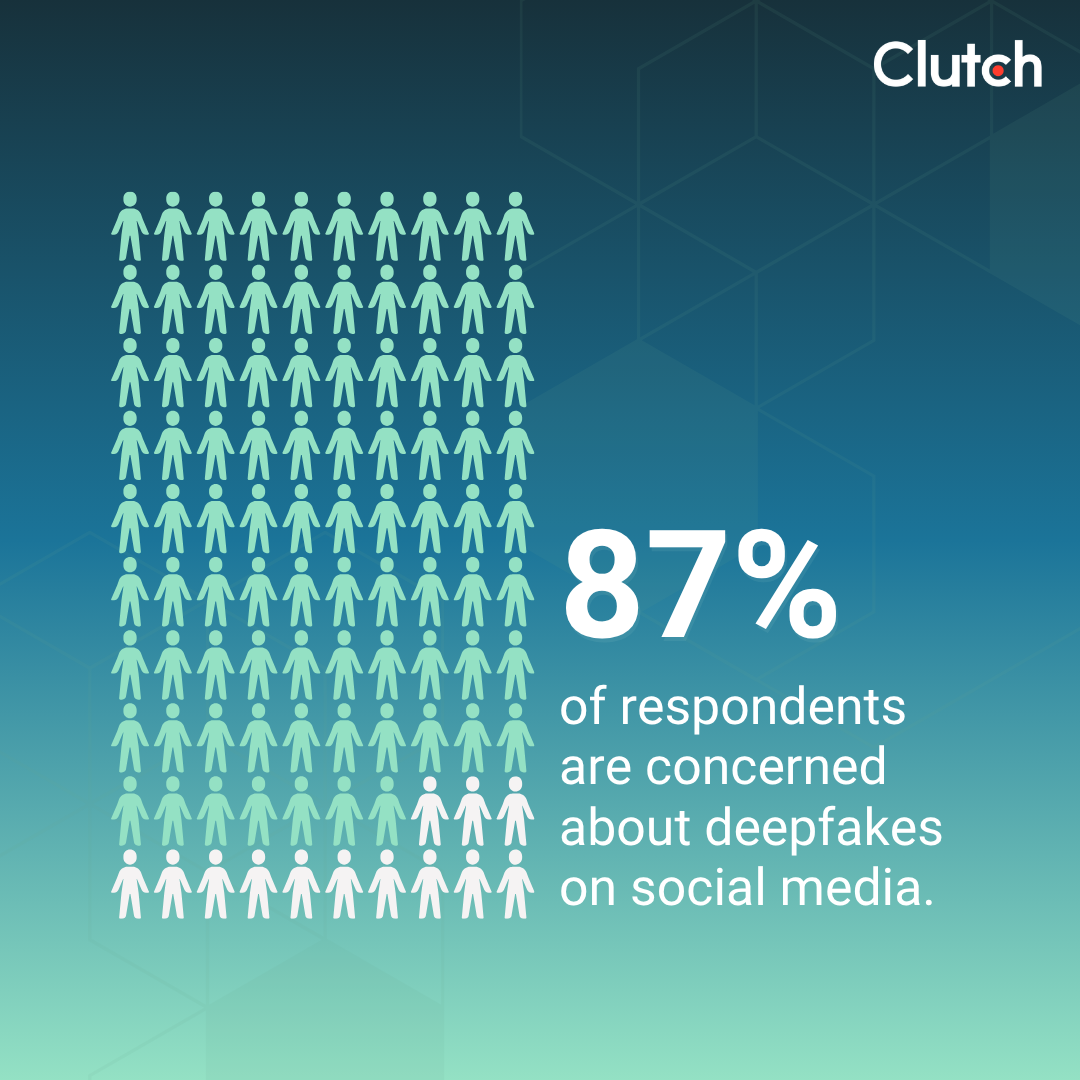
What are deepfakes, and how are they already eroding the public’s trust in what they see online? Here’s how the AI-driven technology works, why 87% of consumers say they’re already concerned, and how your brand can protect its credibility.
Deepfakes, until recently a mere technical curiosity, have become a widespread, mainstream concern for consumers worldwide. Frighteningly realistic AI-generated video clips, images, or audio snippets featuring real people saying or doing things they never actually said or did circulate on the social media feeds people look at every day. What once required a Hollywood VFX studio or specialized computer science skills to conceive, virtually anyone can now create in seconds with a few taps, using one of many highly accessible generative AI tools.
The proliferation of deepfakes leaves consumers trying to determine what’s real and what’s AI-generated. Meanwhile, brands suffer, too: Their credibility heavily depends on their audiences believing what they see.
Looking for a Artificial Intelligence agency?
Compare our list of top Artificial Intelligence companies near you
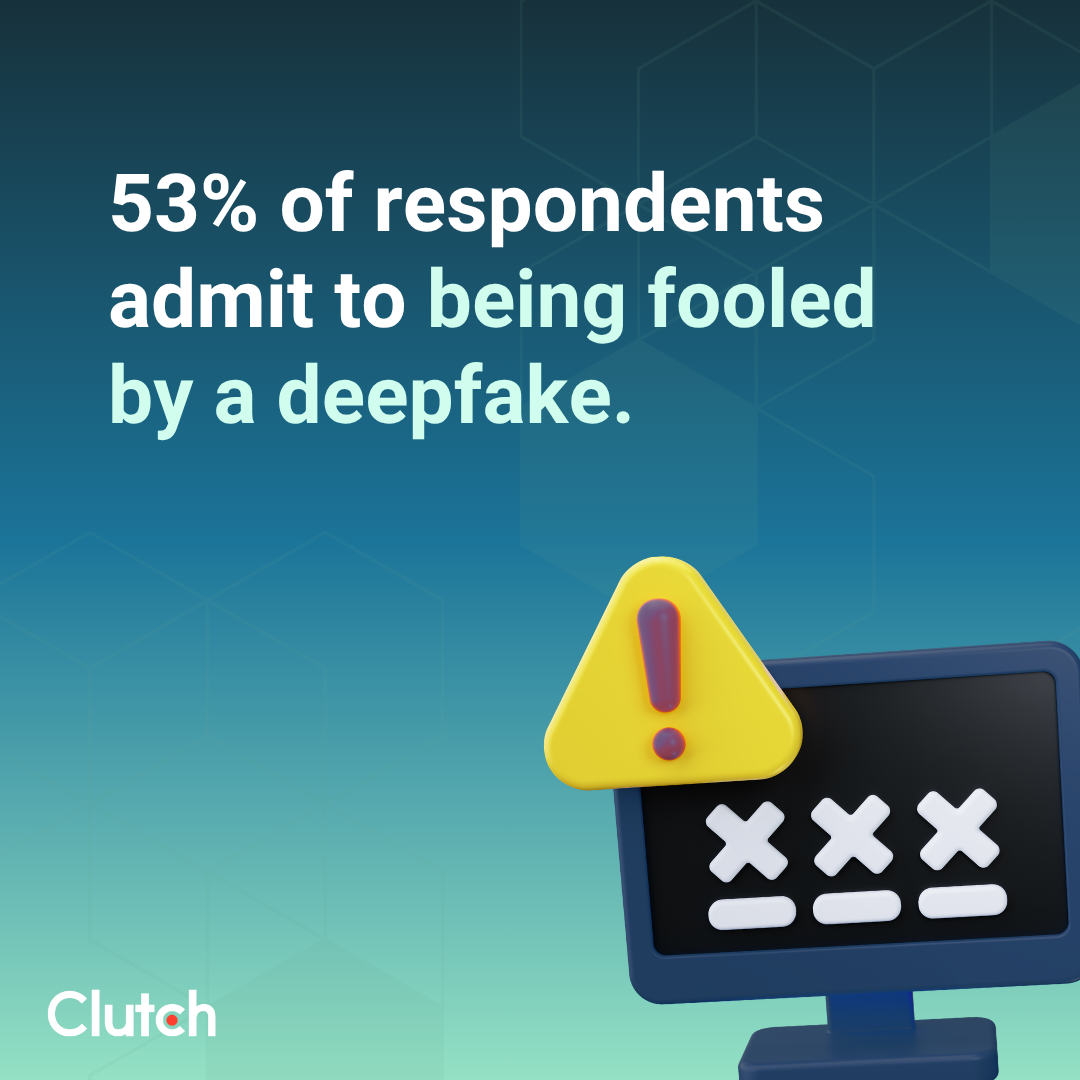
In August 2026, Clutch surveyed 601 U.S. consumers regarding their perceptions of AI on social media. Maybe unsurprisingly, 87% of respondents said they are concerned about deepfakes on social media. Perhaps more surprising is that over half — 53% — said they have already seen a deepfake portraying a public figure that initially fooled them into believing it was real.
We’ll take a look at what deepfakes are, how they work, and why they’re rapidly becoming a major concern. We’ll also examine how to spot a deepfake, how this technology is influencing consumer trust, and what brands can do to protect it.
A deepfake is a type of synthetic media, such as video, images, or audio, that uses artificial intelligence to make a convincing imitation of a real person’s face, voice, or actions. The name itself explains the technology: “Deepfake” combines deep learning, an advanced machine-learning method that powers many modern AI systems, with the word “fake.”
The four main types of deepfakes include:
Some uses of deepfake technology are harmless and creative, such as using it in film production as VFX, dubbing to match a foreign-language voiceover track, recreating a voice for someone who has lost the physical ability to speak, powering silly and entertaining face-swap apps, or creating satire and parody clips. These applications are consensual, generally harmless, and transparent.
For example, in 2018, filmmaker Jordan Peele and BuzzFeed created an early demonstration in which a deepfake of former President Barack Obama warned the audience about misinformation.
Other use cases are much less benevolent. When deepfakes are non-consensual, deceptive, malicious, and undisclosed, they often exploit human psychology and trust to manipulate outcomes or abuse someone. From political impersonation clips to financial scams using executive voice clones, the misuse of deepfakes proves that if the technology exists, someone will exploit it.
Creating a deepfake is essentially like teaching a computer to perform the ultimate impression of a real person. The programmer feeds a deep learning system massive amounts of data, consisting of hundreds or thousands of photos, videos, or audio clips of a specific person.
The AI analyzes this material from every possible angle and maps out the exact geometry of the person’s face, how their muscles move when they speak, and the unique pitch and cadence of their voice. When the system completely understands these patterns, it can swap that digital persona onto someone else’s body or even generate entirely new footage from scratch.
Training the AI system to create deepfakes relies on a machine learning framework called a Generative Adversarial Network (GAN), in which two neural networks compete to create the most realistic new data. The generator creates fake images or audio clips, and the checker inspects the results and flags anything that looks or sounds unrealistic.
Whenever the checker catches a mistake, the generator learns from it, tweaks the code, and tries again. They repeat this loop millions of times, pushing each other to improve until the deepfake content is convincing enough to pass for the real thing.
This intricate training process used to require Hollywood-budget software, massive server farms, and specific technical expertise. Today, the barrier to entry has completely collapsed. Anyone can download free or low-cost apps onto their consumer devices that generate highly convincing face-swaps and voice clones in seconds.
By democratizing these advanced tools, technology has turned a complex computer science process into an accessible, high-volume trend. As a result, deepfake volume is now exploding across social platforms.
As our survey found, 87% of consumers worry about encountering deepfakes on social media, and more than half report seeing a deepfake of a public figure they initially believed was real. Now that a majority has already been fooled, the concern is no longer hypothetical.
This technology can create materials that pose severe threats to individuals, public trust, and security. These are among the most prominent dangers of deepfakes.
A wave of deepfake robocalls impersonating President Joe Biden told thousands of New Hampshire voters in 2024 not to vote in the state’s primary election. Shortly before polls opened in 2025, cybercriminals in Ireland and Argentina distributed hyperrealistic deepfake videos of leading political candidates announcing they were dropping out of their respective races.
By spreading misinformation and coloring public opinion, deepfakes undermine elections and even endanger democracy.
Public figures, private individuals, and even schoolchildren face targeted intimidation through fabricated media. National data from the RAND Corporation indicates that approximately 20% of middle school principals and 22% of high school principals have reported deepfake bullying incidents.
These malicious and criminal deepfakes most often target women and girls, placing real people’s faces into fake, explicit videos. More than a violation of privacy and dignity, this illegal activity can cause severe psychological and reputational damage.
A well-known instance of criminal deepfake trickery occurred in 2024: AI-generated deepfakes on a video conference call convinced an employee at Arup’s Hong Kong office to transfer $25.6 million to cybercriminals.
Voice-cloning, video avatars, and deepfake videos allow criminals to impersonate loved ones or trusted company executives during emergency fraud calls and corporate financial scams. Falling victim to these ruses is all too common for those who don’t know what deepfakes are or how convincing the technology can be.
A Cambridge University study provided evidence of the “liar’s dividend,” showing that politicians who falsely claim that stories are “fake news” or videos are deepfakes maintain more support after a scandal than they would if they remained silent or apologized.
When fake media becomes common, people begin to doubt real evidence. This allows wrongdoers to dismiss genuine proof of misconduct as a “deepfake.”
“Seeing is believing” is no longer the default. As deepfakes and other AI-generated media become impossible to distinguish from reality with the naked eye, people become cognitively exhausted trying to parse the synthetic and the organic. Rather than using energy trying to determine what is and isn’t real, many simply refuse to trust anything.
When information nihilism becomes the default, citizens no longer believe the news, official government channels, or scientific data, and the shared reality a functioning democracy requires collapses.
After a convincing fake manages to fool someone, that person becomes skeptical of everything in their feed. The damage doesn’t stop at the individual fake; it begins to erode the person’s baseline trust in all forms of audio-visual content.
The effect is a kind of online “trust tax” for the digital public. The burden of proof has transferred from the creator to the viewer. You can no longer simply consume media without auditing every image or clip for authenticity before you believe or share it. This constant second-guessing is changing our relationship with the internet, transforming social media from a casual source of truth into a minefield of digital suspicion.
Brands need to understand that this consumer skepticism isn’t limited to obvious fakes. It insidiously creeps into the way audiences perceive the authenticity of everything around them, including your marketing content. Beyond creating isolated incidents, deepfakes feed into an overarching authenticity problem you can’t afford to ignore.
Catching a deepfake in the wild requires vigilance and knowledge of the visual, auditory, and behavioral inconsistencies to look for. Examining these red flags helps answer the broader question: What are deepfakes, and how do we identify them?
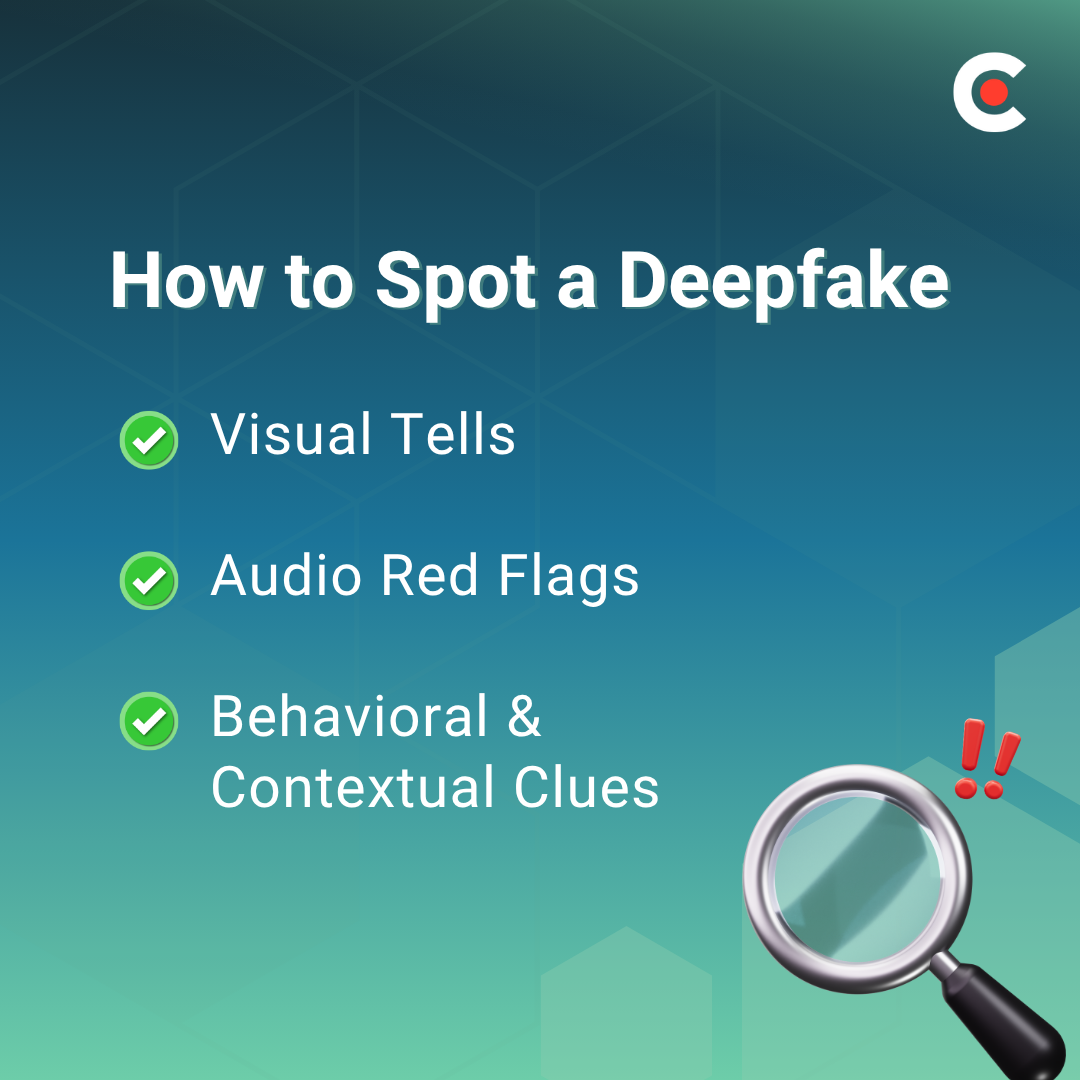
Although high-end AI manipulations are increasingly difficult to spot by eye alone, these visual cues can indicate a deepfake:
If you’re having a hard time discerning by sight, sound can yield other clues.
Your ears are the next line of defense against deepfakes. Listen for:
Watching and listening carefully can help you ascertain whether you’re watching a genuine video or a deepfake.
The last and most reliable defense is paying attention to contextual and behavioral signs, such as:
The Federal Trade Commission (FTC) has issued guidance advising against trusting even a familiar voice if the person appears to be making an urgent request. Always verify requests independently through separate known, trusted numbers or channels before acting or sharing.
Consumer skepticism is a major marketing problem. With 87% of consumers worried about deepfakes and 53% admitting a deepfake has already fooled them, your audience is primed to doubt first and verify second — if they even bother. Protecting that trust now falls as much on marketing and communication as on cybersecurity.
In this cynical climate, consumers reward honesty and visible proof. Protecting your brand against skepticism must now become an ongoing part of brand-building. A handful of best practices can help your brand reassure a wary audience.
Audiences are more forgiving when brands disclose AI-generated or AI-assisted content upfront. They also punish brands they catch failing to disclose AI use.
Verified accounts, content provenance markers like C2PA-style watermarking, and behind-the-scenes footage of real people cost more to fake, which is exactly what makes them convincing proof.
Put procedures in place to monitor for impersonation attempts against executives or your brand. Your process should include quickly pulling down fake content and making public corrections before misinformation spreads further.
Each synthetic voiceover, AI-generated image, or heavily filtered clip your brand posts adds to the general “is-it-or-is n’t-it” fog consumers already slog through. Don’t add to the ambiguity with unnecessarily AI-created media.
Deepfake technology no longer belongs solely to movie studios or spy agencies. Anyone with a laptop or smartphone, a few reference photos or clips, and a free app can produce a convincing fake in no time. The evidence is already circulating widely, infiltrating the feeds people scroll through every day.
Audiences have noticed, with 87% of consumers already uneasy about deepfakes and 53% admitting they’ve mistaken at least one deepfake portraying a public figure for the genuine article. Trust is under pressure, and brands are under the microscope.
Detection tricks and telltale visual and auditory glitches will continue to lose ground as technology improves. Some deepfakes already fool trained eyes with little effort. For consumers who don’t yet know what deepfakes are or how convincing they can be, verifying anything urgent or unexpected before believing, acting on, or sharing it is now the bare minimum.
For brands, this heightened consumer apprehension piles the heaviest responsibility on you: disclose AI use without hesitation, include visible proof of authenticity in your everyday content, and understand that transparency is the key to earning the benefit of the doubt in a skeptical audience’s eyes.