How to Measure Your AI Visibility as a B2B Provider
Discover how to enhance your business's AI visibility. Learn to track mentions and measure your standing against competitors effectively.
Updated November 3, 2026

Have you ever been too embarrassed to ask a colleague a question at work? Maybe you don’t know what an acronym stands for, you’re not sure what is needed for a project, or you don’t know how to do something simple like alphabetize in Excel. If so, you’re not alone.
Seventy-six percent (76%) of workers have been so embarrassed to ask a coworker a question that they asked AI instead.
Looking for a Artificial Intelligence agency?
Compare our list of top Artificial Intelligence companies near you
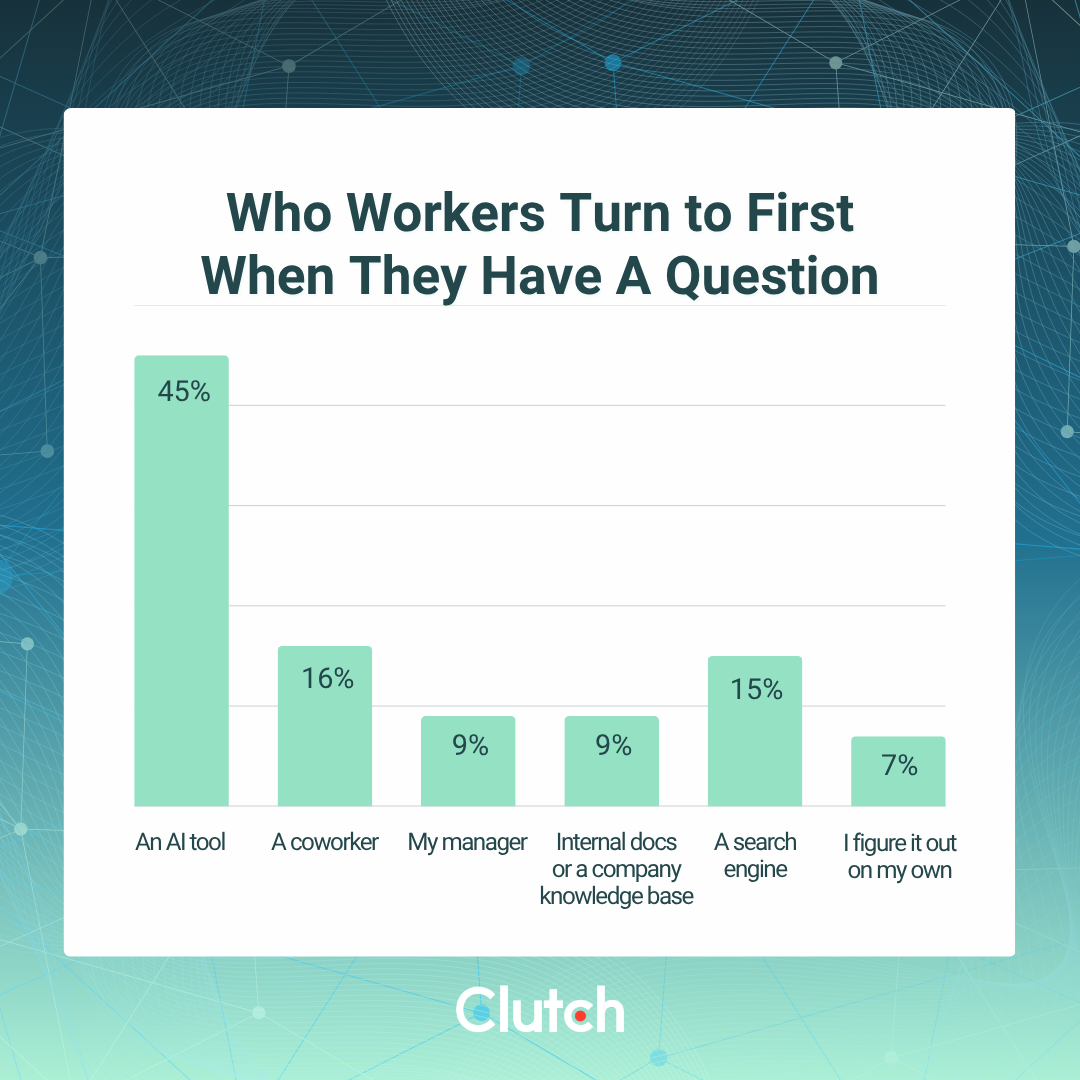
This stat is indicative of how AI is reshaping the workplace, from where workers turn when they have a question to how they address problems and collaborate. AI is now the first place 45% of workers turn when they have a question, ahead of coworkers (16%) and managers (9%).
But if coworkers aren’t stopping by your desk to ask a question, what does collaboration look like in an AI-powered workplace?
The numbers suggest it’s changing, not fading. Nine in 10 workers (90%) say they collaborate as much as or more than they did before AI became a common workplace tool. It just doesn’t look the same as it used to.
We surveyed 669 full-time workers about how they use AI and how it has impacted their relationships with their coworkers in order to get a better understanding of how AI is impacting office culture. Here’s what we found:
More than three-quarters (76%) of workers have asked AI a work question they’d be embarrassed to ask a colleague, and 43% do it often. But why?
Not every question is easy to ask out loud, especially if you’re concerned about how your colleagues perceive you. After all, workers want to appear professional and competent at work. AI offers an alternative place to ask questions, fill knowledge gaps, and get help without worrying about being judged.
Workers are more likely to turn to AI first for certain types of questions, especially when they need help learning something new. Nearly two-thirds (64%) use AI to figure out how to complete a task or use a tool, likely because it can break down unfamiliar processes into manageable, step-by-step instructions.
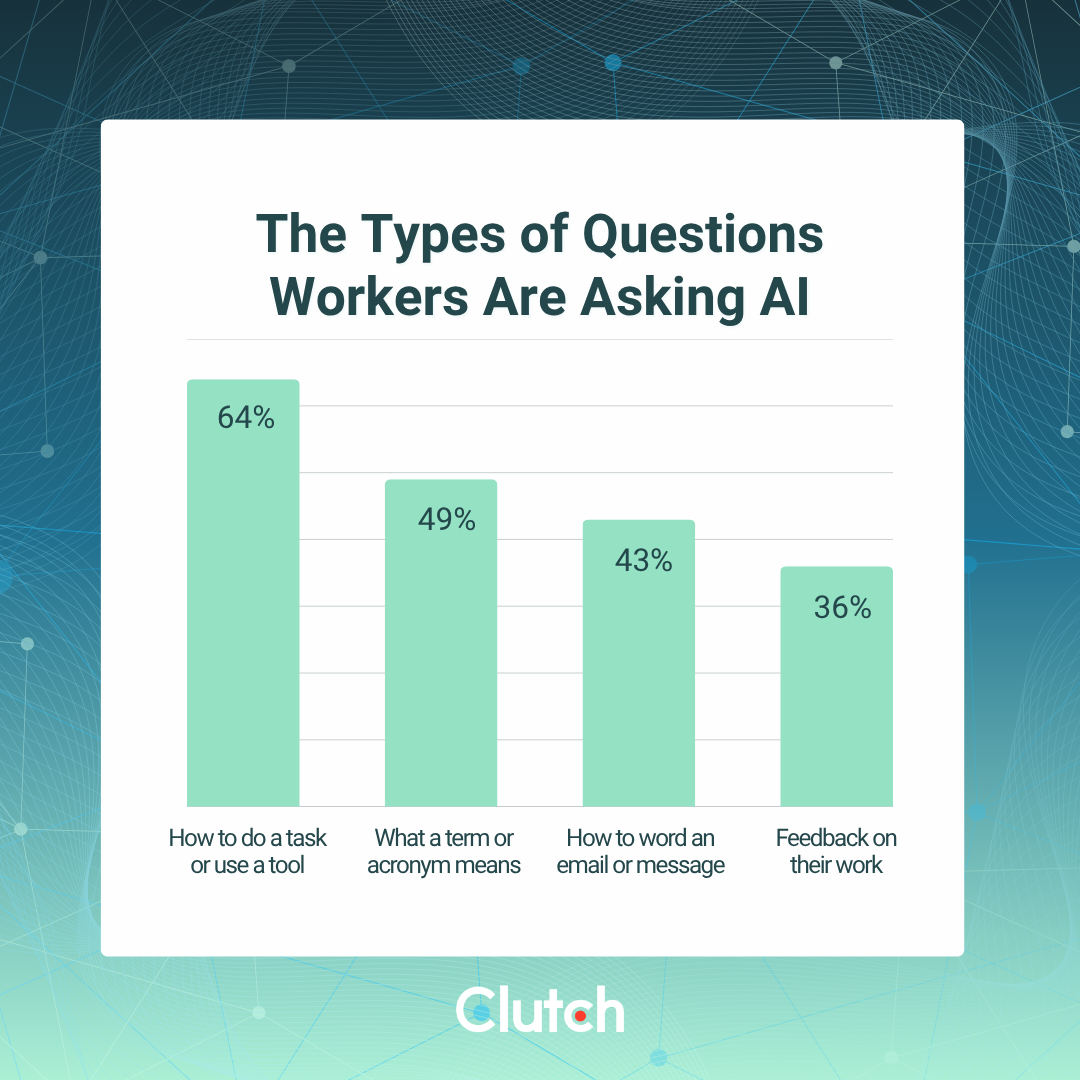
Workers also rely on AI to explain unfamiliar terms or acronyms (49%) and help them word emails or messages (43%), giving them a way to clarify concepts and refine their communication without worrying about how a colleague might respond.
Workers aren’t just turning to AI when they’re embarrassed to ask a question. Often, it’s where they go first. Nearly half of workers (45%) start with AI, almost three times as many as those who would go to a coworker first (16%).
The same pattern holds when something goes wrong, too. After making a mistake or encountering a technical issue, 44% of workers say they would turn to AI first.
This points to a shift in how people approach their work. AI is becoming a natural first step in the problem-solving process. Rather than immediately asking a coworker for help, workers can use AI to troubleshoot an issue, test a solution, or get a second opinion before involving someone else.
That doesn’t mean workers are collaborating less or working in isolation. Instead, AI is changing how and when they seek help, giving them another resource to turn to before reaching out to their colleagues.
The decision about whether to use AI to solve a problem or ask a coworker for help depends largely on the question or problem at hand.
More than half trust AI over a coworker for writing and editing (64%) and technical or how-to questions (60%). But when it comes to company-specific knowledge, 67% trust a coworker more than AI. Workers also lean toward coworkers for feedback on their work (38% vs. 24%), career advice (30% vs. 19%), and judgment calls (36% vs. 11%).
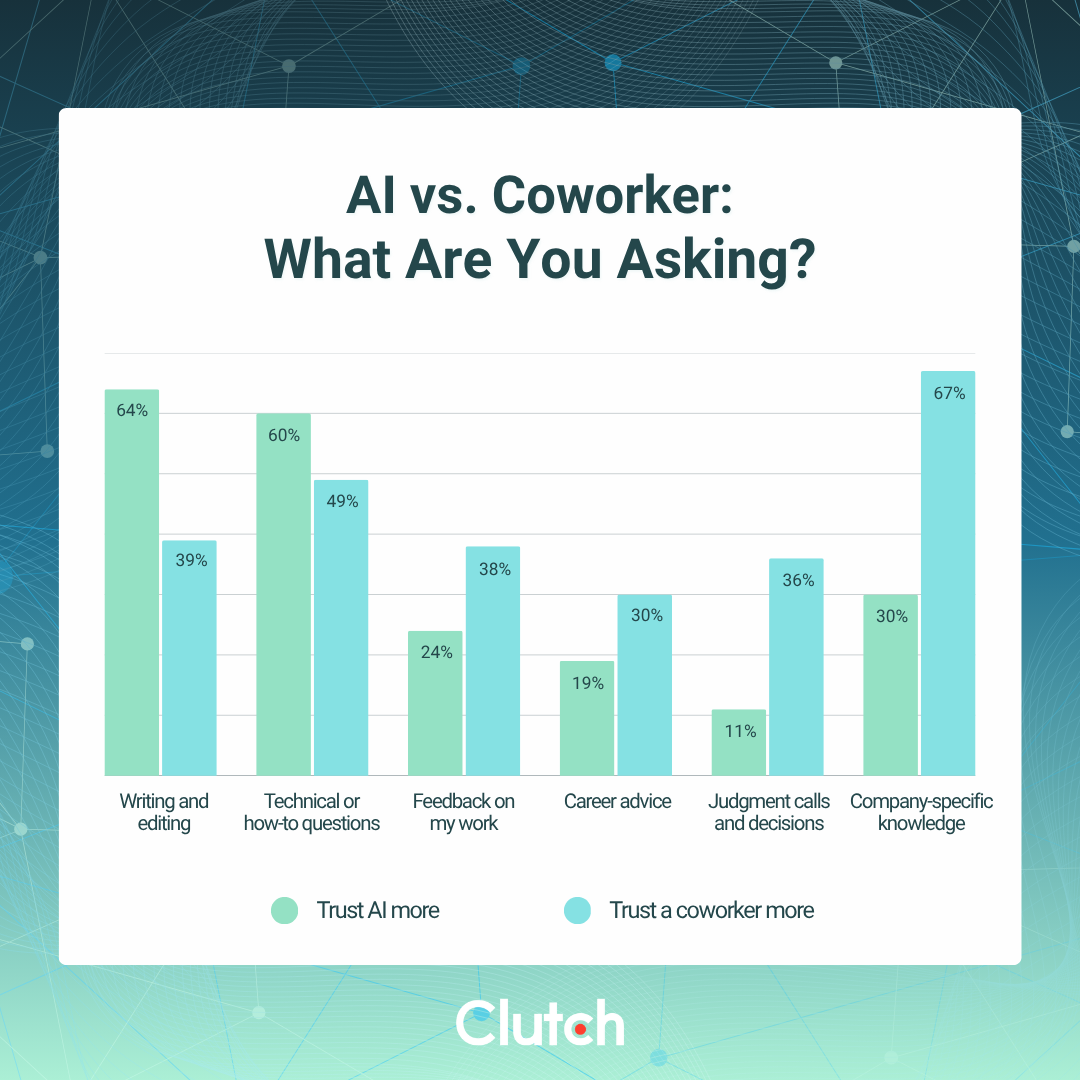
AI is generally helpful because of its broad knowledge base, but human coworkers provide something AI can’t fully replicate: human connection, experience, and judgment. Your coworkers understand team dynamics, the nuances of your workplace, and team expectations, allowing them to provide personalized feedback and help you navigate sensitive situations.
While AI can provide suggestions, it lacks the personal relationships and experiences that shape how people work together.
But AI does offer something that coworkers don’t: speed and efficiency. Among workers who lean on AI first, 72% say it's because AI is faster and another 17% say it's because AI is available anytime. When someone needs a quick answer, they don’t have to wait for a coworker to finish a meeting or find time in their schedule. They can get help and get back to work.
That means workers aren’t using AI to avoid their colleagues. Instead, they may be using AI to resolve smaller questions independently, saving time for themselves and avoiding unnecessary interruptions for others.
In fact, 71% say AI has made them more independent at work. But greater independence doesn’t necessarily mean less collaboration. Even with AI helping them get work done, workers aren’t pulling away from their teams.
Despite relying more on AI, workplace collaboration remains strong, with 90% of respondents reporting they collaborate with coworkers as much as or more than before AI. Only 10% say they collaborate less.
The shift towards AI also isn’t impacting office relationships. Ninety-one percent (91%) of respondents say their relationships with coworkers have either stayed the same or improved since AI became part of their workday. For 42%, those relationships have actually grown stronger because they spend more time together on bigger conversations. Just 7% say their relationships have weakened because they talk less.
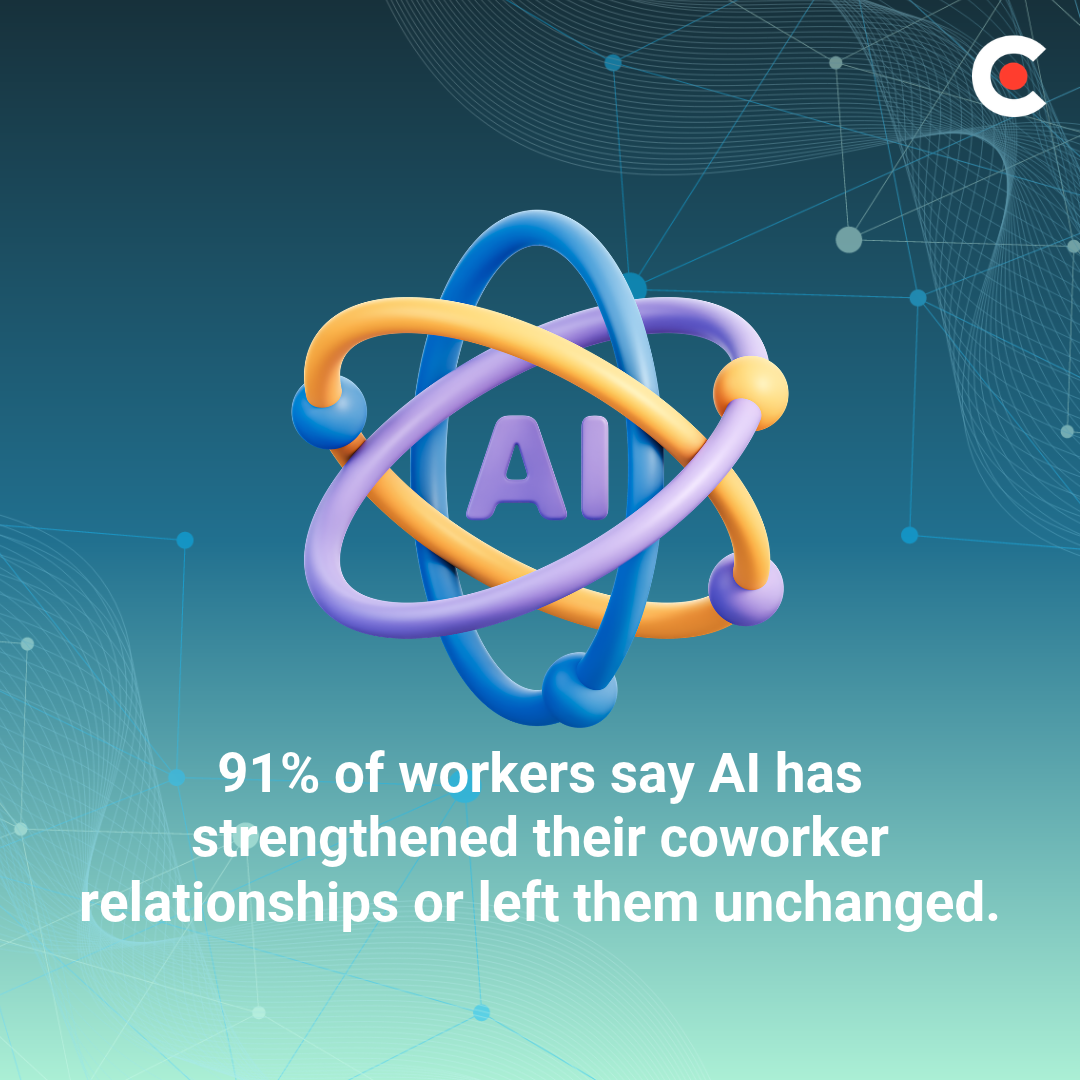
Rather than reducing collaboration, AI is simply shifting how people work together. AI is taking some of the quick, routine questions that once brought coworkers together, leaving more room for higher-value conversations.
Instead of popping into someone's office to ask how to use a tool or troubleshoot a minor issue, workers can turn to AI. They can then use time with colleagues to discuss upcoming campaign strategies, tackle big-picture problems, and collaborate on important projects.
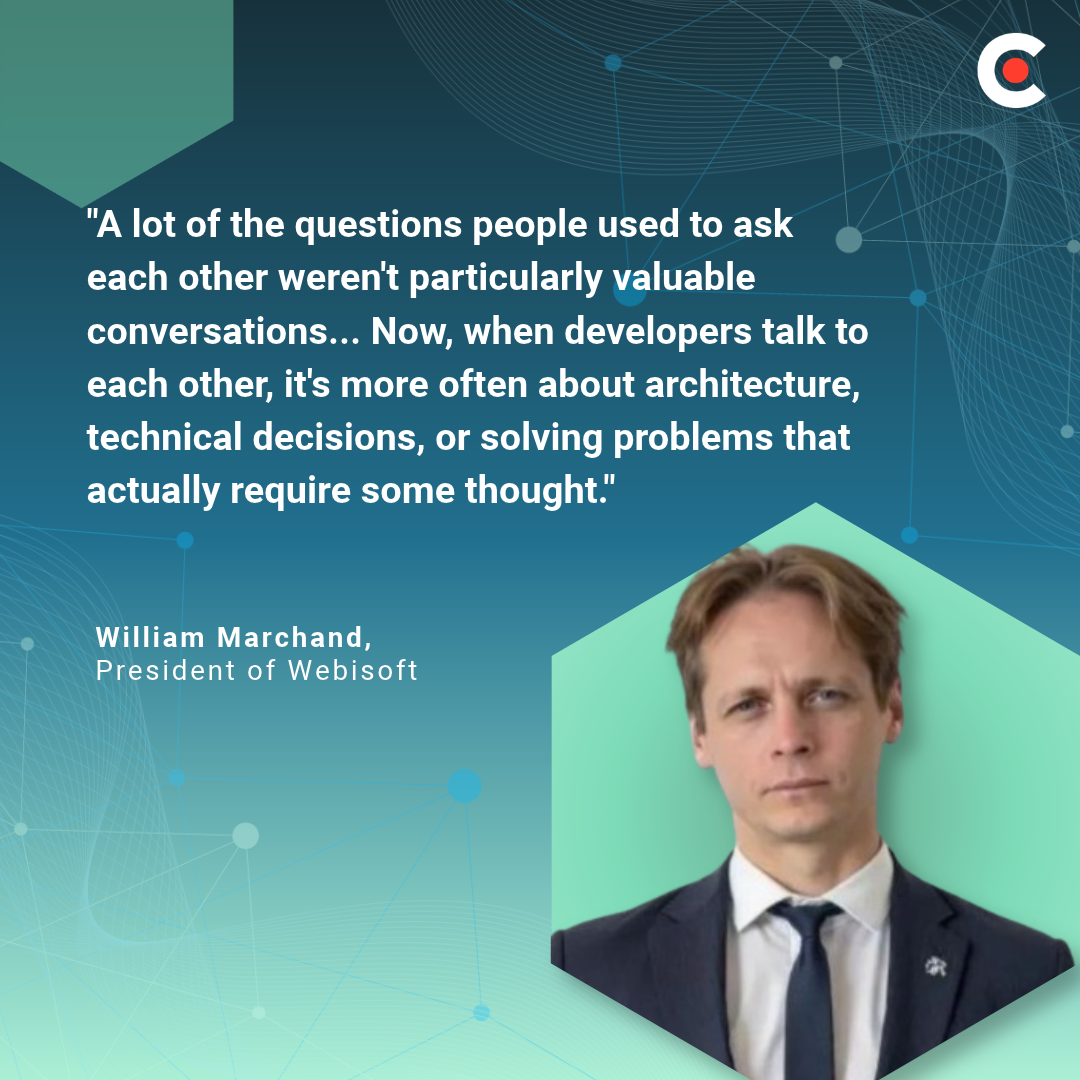
For William Marchand, President of Webisoft, losing some of those quick questions isn't a bad thing. "A lot of the questions people used to ask each other weren't particularly valuable conversations. They were just interruptions," he said. "Now, when developers talk to each other, it's more often about architecture, technical decisions, or solving problems that actually require some thought."
That shift has its benefits, but it comes with a trade-off. Quick questions aren't just about getting answers; they also help teams share knowledge, exchange ideas, and keep each other informed.
When those everyday interactions disappear, useful information may remain with individuals rather than spread across the team. Over time, this can create information silos, where employees lack visibility into what their colleagues know or are working on
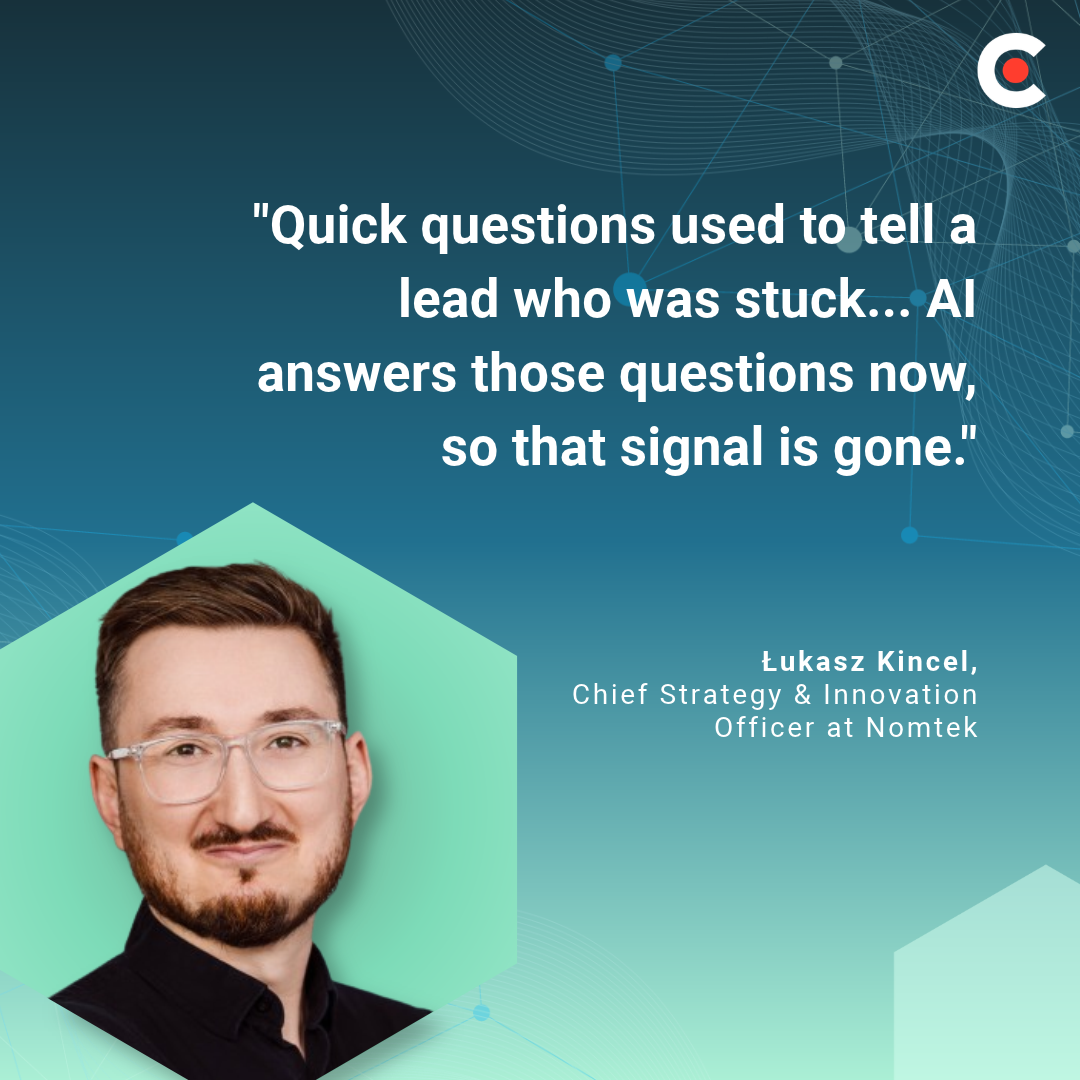
Those quick questions also helped leaders spot problems early, according to Łukasz Kincel, Chief Strategy & Innovation Officer at Nomtek. "Quick questions used to tell a lead who was stuck. 'Where's that config?' on day two meant help on day two, not a missed deadline on day five," he said. "AI answers those questions now, so that signal is gone."
More than half (57%) say AI is creating silos on their teams, and 39% say it's happening to a significant extent. If workers don’t need to ask a colleague a question, they end up figuring it out on their own, and they miss opportunities to share information and learn from one another.
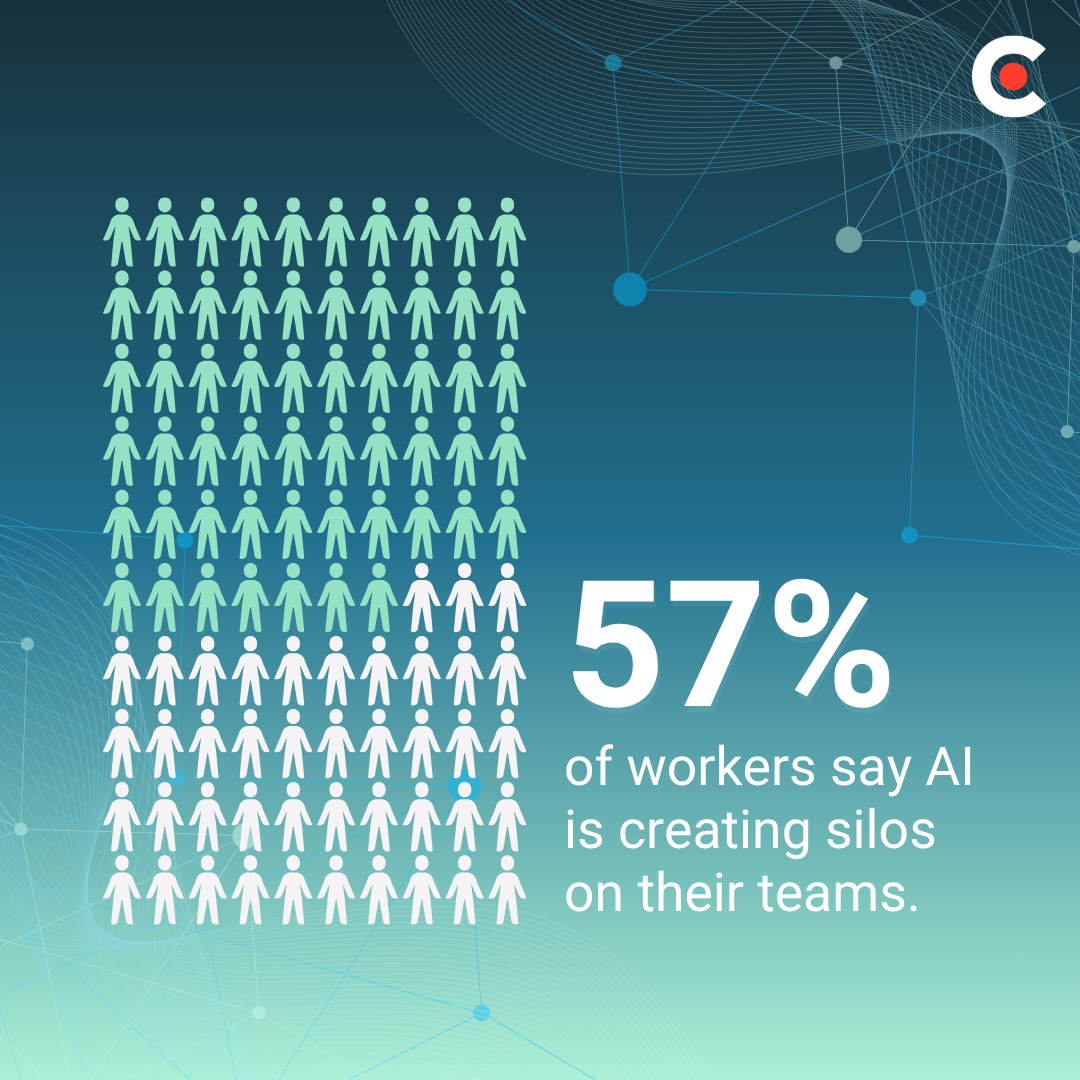
Workers are already noticing changes in how their teams operate. More than half (51%) report fewer quick questions or check-ins from teammates since their team started using AI. But the effects go beyond fewer conversations: 38% say teammates are solving the same problems separately, and 18% have reported inconsistent answers or processes.
What workers have noticed since their team started using AI:
These changes can have practical consequences. When employees troubleshoot problems independently, they may duplicate work a teammate has already completed or follow a different process to reach the same result.
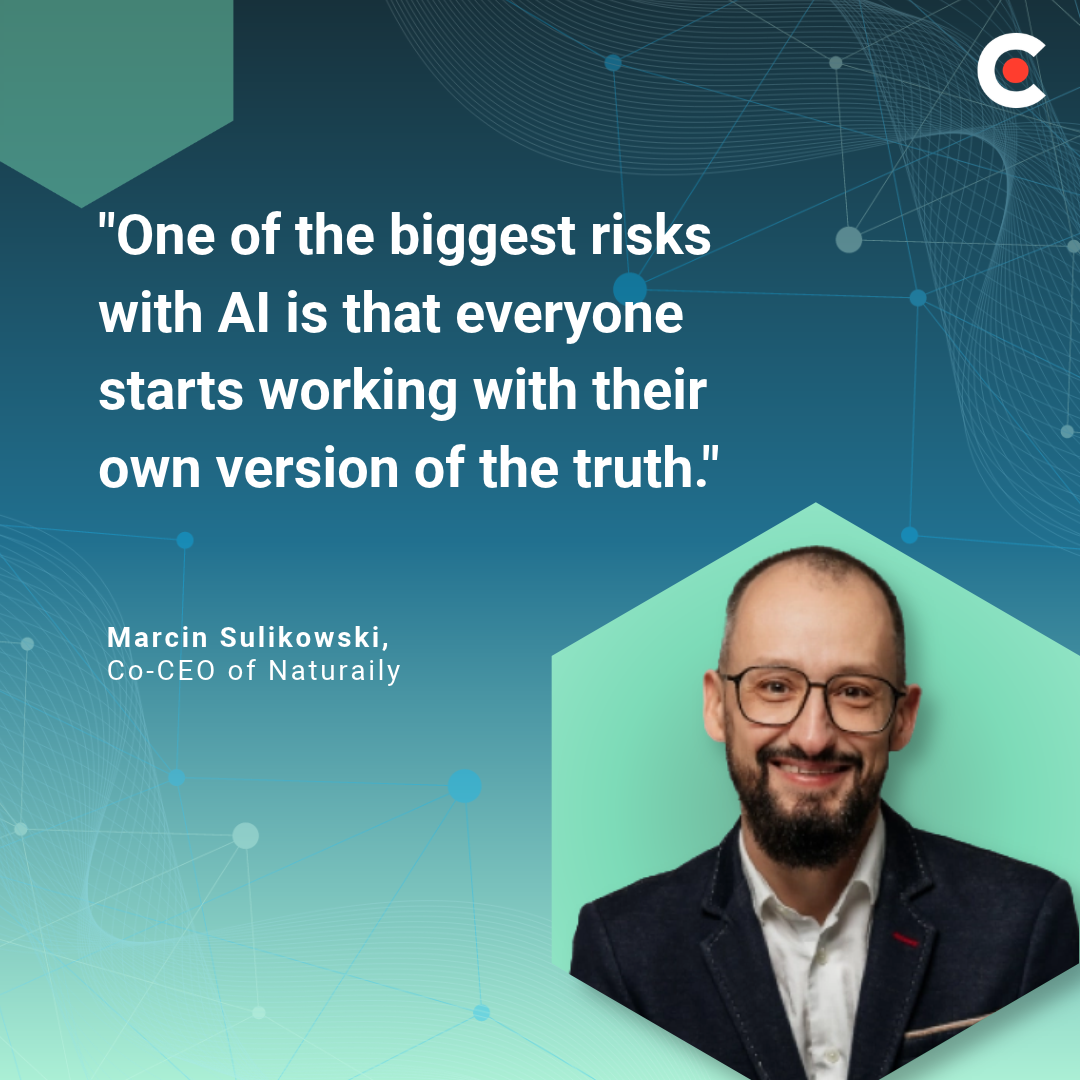
Marcin Sulikowski, Co-CEO of Naturaily, points to inconsistent answers as a key concern. "One of the biggest risks with AI is that everyone starts working with their own version of the truth," he said. "Five people can ask the same question and get five convincing but slightly different answers."
Ultimately, this wastes time and resources and creates inconsistent processes that can cause confusion.
There may be even bigger consequences for newer employees who often learn the ropes by working closely with coworkers. A third of workers (33%) have noticed that new employees are receiving less mentoring than they used to, and 76% worry newer employees miss out on learning from colleagues because they ask AI instead.
This creates a potential gap for both employees and the companies they work for. Mentors share institutional knowledge that isn't always documented, from best practices and common mistakes to how decisions get made. They also help new hires build relationships and gain confidence in their roles.
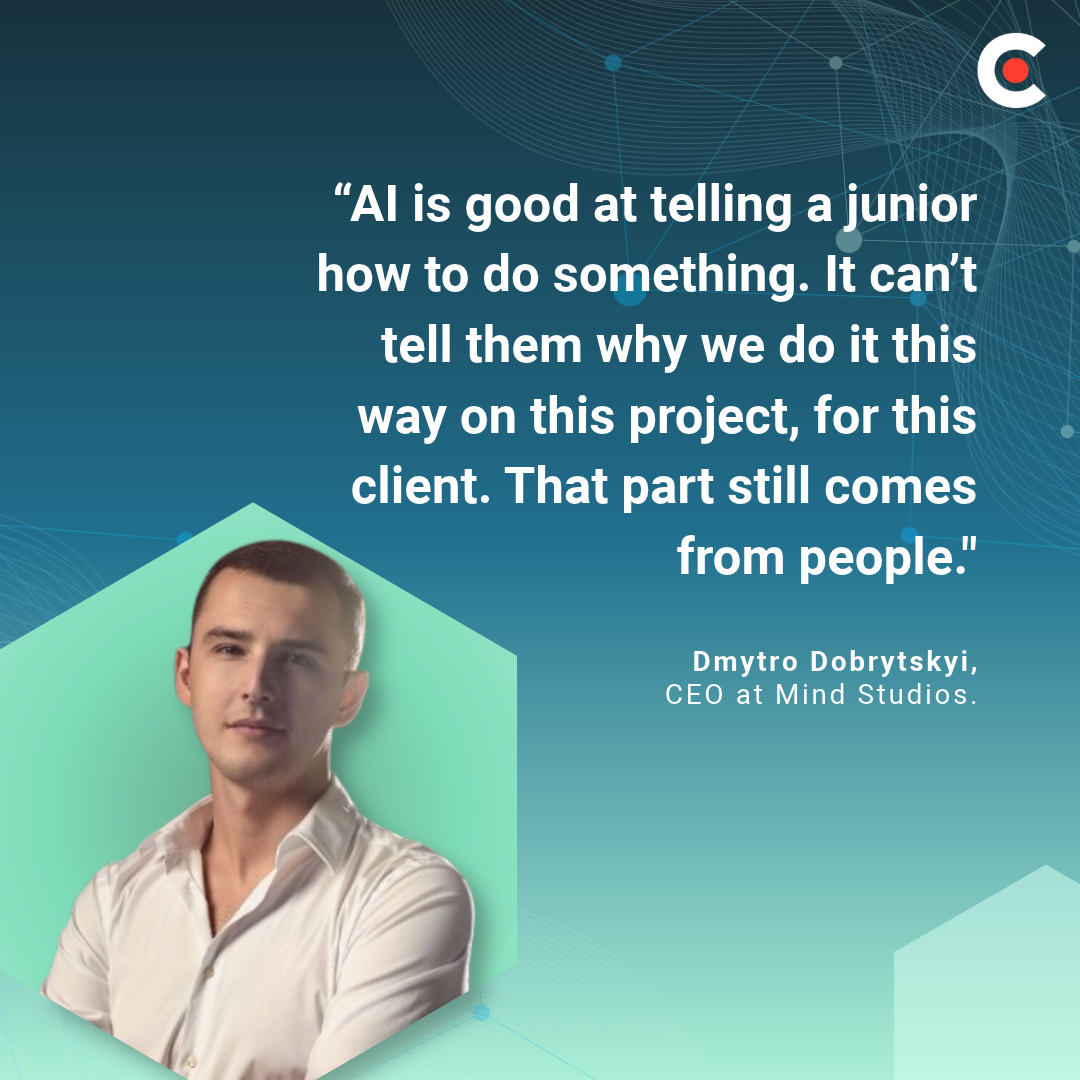
That kind of context is hard to get from AI. “AI is good at telling a junior how to do something. It can’t tell them why we do it this way on this project, for this client,” said Dmytro Dobrytskyi, CEO at Mind Studios. “That part still comes from people."
The small or “embarrassing” questions that newer employees now take to AI may once have been opportunities to connect with a coworker and build a mentoring relationship. Without those everyday interactions, new hires risk missing out on the guidance and professional relationships that help them develop and become effective team members.
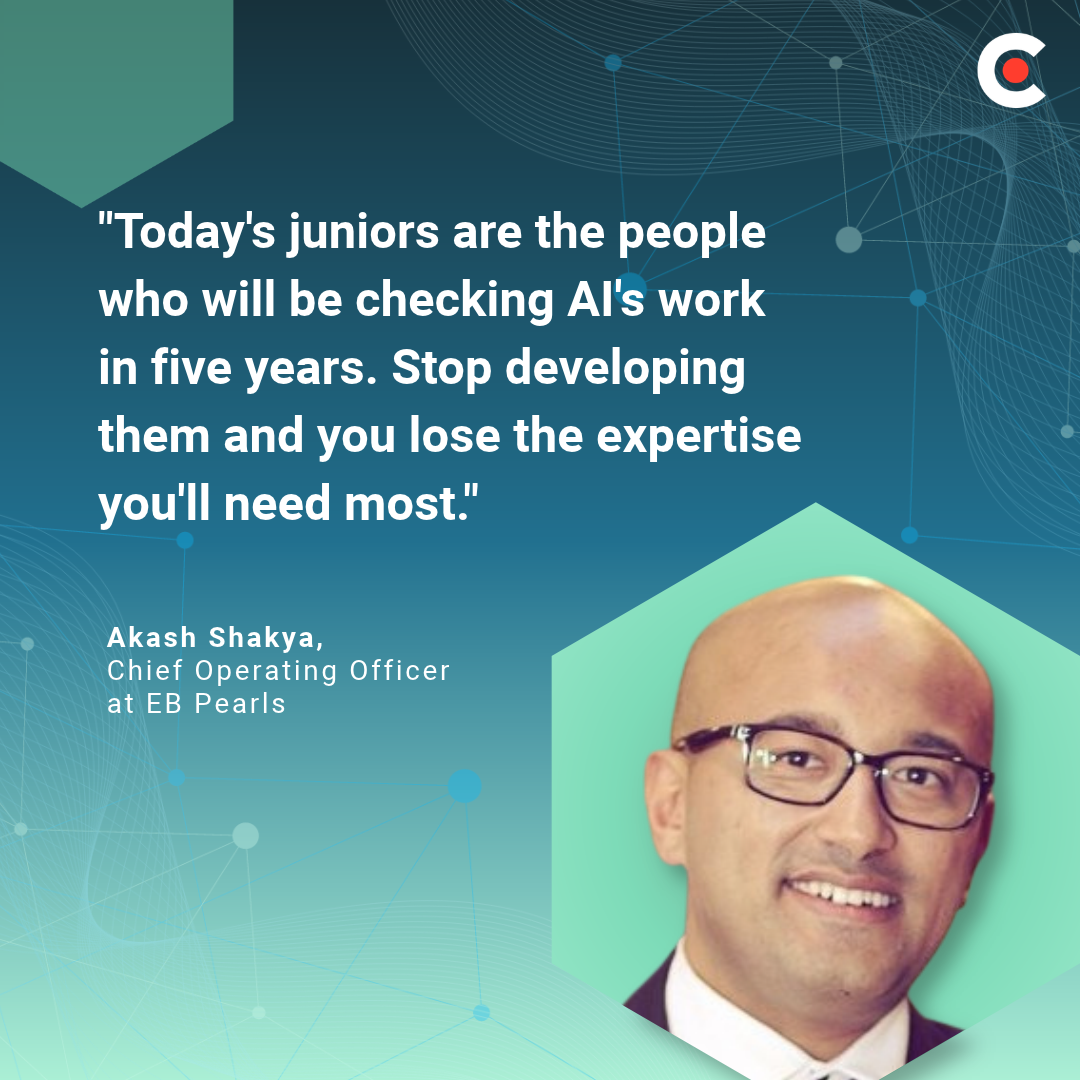
Akash Shakya, Chief Operating Officer at EB Pearls, warns that the stakes go beyond any one team. "Companies are cutting junior roles because AI can do junior tasks. But today's juniors are the people who will be checking AI's work in five years," he said. "Stop developing them and you lose the expertise you'll need most."
Companies also risk losing valuable institutional knowledge when experienced employees leave without passing on what they know.
One way companies can address information silos and inconsistent processes is by giving employees access to internal AI tools that understand how their organization works.
Nearly two-thirds (64%) of businesses have an internal AI tool trained on company policies, documentation, and past projects. These tools act like AI assistants that can answer questions using a company’s own information and automate repetitive tasks.
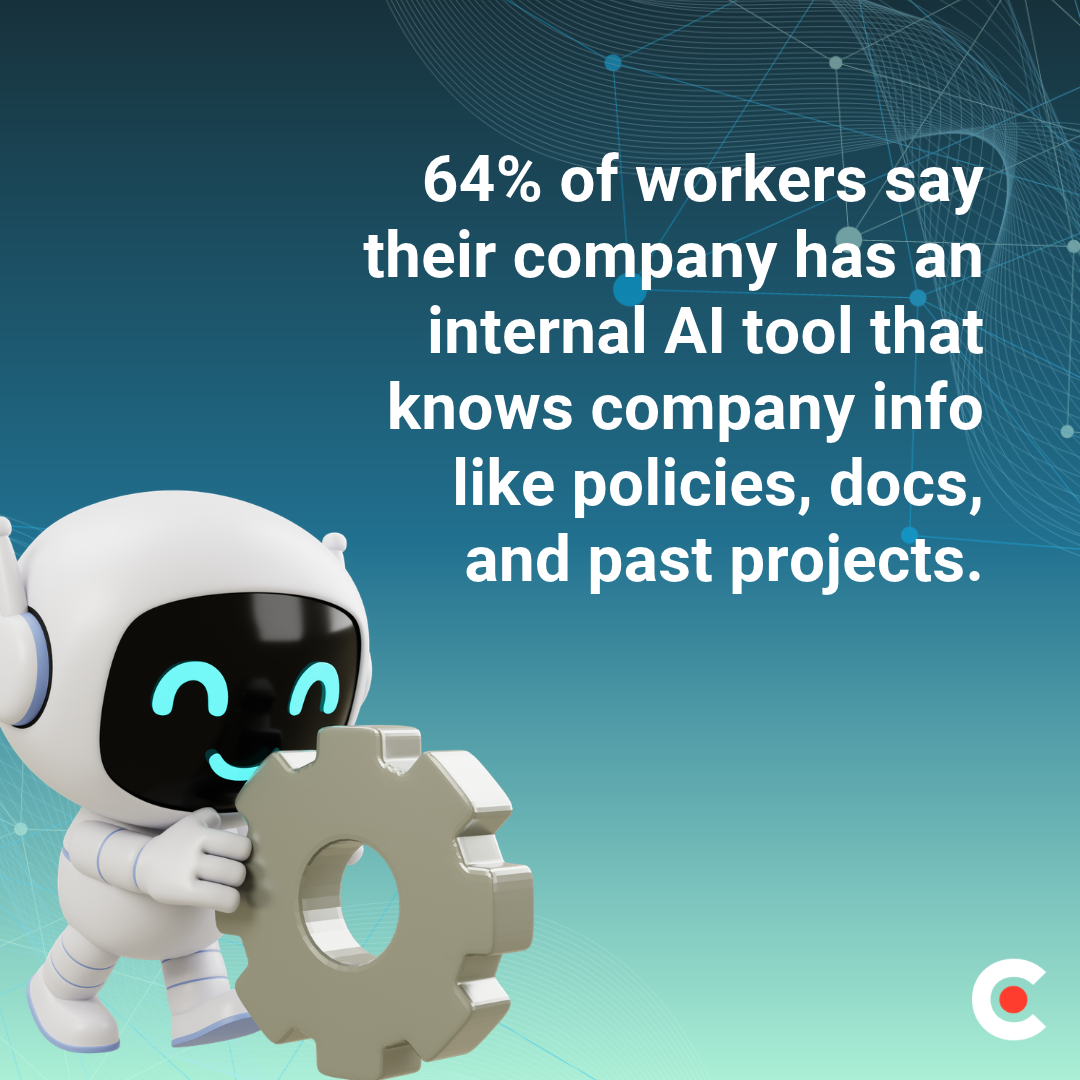
For example, an employee could ask, “What’s our process for launching a new campaign?” and get an answer based on the company’s actual workflows, templates, and documentation without having to track down a coworker who knows the process.
And employees are putting these tools to use. The majority (84%) say they use their company's internal AI tool regularly, while 81% say their company's internal knowledge base or documentation is useful.
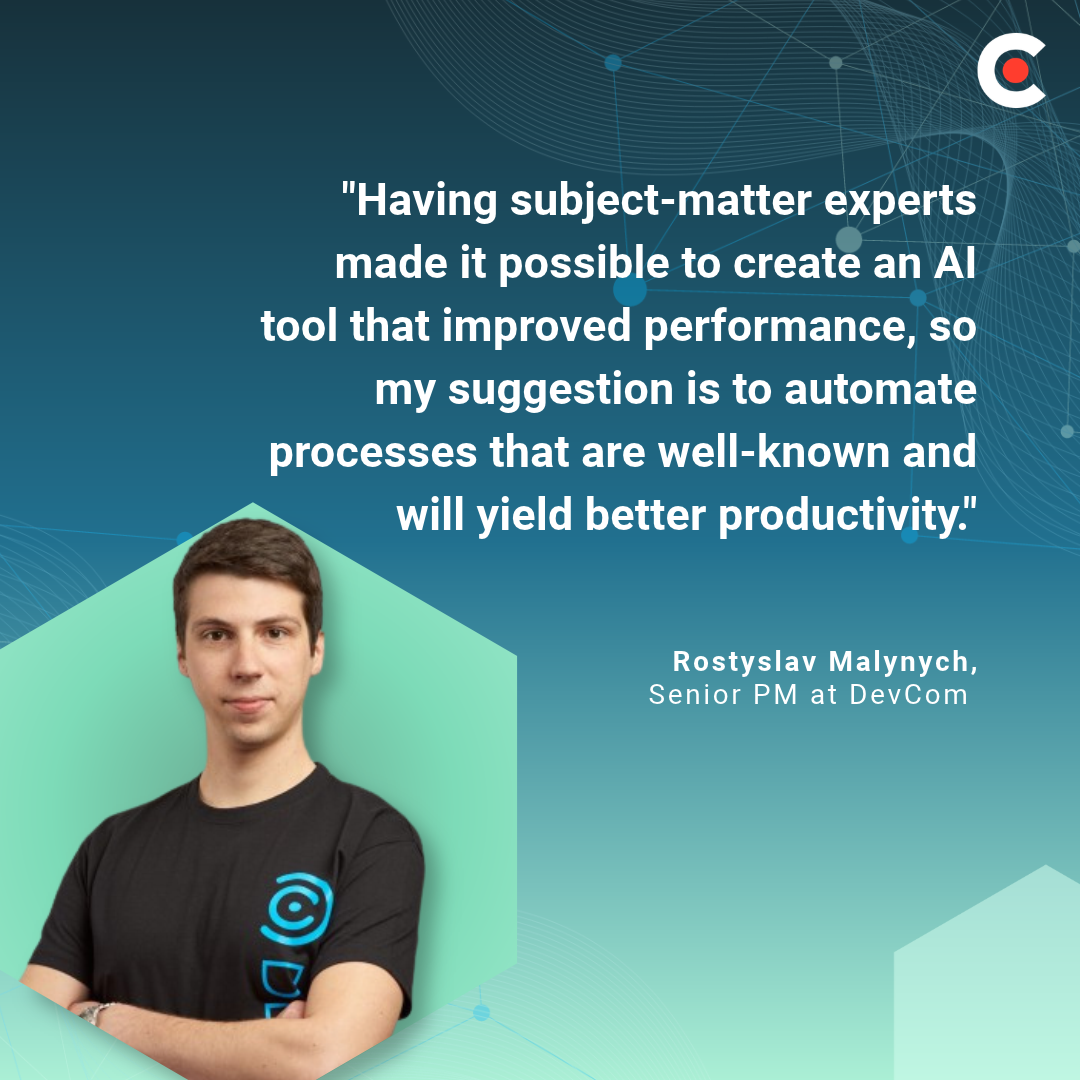
At DevCom, an in-house AI tool for project requirements has sped up project kickoffs. Rostyslav Malynych, Senior PM at DevCom, says the key is starting with work your team already knows well. "Having subject-matter experts made it possible to create an AI tool that improved performance, so my suggestion is to automate processes that are well-known and will yield better productivity."
Workers also seem willing to let AI handle more of their everyday tasks when it has the right context. Sixty-one percent say they would almost always or often ask an AI tool that knows their company's processes, documentation, and team instead of a coworker.
Internal AI tools could help address some of the challenges workers are already seeing. When employees can reference the same company-approved documentation, they're more likely to follow consistent processes, find existing solutions, and avoid duplicating work.
Instead of everyone asking their own AI for answers based on general knowledge, teams can draw from a shared source of information that's specific to their organization. They just need to be updated regularly.

Upkeep matters as much as the technology itself. "Organizations must ensure the available data or information is up to date, properly organized, accurate, and easy to understand," says Yogendra Gupta, Project Leader at Konstant Infosolutions.
Thanks to popular AI tools like Microsoft Copilot Studio, Custom GPT in ChatGPT, Google Gemini Enterprise, and Claude Enterprise, building custom AI resources isn’t hard. Most teams just need to gather the right information and connect it to their chosen AI model.
AI is already the first place many workers turn when they have a question, and that trend will likely grow as more companies introduce internal AI tools.
The teams that come out ahead won’t necessarily be the ones that use AI the most. They’ll be the ones that turn the time AI saves into better conversations, stronger mentorship, and more opportunities to share knowledge.
But companies still need to give employees, especially those just starting their careers, the guidance and support they need to keep learning from their coworkers. AI can provide quick answers, but human connection helps workers build judgment, develop new skills, and grow together.
Clutch surveyed 669 workers who regularly use AI in October 2026 via the polling site SurveyMonkey. All respondents were based in the United States between the ages 18-99; 49% were male, and 51% were female. All respondents were required to complete the survey in full to be included in the final analysis.