
What 25 Years of Design Projects Taught Us About What Clients Actually Need
That moment changed the way we ask questions at the start of a project. Twenty-five years in, the work has touched organizations of every kind: enterprise...
Updated January 13, 2026

Think you can tell when a photo is AI-generated? Most people can’t, and that’s why transparency, context, and responsible use matter more than ever for brands.
AI photos are everywhere. From glossy product listings to eye-catching social ads, brands are experimenting with AI-generated pictures at record speed. However, as the recent controversy around J. Crew’s AI product images showed, not every experiment lands well with consumers.
The challenge isn’t whether people can spot the signs of AI-generated photos (because most can’t). Instead, the question is how brands can use AI responsibly, disclose clearly, and protect trust in a world where AI imagery is becoming the norm.
In this article, we’ll explore what consumers think about AI photos, how often they misidentify them, where they accept them, and what brands should do to stay authentic.
Think you can tell if a photo is AI or not? Take our quiz:
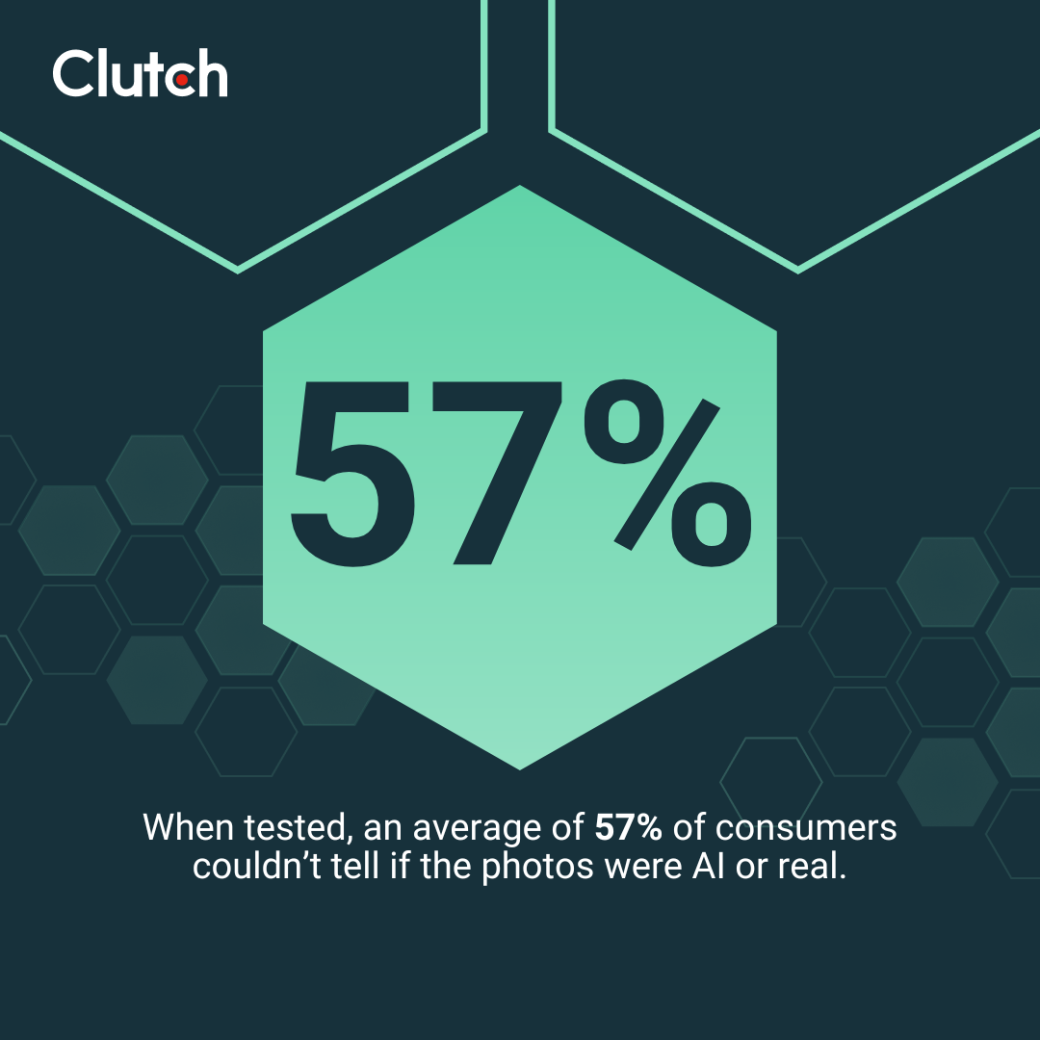
If you struggled to identify which photos were real or fake correctly, you’re not alone. According to a recent Clutch survey:
Confidence varies by age:
Accuracy shows a similar pattern. On average:
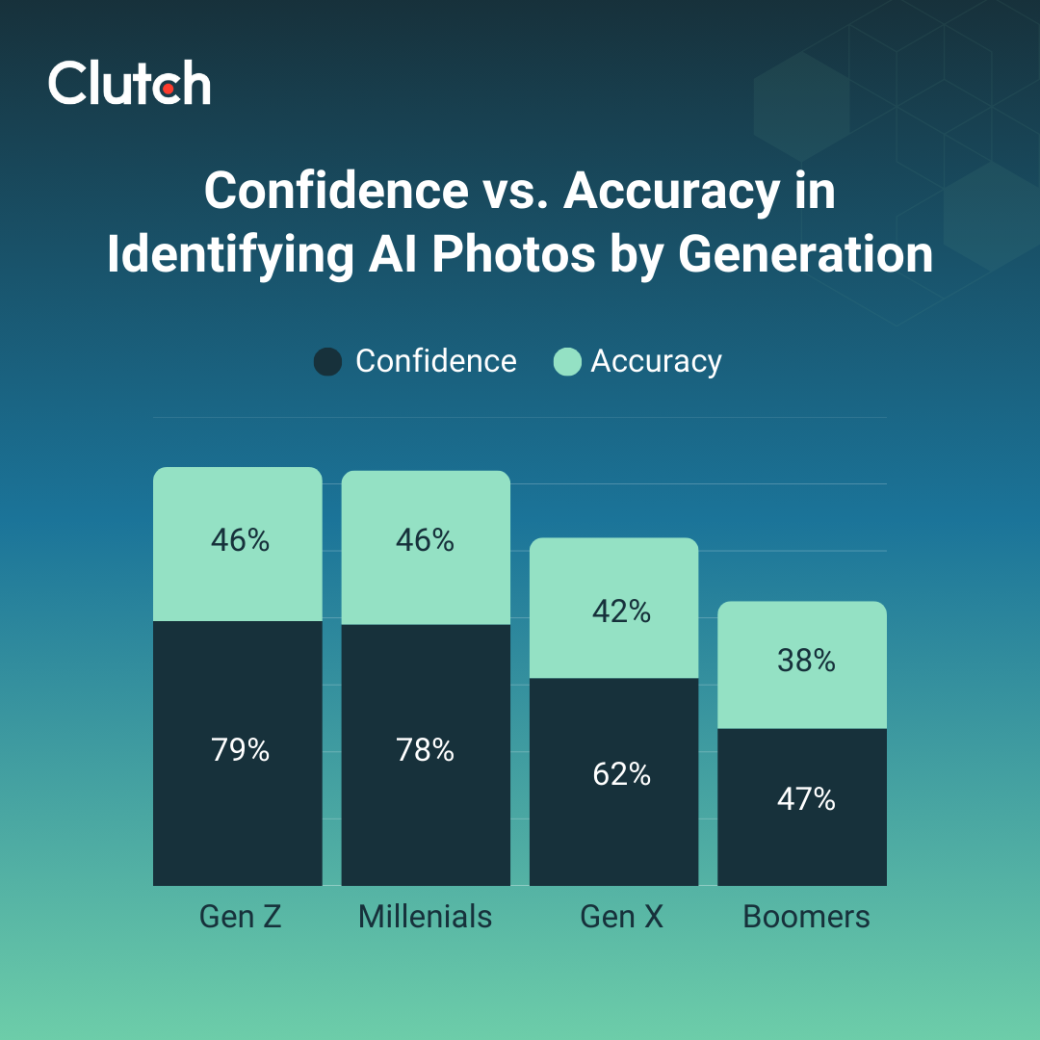
Ultimately, even when people think they know the signs of AI-generated images, most don’t. And this gap between confidence and accuracy has big implications for brand trust.
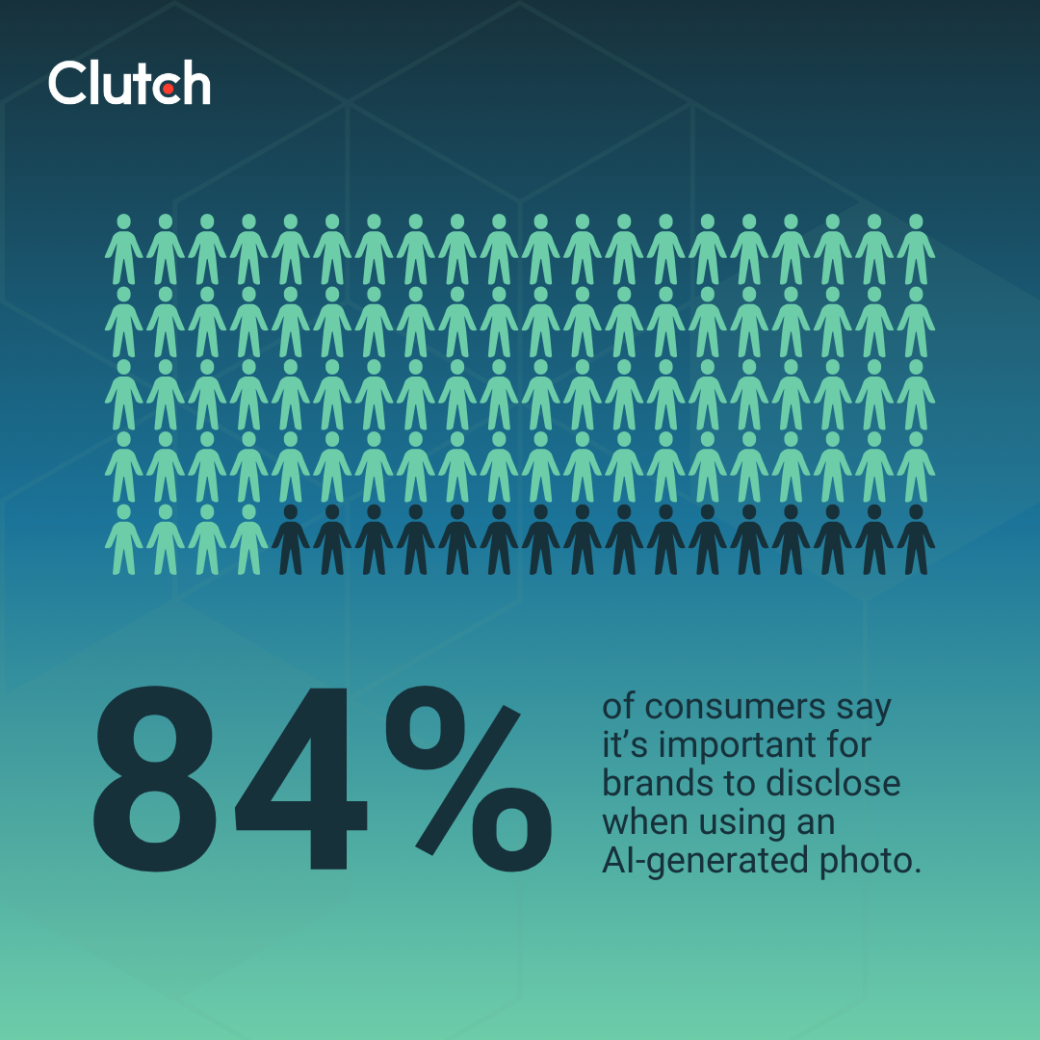
If consumers can’t reliably tell the difference between which photos are real or AI-generated, then brand disclosure becomes critical. In fact, 84% of consumers say it’s important for brands to disclose when using an AI-generated photo. Without that transparency, trust quickly comes into question.
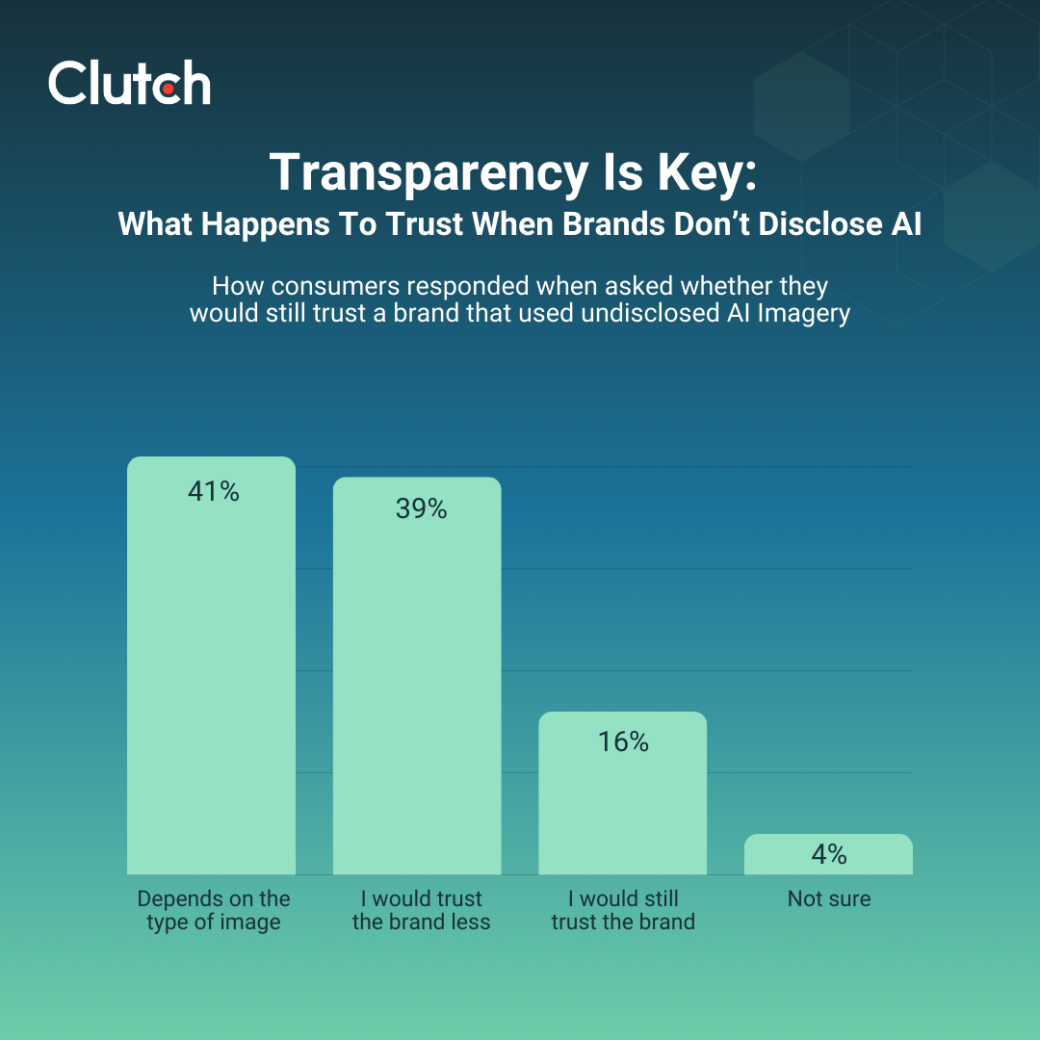
When asked whether they would still trust a brand that used undisclosed AI imagery, the responses showed how fragile that trust can be:
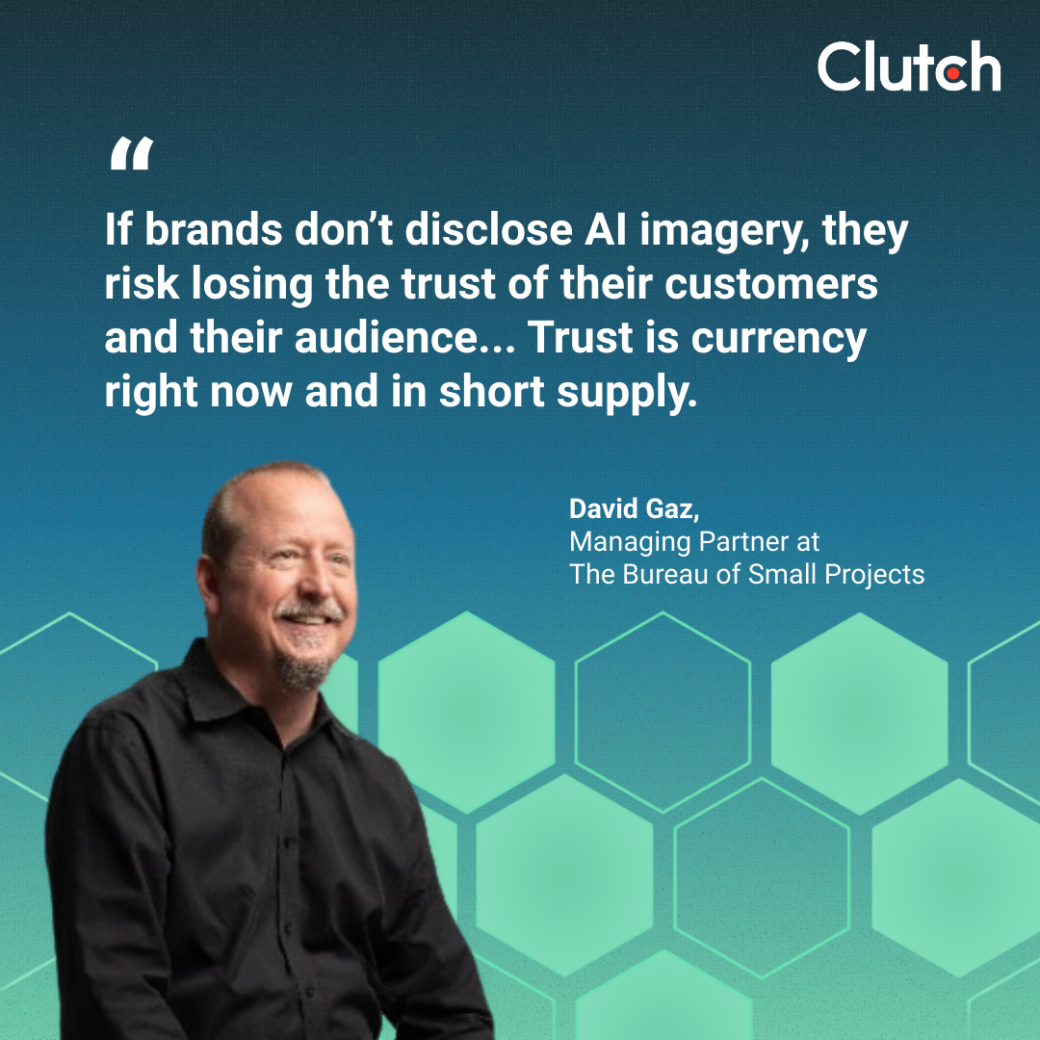
As David Gaz, Managing Partner at The Bureau of Small Projects, explains, “If brands don’t disclose AI imagery, they risk losing the trust of their customers and their audience… Trust is currency right now and in short supply.”
This erosion of trust can snowball into something even more damaging. Adam Bird, Director of Strategy at Deksia, warns, “A brand using AI imagery without disclosing it risks complete emotional disconnection from its audience. Once people default to ‘this is probably fake’ when viewing your content, you’ve lost them… They stop seeing your brand as a choice and start seeing it as noise.”
Even if some consumers don’t spot the use of AI imagery, others will. At the very least, they’ll question it. And once suspicion enters the picture, it can unravel trust across your entire audience. Transparency, then, isn’t optional. It’s the safeguard against losing your audience entirely.
Honesty matters, but so does context. People may distrust undisclosed AI images, yet they’re surprisingly open to them when used responsibly.
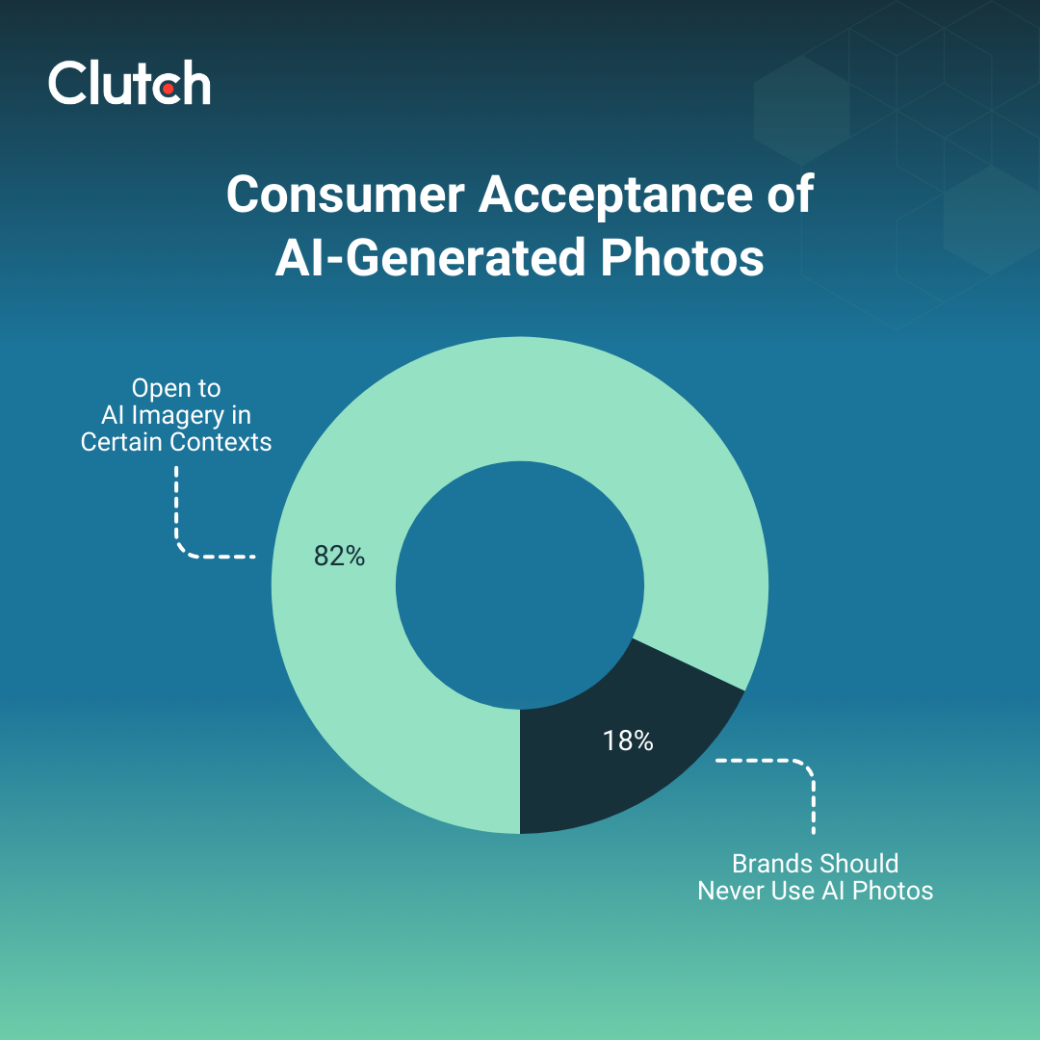
It’s important to note that 18% of consumers say brands should never use AI-generated photos. However, the remaining 82% are open to it in certain contexts, especially when it doesn’t replace real-life photography.
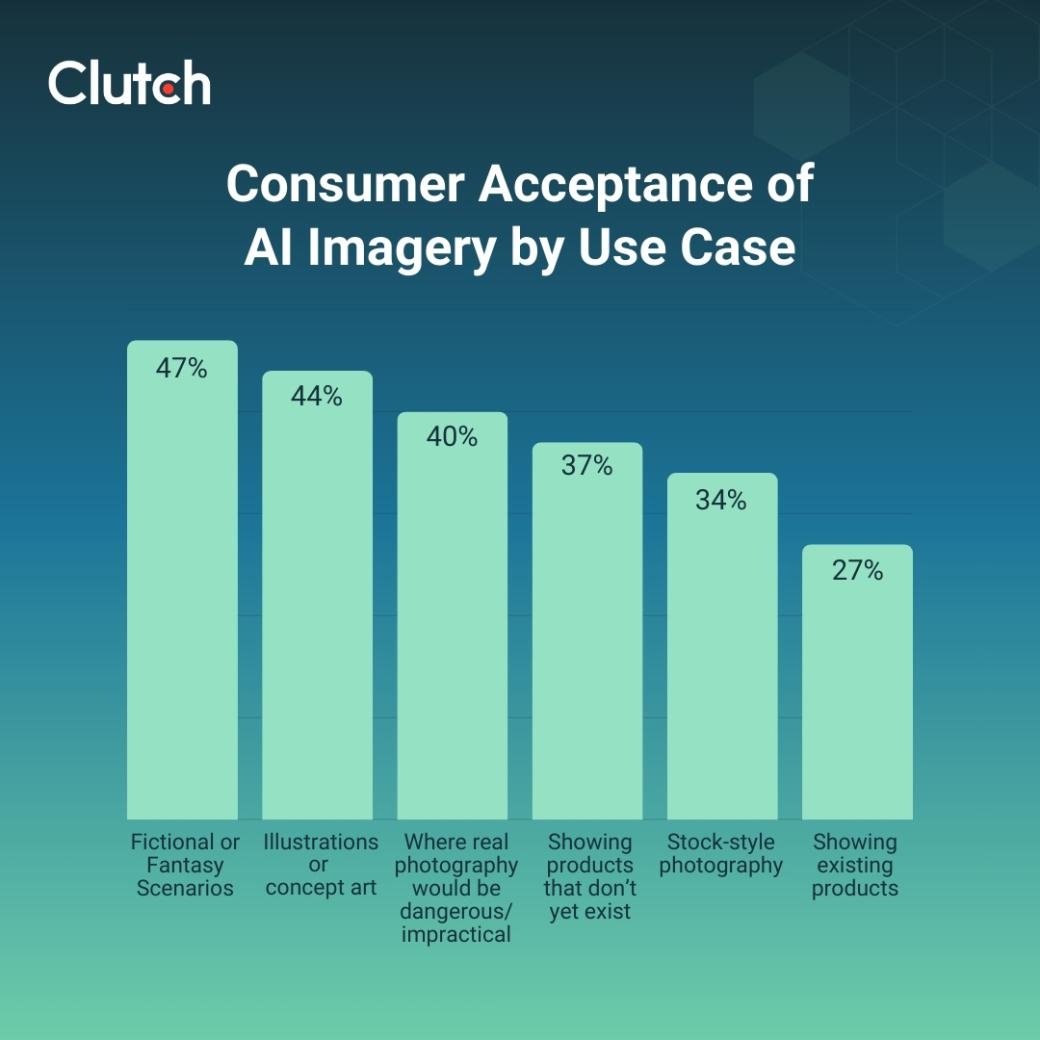
When asked about acceptable uses of AI imagery, consumers most often approved of the following scenarios:
However, acceptance does drop as the imagery gets closer to reality:
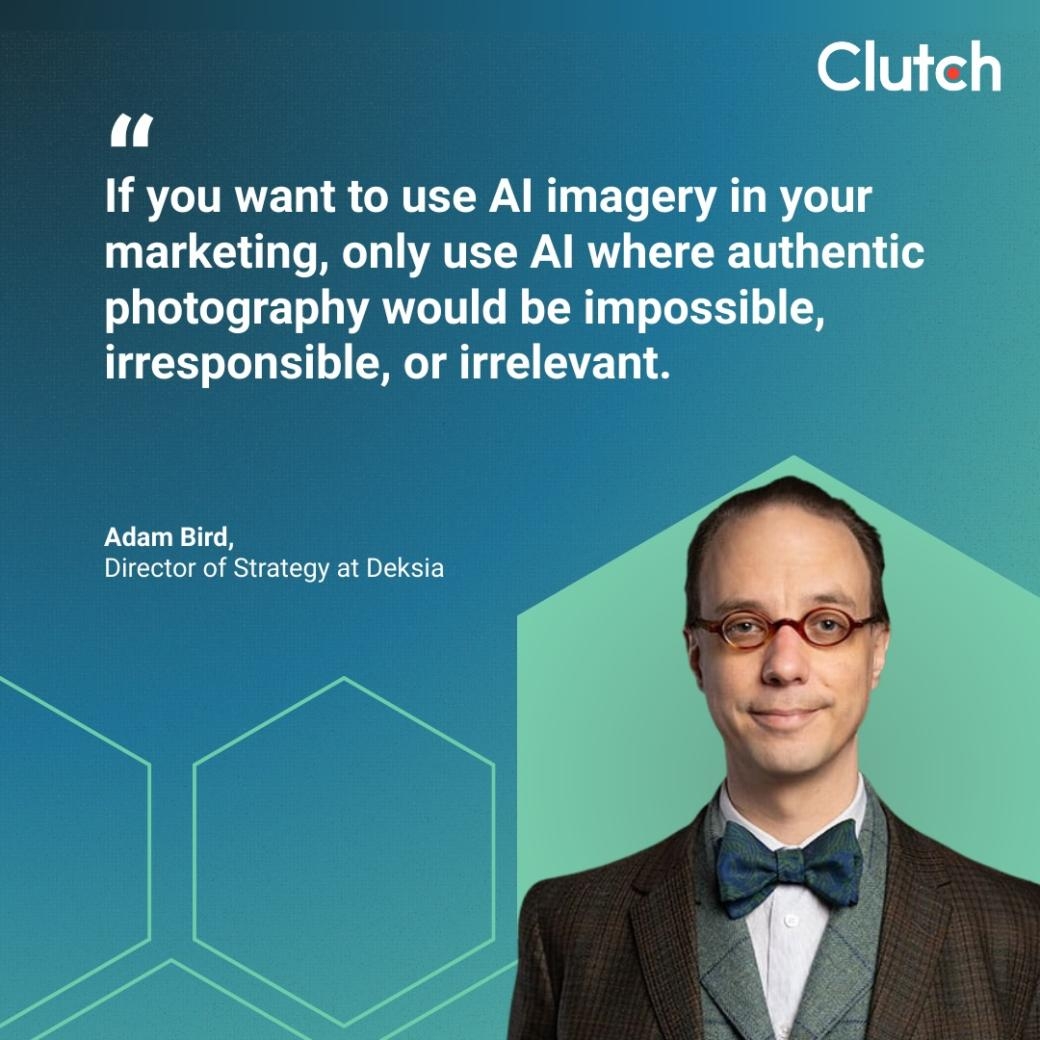
As Bird puts it, “If you want to use AI imagery in your marketing, only use AI where authentic photography would be impossible, irresponsible, or irrelevant.” Consumers seem to agree, signaling that AI is welcome in imaginative or supplemental roles, but not as a substitute for reality.
Even when consumers say AI imagery is acceptable in theory, their buying behavior tells a more cautious story.
When asked how likely they would be to purchase from a website that uses AI-imagery for product photos:
When it came to purchasing from a website that uses AI lifestyle images, logos, or non-product visuals, the split was similar, but somewhat more positive:
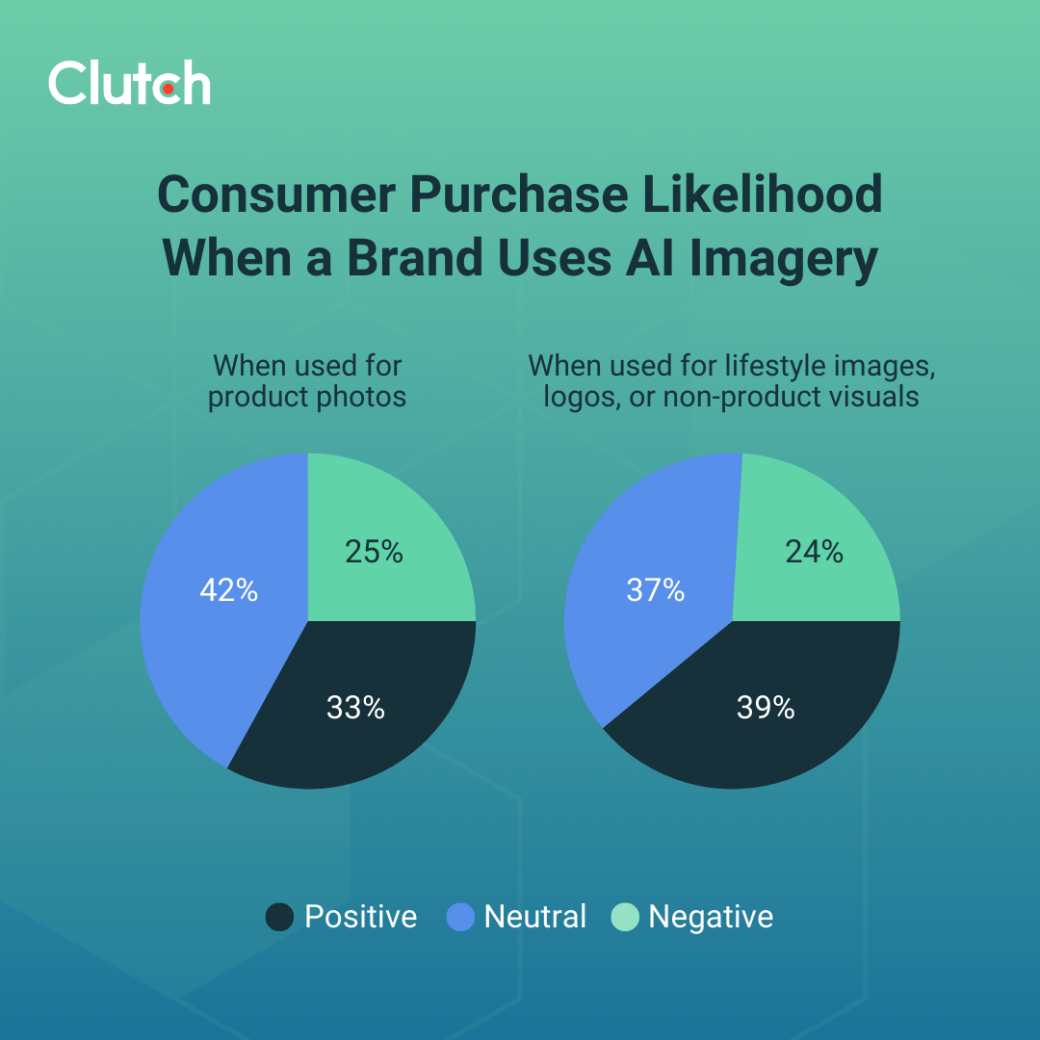
This predominance of neutrality shows that consumers aren’t automatically swayed by AI imagery. Rather, it reveals an opportunity for brands: Responsible use and clear disclosure can tip neutral perceptions toward trust and confidence.
As Josh Webber, CEO of Big Red Jelly, explains, “The single most important asset a brand has is its authenticity, and AI should be a tool that enhances that asset, not undermines it.”

In other words, AI photos won’t make or break a purchase on their own, but they can influence trust, positively or negatively, depending on how brands handle them.
If you’re unsure how AI fits into your broader marketing mix, consider working with a top-rated digital marketing company. The right partner can help you balance innovation with authenticity so AI strengthens, not undermines, your brand.
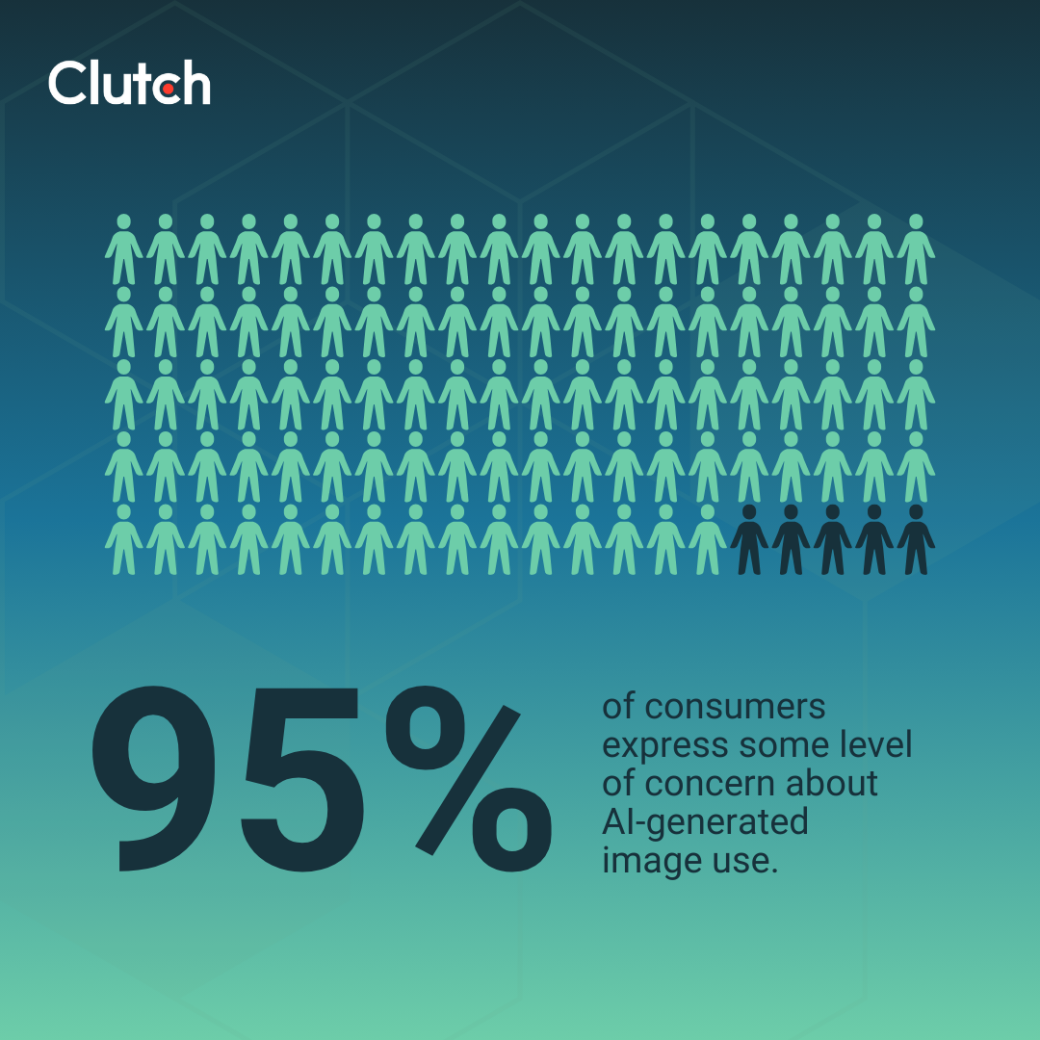
Even though most consumers don’t reject AI-generated images outright, 95% express some level of concern about their use.
Top worries include:
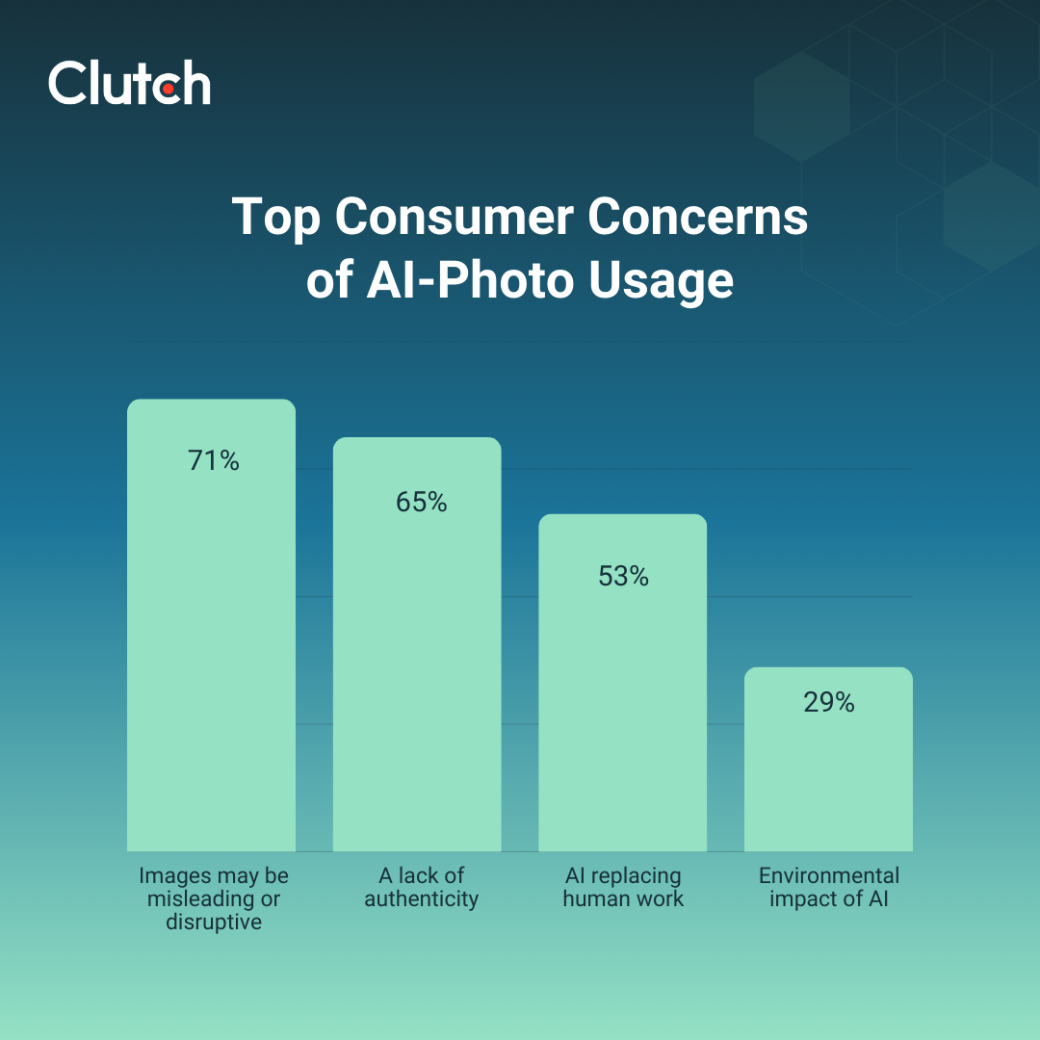
Addressing these concerns head-on is as ethical as it is strategic. Brands that take the time to understand their specific audience’s worries can use that insight to shape their AI usage policy, ensuring imagery aligns with what customers value and expect.
By aligning AI use with audience concerns and combining it with transparency and ethics, brands can turn skepticism into a competitive advantage.
Context, transparency, and ethical use shape how consumers perceive AI imagery. With these principles in mind, brands can take these concrete steps to build trust rather than risk skepticism:
For further support with your AI initiatives, connect with a top-rated artificial intelligence company to help your brand use AI both responsibly and strategically.
While most consumers may struggle to identify AI-generated images, it doesn’t mean they’re indifferent. Brands that embrace AI with honesty and integrity will gain a measurable edge in trust, while those that hide their usage risk alienating customers.
If you’re second-guessing how to incorporate AI imagery or want to ensure your marketing stays authentic, partner with a top-rated designer. Explore expert designers who can guide your creative strategy, combine AI with traditional design, and help your brand maintain trust while experimenting with new tools.
This report is based on a survey conducted on September 2, 2025, using the online polling platform SurveyMonkey. We surveyed 401 consumers in the United States between the ages 18-99 of all income levels. The respondents were 48% male and 52% female.
Participants were asked five questions that featured a single image and were asked to identify if the image was AI or real. They were also asked several multiple-choice and single-selection questions about their preferences around AI photo usage. Quotas were applied to ensure a balanced distribution across demographic segments. All respondents were required to complete the survey in full to be included in the final analysis.