
Cyberattacks Are Common. Here’s How Small Businesses Recover
68% of small businesses have faced a cyberattack. Learn how most recover within 3 months and the steps to strengthen security after an incident.
Updated March 3, 2026

Customer reviews influence buyers at every stage of the sales funnel, yet many brands overlook their potential. This guide breaks down how to turn reviews into high-converting copy, ads, and other assets.
When buying something new, most shoppers look to customer reviews for guidance. Data from Clutch shows that 96% of potential buyers check reviews before first-time purchases at both the consideration and decision stages. A comprehensive customer review strategy leverages your feedback to persuade buyers at every stage of the sales funnel and across marketing channels.
This article outlines specific tactics for turning these reviews into effective copy that influences buying decisions and converts more customers.
Businesses can use customer feedback in effective marketing strategies for improvement and growth. Go beyond glancing over reviews as they come in and use them to position your brand to meet and exceed customer expectations and differentiate yourself from competitors.
A comprehensive customer review marketing strategy involves:
It’s essential to distinguish between review generation and review strategy. Review generation is when businesses actively seek more or better reviews. You may send emails, reminders, or prompts to encourage customers to provide feedback.
A review strategy is how you put collected reviews to use, going beyond generation to activate customers and leverage insights to optimize products and marketing.
Using customer reviews in marketing is an easy way to guide prospective buyers toward a sale. When a customer expresses satisfaction with a purchase, others are more likely to do the same.
Effective customer review marketing can drive conversions in multiple ways:

Customer review marketing ultimately works because it builds trust with prospective buyers as they weigh their decision. Reviews reduce uncertainty and validate claims, turning interest into action.
Placing customer reviews throughout your website is an excellent way to guide buyers through the customer journey, from landing pages and blogs to product pages, all the way through to checkout.
Product pages communicate an item's details with descriptions, images, and prices. When relevant reviews appear on product pages, it reassures customers before they add an item to their cart.
Fairburn and Drummond note, “Showing credible, experience-led feedback close to key actions such as product pages or inquiry points can have a measurable impact on conversions, because it reinforces trust at the exact moment it matters most.”
For best results, highlight the top reviews above the fold to build trust before the user starts scrolling. Integrate customer quotes that highlight product benefits into the descriptions to connect features to real-world outcomes. Finally, add review filters by use case, such as size, industry, and ratings, to make it easy for shoppers to find relevant information.
Landing pages are standalone web pages made for a marketing campaign. Visitors click a link from a search, email, or ad and arrive on a landing page that guides them to a specific call to action (CTA).
These pages aim to convert high-intent buyers fast, so customer reviews can play a key role in reducing hesitation. In paid traffic campaigns, reviews help reinforce credibility for first-time visitors who reach the landing page via ads.
During product launches, testimonials on landing pages can help reduce uncertainty about new products. Landing page reviews for seasonal promotions can also show shoppers that others have also taken advantage of the deal.
Add testimonial banners to landing pages to highlight key messaging. Star rating badges are also useful as they provide social proof at a glance. Another excellent approach is to include “as seen in reviews” sections, which connect product benefits to real experiences.
As shoppers near the end of the customer journey, they reach a checkout or cart page. Here, they review the items that they’ve added to purchase before completing the transaction.
However, just because a potential buyer put an item in their cart doesn’t mean they will complete the purchase. A well-placed review here can reassure them that they’re making the right choice and reduce your cart abandonment rate.
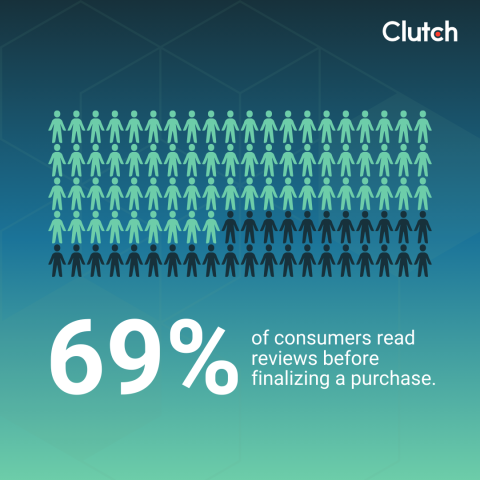
Clutch’s survey found that 69% of customers at this stage read reviews before the final purchase. This demonstrates that even late-stage proof is essential for driving conversions.
Blog posts are another great place to employ customer reviews. These articles allow potential buyers to dive deeper into the decisions and outcomes other customers have already made.
You can turn reviews into full-featured experiences that highlight customers' experiences in their own words. Success stories can showcase practical uses and results that other customers got from their purchase. Transformational narratives are also useful, guiding readers through the before-and-after of a shopper’s experience.
Blogs are excellent tools for influencing interested individuals to make a purchase. They also create SEO opportunities to help the article and product rank higher in search engines or appear as AI recommendations.
Besides serving as social proof, positive reviews can also inspire your own content. Repurposing the language that your customers naturally use in feedback can make copy more accurate and persuasive.
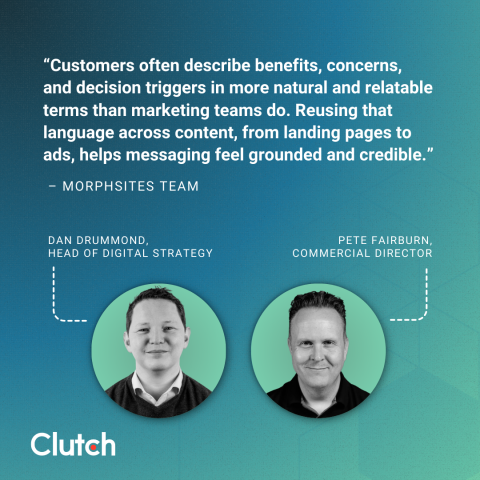
The morphsites team explains, “Customers often describe benefits, concerns, and decision triggers in more natural and relatable terms than marketing teams do. Reusing that language across content, from landing pages to ads, helps messaging feel grounded and credible.”
It's easy to rework reviews into high-converting marketing copy when you know the steps to take.
Scan customer reviews for language indicating where pain points were resolved. Reviews that describe the problem the customer had and how the product solved it work perfectly in marketing copy.
Additionally, look for customers who explain how the product reduced their frustration or exceeded their expectations. These insights are great for crafting engaging headlines, hooks, and email subject lines.
Statements that highlight product benefits are always useful for copy. Look for customers who describe outcomes, improvements, and results from the product, and rewrite those descriptions into claims.
For example, you can transform a review that states “Shipping was fast and sizing was perfect” into “Get the perfect fit delivered fast.” Validate the claim by displaying the original customer feedback.
The more reviews you have at your disposal, the more data you can analyze. Identify review patterns across campaigns and channels to build a framework for engaging messaging. Comfort, durability, ease of use, or good customer service are effective themes to drive conversions.
In paid ads and social campaigns, you often have only a very short window to capture someone's attention. Using customer reviews in marketing creates engagement and builds trust instantly. Reviews are especially helpful when it’s a shopper’s first encounter with a brand.
Static review creatives are non-animated images that feature a testimonial, rating, or quote. These ads work well on social media platforms, website displays, and paid digital advertising channels.
For best results, overlay a star rating or a “top-rated product badge” on ads to immediately signal popularity and quality. Short testimonial snippets can quickly showcase product benefits. To maximize impact, carousel ads that feature multiple customer quotes give shoppers multiple reasons to buy.
Static reviews on paid ads work well because they build trust in a brief impression. This allows social proof to influence decisions before a user takes action.
Static images can be effective, but video and UGC ads are even more likely to pull people in. Apart from their visual appeal, they also come across as more authentic to users. Fairburn and Drummond say, “Video reviews, photos, and longer-form testimonials feel harder to fake and therefore more trustworthy.”
Examples of UGC and video content include:
Sharing genuine emotions and reactions from actual customers can be far more effective than making marketing claims.
Email and SMS review marketing campaigns send review content directly to individual customers. Direct messages can do everything from reinforcing trust mid-funnel to assuring customers they made the right decision after a purchase.
Examples include:
The right reviews in these messages can move engaged prospects to the next stage and encourage repeat buyers.
Positive reviews, properly deployed, can go a long way toward providing social proof and reducing purchase anxiety. However, there are common pitfalls that marketing teams can fall into. Avoid these traps to improve your strategy.
Brands may try to edit and shape customer reviews to better reflect their preferred messaging. But this can come across as inauthentic. If shoppers feel like they’re being manipulated into making a purchase, they often don’t.
Filtering reviews to only show the top-rated also raises red flags for buyers. No company or product is perfect, and consumers will grow skeptical of those that pretend to be.
Additionally, hiding negative sentiment removes the opportunities to address criticisms. Brands that respond openly to negative feedback often come across as more trustworthy and transparent.
Finally, shoppers must be able to relate to the reviews. Posting positive reviews without giving context on the product, situation, or problem solved won’t do much to influence purchasing decisions.
Measuring the effectiveness of your customer review strategy helps you achieve your marketing goals faster. It’s important to gather the best data to evaluate and optimize your return on investment.
Key metrics to consider include:
Combining all of these metrics gives you a clearer understanding of which customer review strategies equate to business success.
Once your initial customer review strategy is starting to show results, it’s time to build it out with the right resources and tools. Look for the telltale signs that your business should consider expanding operations and bringing in help.
When your volume of reviews is growing over time, you must divert more resources to find the reviews that work best. If you're trying to coordinate your customer review marketing across multiple channels, such as email, social media platforms, and websites, additional support can ease the process.
Scaling paid ad campaigns can benefit from professional expertise with continued experimentation and performance monitoring to get the best results. Turning reviews into visual or video elements often requires production services.
Digital marketing agencies can support and optimize your review strategy with:
Partnering with experts allows you to scale your customer review strategy quickly and consistently.
Review campaigns are a great way to invigorate marketing efforts and drive sales. Customer reviews can enhance every part of the sales funnel, from product pages to paid advertisements, convincing your audience of the value of your products or services.
To develop the best marketing strategy for your reviews, hire a digital marketing agency through Clutch today.