
How to Define Brand Values That Guide Every Business Decision
Brand values are the principles that guide company decisions, define what a brand stands for, and shape how it treats customers, employees, and partners.
Updated February 24, 2026

Rebranding can signal relevance or spark confusion. How will consumers interpret your brand’s move?
In August 2025, Cracker Barrel unveiled a new logo. It was sleek, modern, and meant to signal a fresh direction for the nearly 40-year-old brand. Instead, backlash was immediate. With customers outraged, the business’s value plummeted nearly $100 million. Within a week, Cracker Barrel quietly reverted to the old design. The lesson? Consumers notice changes, and they care deeply about how brands evolve.
Most people respect updates that signal a brand is keeping up with the times, especially when quality remains high, changes aren’t too frequent, and the reasons behind them are clear.
Looking for a Public Relations agency?
Compare our list of top Public Relations companies near you
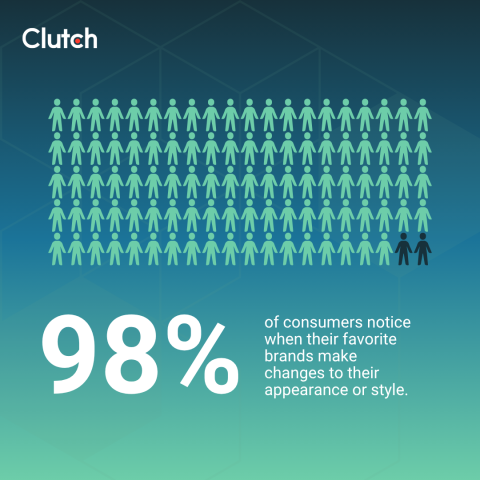
According to a recent Clutch survey, 80% of consumers say brand consistency influences their purchasing decisions, but change isn’t an automatic dealbreaker. Thoughtful updates can capture attention, signal relevance, and even delight audiences. In fact, 98% of consumers notice brand changes, and 51% have a positive reaction to updates from their favorite brands.
So, the real question for brands isn’t “Should we rebrand?” It’s: “How can we evolve in ways that feel earned, transparent, and aligned with what consumers already trust?”
In this article, we’ll explore how consumers perceive, interpret, and respond to rebranding. Learn what brands can do to ensure updates strengthen trust, spark engagement, and signal relevance rather than cause confusion or frustration.
Not sure where to start? Check out our roundup of top-rated branding agencies to help shape a strategy that resonates.
Consumers are far more aware of brand updates than many brands realize. Recent Clutch data shows that 98% of consumers notice when their favorite brands make changes, whether that’s a new logo, packaging, website design, or a shift in overall style.
However, certain rebranding efforts stand out more than others. Consumers report noticing the following updates most frequently:
Ultimately, brands should assume that changes are being noticed. Once the rebrand effort has been seen, consumers start to assume why it has been made, and those assumptions can make or break trust.
Put yourself in the shoes of a consumer: your favorite brand updates its color palette for the first time in 20 years, with a fresh logo to match.
Not only do you notice (and immediately compare it to the original), but a question forms almost instantly: “Why did they change it?”
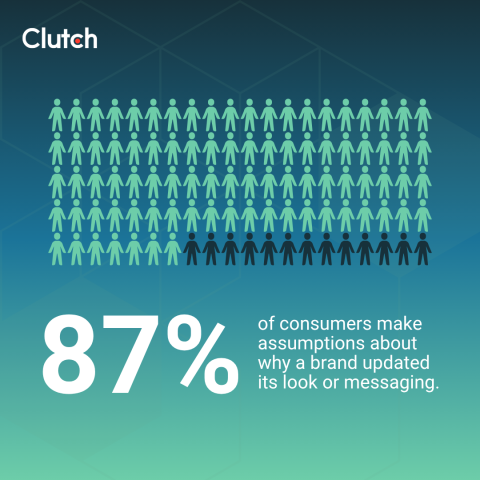
Clutch data shows that 87% of consumers make assumptions when a familiar brand updates its look or messaging, and the story they create in their heads matters.
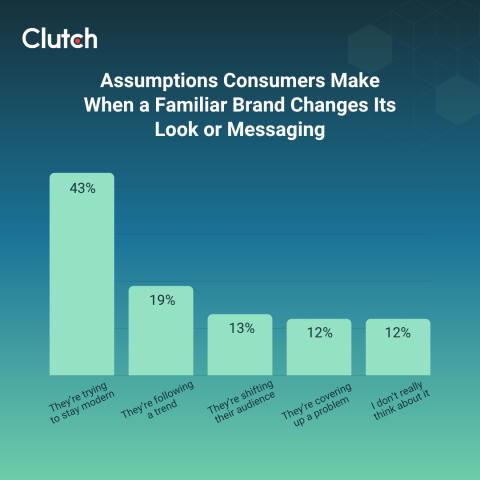
For many, the assumption is positive or neutral as they believe the brand is trying to stay current:
These interpretations aren’t necessarily wrong. Brands should evolve. But for a notable segment of consumers, the initial reaction is more cautious:
This is where transparency becomes a powerful tool. For example, Meta’s 2021 rebrand communicated a clear reason behind the change — shifting focus toward the metaverse — which shaped perceptions before assumptions took hold.
On the other hand, silence leaves room for skepticism, such as when Weight Watchers rebranded to WW in 2018, leaving many consumers confused about what the brand stood for.
"Silence breeds speculation, but storytelling builds trust,” says Kristijan Binski, Co-Founder and Creative Director of Uniko Studio. “The goal is to help people recognize continuity through change and understand that evolution represents positive growth.”

Mo Dhaliwal, CEO of Skyrocket Digital, suggests pairing transparency with clear value for optimal results. He shares, “Your audiences are more likely to care about how this change improves their experience. So, connect the change to benefits… Launch the rebrand alongside tangible improvements. New packaging that's easier to open. A service that feels easier and more responsive. A website that is more clear and delightful. Give customers a path to experience the ‘why’ before you explain it.” Not only will they better understand the change, but they are more likely to be on board with it.

The takeaway is clear: Consumers aren’t opposed to change, but they want to understand it. When a brand rollout strategy communicates the why behind a rebrand, they reduce negative assumptions, strengthen trust, and make the update feel intentional.
Consumers understand that rebrands serve real business needs. In fact, 92% agree that rebrands can be necessary, especially when they:
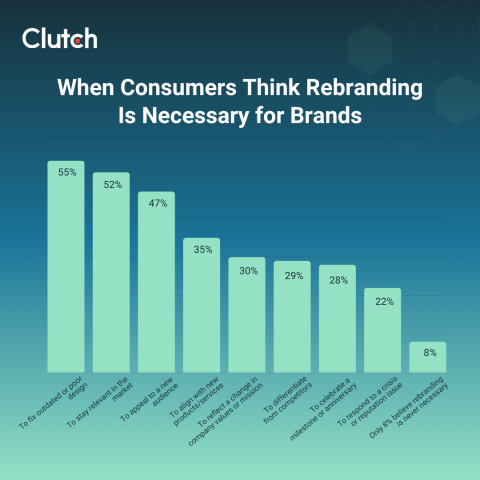
Yet, consumers approach rebranding the way they approach a haircut: small, thoughtful updates are welcome, but drastic changes can be jarring. Recent Clutch data shows:
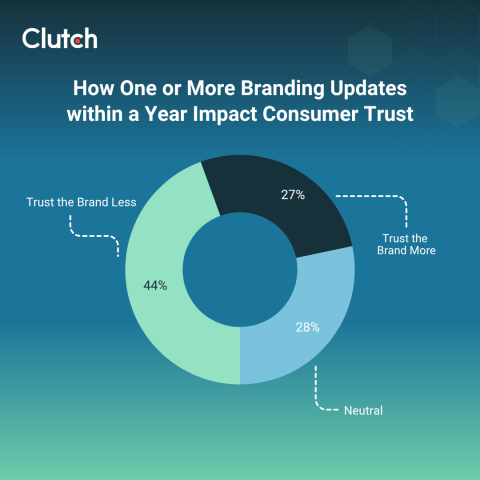
Even well-executed updates can affect trust if they happen too often. If a brand rolls out updates too frequently (one or more within a year), 44% of consumers say it makes them trust the brand less. At the same time, 27% see frequent updates as a sign of innovation, and 28% don’t mind either way. How often changes occur shapes how credible a brand feels: carefully paced updates reinforce reliability, while constant shifts risk confusion or skepticism.
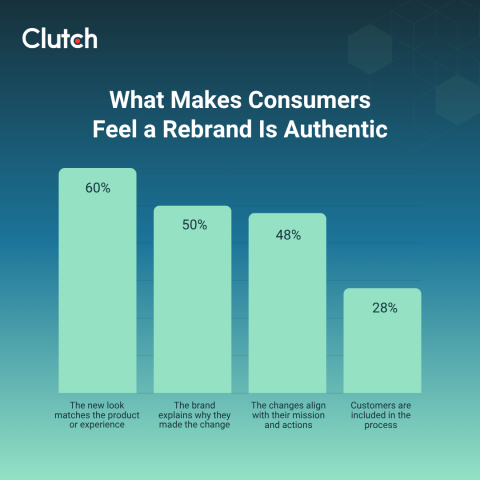
Consumers also associate authenticity with trust, and authenticity drives acceptance. A brand refresh feels credible when it’s clear, intentional, and aligned with the brand’s identity. Consumers say a brand refresh feels authentic when:
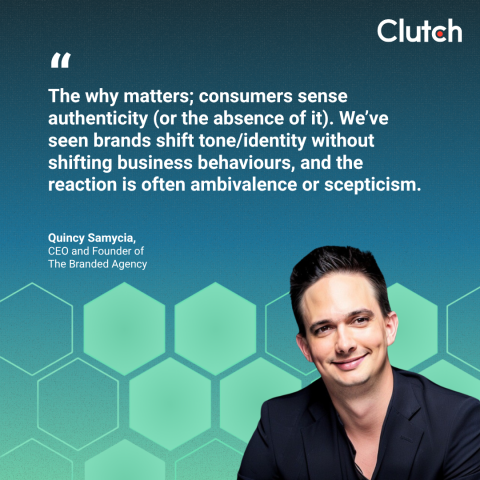
As Quincy Samycia, CEO and Founder of The Branded Agency, emphasizes, “the why matters; consumers sense authenticity (or the absence of it). We’ve seen brands shift tone/identity without shifting business behaviours, and the reaction is often ambivalence or scepticism.”
Rebrands succeed when they build trust. They should make customers feel more clear about who you are and what you offer, while drawing them into your orbit. Bad rebrands leave people questioning what changed and why, it can create enough force to send them drifting away, taking their engagement with them.
Rebranding changes more than a logo or color palette by directly impacting how people interact with your brand. Consumers’ reactions to updates, along with their tolerance for change, directly influence their engagement.
Austin Schulenburg, Creative Director at Pen and Mug, believes that the biggest misconception brands have with rebranding is that “consumers are always resistant to change.” He explains, “When a rebrand brings real value that aligns with your brand’s core values and value propositions, your audience will love it.”

Clutch data supports this sentiment, showing 32% of consumers react positively, enjoying the fresh look, and only 17% react negatively, preferring the brand’s original appearance. About half (51%) feel neutral about the change.
Engagement behaviors vary when a favorite brand rolls out a major visual update:
Consumers are also open to exploring new offerings from brands they trust. In fact, 86% of consumers who notice a rebrand say they are likely or somewhat likely to try new products or services, leaving just 13% who are unlikely to engage.
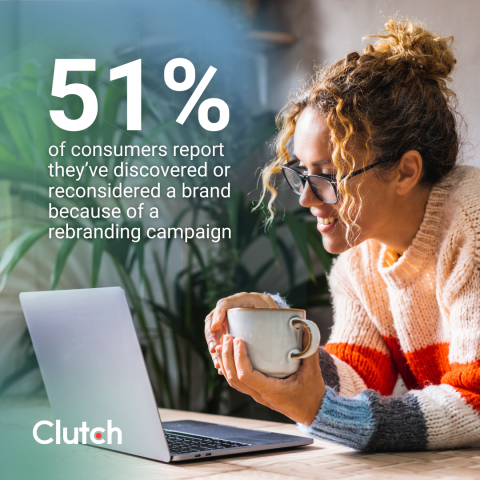
Rebrands can also capture the attention of new or previously disengaged customers. Over half (51%) of consumers report that they’ve discovered or reconsidered a brand they once dismissed because of a fresh image or rebranding campaign.
Ultimately, a strong rebranding strategy can spark curiosity, engagement, and renewed interest, but only when it’s done thoughtfully. Clearly communicating the reasons behind updates, pacing changes intentionally, and keeping the brand aligned with its identity all help ensure consumers lean in rather than pull back.
Rebranding doesn’t have to be risky—but it should always be intentional. Here’s what successful updates have in common:
Purposeful rebranding balances evolution with familiarity, keeping your brand fresh while maintaining your brand’s core identity.
Rebranding is more than just a visual refresh—it’s an opportunity to strengthen trust, spark engagement, and show that your brand is evolving thoughtfully. Consumers notice, interpret, and react to every change, so pacing, transparency, and alignment with your values are key.
When done right, rebrands can renew interest among loyal customers and attract those who may have previously overlooked your brand. Start small, communicate clearly, and save the bold moves for moments that matter.
“The true rebrand lies in balance, evolving without losing what made the brand trusted in the first place,” Binski says. “The most successful rebrands... allow audiences to grow into them, at their own pace, with trust leading the way.”
Ready to make your next brand update count? Hire a top-rated branding expert to guide your rebrand and ensure it resonates with your audience.
This report is based on a survey conducted on October 24, 2025, using the online polling platform SurveyMonkey. We surveyed 404 consumers in the United States between the ages 18-99 of all income levels. The respondents were 48% male and 52% female.
Participants were asked a series of multiple-choice and single-selection questions about their experiences and preferences for business rebranding practices. Quotas were applied to ensure a balanced distribution across demographic segments. All respondents were required to complete the survey in full to be included in the final analysis.