
How to Define Brand Values That Guide Every Business Decision
Brand values are the principles that guide company decisions, define what a brand stands for, and shape how it treats customers, employees, and partners.
Updated February 24, 2026

A rebranding campaign offers a chance to deepen customer trust and capture new consumer interest, but vague messaging or a haphazard rollout can derail your rebrand before it begins.
For six days in 2010, the Gap had a different logo. The minimalist rebrand ditched the iconic blue box, and in doing so, attracted the ire of consumers worldwide. The company quickly backtracked, learning an expensive lesson in the perils of surprising consumers and pulling away from their perceived image of a brand.
Many people are naturally averse to change, and consumers have a deep connection with the brands they regularly interact with. That makes pulling off an effective rebranding campaign one of the most difficult things for a business to do (which is why so rebrands many fail). Done correctly, though, a rebrand can create excitement, engagement, and, ultimately, sales. As a Clutch survey shows, it piques consumer interest:
Looking for a Public Relations agency?
Compare our list of top Public Relations companies near you
But what separates a successful rebrand from a disastrous one? It all comes down to transparency and a sense of purpose.
Check out expert insights and data from a Clutch consumer survey to learn the essential steps for a successful rebrand.
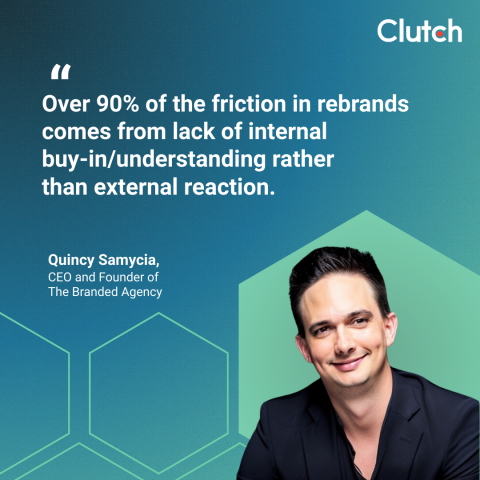
You can trace the failure of many unsuccessful rebranding campaigns back to the very beginning. If you don't have the whole organization on board with your new image, you can't expect to convince consumers. According to Quincy Samycia, CEO and Founder of The Branded Agency, “over 90% of the friction in rebrands comes from lack of internal buy-in/understanding rather than external reaction.”
Rebranding is a holistic process that incorporates all of a company's teams. One risk is that some stakeholders may be excited about some aspects of the rebrand but remain uncertain or opposed to others. Your design team may love the new visual direction, but think the speed of the transition is too fast. Customer service might be on board with some of the changes, but is worried about how to launch the rebrand to customers.
Make sure everyone is aligned on the rebranding strategy, mission, messaging, visual direction, and rollout plan. "Before public rollout, your teams must be aligned, your operations primed, and your story clear," says Samycia.
If your team has an inconsistent understanding of your rebranding, your external communication will be similarly inconsistent. Holding those extra team meetings now will save you stress down the line.
The greatest risk in a rebrand is that it feels inauthentic to your consumers. Data from Clutch suggests that nearly half of consumers would stop buying from a brand that felt inauthentic. Collecting data from your customers helps keep you on track.
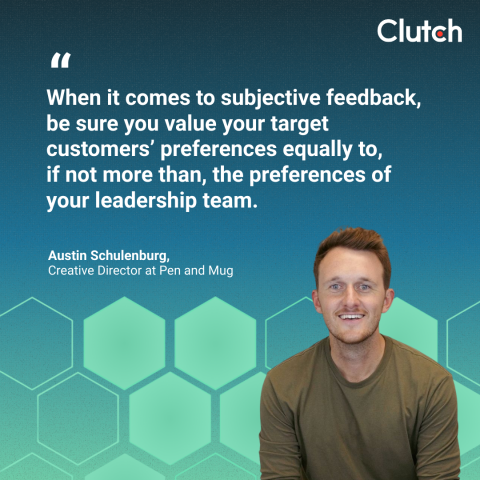
Don't make the mistake of falling in love with your rebrand before you get a reality check. "When it comes to subjective feedback, be sure you value your target customers’ preferences equally to, if not more than, the preferences of your leadership team," says Austin Schulenburg, Creative Director at Pen and Mug.
There are many different ways to collect the data you need. Schulenburg recommends interviews and focus groups. You can also employ surveys, interviews, and data from your customer support teams.
Why are you rebranding? The question is simple, but you need a good answer that makes sense to people outside your company. "Nobody cares about your internal restructuring or the various justifications of your creative department," explains Mo Dhaliwal, CEO of Skyrocket Digital.
Explaining your reasons for rebranding isn't an optional step, either. Data from Clutch shows that 87% of consumers make assumptions when they see an update to a familiar brand. If those consumers aren't given the right story, they'll invent their own, and it won't always be positive.
Customers also need to understand how your company's rebrand will affect their experience with your products or services. They want to know what's changing, what's staying the same, and why you're rebranding now.
Consumer response isn't something to fear, though. As Schulenburg explains, "The ‘why’ is everything. If a rebrand is tied to actual business evolution that brings more value to consumers, they’ll get in on it and share in the excitement." Offer an authentic explanation for your rebrand that addresses customer concerns.
A rebrand can be confusing to consumers. Sequencing provides much-needed structure and prevents consumers from feeling blindsided. Following a clear order also gives you a chance to check in and retool, if needed, before the next step:
A lot of negative reaction to rebrands isn't necessarily because of the contents of the change but rather the result of a rushed, uncoordinated rollout. The more controlled your rebrand launch is, the better. "If you can — soft launch the new identity in one geography, channel, or product line, track key metrics (recognition, sentiment, retention), and compare to baseline. This gives actionable feedback with lower risk," says Samycia.
When announcing your rebrand, consider how you'll communicate the changes across all of your touchpoints to prevent misalignment.
A simple visual refresh isn't enough for many consumers. In fact, a rebrand launch lands best when paired with service, product, or usability upgrades, which you can see in these successful rebranding examples. A purely cosmetic change can feel cynical and inauthentic to consumers, as if you're chasing new business without thinking of your current customer experience.
Consider rolling out your branding changes with other improvements. Dhaliwal suggests a refreshed website, service improvements, or easier-to-open packaging.
Rebrands can also stray into dangerous territory if customers don't understand your reasoning. "If you feel like you have to lead with explanation, then the value add of the rebrand might not be great enough to matter to them," explains Dhaliwal.

Concrete action helps customers understand the "why" behind a rebrand. For instance, if you're an apparel company looking to emphasize consumer value, consider launching your new look along with an improved customer loyalty club or a more generous returns policy. If you're a B2B marketing company wanting to focus on how easy it is to work with you, pair your rebrand with a more streamlined website or account management system.
Over the course of a few weeks, a loyal customer may engage with your brand in different ways across multiple touchpoints. They could:
All of these channels need to be pushing out consistent messaging. Inconsistent implementation is one of the top triggers of rebranding failure. Consumers are understandably confused if they see different visuals or hear different phrasing from different parts of your company. This confusion can make it harder for them to understand the reasons behind your changes, promoting cynicism. Frontline employees will bear the brunt of this customer confusion, potentially undermining internal buy-in.
To avoid these issues, make sure your customers see your new branding consistently across all channels.
You understand the reasons behind your rebrand, you've gotten your team and stakeholders on board, and you're prepared for a consistent launch across touchpoints. Launch day is here, but your brand rollout work isn't over.
Instead of thinking of launch week as a finished project, treat it as a feedback loop where you consistently make small adjustments.
Keep up to date with consumer sentiment across a variety of channels: social comments, organic search queries, customer service conversations, and review sites. If customers are confused, act quickly to answer their questions and make sure that your rebranding isn't confusing other consumers. Proactive engagement can turn uncertainty into enthusiasm.
Back in 2019, Kim Kardashian announced the name of her new shapewear brand: Kimono. Many consumers around the world took issue with what they saw as cultural appropriation. The mayor of Kyoto even addressed an open letter to Kardashian.
As a result, the brand reacted fast. Within a week, they announced a coming name change. Within two months, the new name, Skims, debuted, along with images that highlighted the wide range of sizes and skin tones available. By responding quickly and reinforcing the brand's commitment to diversity, Skims charted a successful path through the controversy.
Rebranding is a months-long process that requires consistent reinforcement. By launch day, you and your team have been living your rebrand for months, but your customers haven't. It's going to take time and consistent messaging for them to catch up.
Reinforcement involves more than making sure all of your social channels use the right logo. Different parts of your business can produce content that connects your rebrand to your mission and values:
Successful brands know that repetition reduces friction, so they keep reinforcing rebranding changes long after launch day.
Rebranding can be tremendously rewarding for a company. It's a great way to attract new eyeballs while exciting current customers and reinforcing key brand values. However, that opportunity doesn't come without risk. Brands that rush the planning stages, fail to get internal buy-in, or ignore consumer feedback pay for their haste and poor preparation.
Successful rebrands all incorporate thoughtful storytelling, customer involvement, and an intentional rollout. Above all, successful rebrands are guided by transparency and a clear sense of purpose that deepens consumer trust instead of disrupting it.
Interested in a rebrand? Browse Clutch's directory of top-tier branding agencies to find professionals who can show you how to rebrand and guide you through a smooth, insight-driven rollout.