
How to Define Brand Values That Guide Every Business Decision
Brand values are the principles that guide company decisions, define what a brand stands for, and shape how it treats customers, employees, and partners.
Updated February 24, 2026

In 2026, brand authenticity is no longer optional. Clutch's data shows that 97% of consumers say authenticity impacts their decision to support a brand. But what does this look like in practice for businesses?
When you’re building an authenticity strategy, brand voice should play a central role in creating a strong, human, and distinctive identity.
A voice that ticks these boxes speaks to customers, develops trust, and drives engagement. To better convert your audience, explore how to develop a distinct brand voice.
Looking for a Public Relations agency?
Compare our list of top Public Relations companies near you
The consistent personality, tone, and style that communicates your brand to your audience is your brand's voice. It can vary widely from one company to another. When you think of top brands like Apple, Coca-Cola, and Walmart, they all have distinct voices that connect with their customers.
When a successful brand, even in your industry, has a unique voice that works for them, you don't need to mimic it to succeed. In fact, you probably shouldn’t. Authenticity matters much more than the type of brand voice you choose.
Clutch's survey discovered that over half (55%) of consumers associate originality of tone and style with authenticity. Basically, your voice needs to match your brand’s actions and values to create a unique identity. Not only does an original brand voice stand out, but customers pick up on that alignment and see your business as more authentic and trustworthy.
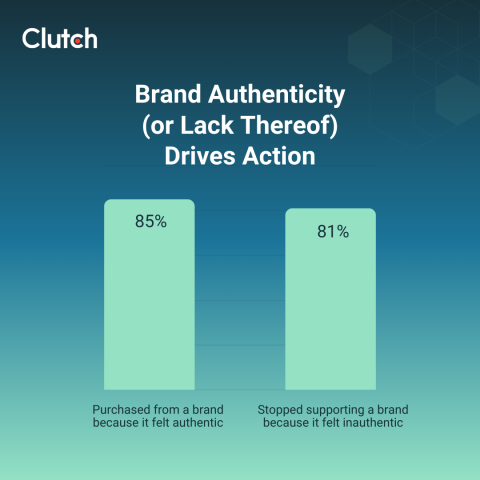
And authenticity is crucial for businesses, because audience perception of your authenticity drives action. In fact, 85% of consumers state that they purchased from a brand because it felt authentic. On the other hand, 81% say they stopped supporting a brand because it felt inauthentic. The data show that establishing an authentic brand is essential in today’s business landscape.
These five simple steps will guide you in building a brand voice that conveys authenticity and helps your business stand out and convert.
Before you can develop and update your brand voice, you need a clear understanding of your messaging today. Review all of your content channels, from email to paid media, to gauge your brand’s tone, style, and alignment with your values.
Make note of any significant differences across channels, too. Your social media content may be more silly and whimsical, for example, while your ad copy is more straightforward and factual.
You don’t have to stick to your current voice. Instead, define what you want your brand personality to be going forward.
Brainstorm adjectives that reflect your brand’s values and resonate with your audience. Consider options like:
Don’t copy another brand’s personality just because it’s popular or trendy. Your voice should reflect who you actually are as a business and resonate with your specific audience. Otherwise, it can come across as forced or inauthentic. Not to mention, you'll probably end up changing it once again, resulting in inconsistency and lost trust.
Once you know the kind of personality you want to convey, you can create brand guidelines to keep your voice consistent.
Cover bases such as:
Then, no matter who is creating content for your brand, they can use these guidelines to make sure they stay true to your brand's voice.
The best way to know how well your new brand voice comes across is to test it with your target audience.
As Clay Ostrom, Owner and Lead Brand Strategist of Map & Fire, says, “It all starts with research.” You need insights into your target customers so you can communicate in a way that resonates with them.
“You have to be super clear about their needs, their challenges, and the language they use to talk about these things,” Ostrom continues. “The only way to do that is through interviews and surveys where you can get first-hand insights on what they care about.”
You should also try A/B testing different versions of content with your audience. Through these tests, you may discover that a certain tone or style resonates more.
Your brand doesn’t have to stay the same forever to maintain authenticity. Your business will likely evolve over time, so your brand voice should, too. Barring regular or dramatic changes, it's important to stay fresh and relevant. Regularly audit your voice to make sure it still resonates with your business and your audience.
Brand authenticity can be hard to precisely define and convey. However, incorporating these four key elements can make your content feel even more authentic to your target audience.
Consumers notice when a brand’s tone is generic and bland. As the Clutch survey found, around 59% of consumers notice robotic or formulaic language and think it decreases authenticity.
“Authenticity isn’t something you can shortcut just by posting funny memes and having a casual tone,” says Ostrom. Any brand can do that, but it doesn’t tell customers much about what makes your brand special.

Focus on infusing your content with originality instead. Think about the unique qualities that set your brand apart, and emphasize them in your content.
According to Ostrom, “The real relationship building always comes back to having a core value that aligns deeply with the needs of your customers — and delivering on that consistently.”
Pro Tip: Audit your current content to identify what feels copied or formulaic. Replace those elements with fresh, unique content that’s specific to your brand.
Brands that come across as hollow machines existing only to make money are generally off-putting to customers. The best way to combat this and improve authenticity is to include real people behind your messaging, such as staff, craftspeople, and actual customers.
Clutch research shows that 42% of customers say authenticity increases when they know real humans are behind a brand.
Pro Tip: Integrate employee stories, behind-the-scenes content, or customer testimonials into your content.
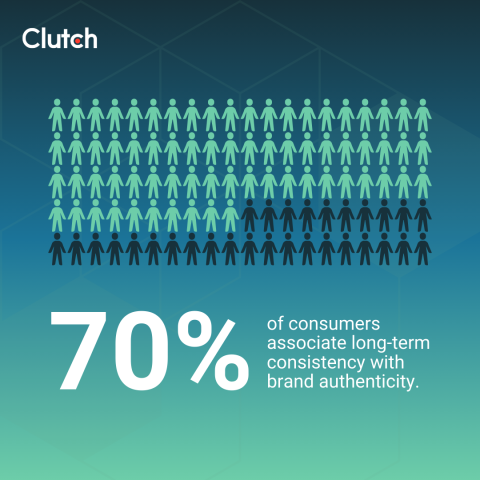
If your voice on one channel is very different from your voice on another, it can come across as inauthentic. Consistency is key. In a Clutch survey, 70% of customers said they associate long-term consistency with authenticity.
Staying consistent doesn’t mean you can’t be creative, though. And it's great to adjust your voice according to the channel and its specific audience as long as you stay true to your broader brand voice guidelines.
Keeping up this consistency builds trust and helps customers recognize your brand without stifling your creativity.
Pro Tip: Create a voice guide detailing tone, vocabulary, and style for all content teams.
Brand voice isn’t just about your business. It’s about your audience, too. Create a voice that echoes your customers' expectations, needs, and emotions.
“Talk to your audience, listen to them, and echo their words back to them,” Ostrom suggests. Using language that’s comfortable and familiar to your audience will make your content more impactful.
However, Ostrom cautions, “You can’t just talk about superficial features, you have to tap into the emotions that drive buying and decision-making.” Choose your words carefully to say something that matters to your audience.
Pro Tip: Conduct audience interviews or use customer feedback to refine your brand's voice.
Brands can get into trouble when they prioritize efficiency or convenience over authenticity in crafting their voices. As you work on your brand voice and create content, avoid these common mistakes.
Using generative AI tools to write your brand messaging may seem like a great time-saving hack. However, entirely AI-generated writing lacks a human touch and won’t consistently capture your authentic brand voice. Clutch research has found that nearly half (48%) of customers say over-reliance on AI diminishes authenticity. They can tell when brands are using too much AI, and it’s off-putting.
Instead, even if you’re using AI in the content creation process, make sure your team checks and edits the writing at every stage. Always make sure the final content adheres to your brand voice guidelines and has a human touch.
When you see a new trend that’s getting a lot of attention online or in the broader culture, it’s tempting to hop on that right away. It’s a good way to get some eyes on your brand, right?
Incorporating trends into your content strategy can help expand your reach, but you need to be selective. In Clutch surveys, around 53% of consumers say excessive trend-following makes brands appear inauthentic.
Only some of the many trends out there will be a good fit for your brand. Consider which trends align with your core voice, and ignore the rest.
If your brand voice on Instagram is super youthful and casual, but your promotional emails read more authoritative and formal, that’s a concern. A customer who sees your messaging across both channels could be confused about which voice is your “real” brand voice. They may assume both voices are inauthentic and lose trust in your brand.
Ensure all your brand messaging adheres to the same guidelines and principles across every channel.
Customers are smart. They can often tell when a business is trying to cash in on something that isn’t true to the brand. Avoid performative messages, like fake social responsibility or exaggerated stories. Such stunts can backfire. Instead, lean into your brand's true values and honest storytelling that customers can connect with.
A strong brand voice signals integrity and trust to your target customers, building a deep human connection. Work on developing a unique voice that represents your brand’s personality. Then, keep it consistent across channels with clear voice guidelines.
Don’t worry if you get stuck or don’t quite know how to develop a voice that stands out. Consider working with a branding agency to help you define and refine your brand voice. With a little help, you can start creating content that sounds unique and authentic to your target audience.