
How to Define Brand Values That Guide Every Business Decision
Brand values are the principles that guide company decisions, define what a brand stands for, and shape how it treats customers, employees, and partners.
Updated April 24, 2026

How do you make your brand memorable and trustworthy in your customers' eyes? Picture Patagonia, a company that has truly mastered the art of consistent branding…
No matter where you encounter the brand — Instagram, its website, YouTube — you’ll find gorgeous nature imagery. The company also constantly highlights its commitment to sustainability with slogans like “Earth is now our only shareholder.”
This uniformity doesn’t happen by accident. Many businesses use brand books (AKA style guides) to define every aspect of their identities. They help brands present the same image across different platforms and team members. It’s also incredibly useful for scaling. Instead of debating which fonts or colors look best, those choices have already been strategically decided on. As a result, marketers can just go with whatever’s in the brand book.
Looking for a Public Relations agency?
Compare our list of top Public Relations companies near you
Save yourself time, money, and headaches by creating a brand book. This guide breaks down the key components and shares practical tips for designing a strong resource for your brand.
Brandbook, branding booklet, brand guidelines — these are just a few names for this resource. Regardless of what you call it, this resource spells out exactly what your brand should look and feel like.
Rahul Aswal, Brand Consultant at Simple Plan Media, explains, “A strong set of guidelines ensures that no matter where or how a brand appears — whether on social media, packaging, or advertising — it always feels the same, reinforcing recognition and reliability.”
This involves more than picking the perfect typography. “Branding isn’t just a set of visual assets — it’s a holistic system,” Aswal continues. “Businesses that think beyond logos and colors to focus on the entire brand experience create stronger emotional connections with their audience.”
Take the McDonald's Feel-Good Design Cheatsheets, for example. It describes how marketers use the signature golden arches and specific font to make customers feel welcome. These visuals help the company create “day-to-day moments” that are special and memorable.
Many professionals use branding booklets, including designers, marketers, and content creators. Here are a few reasons to develop a guide:
Even if you don’t produce much content now, creating a brand book will make it easier to grow in the future.
There’s no right or wrong way to write a branding booklet — it all comes down to your needs. Some businesses create dense guidelines that could rival an encyclopedia, while others prefer short checklists.
Begin with these core components:
Sure, playing with different fonts and logos is fun. But they’re just the accessories for your brand story: the narrative at the center of every decision your business makes. “Weaving your brand's story into everything you do creates a deeper connection with your audience and differentiates you from competitors,” observes Josh Webber, CEO of Big Red Jelly.
This section should include:
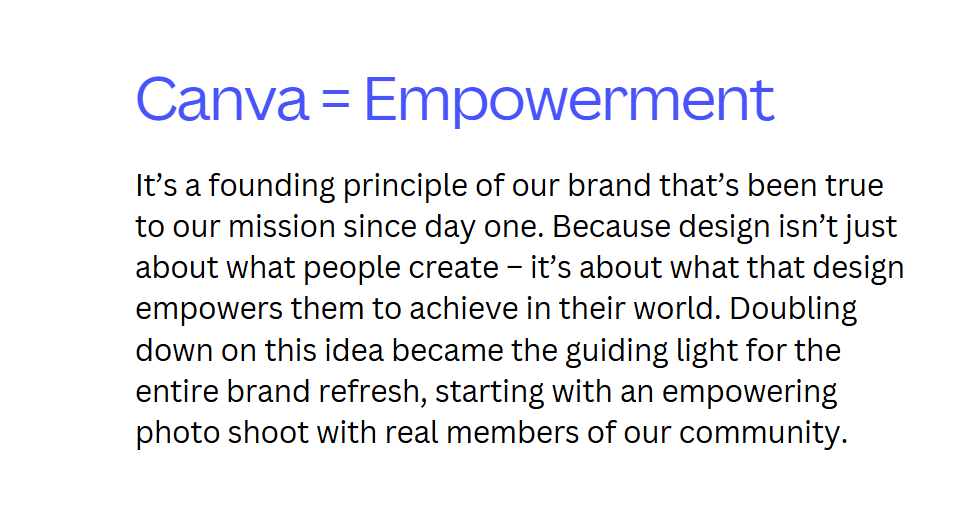
Canva recently revamped its branding booklet, dedicating an entire page to its brand story. Its new values include empowering users to create digital art and celebrating “design in action.” As you’ll see in the following sections, this central narrative shapes every part of Canva’s updated brand.
If the story is the heart of your brand, then the logo is the face. This graphic helps customers recognize all your content, from Facebook ads to websites.
Don’t get too carried away designing an elaborate logo. “Simplicity, versatility, relevance, timelessness, and uniqueness are key,” Webber advises. In other words, your logo should stand out but not be too trendy — otherwise, you’ll just need to redo it in a couple of years.
Once you’ve settled on the perfect logo, add these standards to your branding booklet:
Canva’s booklet includes detailed guidelines for its flowing logo. Designers must follow precise spacing and positioning rules to make sure the logo stands out.
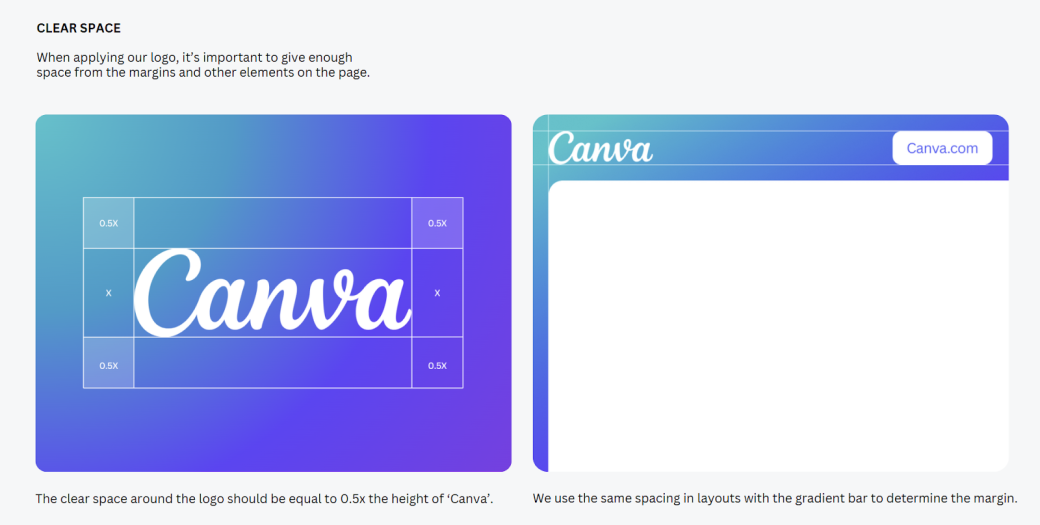
Canva spells out clear spacing guidelines for its elegant logo.
Top brands often have distinct color palettes. Cereal lovers can spot a bright red Lucky Charms box on any shelf, and “John Deere Green” is so famous that Joe Diffie named a song after it.
Define your color palette with these elements:
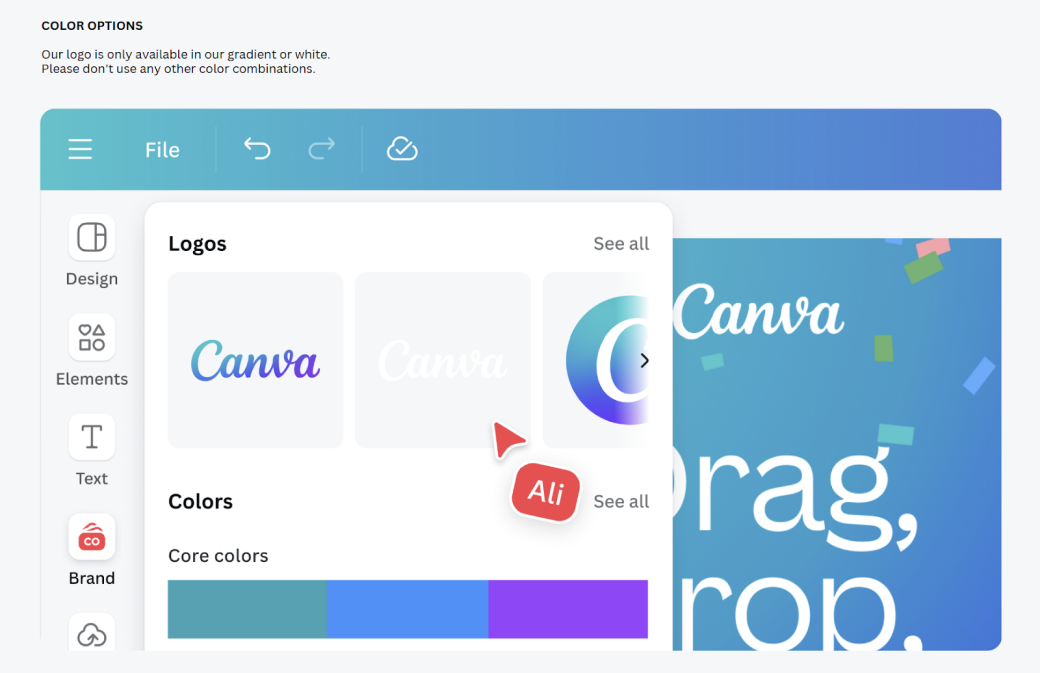
Canva’s color palette includes three core shades that appear in its primary logo and across its website.
The fonts you choose are the visual equivalent of your brand voice. They can make your content sound cheerful, sophisticated, or even scary, if that's what you're after.
Your booklet should spell out:
Some brands invent unique fonts that truly capture their personalities. For example, Canva Sans reflects the platform’s playful spirit.
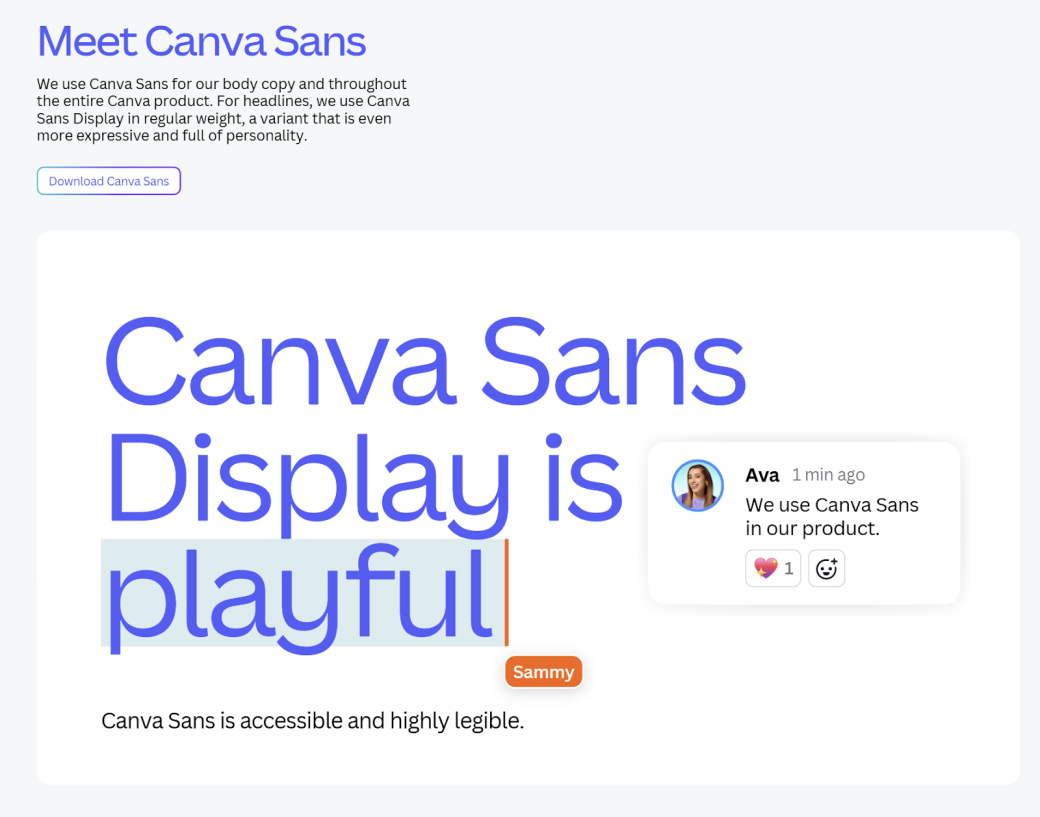
Canva prioritized accessibility and fun when designing its font.
It’s normal to use several different kinds of imagery, such as photos and animations. However, these visuals should still be relatively consistent.
Add these elements to your guidelines:

Canva creates authentic and relatable images with diverse individuals.
Your brand voice should be recognizably “you” across your website, social media profiles, and support services.
Aswal explains, “The Tone of Voice section sets the foundation for all brand communication. It defines:
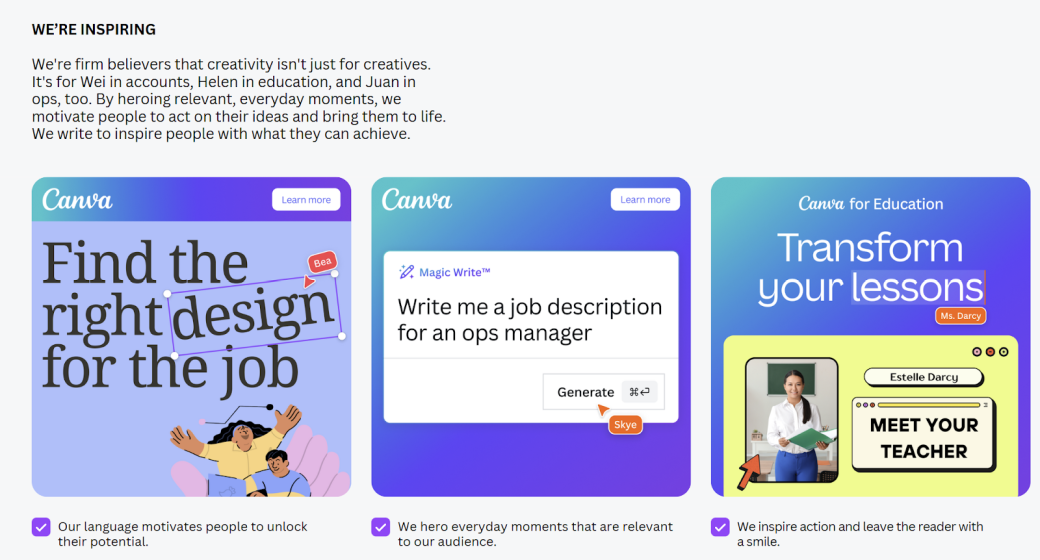
It’s easy to recognize Canva’s inspiring and upbeat brand voice.
Your brand assets don’t have to look identical, but customers should be able to recognize them all as part of the same family. Design consistent templates for these collaterals and anything else you use to promote your brand:
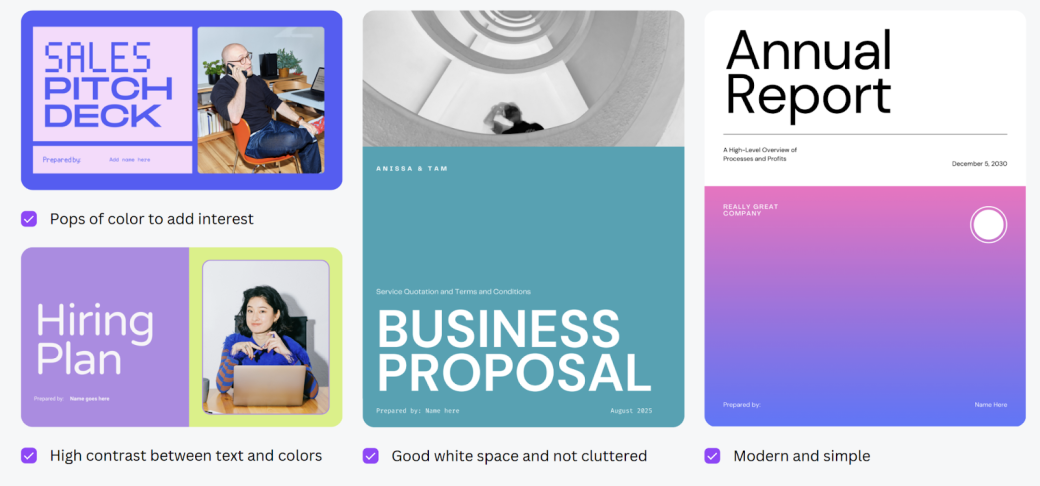
Canva’s brand templates cover many types of content, but they all have similar fonts and ultra-modern designs.
At this point, you might wonder: "What should my brand book look like, exactly?" Major businesses like Canva have spent years refining their guidelines, so don’t feel like you need to compete. Just follow these simple steps.
Inventory all your current assets, from brochures to web banners. Observe what’s working well and what you need to update or reformat for consistency.
Use the categories discussed in the previous section to outline your brand’s key elements, starting with:
Webber recommends an organized approach: “Define your core values and translate them into visual and verbal elements, such as logo usage and color palette. Document everything clearly and make it accessible.”
Be proactive, too. Erin Milnes, Account and Creative Director at Catchword Branding, shares, “Anticipate your teams’ questions and their temptations to stray off-brand (in copy, design, or any other touchpoint), and provide clear and consistent guidance.”
A web-based branding booklet is the easiest to update. However, your team may prefer a stylish PDF or a tangible physical booklet to leaf through.
You may already have a talented graphic designer on staff. If not, you can design your booklet yourself with user-friendly layout tools, such as:
Or maybe you’d rather not learn new software. In that case, many platforms offer customizable templates, including Canva, Behance, and Envato.
Share your brand book content with your team and ask for feedback. They can let you know if it’s accessible and useful, or if it’s time to go back to the (digital) drawing board.
You’ve worked hard on your booklet, so don’t abandon it. “Keep the guidelines up to date and available to everyone involved in projecting your brand,” Milnes advises. Review it at least every six to 12 months and make adjustments as needed.
Even short booklets take a lot of time to design – after all, you’re shaping your entire vision for your brand. That’s why many businesses turn to external branding agencies for assistance.
Consider outsourcing this project if:
Take the time to interview a few providers and look for an agency that meets these criteria:
According to Clutch’s branding pricing guide, most projects cost around $10,000 to $49,999. Some agencies charge hourly rates for small projects, which range from $100 to $149 an hour.
As marketing campaigns grow more complex — sometimes spanning a dozen or more channels — brand booklets have become invaluable. “Brand guidelines ensure consistency, building trust and reinforcing your brand identity,” Webber concludes. “They prevent brand chaos and ensure everyone's on the same page.” That's non-negotiable in today's markets.
Start small with the key elements outlined above — even a few pages will do. As your business expands, you can update your guidelines to adapt to your changing goals and images.