
How to Define Brand Values That Guide Every Business Decision
Brand values are the principles that guide company decisions, define what a brand stands for, and shape how it treats customers, employees, and partners.
Updated March 18, 2026

Brands are moving faster than ever to stay relevant, but that speed often comes at the cost of authenticity.
Marketing leaders face constant pressure to stay current, but trend cycles move quickly. This has created a landscape in which brands often scramble to keep up with whatever is newest or loudest at the moment.
The rush to stay relevant is understandable, but it could be quietly eroding consumers’ trust in your brand. According to Clutch data, audiences reward consistency, transparency, and humanity, not short-term hype. When brands chase trends without grounding them in identity, they can feel inauthentic and interchangeable, which erodes trust.
Looking for a Public Relations agency?
Compare our list of top Public Relations companies near you
That's why a strong brand authenticity strategy doesn’t aim to win every moment. Instead, it prioritizes long-term clarity and reinforces the company’s core values over time. This article explores what it all means for your marketing strategy, drawing on case studies, survey results, expert quotes, and best practices.
According to Clutch survey data, 53% of consumers now see excessive trend-following as a sign of inauthenticity.
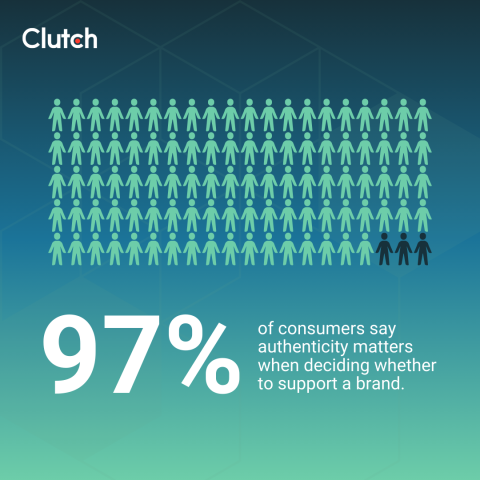
That’s problematic, since the same survey shows that 97% of consumers consider a brand’s authenticity when deciding whether to make a purchase.
The issue isn’t in the trends themselves, but in what happens to brands when they rush to fit in. The process often results in rushed messaging that doesn’t align with the organization's long-term identity or voice.
Trend-driven messaging also tends to push brands toward a generic middle. It blurs your differentiation from competitors and erodes your brand's originality, pushing consumers away from your company.
These are some of the key problems trend-chasing causes:
As Daniel Cordwell, Founder of Visions Design, puts it, “Brand authenticity is something that cannot be built overnight, and it can’t be done quickly, which is what everyone’s trying to achieve.”
Trend-chasing also creates internal friction. Teams that do it are forced to pivot messaging before previous strategies have time to work. That instability makes it harder to build clarity around brand identity, resulting in inconsistent execution that many consumers will quickly recognize and distrust.
Trends that are popular today can be viewed negatively tomorrow and drag a company’s reputation down for years. For example, H&M made sustainability a key part of its messaging before adopting the practices to support it. This ended up hurting the company’s reputation with the environmentally aware audience it was trying to attract.
This also happens frequently when brands force TikTok dances or meme formats that don’t work with their voice. Audiences tend to view these as pandering rather than playful or relevant. In fact, 8 out of 10 branded TikTok videos fail to capture attention, and 24% trigger strongly negative emotions.
Modern audiences are highly fluent in marketing cues. They recognize when brands adopt trends for optics rather than conviction, and this quickly erodes trust. Sustainable brand authenticity requires restraint. Brands that resist the urge to chase every momentary trend tend to be more recognizable and credible when the trends fade.
According to Clutch’s survey, 61% of consumers associate authenticity with staying true to a brand’s identity. That means evolving with shifting markets and trends, without losing your company’s center.
The data highlights four core authenticity signals that shape authentic branding, according to consumers:
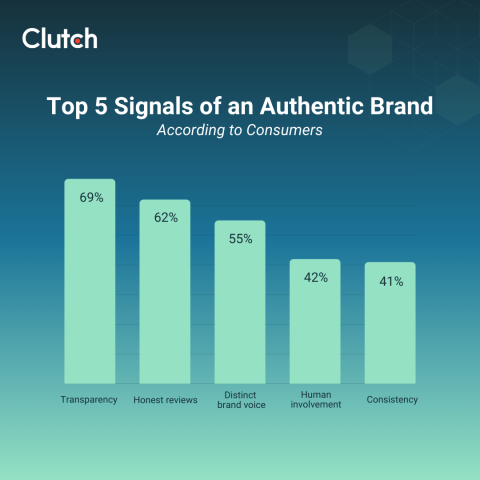
What these signals have in common is their lack of alignment with trends. Consumers view brands authentically when they don’t chase attention, but reinforce who they are at every touchpoint.
Today’s most trusted brands didn’t earn their position by reacting quickly. They earned it by staying grounded to core values and consistent visual identities. Here’s what that looks like in practice, as illustrated by three case studies.
Patagonia consistently prioritizes environmental responsibility, even when it complicates marketing or growth. Its decisions are consistently driven by values, not profit, which has helped the company establish a strong reputation with its target audience over its decades of existence.
Cordwell explains: “Patagonia stands out because they’ve got strong foundations. Their values drive their decisions, not the other way around.” However, this clarity helps the brand shine when targeting trends that align with its core, environmentally conscious values.
LEGO rarely targets fleeting cultural moments in its marketing. Instead, it focuses on building long-term relationships with fans by emphasizing its core values of creativity and product quality. The company consistently prioritizes its core audience over maximizing discoverability, which has helped it stay relevant for nearly 100 years.
Warby Parker has grown significantly over the years, but it's never lost its ethical positioning or recognizable voice. The company has prioritized steady messaging over trends, demonstrating that consistency matters when building an authentic brand.
Emblematic of this approach is the company's long-running Buy a Pair, Give a Pair program. Warby Parker gives a pair of glasses to someone in need for every pair purchased. This social mission has been deeply integrated into the brand's messaging for many years, building trust over time.
Brand authenticity isn’t an exercise in responding to trends faster or more effectively than competitors. It’s built by consistently making decisions grounded in core values and identity.
Here are four examples of what that looks like in practice.
First, you should only target trends when they amplify an existing message. As Cordwell notes, “Brands with strong foundations that live and breathe their values, not just talk about them, are the ones that do well.”

For example, Patagonia can address environmental issues as they arise because it’s built its brand around that identity. But it rarely targets trends outside this niche.
Before your company participates in a new trend, pause and assess alignment. Encourage leaders to reflect on whether the moment supports your established values and reflects the company’s voice. If participation requires adopting unfamiliar language or positioning, it’s more likely to feel forced.
You may want to begin this process by restating your internal values and core philosophies. Let these guide you moving forward as you consider which trends to address in your marketing.
Next, focus more on transparency than on novelty, as the data show that consumers consistently reward brands that do so. That means sharing internal details about how your company operates, where it sources materials, how those practices affect society, and where trade-offs exist in the supply chain.
Honest storytelling compounds credibility over time. When transparency becomes a habit, the benefits can outlast any single campaign. Brands don’t have to reinvent themselves to remain relevant consistently. When they stay true to their core ethos, reliability becomes part of the brand experience, strengthening consumer trust.
It’s also important to maintain visible human involvement in your brand, even as automation and AI accelerate. Audiences respond more positively when they can see the people behind the company. That could mean highlighting executives, designers, operators, customer service staff, or partners, based on your goals.
You don’t need to over-emphasize your team in your marketing, but it’s worth sharing human-centric stories periodically. For example, you might highlight an employee of the month on your social accounts or share a story from a manufacturing team member once a quarter to highlight your people.
The authenticity you build will compound over time through repetition. The more you focus on core values, emphasize the human element, and prioritize transparency, the stronger your trust and credibility should become. As Cordwell puts it, “Authenticity shows through consistency, where messages and actions are repeated.”
To help with this, create a framework that keeps your marketing consistent across channels, team members, and time. That means establishing documentation for tone, visuals, messaging, and behavior to ensure each piece of content reinforces a broader message.
Completing regular tone audits can help to prevent drift in this area. This could mean adding an extra editing step before publishing new content. Or you might schedule periodic reviews of your website and social media profiles to ensure they remain aligned with your broader vision.
Trends can be a powerful way to increase discoverability in the moment. But brands that chase every cultural spike tend to lose their identities in the process. Those that stay grounded by reinforcing their values over time earn trust that persists even as momentary trends fade.
A strong brand originality strategy focuses on what’s true. In a fast-moving market, that clarity is what enables brands to remain relevant over the long term without losing credibility.
However, building a repeatable framework that supports authenticity can be a complex process — especially for a growing company. If you’d like help getting up to speed, consider partnering with a branding agency for support.