
How to Define Brand Values That Guide Every Business Decision
Brand values are the principles that guide company decisions, define what a brand stands for, and shape how it treats customers, employees, and partners.
Updated April 2, 2026

Online scams are tougher than ever to spot — and consumers are taking notice. Here’s how to shop online safely in 2026.
Online shopping has never been more convenient. But as e-commerce continues to scale, so has the sophistication of digital scams. AI is accelerating the problem, as fraudsters use it to build more convincing fake storefronts, generate realistic product reviews, and write phishing emails that are hard to distinguish from the real thing.
The impact on consumer behavior is measurable. Clutch surveyed 401 consumers about their feelings toward online scams and found that:
Looking for a Public Relations agency?
Compare our list of top Public Relations companies near you
These numbers show that awareness of digital scams is growing. But knowing that they exist is a different skill from being able to spot them. With this overview of digital scams and prevention strategies for 2026, you'll be well on your way to shopping safely online.
Today’s scammers run highly coordinated, AI-powered operations designed to closely mimic legitimate brands and retailers. The first step in avoiding this is to understand the strategies malicious actors use.
The most common types of online shopping scams are:
Some fraudsters build entire fake storefronts just to steal your money. They often use the same layouts as well-known brands and feature stolen product images alongside fake reviews.
If you make a purchase from one of these fraudulent online stores, they’ll take your money, but the product will never arrive. AI has made these sites easier to build and harder to detect. Even when authorities take one down, another convincing site can pop up almost immediately.
Phishing scams are also common in the e-commerce space. Scammers send emails or text messages impersonating trusted brands like Amazon, FedEx, or your bank. These ask you to click on a link to confirm your order, resolve a payment issue, or track a delivery.
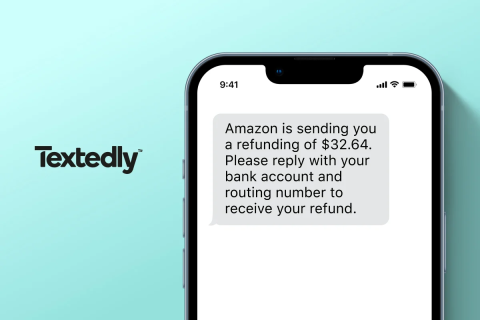
The link often takes you to a fraudulent site that looks identical to the real platform you know and trust. If you enter your login credentials, they’ll go straight to the scammers, who can use your information to access your money or buy products on sites like Amazon.
If you ever receive a message like this, don’t click on the link. Instead, use the method you know and trust to access the site and verify authenticity before proceeding. For example, go to Amazon.com and check for the communication there instead of clicking on the link you receive and logging in that way.
Peer-to-peer marketplaces like Facebook Marketplace, Craigslist, and eBay are also commonly used by scammers. For example, they may list items that don’t exist, send counterfeit goods instead of the real thing, or request payments through untraceable methods without sending you anything.
Social media scams tend to follow a similar playbook. Scammers post fraudulent ads on Instagram or TikTok to drive traffic to fake storefronts. They may appear legitimate with fake reviews and realistic storefronts. But if you can’t confirm the site’s authenticity through a separate channel (like a Google search or AI query), then you probably shouldn’t shop there.
These scams happen after you’ve already bought something online. For example, a scammer may pretend to be a customer service agent and claim there was an issue with your order. If you engage, they’ll ask you to resend your payment details to “reprocess” the transaction. But actually, they’ll end up stealing your funds to buy things.
If there ever is a legitimate issue with your payment, you’ll typically be able to find that information through the same channel you used to make the purchase. Even if you can’t, it’s better to contact the company’s support staff through a trusted website rather than responding directly to a suspicious email or text.
Scams are getting harder to spot, but even the best still leave traces. Knowing what to look for before completing a purchase can save you money and frustration:
No single red flag is always indicative of a scam e-commerce website. But if a platform triggers two or three of these warnings at once, trust your instincts and walk away. There are always legitimate alternatives, and no deal is worth the risk to your financial well-being.
The best way to protect yourself while shopping online is to vet new sellers proactively. That means running through the following checks before spending any money with a retailer you haven’t purchased from yet.
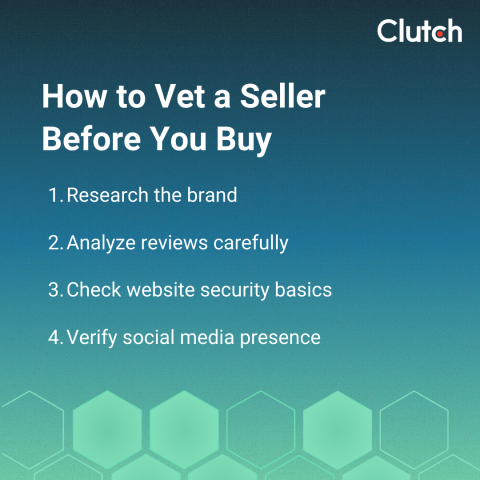
Start with a basic Google search of the brand name alongside terms like “scam” or “complaints.” Even legitimate businesses get their fair share of poor reviews online — often due to customer frustration. But fake businesses tend to have a disproportionate number of these.
If a Google search turns up nothing about a brand, that can also be a warning sign. Established retailers leave digital trails and create organic customer conversations across the web.
The vast majority of digital shoppers look at online reviews before making a purchase. However, these have gotten much easier for scammers to game. For example, AI-generated reviews can flood a product page with convincing five-star feedback, burying a small number of legitimate complaints.
This means it’s important to analyze product reviews—not just look for an overall score and move on. Specificity is key. Genuine reviews tend to include details about the buying experience, shipping timeline, or product quality. They also often include pictures or videos, but even these are getting difficult to trust in the era of AI-generated content.
For the best results, cross-reference reviews across multiple platforms. If the product page has dozens of five-star reviews, but you can’t find any other reviews on sites like Reddit or Google, that’s a red flag.
It’s also worth reviewing a few basic website security checks before proceeding with your purchase. Start by confirming that the site uses HTTPS encryption. This doesn’t guarantee authenticity, but fake sites often won’t even have it, and you can immediately move on from them.
Also, verify the domain name is accurate, without misspellings or subtle variations. For instance, make sure “Walmart.com” isn’t “Walmrat.com” or “Wal.mart.co.” Scammers often create sites that look identical to popular e-commerce platforms but host them on URLs with minor mistakes, hoping shoppers won’t check twice.
Finally, double-check a new brand’s social media presence. Most growing companies have accounts on Instagram, X, or LinkedIn, as these platforms generate business for them. Scam operations will typically have either no social presence at all or freshly created accounts with only a handful of followers.
However, note that it’s fairly easy to buy fake followers online nowadays, so you may also want to check engagement and compare that to follower count. For example, if a brand has 10,000 followers on X but no engagement on their posts, that’s often a sign of a fake following.
Safe payment habits are among the most effective ways to reduce your risk of experiencing e-commerce fraud. Here are some best practices to stay safe:
Your payment method matters as much as the seller you choose. Treating both as habits (rather than one-time checks) adds a second layer of protection to your online transactions, just in case a bad actor or a fraudulent site slips through.
Account security is an ongoing process, not a one-time check. You’ll become more resilient to fraud by following these best practices:
Scammers count on inattention. The less frequently you audit your accounts and update credentials, the wider the window of opportunity for hackers.
If you think you’ve been the victim of a scam, acting quickly and methodically can limit the damage significantly. Here’s what to do if something feels off:
A scam doesn’t have to be a total loss. Consumers who act quickly and report through the right channels recover more often than those who don’t.
The rise of AI-powered scams is a legitimate concern, but you can still shop online safely by following a few best practices. Understanding the red flags covered in this article and using secure payment practices will make you a much harder target and help keep your funds safe. Balancing confidence and caution is essential as scams grow more sophisticated.