Lead Quality vs. Lead Quantity: Why B2B Teams Are Rethinking Their Funnel in 2026
Bigger buying committees and tighter budgets are forcing B2B teams to rethink lead quality vs. quantity. Here's how top teams rebalance the tradeoff in 2026.
Updated April 6, 2026

Online scams are growing on the platforms that consumers trust most. Recognizing where they show up and what they look like is key to staying safe online.
Online scams are no longer isolated incidents — they’re embedded across the full digital ecosystem, showing up in the spaces consumers visit daily. This has made them more difficult to avoid, but fraud typically follows a recognizable pattern.
Clutch surveyed 401 consumers to better understand where and how they’re encountering scams online. The data shows they most recently encountered a suspected scam through the following platforms:
Looking for a Digital Marketing agency?
Compare our list of top Digital Marketing companies near you
While scams can appear anywhere, certain platforms have become hotspots for them. Each of these has a different set of red flags that consumers need to watch for, as hackers exploit them in unique ways. This article reviews the most common sources of digital fraud, highlighting platform-specific warning signs and other tips to stay safe.
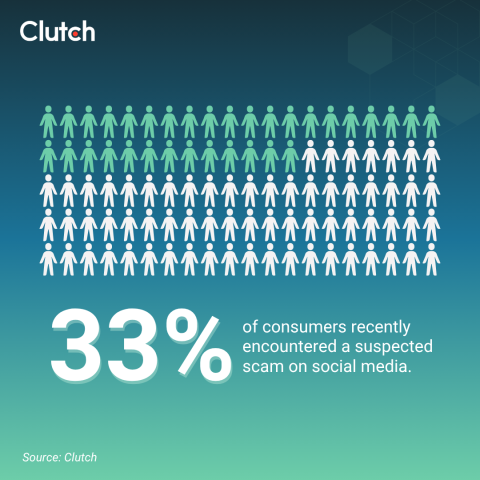
One in three consumers says they most recently encountered a suspected scam through a social media ad, making it the most common platform for fraud. This makes sense when you consider the reach of platforms like Facebook, Instagram, TikTok, and YouTube.
They provide fast access to billions of users worldwide with nothing more than an account and a compelling piece of content. Plus, social media scams can hone in on highly specific demographic groups thanks to powerful ad-targeting tools built into these platforms. Add in impulse-driven browsing behavior and casual scrolling, and you get an environment that’s ripe for exploitation.
Still, scams here tend to follow a few familiar patterns. They often offer pricing that seems too good to be true, creating artificial urgency through limited inventory or flash countdowns. Many also include influencer-style endorsements from accounts that seem legitimate at a glance and mimic fake brand storefronts to create a sense of artificial comfort for consumers.
Social media fraud can be difficult to spot, but it also has consistent red flags. Recently created pages with minimal history, disabled comment sections, and suspicious URLs that don’t match the brand they claim to represent are all common. Another major red flag is pricing that seems wildly below the amount you’d expect to pay for the product.
You can protect yourself from social media scams by:
For legitimate brands, this doesn’t mean you should avoid social media.
“I don’t believe brands should shy away from visibility on social platforms due to online scams,” says Karen O’Mahony, CEO and brand director at Brandlucent. “If anything, better visibility by verified brands may help consumers recognize an authentic interaction versus a malicious one.”

Many companies today build scam protection into their social media strategies. For example, if you run an online business, verifying your business accounts, educating consumers about the risks of fraud, and proactively monitoring for impostors can all help you build trust with your target audience.
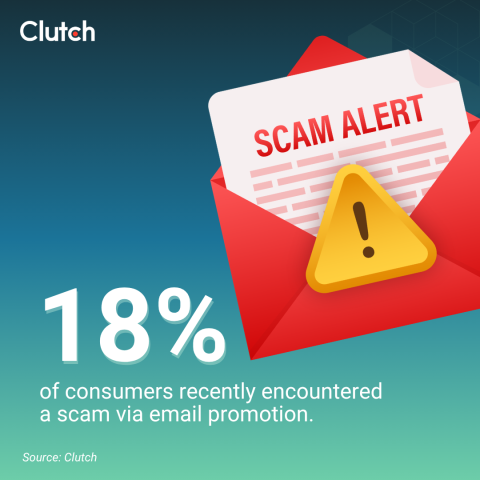
Email scams are also common, with 18% of consumers encountering one more recently than any other type of fraud. That number trails social media, but the platform has its own risks worth reviewing.
Email provides direct access to trusted inboxes, which users often check daily. This can create an illusion of legitimacy that other channels don’t offer. When a fraudulent message lands next to your bank statements and work emails, it’s natural to trust it more than a random post on Instagram or Facebook.
Scammers have used similar types of email fraud almost as long as email has existed. These days, they often send messages that mirror those of legitimate brands, right down to logos, formatting, and sender names.
Some common examples of this include:
It's vital to review any strange emails you receive that don’t feel quite right — like a message from a brand with a suspicious link or attachment included. Scammers design messages to get you to click on them quickly, without reviewing the content or the sender too closely. They do that because double-checking a few things is often all it takes to stay safe.
For example, fake brands will often use generic greetings like “Dear Customer” instead of your name. You can also review the sender’s address, which will often be a slight variation on an official brand’s address: think “support@amaz0n-help.com” versus “support@amazon.com.”
You can protect yourself from email fraud by:
The throughline in email scamming is typically urgency. Fraudsters do everything they can to get you to click on a link or provide sensitive information without thinking twice. If you ever notice yourself rushing to do these things, that’s a key sign you may be the target of a scam.
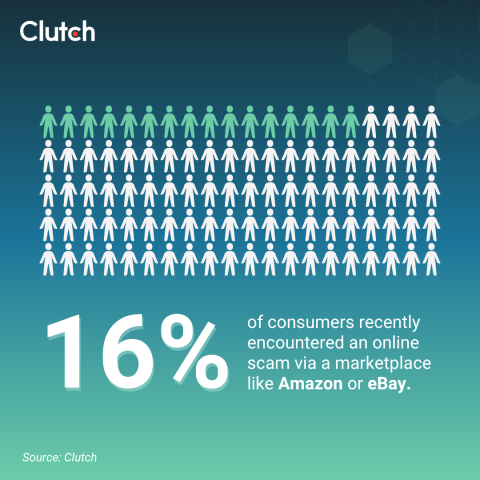
Sixteen percent of consumers most recently encountered a marketplace scam. That may be the last of the three verticals covered, but the risk here is often greater than that posed by email and social media fraud.
A scam on social media or email often requires the consumer to take several steps before any financial exposure occurs. But on a marketplace, that exposure is baked into the platform. Credit card numbers, billing addresses, and account credentials can give hackers access to all of your money — not just the amount associated with a single transaction.
Platforms like Amazon and eBay process millions of transactions daily and host millions of sellers. This creates cover for scammers, who can often set up fraudulent accounts with minimal verification steps. That lets them defraud multiple buyers before getting banned from the platform.
Some of the most common tactics include:
Facebook Marketplace makes all of this even easier with its lack of oversight. Overpayment scams are common here, where a buyer sends extra money and requests a refund before the original payment clears. This puts pressure on you, as the seller, to send them cash before the amount they sent posts to your account.
Watch out for red flags like new seller accounts with no reviews, or a suspicious number of uniform five-star reviews. You should also avoid prices that seem far below competitors' prices and accounts that request moving payment to an untrusted platform.
You can protect yourself from marketplace scams by:
Scammers operating in these environments are counting on you to trust the platforms themselves. But fraud can always slip through the cracks, so it’s important to be careful about who you do business with.
Three key factors drive the concentration of scam activity across social media, email, and marketplaces: scale, monetization incentives, and behavioral triggers. Together, these have made the platforms especially attractive to bad actors.
Scale is naturally attractive to fraudsters. Platforms with billions of users and automated ad-approval systems help them reach large audiences with minimal effort. The amount of activity on these platforms also serves as cover. Finding a fake storefront or phishing campaign is like looking for a needle in a haystack. Platforms are getting better at finding these, but there’s a natural lag that scammers exploit.
Monetization incentives compound the problem. Platforms that generate revenue from ads have an incentive to make it as easy as possible to post. For example, the faster Instagram approves ads, the more revenue it can earn. This doesn’t mean it ignores fraud detection entirely — it invests heavily in it. But the automation and speed platforms like Instagram incentivize leave gaps that scammers have learned to manipulate.
Finally, these platforms are optimized to induce behavioral triggers. Social media is engineered for impulse. The feed keeps consumers hooked by sharing posts that promote an immediate reaction. Scam social ads take advantage of this mindset. Email is similar in that it conditions consumers to act on messages quickly, which is exactly the behavior that phishing emails capitalize on. Even marketplaces encourage trust and quick purchasing.
Reporting online scams does more than you might think. It’s the first step toward getting the fake account or product listing taken down. The report creates a paper trail that platforms and regulators use to identify patterns and refine detection systems. This means the report you submit today keeps everyone a little safer.
Most platforms have built-in reporting tools that you should use first. But other channels outside of these may also be worth considering. Here’s where to file your report depending on the situation:
It’s natural to want to move on after experiencing a scam. But taking a few minutes to file a report is one of the most impactful things you can do to make the internet a little safer.
Consumers who understand where scams concentrate and what they look like are better positioned to catch them before becoming their victims. From deceptive ads on Instagram to fake order confirmations in your inbox, the red flags are consistent. Recognizing just one or two of these is often enough to avoid damage.
For brands, the growth of online scams is a signal to engage more deliberately.

Austin Mallar, CTO of Longhouse Branding & Marketing, summarizes this: “Brands should prioritize verified accounts, domain authentication, and structured data. First-party channels, such as email lists and owned communities, create secure communication pathways.”
With a little forethought and a healthy dose of caution, you can protect your brand from fraud and keep customers happy and wanting more.