Lead Quality vs. Lead Quantity: Why B2B Teams Are Rethinking Their Funnel in 2026
Bigger buying committees and tighter budgets are forcing B2B teams to rethink lead quality vs. quantity. Here's how top teams rebalance the tradeoff in 2026.
Updated April 2, 2026

Consumers today are more aware of online scams than ever, yet millions still fall victim to them every year. Learn what to watch for and how to stay safe in this guide.
Consumers are getting savvier about online scamming, but fraudsters are keeping pace. In the era of AI, it’s never been easier to quickly mock up convincing ads, e-commerce storefronts, and social accounts.
To better understand where consumers stand, Clutch surveyed 401 respondents about their perceptions and experiences with online scams and found:
Looking for a Digital Marketing agency?
Compare our list of top Digital Marketing companies near you
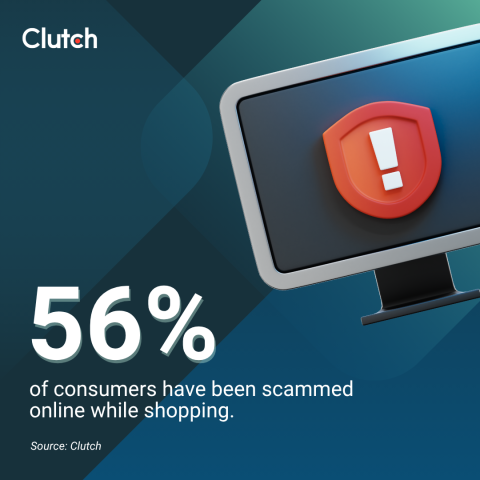
However, even with this awareness, 56% of those same consumers report having been scammed online, and 24% say they were scammed within the last year alone.
Although scam awareness has grown, it hasn’t translated into better protection for many users. This article explores why consumers remain vulnerable despite knowing what to look for, highlighting classic and emerging red flags with practical steps to stay safe.
Having a general idea of what a scam looks like doesn’t always translate into awareness in the moment. Even informed, experienced consumers still get caught off guard. That sometimes comes from not paying attention, but scammers also deliberately exploit how people think and feel to bypass our better judgment.
Emotional triggers are one of the most effective tools scammers use today. They create urgency, fear, or excitement to short-circuit our rational decision-making. That often looks like promoting a fake flash sale with limited supplies, sending an “alert” about an account being compromised, or pressuring you to act fast in other ways.
Overconfidence bias is another significant problem. Consumers who are more aware of scam tactics often believe they’re immune to them. This creates a false sense of security, which can backfire. When someone assumes, “I’d never fall for one of those,” they’re often less likely to pause and scrutinize in the moment.
Distraction and cognitive load are additional contributing factors. Most of the time, we don’t encounter a scam when we’re sitting down, focused, and watching out for them. It’s when we’re scrolling a feed, on a lunch break, late at night, or between tasks. This can lower our awareness and lead us to miss even obvious red flags.
Online scams used to be almost comically obvious — and some still are. Others, though, are near-indistinguishable from the real thing. Understanding the key warning signs of scams today is a critical step in online safety. Here are six worth your attention.
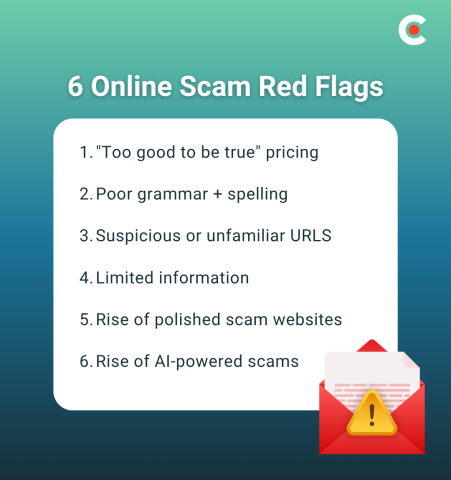
According to our data, 74% of consumers recognize suspiciously low pricing as a warning sign of a scam. Still, deals that seem to defy logic continue to lure in unsuspecting buyers every day. Why the disconnect? It’s typically a combination of emotional triggers, overconfidence bias, and distraction.
The pattern typically goes something like this:
Austin Mallar, CTO of Longhouse Branding+ Marketing, notes: “Consumers respond better to clear timelines, defined eligibility, and specific value rather than exaggerated urgency.”
Scammers understand this as well as legitimate markets do and use these insights to craft more convincing campaigns.
As a consumer, your best option is to be cautious whenever you see an unbelievable deal presented as a limited-time offer. Often, the urgency is exaggerated beyond what a legitimate retailer would say, such as claiming only one or two products are left at the quoted price.
Typos happen, but legitimate brands check their marketing copy carefully before hitting publish and will even take down ads when they contain errors. On the other hand, many scammers use translation tools to create content in non-native languages. They don’t always understand grammatical structures well enough to correct mistakes.
Consumers recognize this. Our survey found that 70% of consumers see poor grammar and spelling as a key red flag of a scam. Common examples include awkward phrasing, inconsistent capitalization, and sentences that are technically readable but somehow feel off.
Even when an ad has perfect grammar, these signs may be present elsewhere throughout the fake brand’s digital presence. For example, the tone may be wildly inconsistent across the company’s site, or there may be formatting errors like broken bullet points and misaligned text. These are all possible signs of a hastily assembled scam site that should be avoided.
However, AI tools are making it easier for scammers to clean up these surface-level errors. Polished writing alone is not a reliable trust signal. Even if you don’t see these types of errors, other red flags could still be present.
A website can look completely legitimate, and still be a trap — especially with the prevalence of AI coding today. Our survey found that 59% of consumers say they think twice when encountering an unfamiliar URL, and you should, too.
The most common tactic is called “typosquatting.” This means registering a domain that’s only one or two characters off from a trusted brand, like “Arnazon.com” instead of “Amazon.com.” These slight variations are easy to miss, and scammers often clone the legitimate site in its entirety, so you may not notice any differences on the storefront itself.
Extra characters, added hyphens, and unusual domain extensions are all important to watch for. A legitimate retailer won’t operate from a storefront like “nike-store-official.net.” If you ever notice this type of strange structure, you may not be on the legitimate version of the website you’re trying to visit.
One way to avoid this is to always double-check that the URL you’re visiting is correct before completing a purchase or entering any personal information, such as your login credentials, as these can be stolen. Try navigating to official sites directly rather than clicking a link.
Legitimate businesses have an incentive to create a robust digital trail. They post contact pages, share customer reviews, publish return policies, and maintain a consistent presence across social media platforms. This is how they build trust and connect with consumers across every touchpoint where they’re active.
Scam sites, on the other hand, tend to be thin. Fraudsters create these sites quickly and make them just believable enough to appear real at a glance. If you probe deeper than the surface level, though, you’ll typically find it challenging to get additional information.
Some of the major warning signs of this include:
In general, the less information a seller's site volunteers, the more cautious you should be.
In the past, a scam site often looked as amateur as you’d expect — broken images, suspicious fonts, and strange design choices that no reputable brand would choose. That’s becoming less common as scammers get access to the same professional design tools and templates that real businesses use.
Here are some signs you may be dealing with a polished scam website:
Scammers are investing in professional website creation tools to bypass many of the traditional warning signs of fraud. It's important to look for other indicators before buying anything on a new website, even one that looks legit at first glance.
AI-powered creative tools have made it much easier for scammers to generate convincing copy. They also use these products to spoof realistic voices and faces, and automate personalized outreach at scale — almost like a real marketer would. This has made fraud even harder to detect.
For example, a phishing email or fake product listing written by an AI tool can read as naturally as anything a real business would publish. Scammers even use AI-generated video and audio to impersonate real executives and leaders within the legitimate company they’re spoofing. This can be genuinely convincing and difficult to spot.
Chatbot-driven fraud is also on the rise, with automated conversations presented as support from real humans. This has all made it more important than ever to watch out for the red flags covered here. The best scammers are hard to discover through any single warning sign but often become apparent when you consider several together.
Online scamming may be getting more difficult to detect, but these five steps can help you stay safe:
No single step guarantees protection, but making these a habit will give you a much better chance of staying safe online.
Online scamming is evolving, but you can stay one step ahead with the right habits. Classic red flags like too-good-to-be-true deals and suspicious URLs still matter, but the most dangerous scams today are the ones that don’t look like scams at all.
Closing the awareness gap is a shared responsibility among consumers and brands. It's important for digital shoppers to stay alert to fake sites and accounts. At the same time, companies have the responsibility to monitor for impostors and take corrective action as they find them.