
How to Define Brand Values That Guide Every Business Decision
Brand values are the principles that guide company decisions, define what a brand stands for, and shape how it treats customers, employees, and partners.
Updated August 4, 2026

Modern e-commerce fraud is a threat to consumer trust, brand reputation, and operational security. Today's scammers are more organized and tech-savvy than ever, and brands need knowledge to stay ahead.
E-commerce and the online shopping world have experienced rapid growth in recent years. The COVID-19 pandemic hastened this, changing consumer shopping habits and leading to a 20% increase in online transaction values.
However, with this explosive growth came a surge in sophisticated e-commerce fraud. Ecom scams have evolved. What fraudsters once accomplished simply by stealing credit cards has morphed into coordinated attacks that take many forms.
Looking for a Public Relations agency?
Compare our list of top Public Relations companies near you
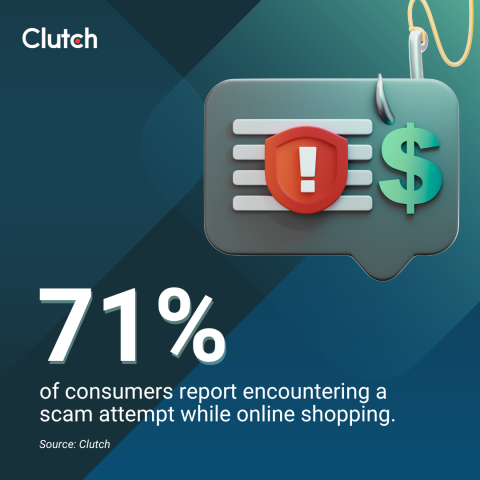
Clutch surveyed 401 consumers about their experiences and opinions about online scams. A startling 71% reported encountering a scam attempt while shopping online, demonstrating how widespread ecom scams are. Thankfully, there are a few steps brands can take to protect customers—and their reputations.
Online shopping fraud is no longer limited to simple payment problems like card theft. Using AI and advanced tactics, today's criminals target user trust, account credentials, and logical systems. Modern e-commerce fraud is a complex, multi-stage attack on the e-commerce ecosystem that endangers not only revenue streams but brand reputation and operational security. Because these attacks span payments, logins, and accounts, many brands turn to fraud prevention platforms like Sift that use machine learning to detect suspicious activity across the full customer journey.
Scams are prevalent due to:
Our survey found that 61% of consumers think platforms like marketplaces, social media, and search engines are most responsible for preventing e-commerce scams. Despite this, 67% of consumers also believe brands could take more initiative to protect their customers by, for example, monitoring or removing fake ads.
For brands, the risk goes beyond lost revenue from fraudulent transactions. E-commerce fraud puts their brand equity at risk.
These are the most common types of scams related to online shopping and e-commerce platforms:
Both companies and consumers should know the signs to watch for.
Also known as “friendly fraud,” fake chargebacks occur when a consumer makes a legitimate purchase but then falsely disputes the charge with their bank to receive a refund, while keeping the product or service. This fraud works by exploiting consumer protection laws to claim they didn’t receive the item, the transaction was unauthorized, or the item was “significantly not as described.”
For the offender, the consequences of fake chargebacks may include account termination, negative impact on their credit report, blacklisting, and, in extreme cases, legal action for theft or fraud.
Fake chargeback scams cause significant revenue loss, high fees, and potential termination of the brand’s merchant accounts. However, there are ways to mitigate the risks of friendly fraud:
Detailed transaction records, including order tracking, are your best evidence to fight chargeback disputes.
The combination of refund abuse and policy exploitation involves malicious manipulation of a company’s consumer-friendly return or customer service policies. This problem is on the rise thanks to wider e-commerce usage, easier return policies, and organized fraud networks, in which scammers share techniques and offer services to help other scam retailers.
Some often-used methods are:
Fraudsters tend to strike during busy holiday periods when retailers are overwhelmed, which increases the likelihood of quick, unverified refund approvals. They may also use tactics to pressure customer service agents into issuing refunds.
This type of ecom fraud poses risks to businesses, including financial losses, reduced profit margins, operational strain, higher prices for honest customers, and — like many types of e-commerce fraud — damage to their brand integrity.
Refund abuse and policy exploitation cost brands over $100 billion per year, transforming these common scams from a minor operational nuisance into a massive, profit-decimating threat. Some lessons to take to heart are:
You want to keep your customers happy without compromising your brand’s longevity.
Phishing attempts via brand impersonation involve attackers masquerading as trusted retailers like Walmart, Amazon, or PayPal to steal credentials, personal information, or money. These scams use fake emails, texts (smishing), or ads to lure users to spoofed websites that look identical to the real, trusted brand through:
This type of scam can manifest in multiple ways. For example, a consumer might receive an email stating a “fake” purchase and asking them to click a link to block the transaction, or a text message about a “delivery failure” requesting a small fee for redelivery.
These scams, too, have become increasingly sophisticated, upgrading from simple “copy/paste” logo thefts into sophisticated, AI-powered campaigns that weaponize consumer trust. There are several takeaways for companies:
These scams demonstrate how brand reputation is a primary target.
In an ATO attack, scammers use stolen credentials, obtained via phishing, malware, or data breaches, to gain unauthorized access to legitimate user accounts. These attacks include unauthorized purchases, loyalty point theft, and data theft.
ATO attacks can affect businesses in multiple ways, including financial losses, reputational damage, operational disruption, account vandalism, or even legal and regulatory penalties.
Customer trust is fragile, and traditional security is insufficient. Simple password systems won't stop fraudsters from credential stuffing (trying stolen passwords from other sites) or using bot-driven attacks. Therefore, it’s in your best interests to:
Educating customers on phishing risks and the importance of unique passwords can also be helpful.
Triangulation fraud is an elaborate scam in which criminals operate a fake storefront on platforms like eBay or Amazon, using stolen credit card information to fulfill orders with goods purchased from other retailers. The fraudster takes a legitimate payment from a buyer, uses stolen credentials to buy the item, and has the product shipped to the buyer.
The buyer receives their item, the fraudster receives their payment, and the owner of the stolen credit card often disputes the charge, forcing the real retailer to refund the money without receiving their merchandise back.
Because these common scams often appear to be legitimate transactions and the scammer never handles the merchandise, they can be hard to detect and trace. Triangulation fraudsters often target low-value, high-demand goods to evade automated fraud systems.
Austin Mallar, CTO of Longhouse Branding + Marketing, warns, “Even if a scam happens off-platform, the reputational impact lands on the brand.”

Online marketplaces are at particular risk in these schemes. Fraudsters may leverage a major platform’s reputation to build instant trust with consumers, acting as a seller on one platform and a buyer on another, making it challenging to connect the fraudulent activity.
Important lessons to prevent these scams include:
Marketplace monitoring is a must, as is partnering with reputable fraud detection providers.
Bot-driven e-commerce attacks are automated scripts that target apps, websites, and APIs to commit fraud, disrupt service, or steal data. Common scams in this category include inventory hoarding/scalping, price and content scraping, and DDoS attacks.
For brands, these attacks can have harsh operational consequences, including reduced site performance, financial losses, distorted marketing analytics, and reputational strain.
Preventing bot attacks could involve:
Bot-driven attacks expose critical vulnerabilities in website performance, inventory management, and cybersecurity.
Creating an effective strategy to protect your brand from e-commerce scams doesn’t have to be overwhelming. Here are a few simple tips to start:
With new threats proliferating every day, a strong protection strategy requires a strong, AI-fueled approach.
As e-commerce grows exponentially, these common scams will also continue to evolve. Fraud prevention must be a core pillar of your operations to shield your brand and your customers from financial loss.
Protecting your revenue and your customers’ trust should go hand in hand. Trust equals customer retention, but the opposite is also true. A single instance of a customer’s account being compromised can cause your brand severe, lasting reputational damage. Build and maintain trust by taking proactive steps.