
How to Define Brand Values That Guide Every Business Decision
Brand values are the principles that guide company decisions, define what a brand stands for, and shape how it treats customers, employees, and partners.
Updated April 2, 2026

Suspicious ads have become so common as to erode your brand’s trust and revenue. Learn why and how to reclaim them in our guide.
Digital fraud has become increasingly common as AI-powered creation tools have made it cheaper and easier to produce convincing scams at scale. This has desensitized consumers to fraudulent ads, creating real consequences for legitimate brands.
Clutch recently surveyed 401 consumers to get their perspective on e-commerce scams. The findings are telling:
Looking for a Public Relations agency?
Compare our list of top Public Relations companies near you
At this frequency, fraud has become a pattern that consumers have learned to ignore and scroll past. That behavior may sound reasonable, but it can actually make your customers more vulnerable to scams. When deception becomes familiar, it’s harder to detect — and brands are getting caught in the fallout.
This article explores the psychology behind fraud desensitization and its implications for your business. Learn how to protect your company’s reputation in a market where scams have become the norm.
E-commerce fraud has grown to the point where it’s virtually everywhere consumers shop. Social media feeds, search engine results, and marketplace listings have all become fertile ground for deceptive ads. The sheer volume of them has reshaped how consumers engage with digital commerce altogether.
According to Clutch’s survey, 92% of consumers are concerned enough to change their shopping habits. Instead of purchasing blindly, many now cross-check reviews across multiple platforms, scrutinize return policies, and default to using only their safest payment methods.
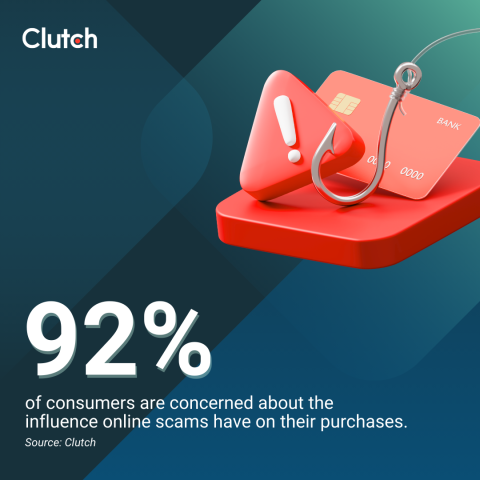
One in three consumers has recently encountered a suspected scam on social media, making it the largest channel for fraudulent activity. But email, online marketplaces, and unfamiliar storefronts are all impacted by this trend.
The key issue from a business perspective is that fake ads are no longer a surprise to your customers. In 2025, Pew Research Center surveyed over 9,000 adults and found that 73% reported experiencing at least one form of online scam or attack. So, fraud exposure is a near-universal experience, as natural to consumers as legitimate ads and regular branded social posts.
The human brain is wired to adapt. When a stimulus repeats often enough, it begins to filter it out. Psychologists call the process habituation, and it’s happening in e-commerce fraud. The core idea is that the more consumers encounter suspicious ads, the less they consciously register them as threats.
Consumers today are bombarded with thousands of posts, notifications, and emails every day. To make sense of it all, the brain deprioritizes non-novel signals, which now includes suspicious ads for most consumers. Researchers call it “scam fatigue” — the state in which chronic exposure to fraud leaves consumers increasingly disengaged from warning signs meant to protect them.
For example, an unfamiliar storefront or a deep discount once triggered caution, but now feels like a routine aspect of being online. That’s why Pew Research found that, although 71% of Americans feel they know how to identify online scams, 73% have still fallen victim to at least one. Awareness alone isn’t protection anymore.
For brands, the idea of fraud desensitization is compounded by banner blindness. This is the tendency consumers have to ignore content that resembles ads — whether legitimate or fraudulent.
Companies can invest heavily in paid placements to reach consumers online. But overexposure to ad formats has trained the audience to disengage entirely from this content. Legitimate campaigns fall into the same blind spot as scam ads, raising the question: How do you even connect with digital consumers today?
We cover practical strategies in a later section. For now, the key takeaway is that even well-designed, authentic advertisements can struggle to land. Trust has to be built through channels and signals that go beyond any individual ad unit.
Today’s consumers are desensitized to both fraudulent and legitimate ads. But understanding why consumers disengage only gives you part of the picture. It’s also important to explore the costs of that disengagement to them and to the brands they shop with. Here’s how normalization is actively increasing consumer vulnerability.
Repeated exposure to fake ads has gradually reduced the skepticism consumers apply to new ones. The familiarity functions as a trust signal. A scam ad that mimics the aesthetics of a legitimate brand, appears in a familiar feed, and uses standard promotional language no longer triggers the same level of scrutiny it did in the past.
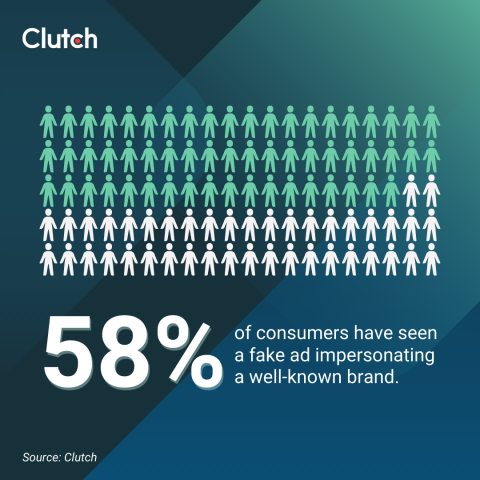
Our survey found that 58% of consumers have seen a fake ad impersonating a well-known brand. This has led to acceptance of the content and, over time, even comfort with it. As consumers lower their guard, they become more likely to engage with content designed to scam them.
As consumer vigilance decreases, scam sophistication has only gotten better. AI-powered tools have made it much easier for fraudsters to create polished, convincing ads at scale. The gap between a real and fake ad has never been narrower, and it's a convergence that’s become dangerous.
Consumers know that scams exist and recognize that they’re becoming more widespread. Yet, this knowledge hasn’t translated into protection. Our data shows that 56% of consumers have been scammed while shopping online. Among those, 42% were within the last year.
The research on scam fatigue explains why. When consumers repeatedly encounter fraud attempts, the emotional burden of sustained vigilance becomes unsustainable. Hypervigilance gives way to discouragement and disengagement, which is exactly what bad actors count on.
Legitimate brands have started to bear the brunt of heightened e-commerce fraud. Our survey found that 54% of consumers trust a company less after encountering a scam associated with it. The reputational damage is real and can compound quickly:
The key takeaway is that brand trust has become fragile in a world where fraud is normalized. This means protecting the brand equity you’ve created requires more than a great product and recognizable logo.
Addressing fraud normalization requires a direct, proactive response.
First, companies can’t rely on consumers to report impersonation. By the time these issues surface, the damage has often already been done. That’s why ongoing monitoring for fraudulent ads, fake storefronts, and spoofed accounts replicating your content should be a priority. Or, as Austin Mallar, CTO of Longhouse Branding + Marketing, puts it, “Ongoing brand monitoring is equally important to catch impersonation early.”

Practically, this means investing in brand protection tools that scan ad networks and social platforms for unauthorized use of your materials. Popular solutions in this space include Brandwatch, Mention, and Google Alerts. These tools help you find and report fraud faster, minimizing the number of consumers exposed to it.
Beyond technology, brands should also establish clear internal processes for addressing these issues. That means deciding who owns the response process, how quickly it needs to happen, and which platform reporting channels to use.
Speed is a critical part of effective brand monitoring. A fraudulent ad that runs for 48 hours could affect dozens of customers, whereas one you flag and remove within hours may only impact a few, if any.
Consumers who have been scammed or suspect they have, often want acknowledgment from the actual brand — even though it wasn’t involved. Brands that communicate openly about these risks and respond visibly when impersonation occurs are better-positioned to retain consumer confidence.
Our survey found that 67% of consumers believe brands can protect them by actively monitoring for and removing fake ads. This is an opportunity for strategic differentiation. Brands that step up and demonstrate their actions loudly and publicly gain trust in this landscape instead of losing it.
But transparency also means being specific. Vague reassurances won’t move the needle for customers who have been burned. So, focus on providing actionable information that consumers can use to verify the authenticity of content they find online.
For example, many companies clearly and frequently communicate their official website address, the only domains they use for email, and what their ads look like when used in an official capacity. General reassurances of monitoring programs running in the background don’t provide the same value to consumers.
Awareness campaigns that help consumers identify fraud protect the brand and its shoppers. The idea is to become an aggressive steward of your brand’s integrity rather than react to fraud after it occurs.
You don’t need a large budget to do it. Many brands achieve it through a pinned social post, a dedicated email blast to existing customers, or fraud-awareness FAQs on the website. Other companies take it a step further by maintaining active, public-facing web pages that detail how to identify counterfeit products and fraudulent sellers.
In a market where most companies remain silent on fraud, proactive communication can be a significant differentiator. Over time, it could help your business gain brand equity while others lose it through the non-conscious psychological effects detailed previously.
It could also be time to rethink your ad structure. Legitimate brands need to lean into the visual and structural cues that set them apart. “Strong visual branding and direct links to official domains reduce confusion and impersonation risk,” says Mallar.
This also means regularly auditing existing ad placements. Brands should know exactly where their ads appear across the web and verify they've authenticated their business accounts on every platform they use. Paid social strategies can benefit especially from these tighter controls.
Reviewing placements, verifying domains, and ensuring creative assets are consistent across every touchpoint will train your audience to distinguish real ads from impostors. That makes it far more likely that your ads cut through the noise online and drive the conversions you’re paying for.
E-commerce fraud has become so embedded in the digital shopping experience that many consumers have become desensitized to it. This process has been compounded by banner blindness, making it more difficult for brands to build and retain trust online.
Our data found that 89% of consumers regularly encounter suspicious ads, 56% have been scammed while shopping online, and 54% trust a brand less after encountering fraud associated with it. These trends can affect a business even when the company has nothing to do with the fraud consumers see.
The danger extends beyond the customer to the business as well. When scams become routine, trust becomes more fragile and difficult to rebuild. Consumers who lose confidence in a brand’s ability to protect them disengage and take their business elsewhere.
In response, brands should recognize fraud normalization as a strategic threat and take proactive steps to prevent it. That means actively monitoring, communicating, and educating consumers about these issues while designing advertising that earns their trust. When fraud is everywhere, standing apart requires more deliberate effort.