
Task Automation: How to Cut Repetitive Work
Task automation saves time, gets work done faster, and reduces errors. Learn how to automate repetitive tasks step-by-step and how to decide what to automate.
Updated August 25, 2026

Someone on your team may already be doing a job that doesn't officially exist.
An analyst, product manager, or operations lead is writing prompts, checking AI outputs, managing tools, and determining which data can safely be shared with AI systems. The work has become part of their role, but their title and career path haven't caught up.
That's how new AI job titles are emerging: the work comes first, and the title follows.
Looking for a Artificial Intelligence agency?
Compare our list of top Artificial Intelligence companies near you
This article examines which AI responsibilities warrant entirely new roles and which should simply be incorporated into existing jobs.
Before you can hire a role that doesn't exist, your systems have to admit it exists.
Your HRIS has a job catalog. Every profile carries a code, family, level, band, and survey match. Recruiting can't post outside it, and finance won't approve a requisition without it. So when a VP wants an AI Product Owner, People Ops often slots the person into the nearest existing profile.
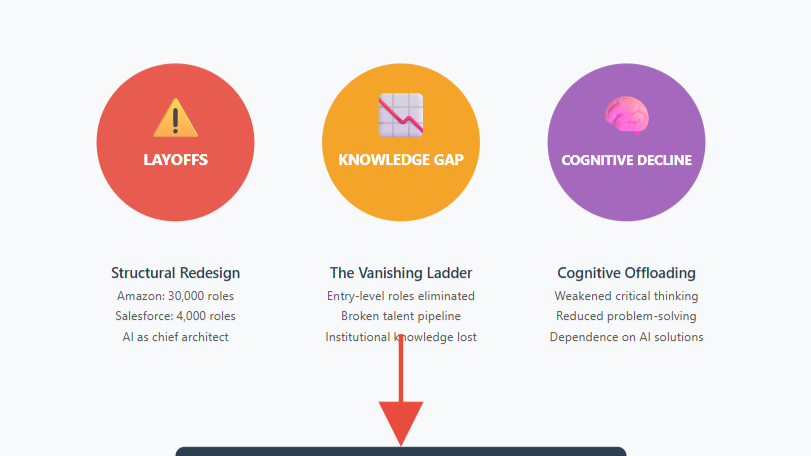
The problem appears later.
Now this person is benchmarked against employees doing different work. Their promotion case has to be argued from scratch, and their external title says little about what they actually do.
Compensation creates another problem. Salary surveys rely on existing benchmarks, and genuinely new roles often have little useful data. That can leave companies setting pay through individual negotiation, creating inconsistencies as the team grows.
Fix the architecture before opening the requisition. Write the job profile, assign the family, set a provisional band, and document the reasoning.
Some AI roles are consolidating into real functions. Others are already becoming skills within existing jobs.
An AI Product Manager is holding because it is largely product management plus a new skill: evaluating probabilistic systems.
An AI PM has to decide whether a system that works 91% of the time is good enough, what happens when it fails, and who bears the cost. Most PMs don't have that evaluation skill yet, but many can learn it.
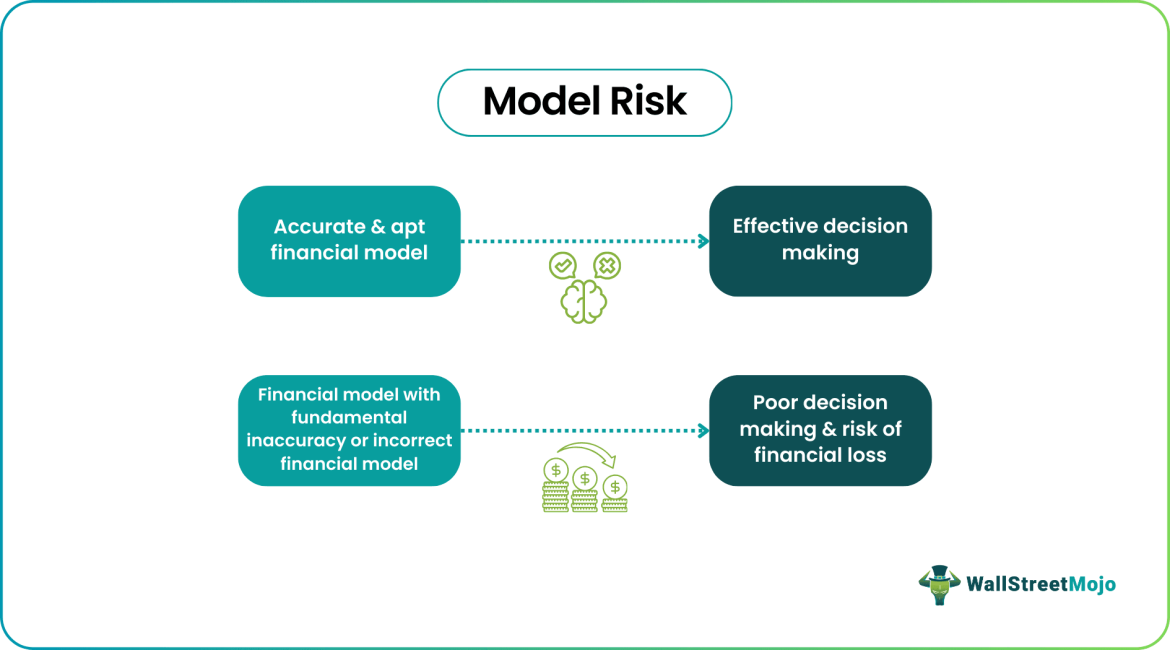
Model risk and AI assurance roles are hardening fastest in regulated industries. Banks already have model risk management functions and are extending them to AI. Insurance and healthcare are following as organizations need clear ownership of AI risk.
An applied AI engineer, forward-deployed engineer, or AI solutions engineer is also a real and growing function. The work combines engineering with problem-solving in customers' actual environments, where data and workflows rarely look like the demo.
A prompt engineer is moving in the opposite direction. The work has spread into product, engineering, content, and other functions. For most companies, prompting is becoming a skill rather than a standalone career.
That shift is happening outside technology companies, too.
Alex Byder, Founder of BD Homebuyer, notes that AI skills are increasingly being integrated into existing roles rather than creating entirely separate positions.
“People don't necessarily need a new job title every time AI changes part of their work. In real estate, the more useful question is whether someone can use these tools to research faster, handle information more efficiently, and still know when human judgment needs to take over,” said Byder.
AI trainer and annotation work increasingly requires domain expertise. Clinical notes need clinicians. Legal clauses need people who understand legal work. Rather than creating entirely new jobs, companies may need existing experts to take on AI-related responsibilities.
An AI experience designer remains a smaller specialist role. Designing for systems whose outputs cannot be fully predicted requires thinking about error recovery, uncertainty, and how users respond when the model gets something wrong.
The Chief AI Officer depends heavily on authority. The title means little if the person has no budget, headcount, or influence over the teams responsible for implementation.
A second wave of titles is appearing now, and it is too early to say which will survive contact with an org chart.
An AI agent manager is the newest of them. Once systems start executing multi-step work rather than producing text for a human to check, someone has to decide what those systems are permitted to do unsupervised, what gets escalated, and how a bad run is caught before it reaches a customer. That is closer to running a team than to running a tool.
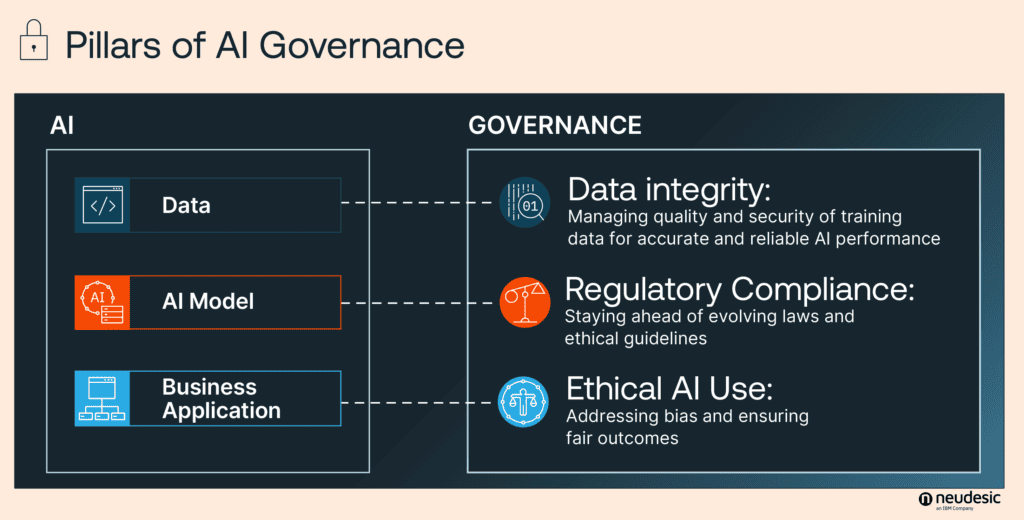
AI governance lead is a real but contested territory. In banks and insurers, it lands inside the
existing model risk function. Elsewhere, it gets pulled toward legal, security, or whoever owned privacy first, and the reporting line often says more about internal politics than about the work.
An AI workflow architect is the one most likely to dissolve into an existing job. The work is process design: mapping where a workflow breaks, deciding which steps a model should touch, and rebuilding the handoffs around it. Operations leads and solutions architects have been doing versions of this for years.
An AI adoption manager usually remains in place for as long as the rollout lasts. The role covers enablement, finding teams quietly ignoring the tools, and turning a license purchase into changed behavior. Once that behavior is ordinary, the role tends to fold back into L&D or internal communications.
Poorly defined AI roles create poorly defined hiring processes.
A company posts a title borrowed from somewhere else and builds the description from several other job postings. Hundreds of applicants arrive, but recruiters have few reliable credentials or previous titles to use as filters.
Interviews can make the problem worse. Engineering screens for technical ability, product screens for roadmap thinking, and legal screens for risk. Without agreement on what the job actually requires, hiring decisions become inconsistent.
A work sample can be more useful.
Give candidates a real example in which a model produced a confidently wrong answer, and ask them to diagnose it.
Or give them a dataset with genuine labeling inconsistencies. Testing candidates against the problems they will actually encounter can reveal more than another behavioral interview.
Look internally, too. Someone already doing much of the work informally has an advantage: they understand your data, systems, and workflows.
The biggest problem is often structural rather than technical.
A company hires an AI product lead with a cross-functional mandate but gives them no dedicated engineering capacity or authority over the teams they depend on. Every project requires borrowing time from teams with their own priorities.
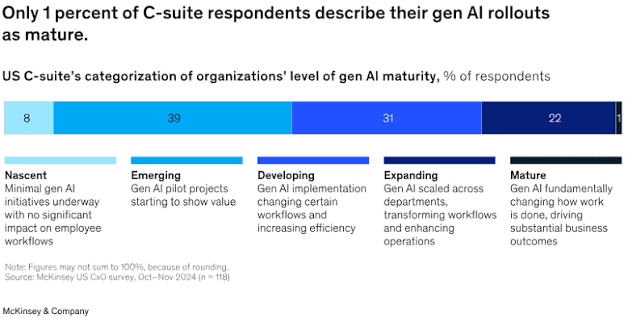
The stronger setup is straightforward. The role reports high enough to bring teams together, has some dedicated technical capacity, and has an executive sponsor willing to support the work.
It also needs business metrics rather than vague AI goals: cycle time on a workflow, error rates, cost per resolved ticket, or another measure the wider organization already understands.
Automation can also change the jobs that remain. When routine work disappears, human employees are left handling more escalations, judgment calls, and difficult cases. That can change the skills, training, leveling, and compensation required by those jobs.
Andrew Bates, COO of Bates Electric, sees the same distinction in skilled trades, where technology can change how work is planned and managed without replacing the expertise required in the field.
“The useful technology is the technology that takes repetitive work off people's plates. That doesn't make the skilled part of the job less important. It usually means the work that's left requires more judgment, experience, and accountability,” said Bates.
The same principle applies to new AI roles. Hiring someone for the expertise is not enough if the organization does not give them the authority, resources, and support to use it.
A broad skills inventory often produces little more than a heat map.
A more useful approach is to pick three workflows where AI is already changing work. For each one, identify who does the work today, what has changed, and what that person now needs to know that they didn't need two years ago.
The exercise works best when it gets specific. A company providing bathroom remodeling in Tampa, for example, might look at estimating, project scheduling, customer communication, and design work separately rather than treating “AI skills” as a single broad requirement.
The gaps might include evaluation design, data governance basics, or knowing when an apparently confident AI output needs checking.
Then decide whether each gap is a training problem or a hiring problem.
Most will be training problems. New hires make more sense when the company lacks deep technical expertise entirely or when the work requires organizational authority that cannot simply be added to someone's existing role.
And training needs real time. A learning platform license is not enough if employees are expected to develop these skills around a full workload.
Go back to the analyst from the beginning: the person already doing part of a job that isn't officially hers.
The company has to decide whether that work deserves its own profile, compensation band, and career path. If it does, formalize it before the employee finds a company that already has.
What leaves with that person isn't only an AI skill. It's knowledge of which data sources are trustworthy, which workflows depend on manual cleanup, and where the model has failed before. That knowledge is much harder to replace than a job title.
When the answer is to hire instead, the search is harder because the usual credentials may not exist yet. Clutch's directory of recruiting firms lists verified client reviews, industry focus, and typical project size, making it easier to find recruiters with experience filling emerging technical roles.