Lead Quality vs. Lead Quantity: Why B2B Teams Are Rethinking Their Funnel in 2026
Bigger buying committees and tighter budgets are forcing B2B teams to rethink lead quality vs. quantity. Here's how top teams rebalance the tradeoff in 2026.
Updated September 24, 2026

Your customers aren't searching the way they used to, and your digital marketing strategy needs to catch up. From AI-powered personalization to the growing role of AI search, the rules of reaching and engaging buyers are changing fast.
Think about the last time you looked for answers on the internet. Did you use Google or ask an AI chatbot? Did you skim a blog or watch a 30-second TikTok? If your search habits have changed in the past year or two, so have your customers'.
In 2026 and beyond, your job is to build a digital marketing strategy that meets your customers where they are now, which means understanding their thoughts and perspectives.
Looking for a Digital Marketing agency?
Compare our list of top Digital Marketing companies near you
Over the last year, Clutch has surveyed hundreds of consumers and marketing professionals to identify the key digital marketing trends.
From influencer insights to video tips to AI, here are the top trends that are shaping digital marketing strategies 2026.
Marketers are drowning in data, but AI features in popular tools like Tableau, HubSpot, and Adobe Analytics are helping them make sense of it all.
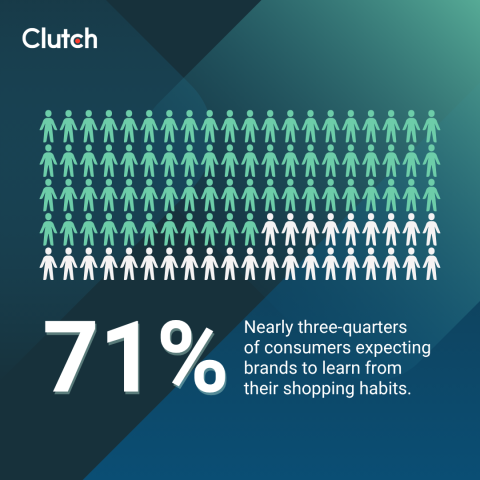
AI is especially effective at powering personalized marketing. With nearly three-quarters (71%) of consumers expecting brands to learn from their shopping habits, leveraging AI can boost sales while delivering a stronger return on investment (ROI).
AI can help analyze all your audience data, from website clicks and social engagement to purchase history and email interactions, which can help you uncover patterns that even the most skilled digital marketer might miss. For instance, it can show whether a content strategy is resonating before you over-invest and flag customers at risk of churning while there’s still time to take action.
You can also use AI-powered tools to identify and engage potential customers on social media, personalize what they see on your company’s website in real time, and guide them to the information they need to make a purchase. They can even help you automate loyalty efforts and analyze customer feedback for trends.
At every stage of the sales funnel, AI can help teams create more relevant and responsive customer experiences.
AI can provide analysis and even automate some follow-up work, but it doesn't replace human judgment. AI doesn't understand your business model, nor does it grasp the complete business context of the decisions you need to make. Most importantly, it can't identify the stories you need to tell as a marketer.
AI can improve the customer experience by boosting efficiency and personalizing service, but customers still crave the human touch and feel more confident about your company when they know humans are reviewing AI-generated work. Brands also need to proactively address privacy concerns and potential algorithmic bias.
While AI helps you understand your audience, human effort remains critical. You still need to do the work to earn your customers' trust. That means staying visible across multiple platforms and building lasting authority.
More and more, consumers are turning to conversational AI to research products, compare services, and make buying decisions. That means your brand doesn’t just need to rank on Google. It also needs to appear in AI search results so customers can see it.
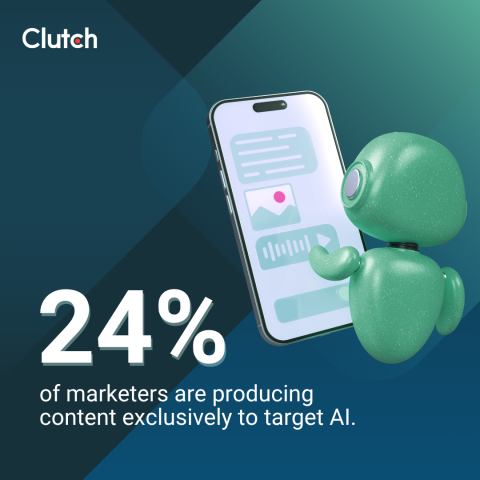
According to a recent survey of 459 marketing professionals, 24% are producing content exclusively to target AI, as they understand it has the potential to significantly impact performance in the next year.
That push isn't universal for businesses of all sizes, though. Bigger companies with 500+ employees are more likely to see a future in AI, with 32% of them identifying LLMs as their primary content audience.
But there's no need for smaller businesses to be left behind. Many of the most effective strategies for AI search don't cost much money at all, and they should already be familiar to marketers.
To grow visibility in LLMs, you need to invest in content that positions your brand as a credible source. That means:
The good news is that these strategies have a lot in common with what content marketers are already doing. Both traditional search and LLMs want to find information that's most relevant to users, so they turn to signals of experience, expertise, authoritativeness, and trustworthiness. In other words, EEAT criteria. Traditional search engine optimization (SEO) principles, such as optimized tags and good technical SEO, can lead to a significant boost in your AI ratings, as well as an increase in search engine results page (SERP) rankings.
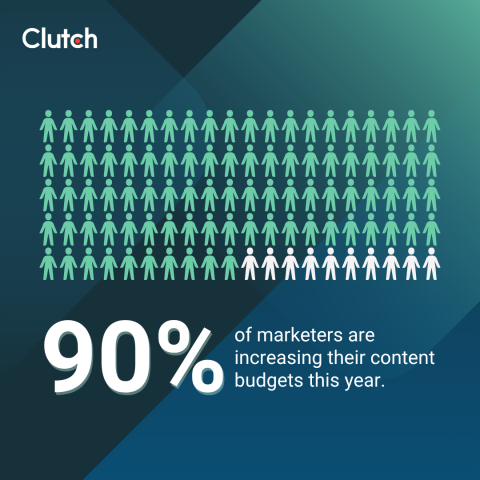
Still, optimizing content for LLMs requires a slightly different approach. AI prefers direct answers to specific questions and quotable snippets, as well as original research. That means companies are spending big to produce original data and publish white papers. Almost 90% of marketers are increasing their content budgets this year.
While brands double down on authority and credibility, there's another shift quietly reshaping digital strategy, and it's also about truthfulness.
For years, influencers were seen as relatable people who appeared authentic, unbiased, and closely connected to their communities, but today's audiences are fatigued by scripted spontaneity and perfectly curated endorsements. They can spot paid partnerships instantly, and they're more knowledgeable than they used to be about the big business behind influencer sponsorships.
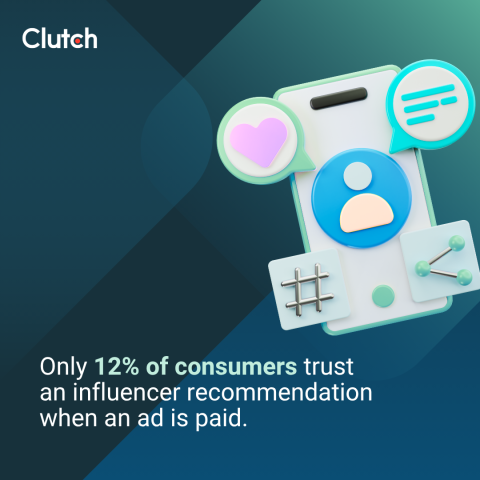
It's no wonder that consumers are increasingly cynical, especially about recommendations that feel transactional. A Clutch study found that only 12% of consumers trust an influencer recommendation when an ad is paid, and 47% percent of people don't trust influencer endorsements at all.
And in a world where 50% of consumers say they would stop buying from a brand if it felt inauthentic, that shift matters.
Paid influence is still a valuable strategy, though. Clutch's research found that more than half of those surveyed bought a product sponsored by an influencer in 2025. But you need tactics that cut through the noise. A one-size-fits-all influencer strategy isn't enough anymore.
That's a big reason why brands are moving away from one-off influencer promotions and toward long-term partnerships, user-generated content, and owned media that feel more transparent and aligned with their values.
A long-term relationship with a content creator offers consistency and a chance to consolidate a brand's message over time. Brands also benefit from reaching out to niche communities and giving their content partners a certain amount of creative freedom. Influencers understand their followers better than you do, and a fan base can sniff out an inauthentic post from a mile away.
Of course, an influencer's voice and audience can be a double-edged sword. Brands need to do their homework to make sure their content partners are aligned with their values.
User-generated content, whether it's TikTok challenge videos or Instagram posts, works over time to establish trust. And if you focus on generating trust, sales will follow. It's a matter of showing consumers what they want to see, how they want to see it.
Marketers are betting big that our already insatiable appetite for video will only increase. More than half (52%) of marketers are increasing their budgets and prioritizing short-form content for YouTube and TikTok this year.
Firms have already had serious success boosting brand awareness, expanding reach, and driving engagement on these platforms, and they think the same should hold true in 2026.
Videos do what other kinds of content can't. Bold, dramatic visual storytelling moves emotions when text might leave consumers cold. Quick clips go viral more easily than blog posts. In an age of constant noise and distraction, the right video can still cut through.
"Short-form video is becoming an increasingly important part of digital marketing, but creating it still requires time and technical skills. AI is lowering that barrier by allowing marketers to turn a simple idea or image into a video without a complex production process. This gives teams more freedom to experiment with visual content, test different ideas, and create videos that are better suited to the way their audiences consume content," says Echo Mao, Head of Marketing at AIReel.
Videos can also maintain a brand's connection with its existing clients. How-tos and product demos might make another purchase look more attractive.
In the past, video was often coupled closely with social media strategy. Marketers posted video clips on platforms, and social media strategy informed decisions about video production.
While that’s still true, now AI search is increasingly using video to decide how to talk about your brand and whether you're a trusted source. If you're not giving AI videos to use, you're not being seen enough.
Investments in video, especially short-form video, will pay off with strong engagement and authority signals in 2026, and companies are already seeing results. It isn't just the video that boosts visibility, either. Transcripts, captions, and metadata all provide valuable signals for AI search to use.
In 2026, marketers are focusing on understanding their audiences, building credibility through authentic content, and expanding brand presence across various channels.
I can support these efforts by automating routine tasks, improving efficiency, and uncovering opportunities that might otherwise go unnoticed.
While the technology opens up new possibilities for marketers, it will never replace human judgment or the strategic expertise a marketing firm provides. Those who stay ahead of these digital marketing trends will be well-positioned to thrive in the next era.