Lead Quality vs. Lead Quantity: Why B2B Teams Are Rethinking Their Funnel in 2026
Bigger buying committees and tighter budgets are forcing B2B teams to rethink lead quality vs. quantity. Here's how top teams rebalance the tradeoff in 2026.
Updated June 19, 2026

Ever wish you had a few more hours — or, better yet, a clone — to sift through that enormous spreadsheet or turn your Instagram Reels into TikToks? Artificial intelligence isn’t your mini-me, exactly, but it can help you guide customers through the marketing funnel and drive those valuable clicks and conversions.
AI has not-so-quietly taken over the digital marketing world. Suddenly, your favorite software has an AI generator ready to spin up emails and images. And your LinkedIn feed is full of people talking about how they’ve automated this or optimized that.
You may have already experimented with a few AI tools, like using ChatGPT to brainstorm subject lines. But this technology can have an impact at every stage of the marketing funnel. That’s the journey that customers go on as they move from awareness to interest to — if you’ve played your cards right — conversion and loyalty.
Looking for a Digital Marketing agency?
Compare our list of top Digital Marketing companies near you
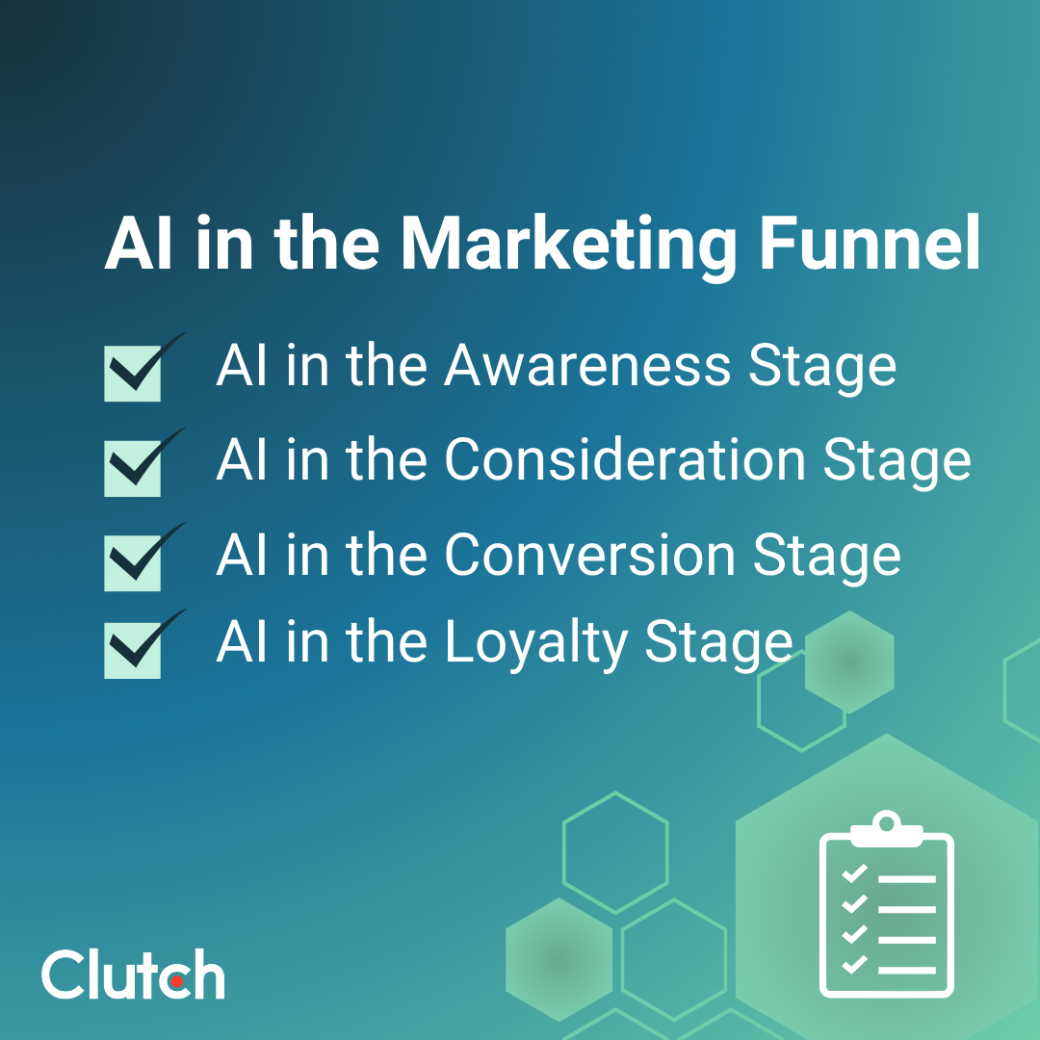
Using AI in the marketing funnel helps you make smarter, faster decisions. It’s not a replacement for your spidey-sense about what works, but it will make it easier to give your customers more of what they like. And that’s the key to more sales and (even better) a shorter to-do list.
| Dimension | Traditional Funnels | AI-Powered Funnels |
| Structure | Static, linear stages | Adaptive, non-linear journeys |
| Decision Logic | Rule-based + predefined | Data-driven + continuous learning |
| Execution | Manual setup + optimization | Autonomous orchestration across channels |
| Personalization | Broad segments | Individual-level, real-time personalization |
| Optimization Speed | Periodic | Continuous, real-time adjustments |
| Campaign Management | Siloed tools + teams | Unified, AI-coordinated systems |
| Response to Behavior | Reactive | Predictive + proactive |
| Scalability | Limited by human bandwidth | Scales automatically with data + demand |
Awareness is that magical exploratory time when customers are learning what you’re all about - perfect time for top of funnel (TOFU) content. Artificial intelligence helps you meet them where they are and share what makes your brand great.
Start by targeting your ideal audience. Tools like ExactBuyer and HubSpot’s Breeze Social Media Agent use AI to analyze your customers’ past behavior and recommend the best content or marketing strategy. Or fire up OpinioAI to “chat” with AI buyer personas. Ask this robot focus group questions like, “Which Instagram caption do you prefer?” and “Would you rather click on subject line #1 or #2?”
Add social listening software to your toolkit, too. These platforms instantly flag online mentions of your brand, such as an influencer raving about your sustainable packaging. And with trend analysis, you can jump right into the latest conversations and start using that viral TikTok sound before your competitors have even heard it.
Once you’ve created content, AI is your 24/7 distribution assistant. Scheduling tools adapt and post content across all your social media platforms at once. You’ll be sipping your morning coffee in peace instead of logging into six platforms or trying to figure out why Instagram keeps resizing your photos.
AI-powered email platforms are even more efficient. They automatically personalize and share messages every time someone joins your mailing list or abandons a cart.
Agentic AI systems are beginning to act more autonomously in orchestrating these tasks, for example, by independently identifying trending topics across platforms and deploying tailored content without manual prompts. This kind of autonomous orchestration accelerates awareness efforts far beyond traditional scheduling tools, helping teams scale outreach within minimal oversight.
Leads start to really dig into your brand in the consideration phase. They’re reading product comparisons, scouring reviews, and eyeing their bank account balance; a lot of content that is considered “MOFU” or middle of funnel. Win their business by proving that you can solve their problem, and you can do it better (or cheaper) than competitors.
Check both boxes with dynamic content optimization. Platforms like Dynamic Yield and Insider use each visitor’s data to customize your website on the fly.
For example, if a customer visits a pet store website, these tools track their clicks and analyze any previous interactions. Someone who bought a dog leash last month might receive AI-generated recommendations for matching harnesses. If they’ve added their dog’s breed to their profile, they could see custom landing pages with Golden Retrievers or training tips for terriers.
Conversational AI is another way to capture customers’ attention. Add a friendly chatbot to your website to answer questions like “Should I buy a medium or large dress?” They can even recommend products based on something as minor as where a customer’s mouse lingers.
Take advantage of all this data with predictive lead scoring. Salesmate, for example, scores potential customers based on location, behavior, and dozens of other factors. You could set it up to flag people who come back to the same product page twice without buying, or visitors who fit your target audience of Millennial hikers on the West Coast. With smarter filtering, your marketing and sales teams can save their energy for the people who are most likely to make it through the whole funnel.
AI SDRs (AI-powered sales development representatives) can further enhance the consideration stage by nurturing leads via personalized dialogs or outreach sequences that feel conversational but are powered by machine learning. Coupled with sales call intelligence tools that transcribe, analyze, and score conversations, marketing and sales teams can extract insights about common objections and preferences, which feed back into smarter content and follow-up strategies.
With automated marketing campaign optimization, you can always say the right thing in the crucial conversion stage, when customers are gearing up to buy.
Suppose you’ve been sending emails with custom coupons, but your lead has stopped opening them. Adjust the subject line with AI — a meme reference could do the trick for Gen Z — or scale back how often you send them so their inbox isn’t overflowing.
Or maybe the customer added something to their cart but wandered away from your site. A well-timed email with a shiny 20% off coupon could bring them right back to finish the sale. Or a retargeting ad on Facebook could jog their memory as they scroll through their ex-roommate’s vacation photos. It’s all about anticipating each client’s needs and meeting them with custom content.
For customers who make it to the finish line and hit that BOFU stage, AI can improve the actual checkout process, too. It analyzes how visitors interact with your page and shares smart design tips. Maybe your colorful call-to-action button is too far down the page, or heat maps show that people leave when they see your shipping costs (surprise!). Simple tweaks like adding your $19.99 delivery fee to product pages can make a big difference in your conversion rate.
But don’t mistake AI for a colleague. Maxime Siebinga, Marketing Manager at Flowium, shares, “We see AI as a tool in skilled hands. It can speed things up, but it doesn’t make campaigns succeed.”
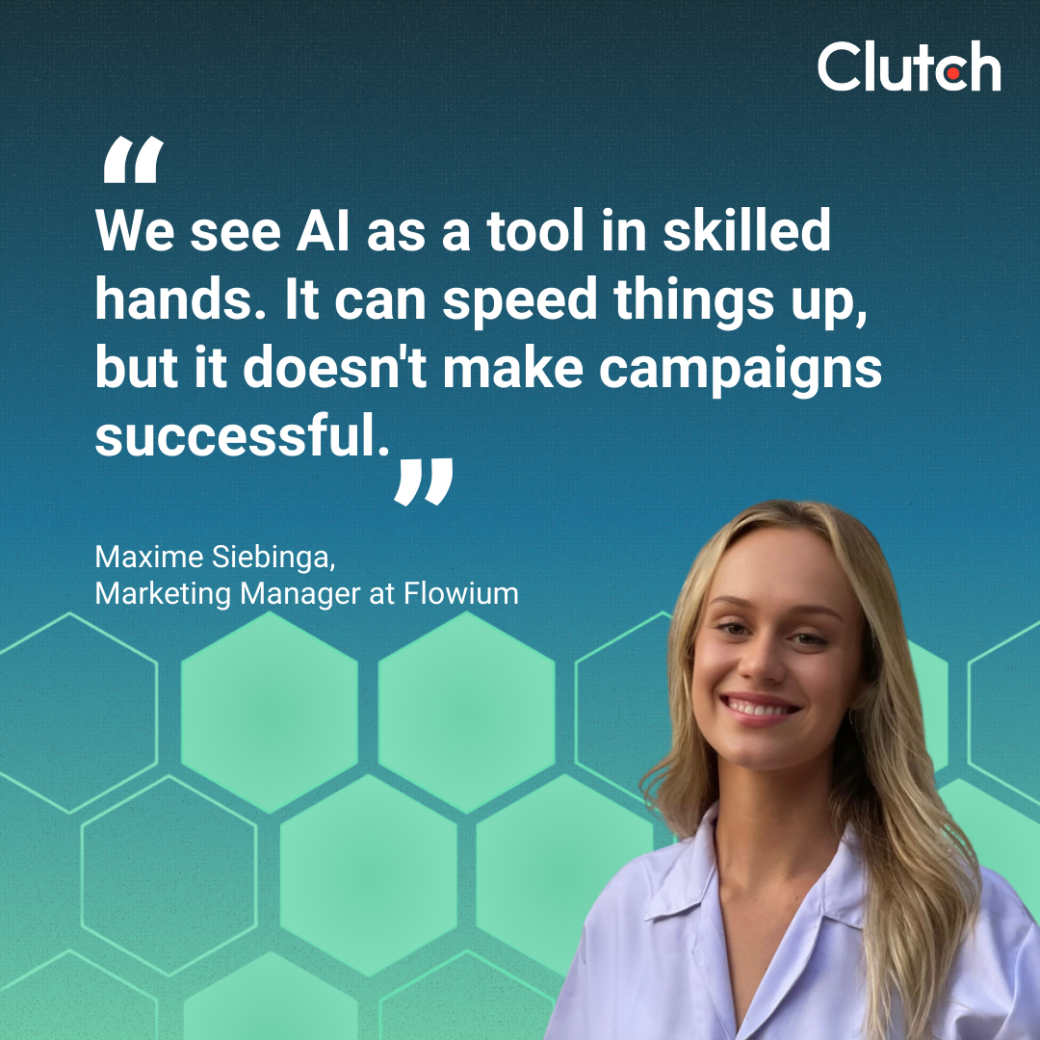
“That’s why we train our team to use it as a resource — not a replacement,” Siebinga continues. “The people behind the emails still make the biggest difference.”
For example, AI might recommend adding emojis to your email newsletters, but that doesn’t fit your brand image. Human oversight will help you avoid confusing customers with messages suddenly brimming with smiley faces and sparkle emojis.
Dynamic pricing adjustments, where AI models adapt offers in real time based on demand signals or user behavior, can complement campaign optimization at the conversion stage. By aligning pricing strategies with individual buyer intent signals, companies can better convert hesitant prospects into customers at scale.
Your job isn’t over when a client finally buys something. Ideally, they’ll love your brand so much that they’ll keep coming back and even tell their friends.
Predictive analytics tools can forecast which customers are the most likely to stick around. For example, busy professionals earning over $150,000 a year may frequently buy your upscale travel luggage. Based on AI recommendations, you could engage them with upselling emails or a Facebook ad campaign for travel accessories.
Data about who isn’t coming back is equally useful. Fresh college grads might buy a single suitcase and vanish forever. Of course, that doesn’t necessarily mean they hate your product. Maybe they don’t travel often, or your luggage is so durable that it lasts a decade. This information might inspire you to scale back retargeting campaigns for that group to save money. Or you could focus on marketing more affordable handbags to win their loyalty.
AI can also help you segment your audience better. Perhaps you’ve been dividing your email list into two groups: cat owners and dog owners. But AI analytics show that some of the dog people love your weekly training tips, while others delete them instantly. Splitting that segment by user preferences is an easy way to keep everyone happy and reduce your unsubscribe rate.
AI-powered feedback analysis tools are another wise investment. Platforms like Zendesk can automatically send surveys a few days after purchase. They also analyze this data to understand how customers feel about your brand and recommend ways to offer support. Are people confused about how to set up your software? A quick video tutorial can clear things up and keep everyone satisfied.
Advanced AI platforms now combine sales call intelligence with post-purchase behavior data to anticipate churn and tailor loyalty campaigns. When teams understand not just what customers do but what they say during calls or interactions, they can deliver more empathic and effective post-purchase experiences.
Your campaigns might already be running fine without AI, but here are a few ways it can get you even better results:
Of course, no technology is perfect, especially when most tools have just been launched in the last few years. Consider these potential drawbacks before you start dabbling in AI with marketing:
All benefits and challenges should be taken into account before making major shifts.
Get a leg up on your competition by using AI in your marketing funnel. This technology can improve practically every aspect of your campaigns, from automatically sending emails to figuring out how to entice repeat buyers.
Looking ahead, the next competitive leap won’t just come from using AI tools, but from embracing autonomous orchestration across the entire marketing funnel. This means AI systems that don’t simply optimize individual tactics, but coordinate strategy end-to-end: dynamically allocating budget, adjusting messaging in real time, syncing marketing and sales signals, and learning continuously without constant human intervention.
As these agentic systems mature, marketers will shift from hands-on execution to high-level guidance, overseeing intelligent engines that adapt faster than any manual workflow ever could.
With more companies embracing automated marketing campaign optimization, you can’t afford to stay in the pre-AI dark ages. Need a hand getting started? Browse Clutch’s directory of vetted artificial intelligence experts to find a partner for your next campaign.