7 Tips For Designing Web Forms
Clutch surveyed 502 web users about what they actually want from form design. Here are 7 data-backed UX principles that reduce abandonment and improve...
Updated May 28, 2026

In 2025, web design services have taken on a bigger role than most realize.
For companies navigating mobile behavior, tighter budgets, or growing accessibility standards, the website is no longer a "nice-to-have."
It’s where first impressions happen, transactions occur, and customer trust is earned or lost.
Looking for a Web Design agency?
Compare our list of top Web Design companies near you
This article pulls together the latest web design services statistics for 2025 and highlights how the field is evolving. We’ve compiled current economic data, platform trends, regulatory updates, and workforce challenges from across the industry. This guide is meant to serve as a practical, data-backed reference for anyone leading a creative agency, building digital products, or advising clients on performance.
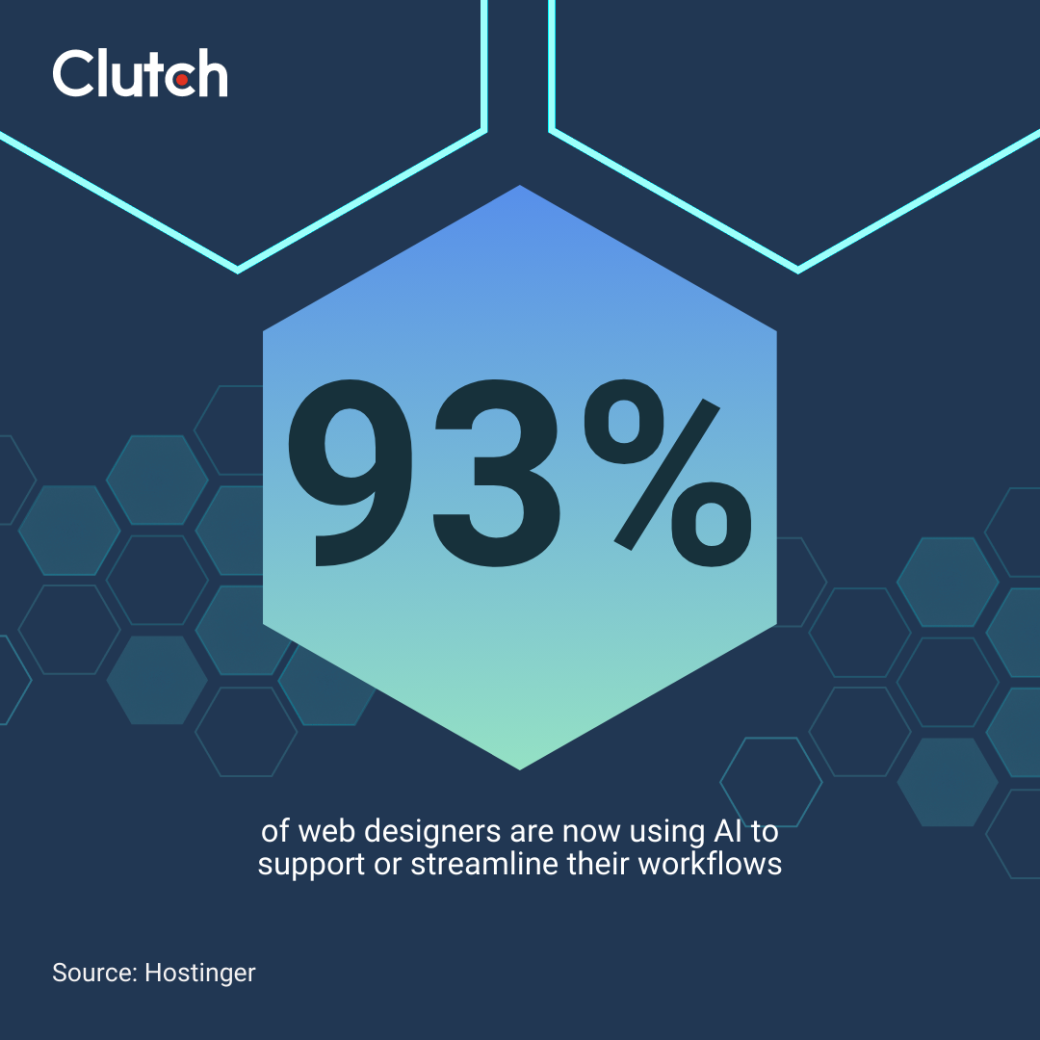
The past year brought major shifts. AI tools are now a standard part of web design work. Nearly 93% of designers report using AI in their process, and 82% of developers rely on it for code. Teams are using automation to streamline layout, production, and testing – speeding things up without sacrificing quality.
Website accessibility remains a serious gap. A 2024 audit found that 96% of websites had at least one detectable WCAG 2 violation, even as user expectations continue to rise.
Legal risk is growing. 4,605 web accessibility lawsuits were filed in U.S. courts in 2023 – up 42% from the year before. And for companies operating in Europe or processing international traffic, GDPR compliance costs are rising, with mid-to-large firms reporting an average spend of $1.3 million.
Meanwhile, hiring remains tough. According to a 2024 Robert Half report, 95% of tech leaders say they’re struggling to find skilled developers and designers. That shortage is delaying timelines and reshaping how teams approach resourcing.
There are common themes shaping the web design landscape in 2025, reflecting how businesses are rethinking how they design, build, and maintain their digital presence.
Web design services look very different in 2025 than they did even a few years ago. Demand is rising, but not in the same way everywhere. Some regions are expanding quickly, while others are focused on regulation and specialization. What follows is a closer look at how the industry is growing, who’s using these services, and how the competitive landscape is shifting.
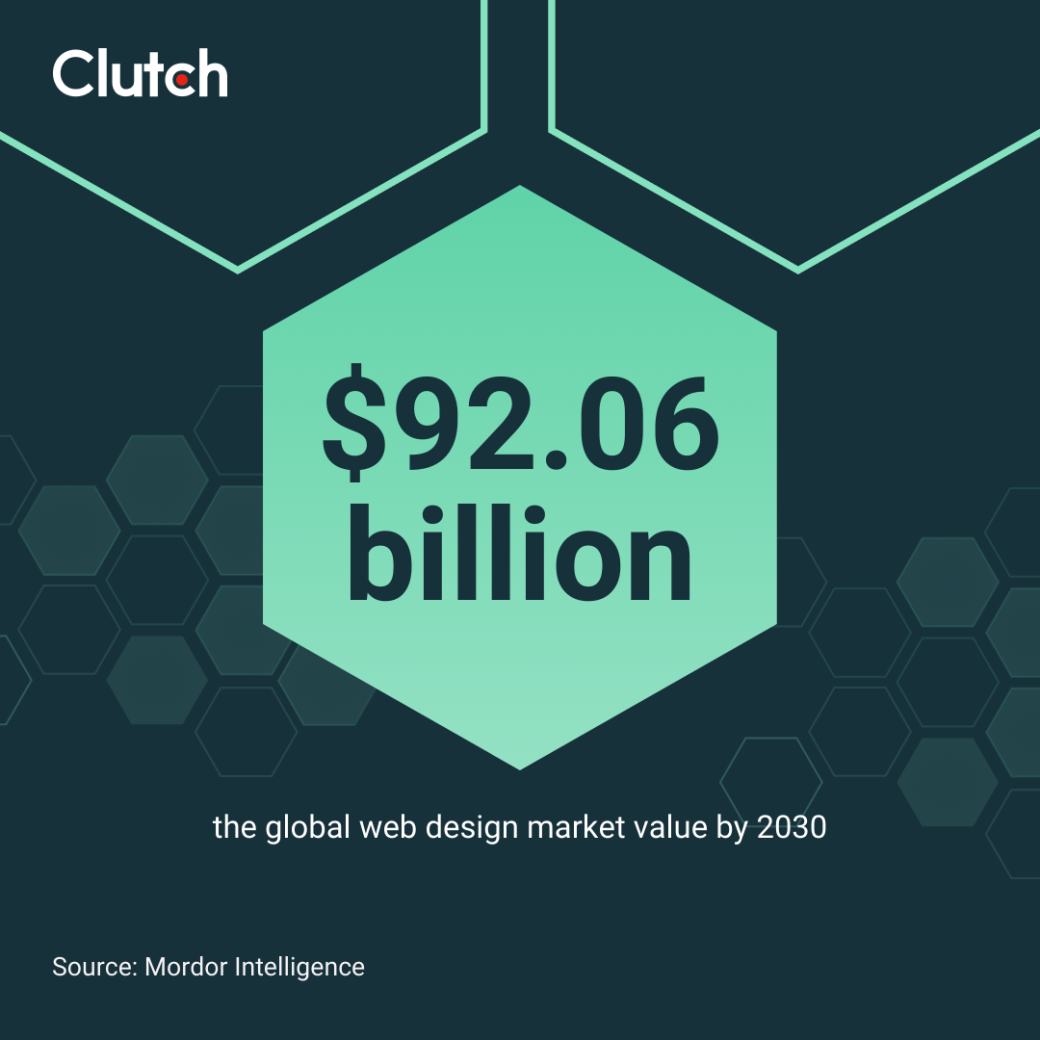
Web design services are seeing steady growth, but the numbers vary depending on who’s reporting. Some estimates put the 2025 market at $61.23 billion, up from $56.03 billion in 2024. Others expect it to reach $92.06 billion by 2030 or as much as $112.59 billion by 2032. That puts growth somewhere between 9% and 11% each year. It’s all solid momentum, regardless of the model.
The U.S. still leads the market, valued at $47.4 billion, making it the largest national share in the industry. But Asia is catching up fast. One report from Google and Temasek suggests Southeast Asia’s internet economy could hit $300 billion in 2025, fueled by growth in online shopping, mobile services, and digital platforms. As more companies in the region move online, web design is playing a larger role in customer experience.
In Europe, growth is more gradual. Markets like Germany, the UK, and France are investing in better design, not just for aesthetics, but for legal reasons. GDPR and accessibility regulations are pushing firms to upgrade websites with compliance in mind, creating more demand for designers who understand those requirements.
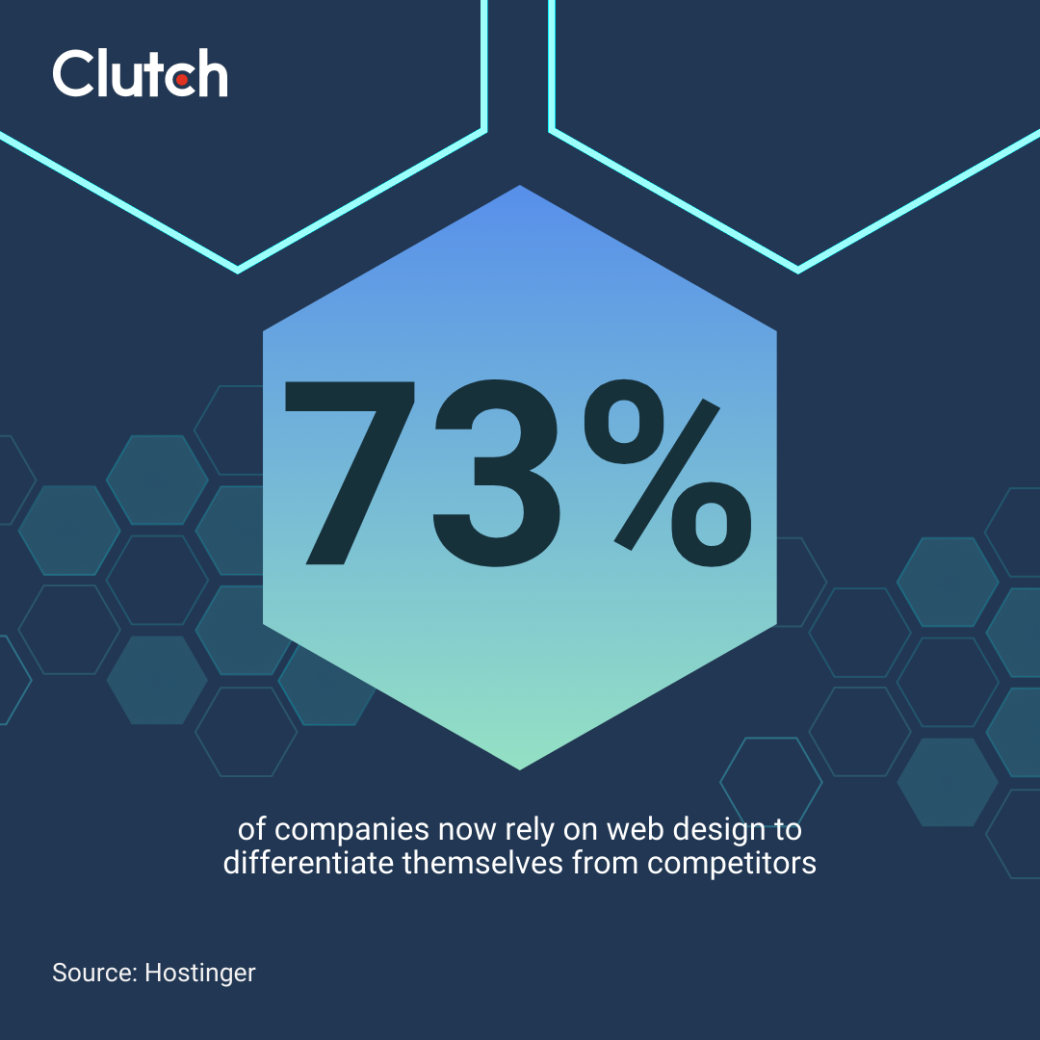
Web design maturity is rising. 73% of companies now rely on design to differentiate themselves from competitors, and enterprise clients increasingly expect measurable performance from their design investments.
This demand is mirrored in the B2B space. According to BigCommerce, 90% of B2B buyers expect websites to deliver consumer-grade digital experiences: meaning intuitive design, mobile responsiveness, and personalized content.
E-commerce continues to lead in volume. There are between 10 and 25 million e-commerce websites online today, competing for visibility in a market valued at $3.3 trillion. That number is expected to rise to $5.4 trillion by 2026, which is helping drive investment in scalable and conversion-optimized design.
Other industries are catching up. Sectors like healthcare, education, and financial services are increasing web design budgets, often out of necessity. These verticals have specialized compliance needs and require more intentional user experience design, especially for accessibility, data security, and multichannel functionality.
Geographic usage patterns point to more global opportunities. China alone has over 1 billion internet users, roughly three times the U.S. total. This user base is increasingly mobile-first and digitally active, which creates fertile ground for expansion, especially among service providers targeting Asia-Pacific clients.
The web design services industry remains highly fragmented, with over 203,000 active businesses in the U.S. alone and no dominant market leader. In this environment, specialization and regional relevance often matter more than scale.
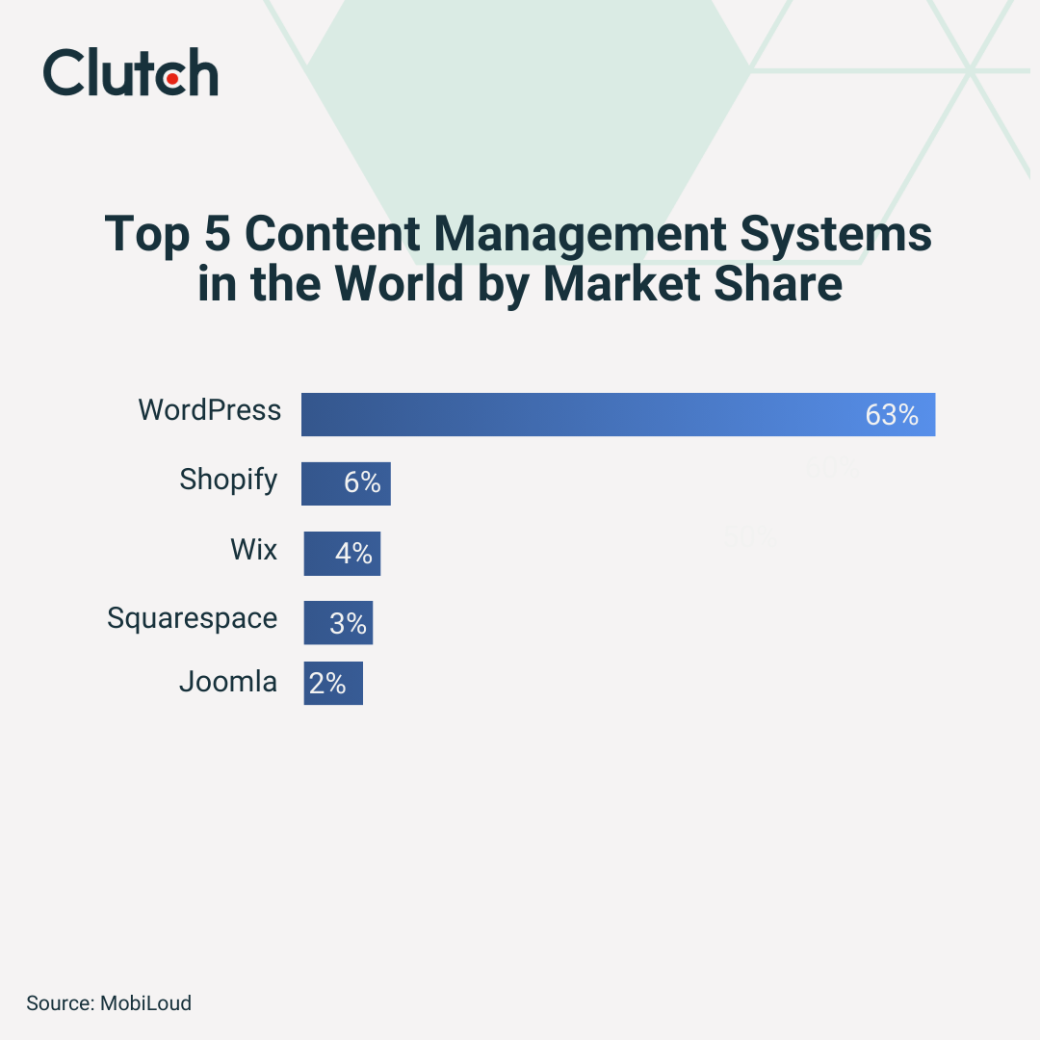
That fragmentation also creates space for different types of players. Large full-service agencies compete alongside boutique firms and freelancers. On the platform side, WordPress is the top CMS overall, but Wix leads the simple website builder market, followed by Squarespace. In e-commerce specifically, Wix Stores and Squarespace hold 16% and 11% of the market, which shows the growing demand for low-code tools.
The market is also consolidating. In Q1 2024 alone, technology services M&A reached $125 billion. These deals are being driven by digital demand, cross-market expansion, and pressure to integrate design, development, and analytics.
Some acquisitions are especially strategic. In early 2025, Accenture acquired Yumemi, a Tokyo-based digital product studio, bringing over 400 design professionals into its fold. Moves like this show that design is a capability that major firms are willing to buy to stay competitive.
Despite the volume of players, client acquisition still comes down to relationships. One study found that 80% of small agencies rely on referrals to win business, signaling that trust and word-of-mouth still carry more weight than big ad budgets or national scale.
The web design industry is being rebuilt in real time. Between AI breakthroughs, mobile-first expectations, and new ways of building for the web, design teams are rethinking what’s possible and what’s worth prioritizing. These three trends are shaping how the work gets done, who’s doing it, and what clients now expect from a modern website.
AI is now the engine behind much of the design work. In 2025, 93% of web designers report using AI tools, and that number is only going up. For many agencies and freelancers, it’s become central to how projects get done.
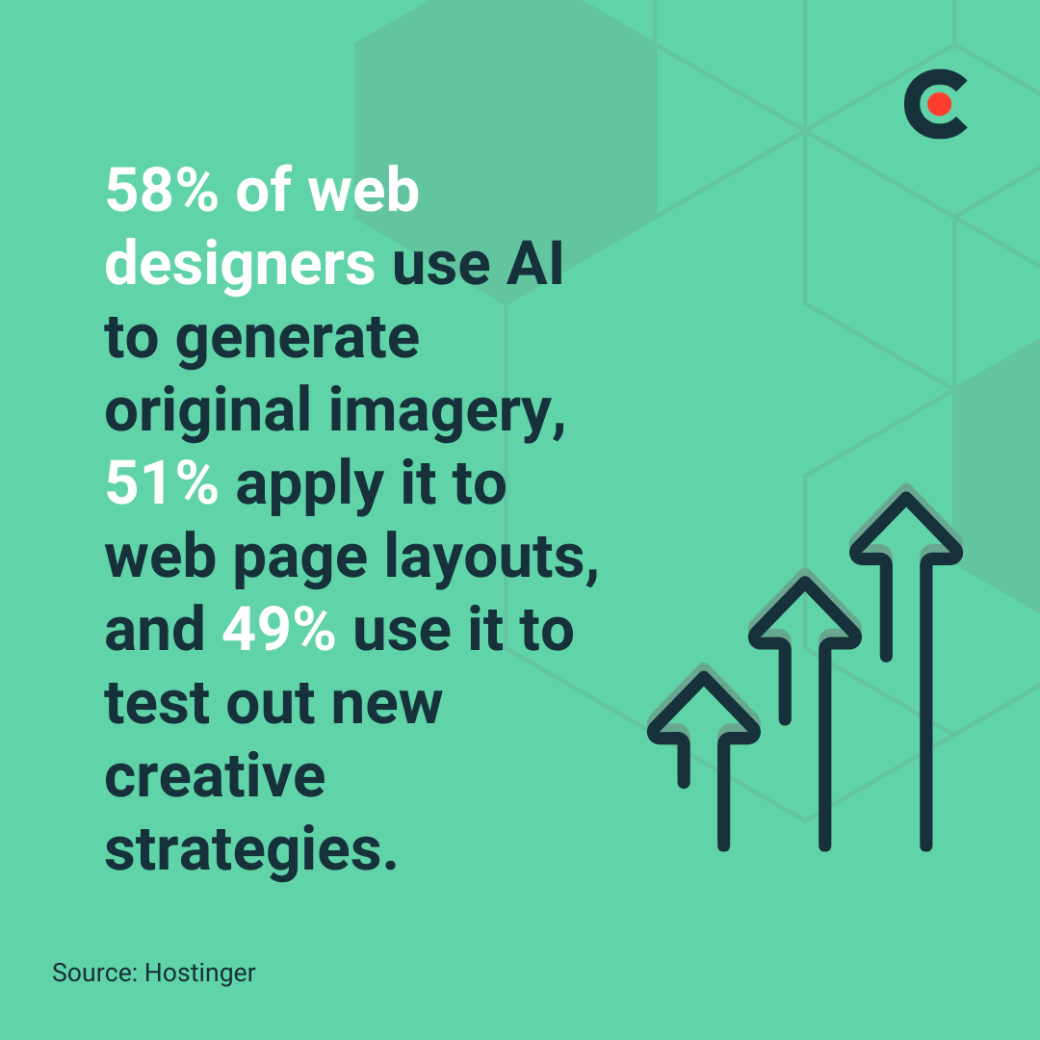
Designers are applying AI at multiple stages of the process. 58% use AI to generate original imagery, 51% apply it to web page layouts, and 49% use it to test out new creative strategies. On the development side, 81% of engineers say AI makes them more productive, with 82% actively using AI for writing or reviewing code.
We see AI as a set of tools that enhance what we do, but they are not driving the creative direction. They allow our team to move faster in early stages and remove friction in routine tasks, but the real value still comes from strategic thinking and human-led design.
Boyd Roberts, Group Director
Emote Digital
Client acceptance has caught up, too. Today, 55% of designers say their clients support the use of AI in design workflows, which is a major shift from just a few years ago.
The speed benefits are only getting more dramatic. By 2027, AI systems may match or exceed human coders, with the potential to execute development tasks up to 30 times faster. As timelines tighten and budgets stretch, AI is quickly becoming one of the most valuable assets in the design toolkit.
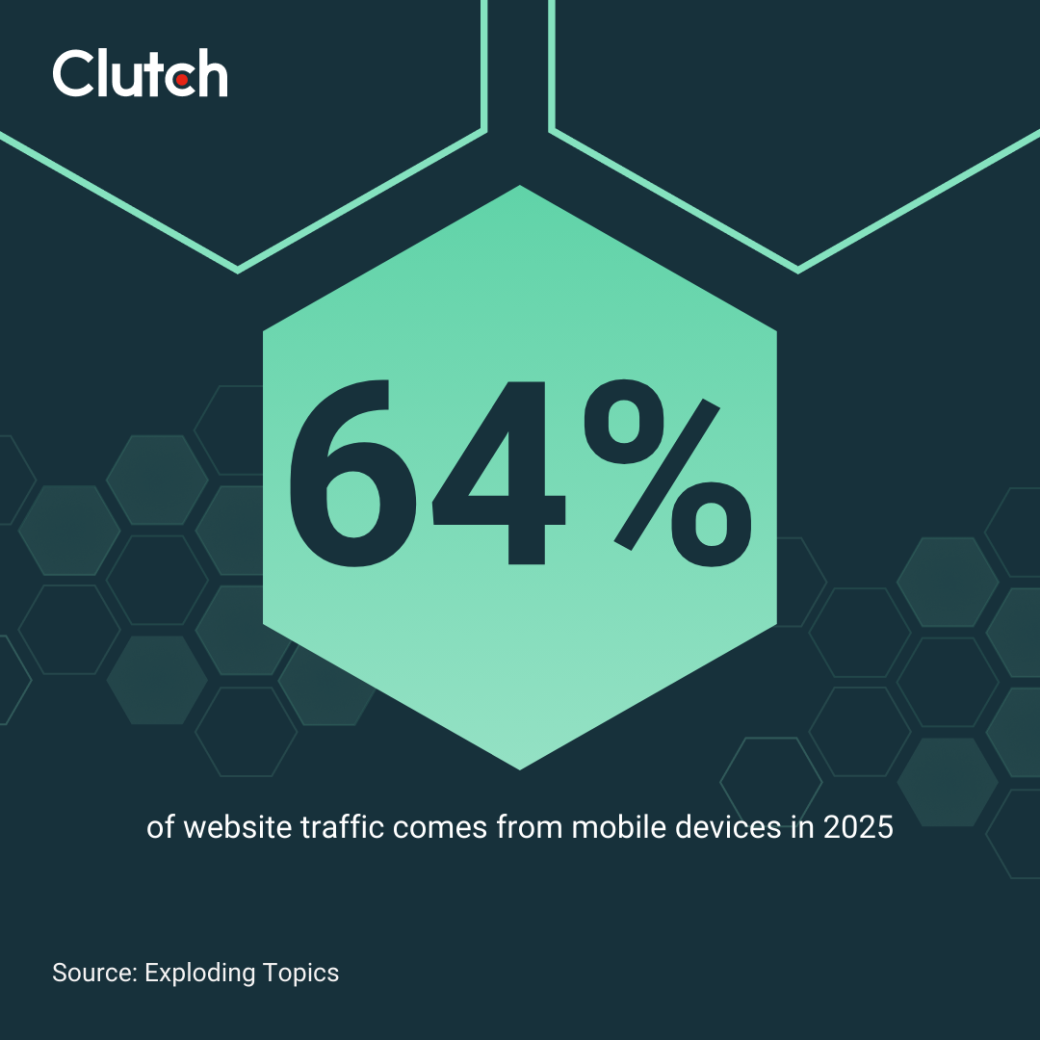
Most digital activity now happens on a phone. In 2025, 73% of e-commerce revenue is coming through mobile devices, and 64% of all web traffic is mobile-driven. With 77% of searches starting on phones and 90% of sites using responsive frameworks, mobile performance has become the baseline for usability and reach.
That performance has a real impact. Websites built for mobile see 11% higher conversion rates, and users engage 15% more with designs that respond fluidly to their screen size. But mobile expectations are also tougher. If a page takes 10 seconds to load, there's a good chance half the users will leave: a loss that costs companies $2.6 billion a year in revenue.
Clutch’s 2025 survey found that 29% of online shoppers cite slow-loading websites as one of their top frustrations, and 19% say complicated checkouts are enough to drive them away. Those pain points are magnified on mobile, where users expect speed and simplicity from the first tap to the final purchase.
We have been pushing mobile-first design as a default for years, but more recently we have been building service offerings around performance and conversion on mobile specifically. For ecommerce clients especially, improving mobile UX has had a direct correlation with better sales. Cleaner UI, better load times, and simplified checkouts tend to deliver measurable impact. It is not unusual to see conversion uplifts between 15 and 30 percent when we fully optimise the mobile journey.
Boyd Roberts, Group Director
Emote Digital
To keep up, design teams are rethinking how they approach speed and usability. Google’s 2024 Core Web Vitals update introduced Interaction to Next Paint (INP) as a new standard for responsiveness. The bar is high – only 47% of desktop sites pass the test.
Some teams are turning to Progressive Web Apps (PWAs) to close the gap. These app-like experiences are gaining ground fast, with the PWA market projected to grow from $3.53 billion to $21.44 billion by 2033. The results are promising: travel companies using PWAs have seen a 3x jump in conversions and 180% improvement in retention.
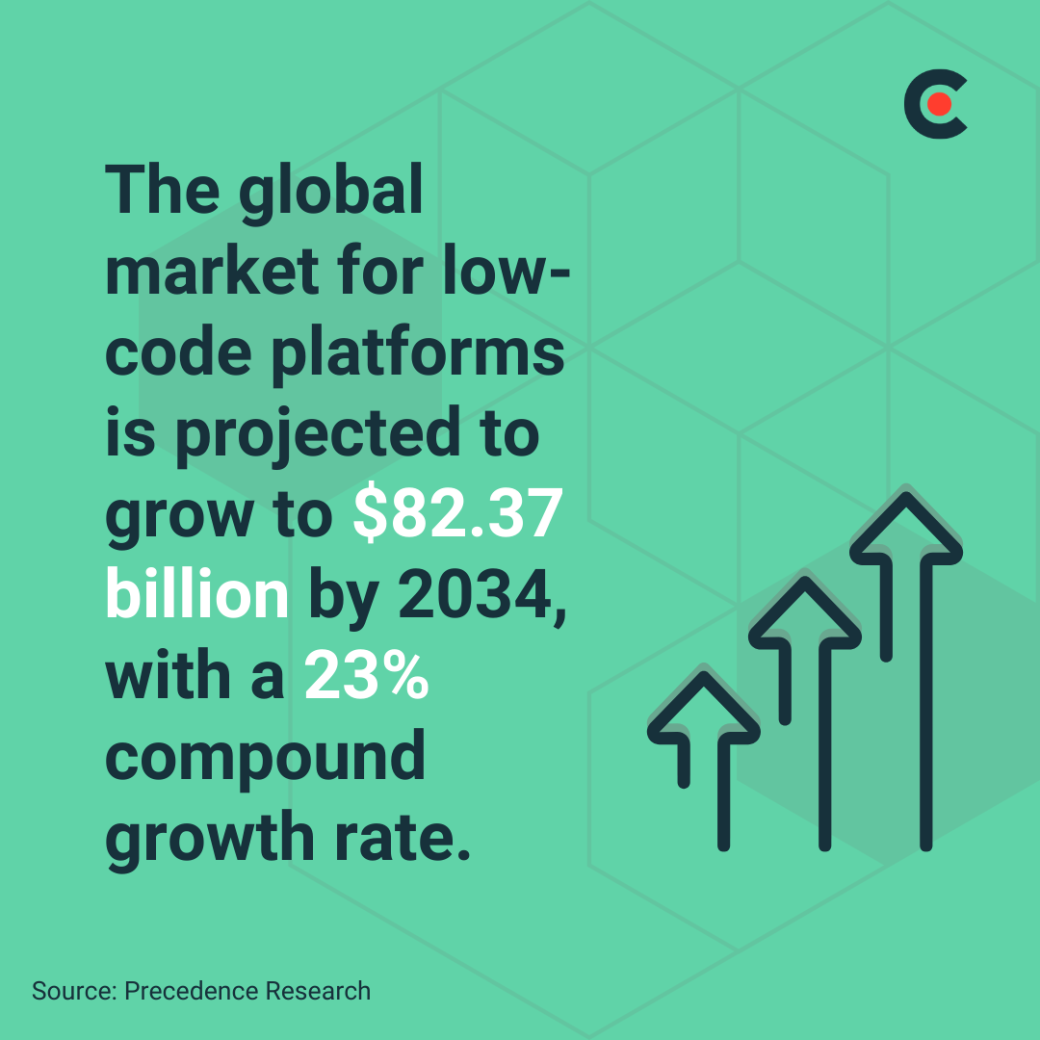
Low-code and no-code tools are changing how digital experiences get made and who gets to make them. In 2025, the global market for these platforms is worth $12.86 billion and projected to grow to $82.37 billion by 2034, with a 23% compound growth rate.
The shift goes well beyond revenue. According to recent estimates, 70% of new apps will be built using low-code or no-code technologies this year. By 2026, 80% of non-IT professionals are expected to participate in the development of software – a change that’s reshaping workflows inside businesses and agencies alike.
Website builders like Wix (45% market share) and Squarespace (18%) are leading in accessibility and price. For many small teams, these tools offer an affordable entry point with plans ranging from $16 to $159 per month compared to the $7,139 average monthly cost of working with an agency.
But that gap doesn’t spell the end of professional design services. The firms that thrive are those that focus on outcomes. A well-built user experience can increase conversions by up to 400%, and good interface design has been shown to double conversion rates. It’s that kind of ROI that helps agencies justify premium pricing, even in a world full of templates.
Web design is growing, but so are the risks. Between rising compliance costs, economic pressure, and a deepening talent gap, many agencies and in-house teams are under strain. These are the three biggest challenges shaping how firms operate in 2025:
Compliance is eating into margins, and the price of falling short keeps rising. Data privacy regulations like GDPR and CCPA are top of mind, with Fortune 500 companies spending an average of $1.1 million annually on GDPR alone. Small and mid-sized firms aren’t exempt; their costs typically range from €1,000 to €50,000 per year, depending on geography and traffic volume.
CCPA fines can get steep fast. Each intentional violation carries a $7,988 penalty, and even minor errors can add up. One case involving a misconfigured cookie banner reportedly cost Blinkist around $300,000 in lost revenue.
Web accessibility compliance is an equally urgent challenge. In 2023 alone, 4,605 accessibility lawsuits were filed (a 42% increase!) with more than 400 lawsuits filed in January 2025 alone. Penalties for first-time ADA violations can start at $55,000, while repeat offenses can cost up to $150,000. Most settlements stay under $10,000 when resolved quickly, but reputational risk remains high.
There’s also a revenue cost to getting it wrong. 71% of users with disabilities will leave a site that isn’t accessible. That represents a lost opportunity among the 1.3 billion people globally living with a disability or potential clients who value inclusivity.
We see accessibility as more than a legal requirement. It’s part of good UX. If someone can’t use your product, it becomes a business problem.
Mykola Bilous, CEO
Stubbs
Even with demand rising, many web design firms are operating on thinner margins. According to Resource Guru, healthy agencies maintain about a 20% net margin, with 15–30% considered the optimal range. But persistent inflation and cautious clients are tightening budgets. As Design Week notes, budgets are down across the board, leaving agencies to absorb more costs while delivering the same output.
A bigger issue is that many agencies lack visibility into where their money is going. Only 49% track revenue per client, and just 24% track revenue per employee, making it harder to adapt pricing or identify inefficiencies.
Cybersecurity adds another layer of financial risk. The average global cost of a data breach hit $4.9 million in 2024, and in the U.S., that number jumps to $9.44 million per incident. Understaffed teams are especially vulnerable: IBM found that companies with severe talent shortages incur $1.76 million more per breach than those fully staffed. Conversely, firms that adopt AI or automation tools for security save an average of $2.22 million, highlighting the ROI of proactive investment, even in lean times.
The hiring crunch in tech hasn’t let up, and in web design, it’s getting worse. According to Robert Half, 95% of tech managers say they’re having a hard time finding qualified people. In the U.S., developer hiring is supposed to be up: 8% growth is projected through 2032, according to federal labor data. But it’s not solving the problem. Teams that can hire are still struggling to keep up with the pace of change. 65% of tech leaders report internal skills gaps, and 62% say those gaps are worse than they were a year ago.
And it’s not just talent. It’s pricing pressure, too. DIY platforms like Wix and Squarespace now offer site-building tools priced between $16 and $159 per month. That kind of accessibility puts pressure on agencies to prove their value, especially when compensation costs are climbing. In 2025, the median U.S. salary for a web developer is $90,930, and digital interface designers earn $98,090. It’s getting harder to stay profitable while keeping talent and technology up to date.
The talent crunch isn’t new to us - we saw it coming years ago. As top talent moved to big firms, the remaining market pool became less efficient. The key is long-term thinking: keep refining your hiring and retention practices continuously.
Volodymyr Katanskyi, Founder and CEO
Startup Craft.io
Web design is shifting from execution to orchestration. The tools, platforms, and infrastructure behind modern websites are evolving faster than most teams can adopt them, and that momentum is only building. Here’s what to expect over the next few years as new priorities and technologies reshape the industry.
In the near term, AI will become even more embedded in how web design gets done. By 2026, Gartner predicts that generative AI will reshape 70% of the design and development effort for new web apps. That change is already underway, especially among firms that need to scale fast without increasing headcount.
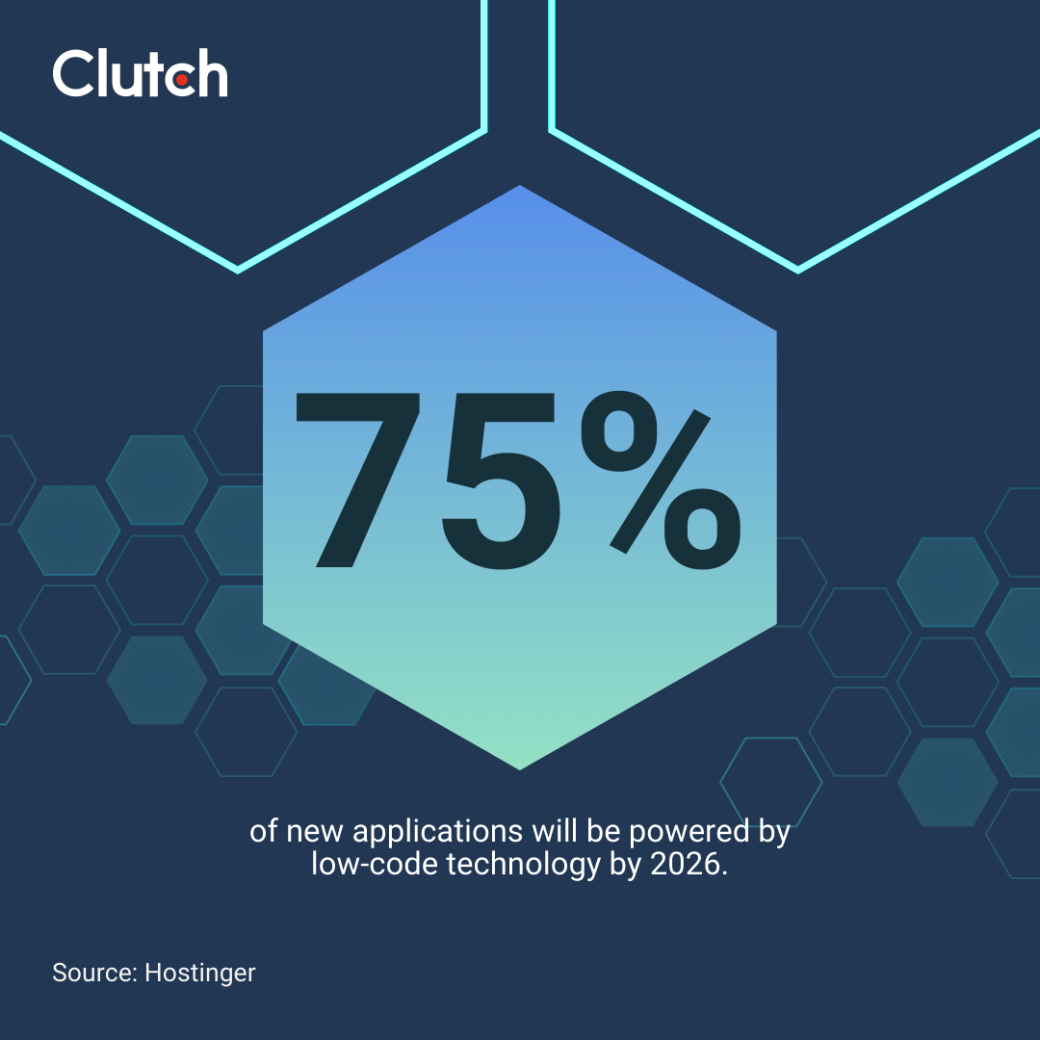
Low-code tools are also maturing. By 2026, low-code platforms will power 75% of new applications. Another estimate suggests that 65% of all app development has already moved in that direction, marking a real tipping point in how digital products are created.
Other interfaces are catching up, too. Voice UI is becoming more mainstream, with the voice user interface market expected to hit $76.13 billion by 2030, growing at a 20% CAGR. As conversational search and accessibility become bigger priorities, voice-native experiences are likely to show up more often in design briefs.
Infrastructure is changing alongside front-end trends. Edge computing is transforming performance standards. In the U.S., utility companies are using private LTE and MEC nodes to modernize grid operations. By 2025, 75% of enterprise-generated data is expected to stay near its source. In Canada, edge-based networks are being deployed to support autonomous systems in mining and energy where traditional latency is too risky.
Environmental impact is coming under more scrutiny, too. The internet now accounts for nearly 4% of global carbon emissions, which is pushing buyers and providers alike to reduce load times, minimize asset bloat, and adopt cleaner hosting. That pressure is translating into real investment: the green tech and sustainability market is on track to hit $28.13 billion by 2025, growing at a 23% CAGR.
Accessibility is becoming more urgent as well. With lawsuits on the rise, countries like Canada are raising the stakes. Failure to meet accessibility requirements can now carry penalties as high as $250,000, making proactive compliance a must, not a nice-to-have.
Looking further ahead, AI is expected to take an even bigger leap. By 2027, AI systems may exceed human coding ability, with some estimates suggesting development tasks could be completed up to 30 times faster than they are today. That kind of speed will fundamentally change how agencies price, plan, and staff design work.
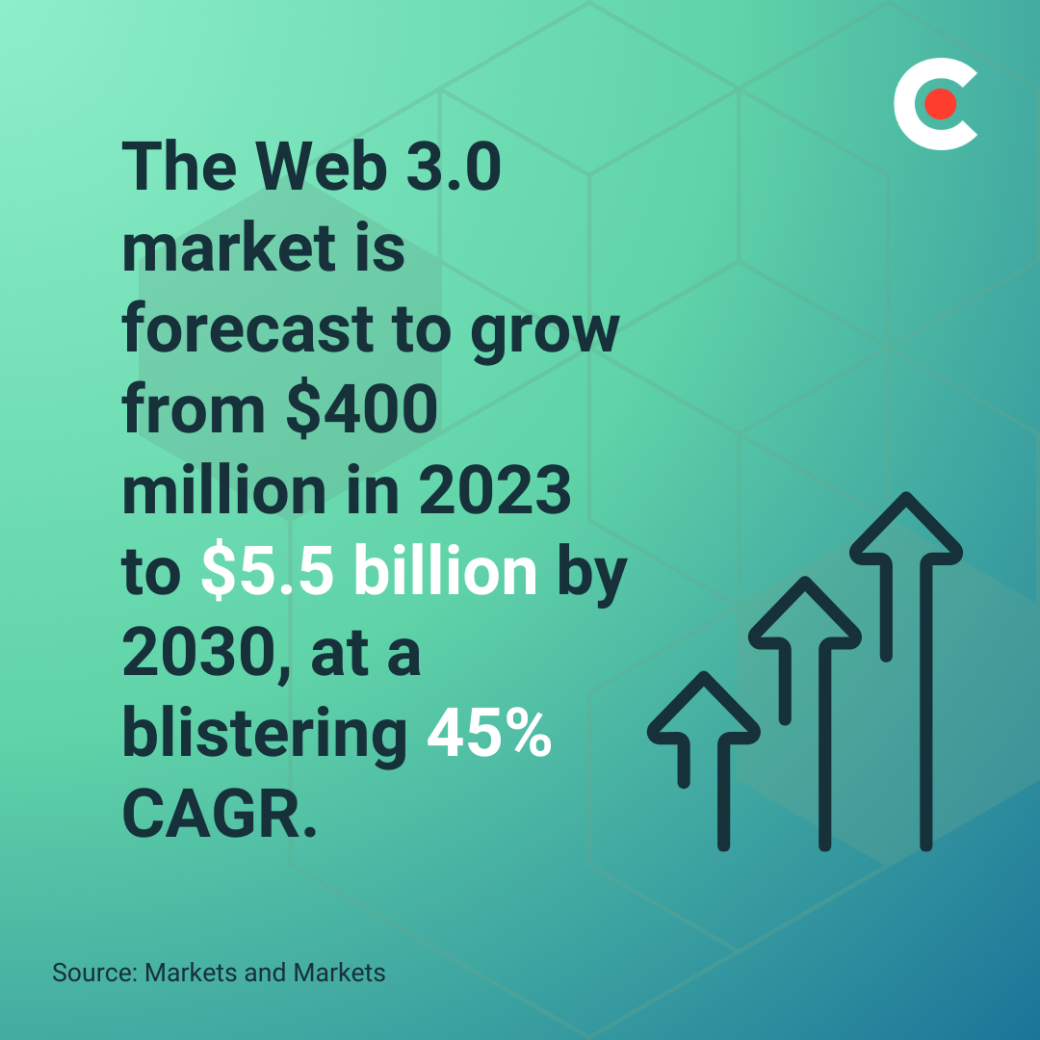
Other emerging technologies are rising in parallel. The Web 3.0 market is forecast to grow from $400 million in 2023 to $5.5 billion by 2030, at a blistering 45% CAGR. What that means for web design is still unfolding, but immersive experiences, decentralized platforms, and blockchain-backed interfaces will likely play a larger role in user experience strategy.
Meanwhile, the business side of web design will continue to consolidate. The global market is projected to reach $92.06 billion by 2030, with larger firms absorbing niche players to meet demand for full-service capabilities. At the infrastructure level, that demand is changing fast: 95% of new workloads will be cloud-native by 2025, pushing providers to rethink legacy architectures and support more agile frameworks.
Edge computing will be a major part of that shift. The market is expected to grow to $424.15 billion by 2030, with 74% of global data being processed outside of traditional data centers. That decentralization will influence how performance, storage, and real-time data are handled, especially for interactive or content-heavy websites.
Lastly, sustainability targets are reshaping long-term planning. The Green Web Foundation has called for a fossil-free internet by 2030, a goal that’s already influencing how hosting platforms, design systems, and server infrastructures are being architected. What’s changing isn’t just what websites look like – it’s how they’re built from the inside out.
The web design landscape is changing fast, and success in 2025 depends on how quickly different players adapt. Agencies, enterprises, and platform providers each face their own pressure points. Below are practical, research-backed recommendations for navigating what’s next.
Agencies that haven’t adopted AI tools are already behind. 93% of web designers are now using AI to support or streamline their workflows. The most successful shops are positioning AI not as a shortcut, but as a productivity enhancer, freeing up time for deeper creative thinking and more complex client work.
Proprietary prompts and toolkits are also becoming competitive assets. Teams that can systematize how they use AI – without compromising creative integrity – are better able to scale. And with healthy web design agencies operating at 20% net profit margins, efficiency is essential to staying viable.
Specialization is becoming a differentiator. In a fragmented market, agencies that focus on specific sectors or technologies can command premium pricing. UX, in particular, offers a strong upside: research shows that every $1 invested in UX yields a $100 return. Positioning UX as a measurable performance lever, not just a design add-on, can make all the difference.
There’s also an opportunity in partnerships. By working closely with platforms like AWS, Microsoft, and Google, agencies can unlock co-marketing budgets and certifications that expand reach and credibility.
And finally, accessibility. With 96% of websites failing automated accessibility checks, agencies that build compliance into their process can stand out and protect clients from legal risk in the process.
Enterprise teams should approach web design as a lever for long-term transformation, not just a branding exercise. That starts with budgeting. Most digital leaders recommend allocating 15–20% of total digital spend to emerging tech. This includes low-code platforms, which are now used in 70% of new app builds.
Mobile-first strategy also needs to stay front and center. With 73% of e-commerce revenue coming from mobile, companies must prioritize responsive performance and speed. It’s also time to explore voice UI: a growing space projected to reach $76.13 billion by 2030.
Sustainability planning is another key frontier. As the internet’s environmental footprint draws scrutiny, many enterprise teams are aiming for carbon-neutral operations by 2030. Those goals will shape everything from hosting decisions to design frameworks.
Some companies may consider insourcing web redesigns to save money, and while that can reduce costs by 50% or more, it can also backfire. According to Rick Whittington Consulting, internal projects without the right expertise often lead to poor outcomes, requiring costly fixes later on.
Accessibility needs to be treated as essential infrastructure. 1.3 billion people worldwide live with a disability, and failing to meet standards can result in fines ranging from $55,000 to $150,000. Getting this right is both a business imperative and a brand trust issue.
And finally, enterprises should start preparing for Web3 integration. With the market expected to hit $49.1 billion by 2034, now is the time to begin evaluating use cases for decentralized applications and blockchain-backed user flows.
Tech vendors powering the design ecosystem are facing new demands. The most urgent: move beyond point solutions. With 65% of companies citing internal skills gaps, platforms that offer comprehensive workflows will have a clear edge.
AI-driven development is a prime focus area. By 2030, the market for AI development tools is projected to reach $7.19 billion. Those tools must be easy to use, especially since 80% of non-IT professionals are now building apps and digital experiences on their own.
Sustainability is a design constraint as well. 30% of large organizations say GDPR compliance has slowed their ability to innovate, but platforms that help track, measure, and optimize for privacy and emissions will become increasingly valuable.
Security must be prioritized, especially as AI becomes more embedded. Companies using automation and AI in their cybersecurity workflows are saving an average of $2.22 million per data breach. The case for proactive investment is clear.
Edge computing is another fast-moving space. The global market is expected to hit $424 billion by 2030, and user expectations are rising. Developers are targeting under 5 millisecond response times, especially for real-time apps and interactive tools.
And as Web3 adoption accelerates, vendors need to build systems that support decentralized protocols without alienating teams still using legacy web infrastructure. With the Web3 market growing at a 44% CAGR, now is the time to ensure long-term compatibility.
Web design teams in 2025 are balancing speed, standards, and shifting tech. AI is reshaping workflows, while users expect seamless, accessible experiences. The job now is staying focused: whether that means improving performance, embracing low-code, or preparing for what Web3 might bring.
If you're looking to move fast and build smart, explore top-rated web design agencies on Clutch to find a partner who can help bring your next digital experience to life.