7 Tips For Designing Web Forms
Clutch surveyed 502 web users about what they actually want from form design. Here are 7 data-backed UX principles that reduce abandonment and improve...
Updated February 17, 2026

AI has become the technical muscle helping design agencies build the next generation of websites. Could it help you reach a positive ROI faster on your next web project?
The vast majority of web designers think it can – as 93% now use AI web design tools as part of their process. It’s a trend that’s likely to grow as technology becomes more advanced.
But how does the website design process work when using artificial intelligence, exactly? What are the benefits, and how could they impact your project timelines, costs, and outcomes? This guide covers everything you need to know about how AI is being used in web design projects.
Looking for a Web Design agency?
Compare our list of top Web Design companies near you
Every design agency has its own strategy for leveraging the power of AI. In general, you can expect it to support your web development goals in any of the following ways.
First, agencies use AI to speed up repetitive parts of their web design process. Christopher Baker, Managing Director at CreativeWeb, explains, "A lot of what we do when building a website comes down to communication, both written and verbal. AI helps us handle that more effectively. For example, if we are sent a 20-page deck of information for a pitch, AI allows me to summarise it, pull key points, ask questions, and digest it much faster."
Teams also use AI to speed up processes such as:
This leaves design teams with more time for every client.
Teams use AI tools to support quantitative user research. For instance:
These processes save time by finding complex solutions more quickly. Nicola Catton, VP of Delivery of XWP, says, “We extensively use AI for helping with information consolidation and retrieval,” during the discovery stage to help the team “consolidate, deduplicate and digest the (often varied) information” provided by clients.
Baker adds, "We also use it for persona generation, creating more in-depth persona breakdowns during discovery."
Teams also use AI tools when performing qualitative user research. For example, an LLM could help you create the ideal list of survey questions for getting into your target audience’s mindset. You could get more usable information from interviews, write more impactful case studies, and improve your marketing performance.
Ultimately, web design agencies use AI to understand their clients' target users better. Leveraging that information, they can design more effective websites, helping businesses increase traffic and sales in the process.
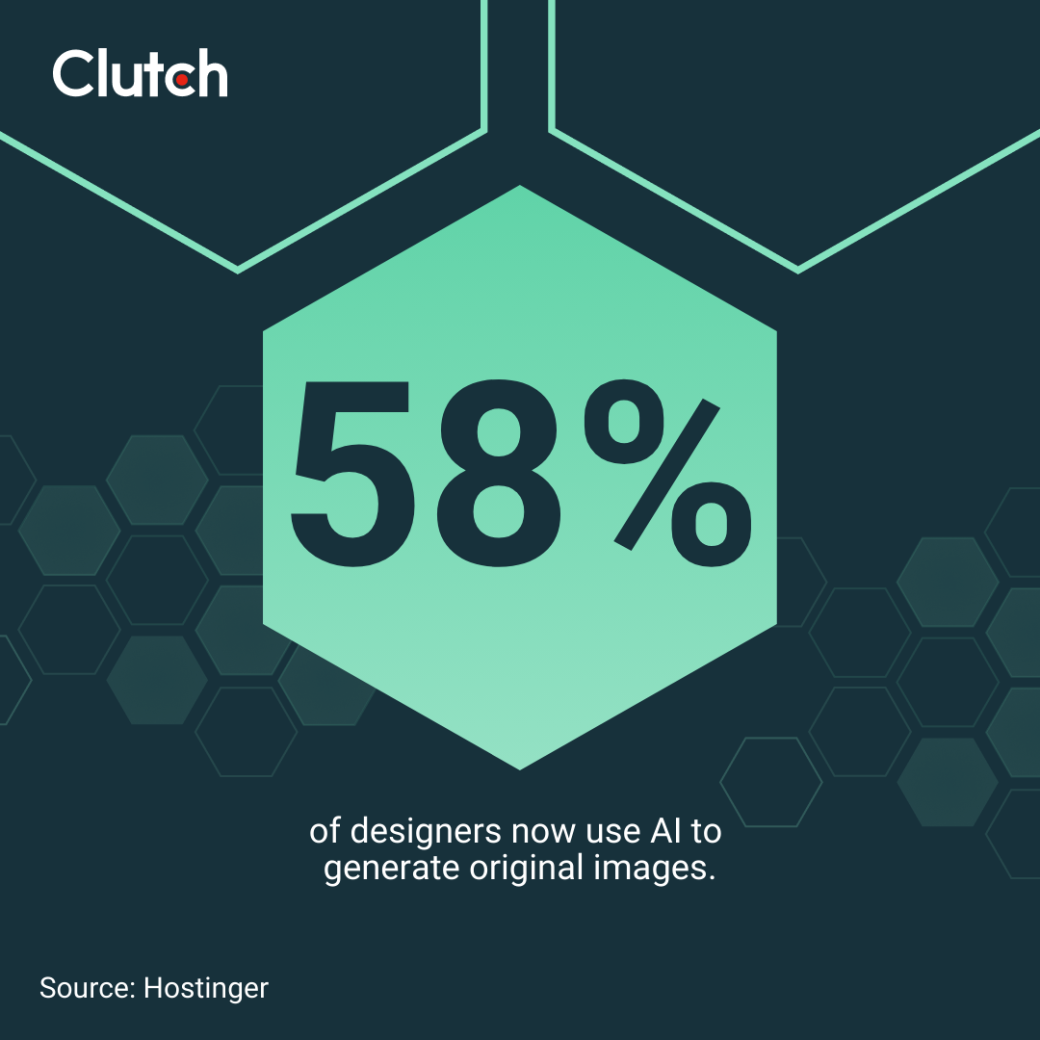
AI has also become very useful for conceptualizing visual elements on websites. Researchers say 58% of designers now use it to generate original images. Utilizing AI for initial visualizations could save a substantial amount of time and money.
For example, an agency can use an image generator to instantly create rough versions of the visual concept it's testing. It could speed through alternative ideas with instant asset generation, quickly arrive at the correct solution, and have more time to experiment with fresh approaches.
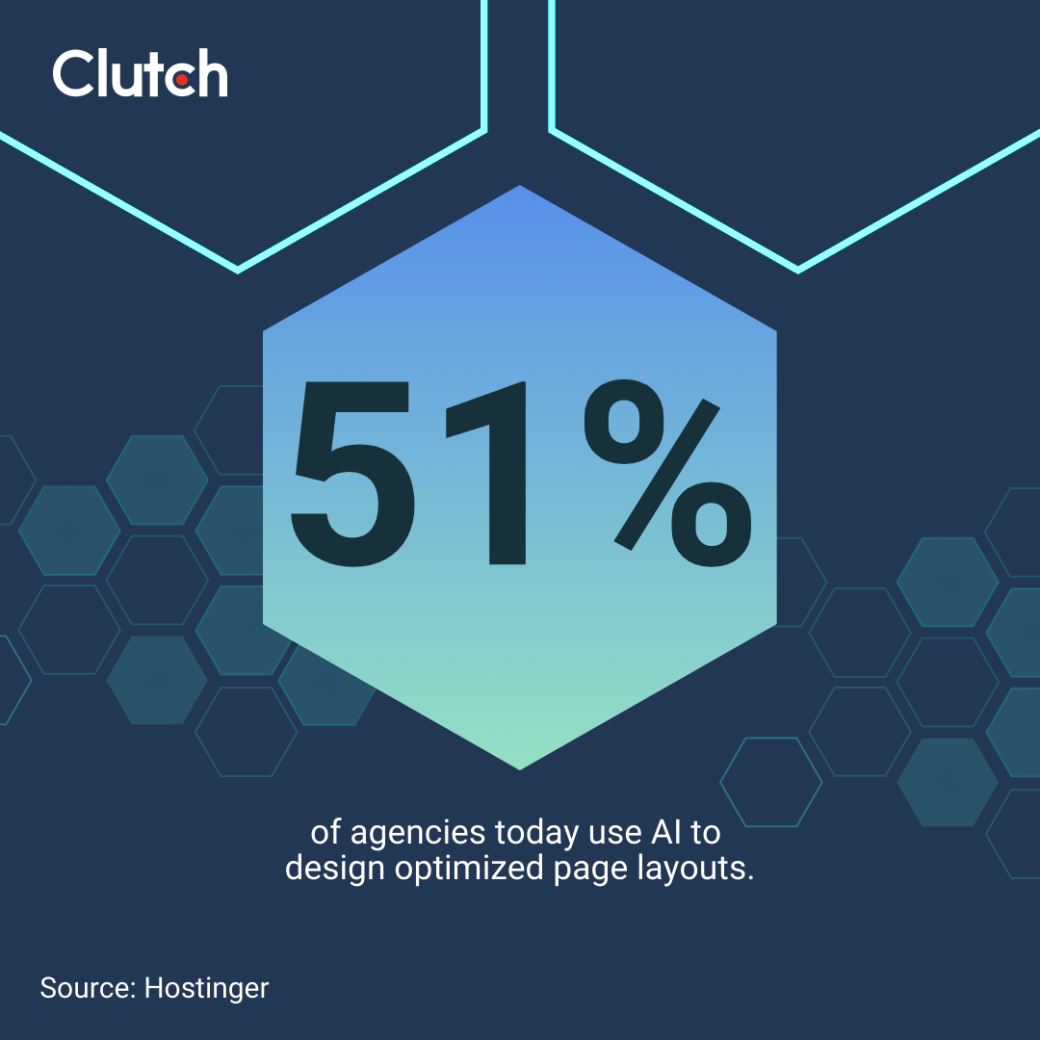
As well as visual concept testing, 51% of agencies today use AI to design optimized page layouts, which help to increase dwell times and clicks.
Teams use AI tools to create prototypes, which they refine over time through ongoing A/B testing. These help to solidify design choices earlier in the process, before heavy coding starts.
This is another example of how AI helps design teams operate more efficiently. Instead of going through rounds of manual trial and error, teams can leverage data-backed AI designs to get there almost immediately.
Another way teams are using AI is to help apply human-created designs across templates. Catton shares that their team uses AI “to streamline efficiency while keeping the creative process entirely human-led.” They do this by having the design led by their Product and Design team and then utilizing AI to roll out design decisions consistently across templates.
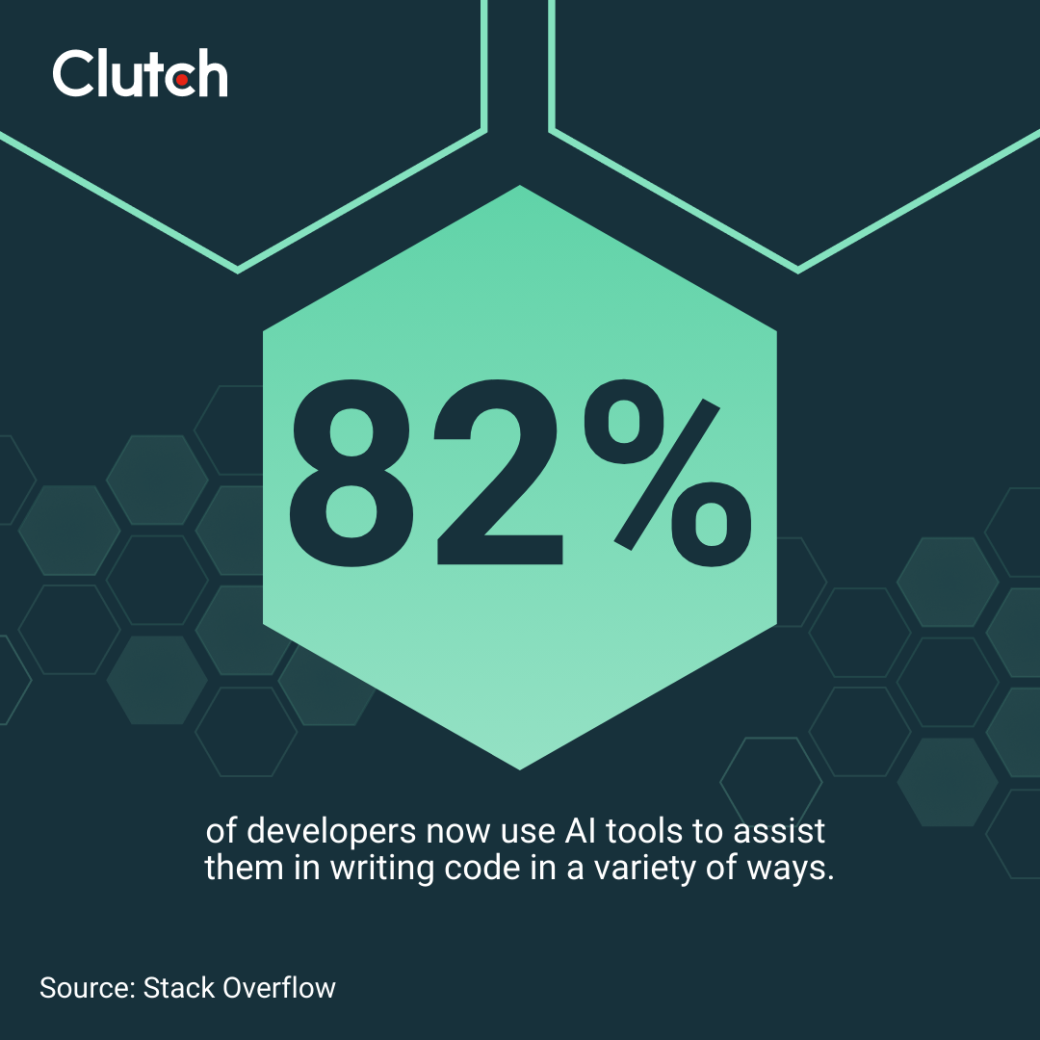
AI can also simplify or speed up the coding process across development phases. That’s why 82% of developers now use AI tools to assist them in writing code in a variety of ways:
That being said, Baker says, "In development, [AI] helps more with speed than anything else. It allows you to quickly get to the code or syntax you need, rather than hunting around for it." Ultimately, while AI can sometimes help you write original code, its main uses when it comes to coding today are tasks like double-checking syntax.
There's also a growing use of AI in the quality assurance arena. Predictive testing tools help today's design teams find and solve errors before they derail progress. They can help you keep post-launch issues to a minimum, speeding up the deployment process and helping businesses realize value as soon as possible.
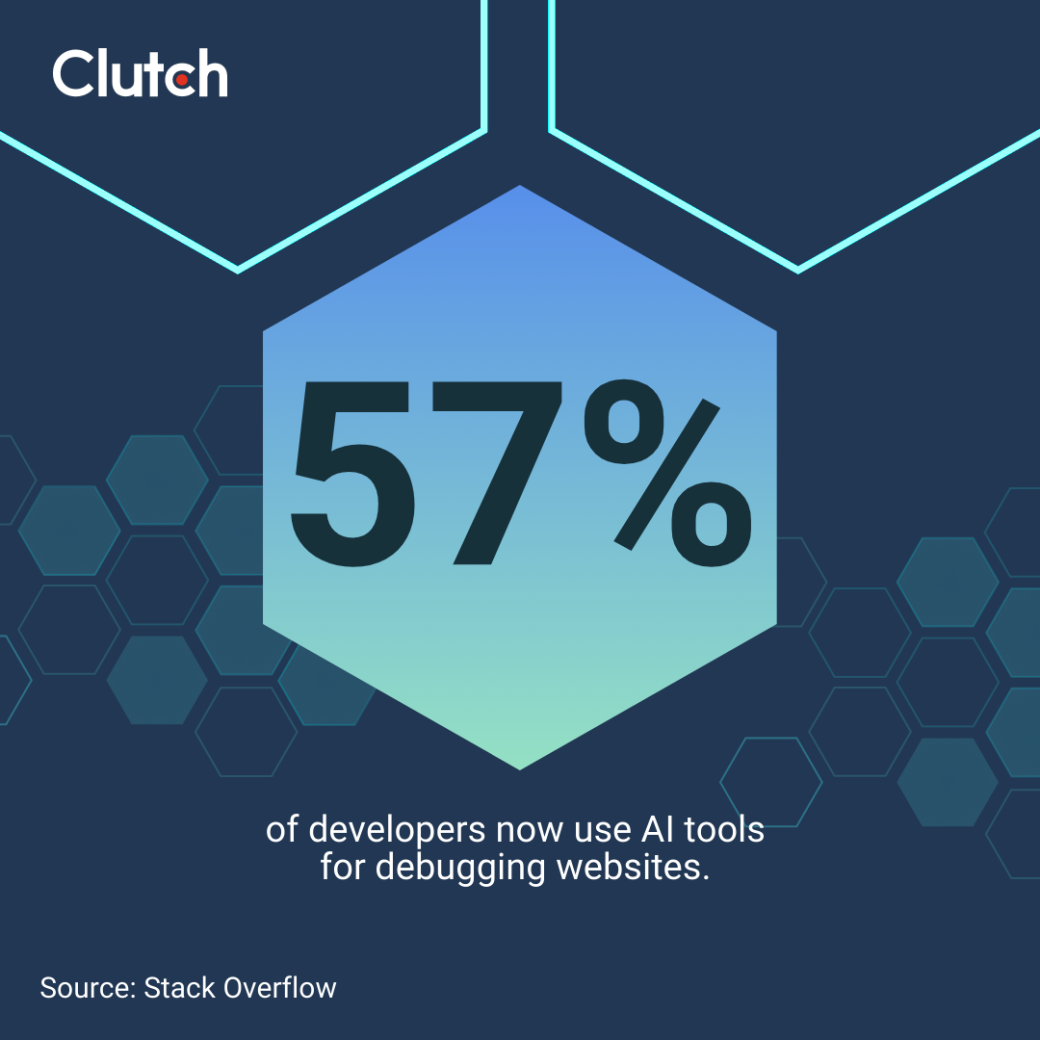
Human testing will still be important, as AI isn't entirely reliable yet. However, the tools can still be very valuable. Surveys show 57% of developers now use them for debugging, while 27% use them to test code.
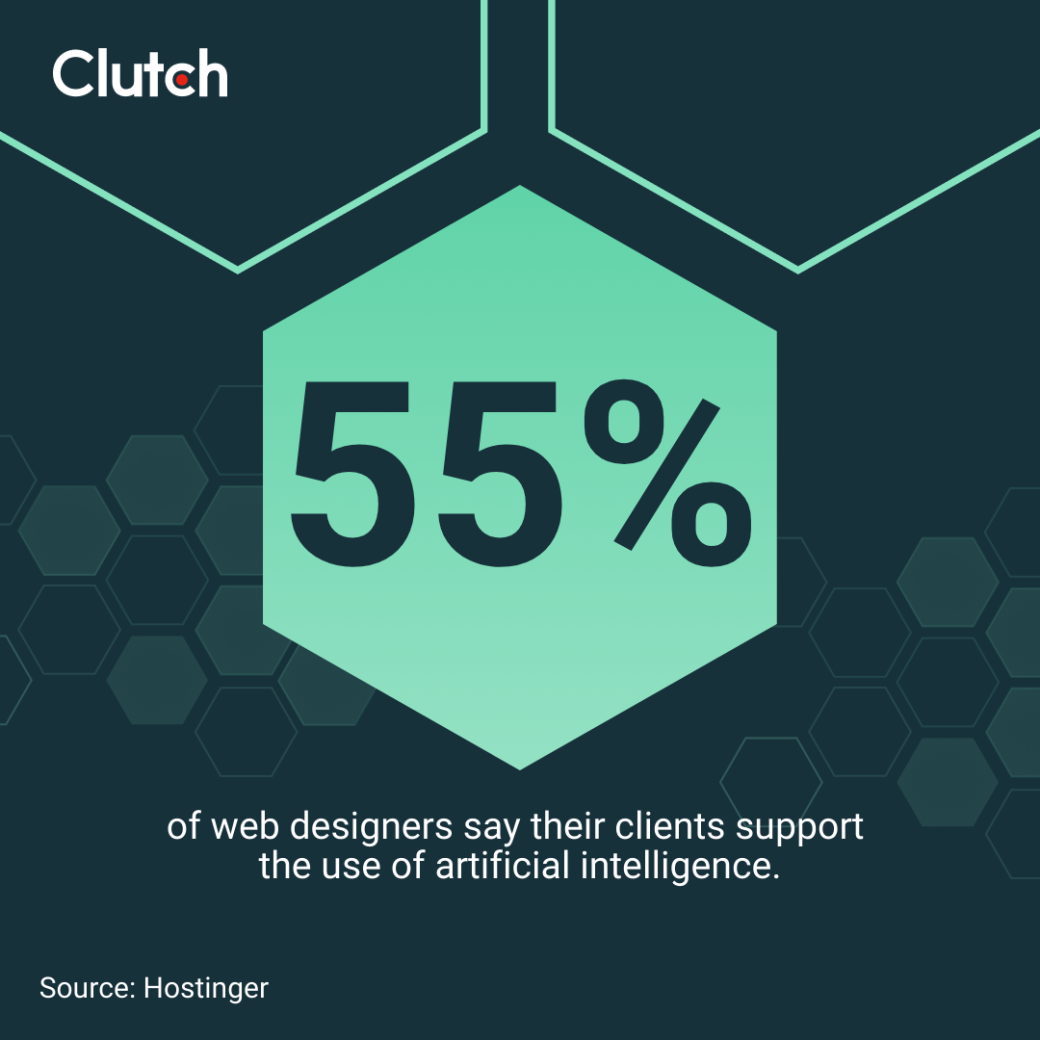
Web design professionals aren’t the only group expanding their acceptance of AI. As of 2025, 55% of designers say their clients also support the use of artificial intelligence. This represents a meaningful shift in public perception toward growing cultural acceptance of the technology.
In fact, Catton says, "It's becoming increasingly evident that clients expect us to be using AI to be more productive, whilst not taking away from the core of the quality of our delivery."

Note that AI website designers using the technology should be transparent about doing so upfront. This increases client trust. On the other hand, if a team uses AI without disclosure and the client only discovers it after the fact, the opposite tends to happen. Early transparency is a key step in helping clients feel comfortable with the use of artificial intelligence to gain the following advantages.
AI helps teams complete projects more quickly and more accurately. Estimates show it could increase coding speed by 30x as soon as 2027. For clients, that means better deliverables, fewer costly revisions, and improved quality.
For example, it might take a small web development team several weeks or months to design, code, and refine a client's website. That process could shrink significantly with the right AI tools to support admin, coding, debugging, and asset generation.
AI can also help you reach new creative heights. It gives you the freedom to experiment with fresh ideas without spending much time or money. As a result, clients get more innovative, customized, and accessible web designs that might have exceeded their budget without AI.
AI tools complement human creativity rather than replacing it. Instead of spending hours thinking through ideas, agencies can test them instantly with simple tools. This process helps teams reach the right decisions in a shorter period, allowing them to spend more time adding value elsewhere.
Ultimately, AI website builder tools help agencies get more done in less time. This can unlock hours of new labor availability, help teams meet tighter deadlines, and create more space for client communication and feedback. That's all good news for an agency's reputation and bottom line. More time for personalized interactions typically means better outcomes for the customer.
Catton explains, “AI is allowing us to focus our expertise on the areas that matter, and use AI to save time and money elsewhere. We think it's hugely important to gain production efficiencies for our clients, allowing us to focus our time on being strategic partners to them in the long term.”
Some agencies are more effective at using AI than others. If you're thinking of hiring out to help you unlock the benefits of AI in design firms, it's important to compare a few options before proceeding. But how do you know if you’ve found the right fit?
Asking the following questions can help you compare your options:
Baker recommends, "[using] caution when an agency suggests heavy AI usage, especially in website design. From what I have seen, there is no part of good design or development that can be properly replaced with AI. At best, it can help with speed and efficiency in certain parts of the process. If an agency is promoting AI too strongly, it is often more of a marketing angle than something that will benefit the client."
Note that the way an agency uses AI can impact its pricing, delivery timelines, and more. It’s worth being thorough when comparing agency options based on these criteria.
According to Gartner, 70% of web design will be shaped by generative AI by 2026. And according to some experts, AI systems could surpass human coding ability by 2027.
These trends show why AI-influenced websites are likely to become increasingly common as time moves forward. Future sites could have “always-on” AI constantly refining them over time as new user data comes in.
Obviously, AI’s role is expanding in the website development arena. But what does that mean ethically and creatively? For one, it doesn’t have to mean the end of human value. People will still play a vital role in helping sites appeal to other people. But the tasks they complete to do this could evolve.
Nobody can fully predict the future. But it's clear that AI tools will become increasingly important in website design and related fields as well. The agencies that succeed in this emerging era will be those that use AI most effectively.
Artificial intelligence for web design is already helping web developers create great websites for clients. That process should accelerate as the technology improves. This means AI is becoming more than a trend, instead forming the backbone of modern agency work.
With these changes, it's increasingly important to consider an agency’s AI capabilities before hiring. Clutch’s list of the top web design companies makes these comparisons easier.