7 Tips For Designing Web Forms
Clutch surveyed 502 web users about what they actually want from form design. Here are 7 data-backed UX principles that reduce abandonment and improve...
Updated April 23, 2026

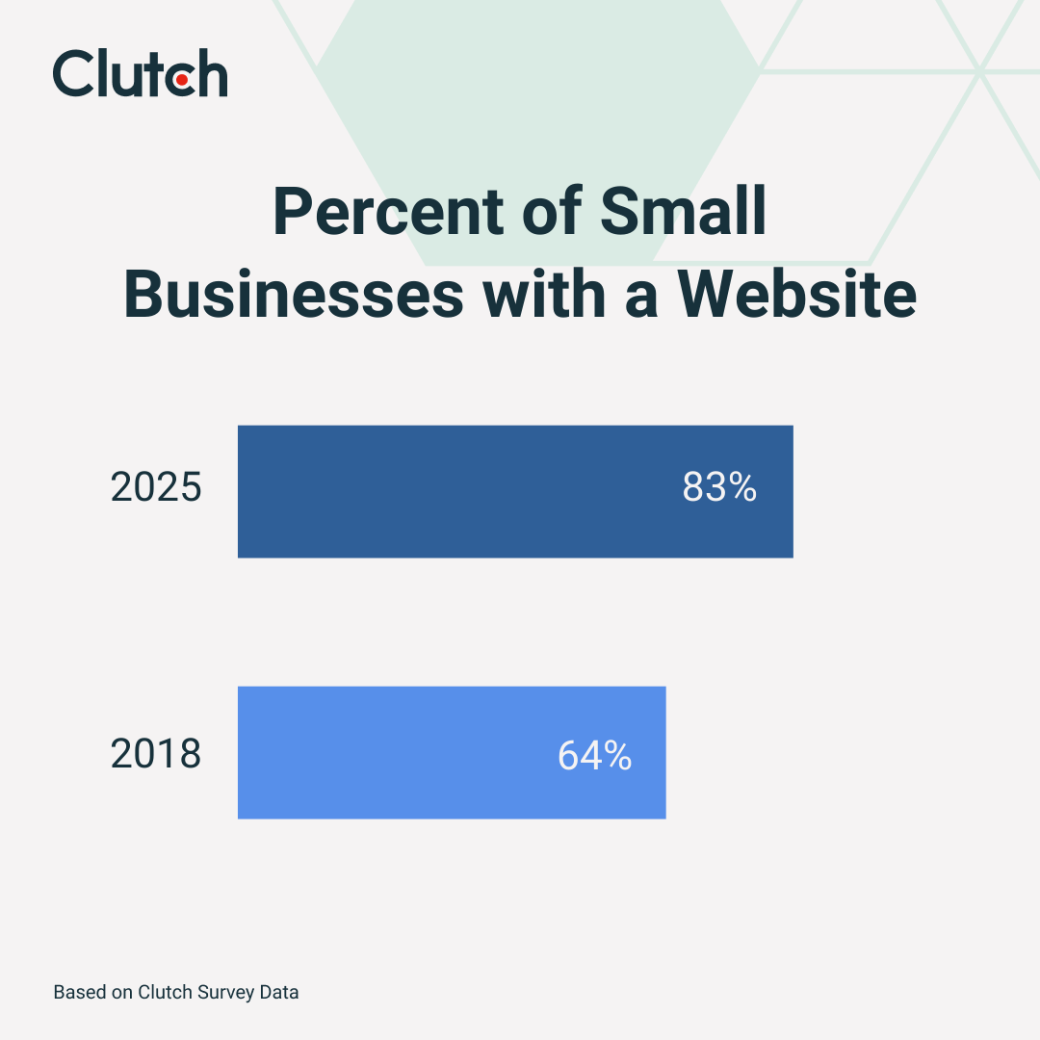
83% of small businesses now have a website, up from 64% in 2018, driven in part by the rise of affordable, no-code tools and AI integrations.
Have you ever searched for a local business online and come up empty-handed? Maybe they didn’t have a website, or the one they had looked outdated and hard to navigate. Chances are, you moved on, and so did other potential customers.
Websites are no longer optional. 83% of small businesses now have a website, and 12% launched theirs in the past year alone. Growth is fueled by budget-friendly, no-code builders and AI integrations that make professional websites accessible to businesses of all sizes.
Looking for a Web Design agency?
Compare our list of top Web Design companies near you
While the 17% of small businesses that are still offline cite misgivings about relevance rather than cost, the reality is that businesses without a website are missing the control, flexibility, and long-term ROI that other channels like social media or marketplaces simply can’t match.
In this article, you’ll see the latest small business website trends, what’s driving adoption, and how today’s tools make building one easier and more affordable than ever, even if you’ve never touched a website builder before.
Websites aren’t just for e-commerce anymore. From local shops to service providers, small businesses now see their website as a critical asset for sales, visibility, and trust.
It’s clear that having a website is becoming the norm:
The reasons why small businesses invested in their website varied: some wanted to increase sales and revenue (39%), others aimed to build brand awareness and credibility (24%), and many sought a place to provide information or customer support (22%).

Why this matters: The data shows that more small businesses than ever recognize the value of having a website. Their reasons for investing, from driving revenue to building credibility and providing information, highlight that websites are now a central tool for growth, visibility, and customer engagement.
For the 17% of small businesses without a website, the hesitation isn’t usually about money.
When asked why they’ve held off, the top answer was “Not relevant to my industry” (34%).
Only 16% cited cost as the main reason, which is a notable drop from 26% in 2018 (Clutch data).
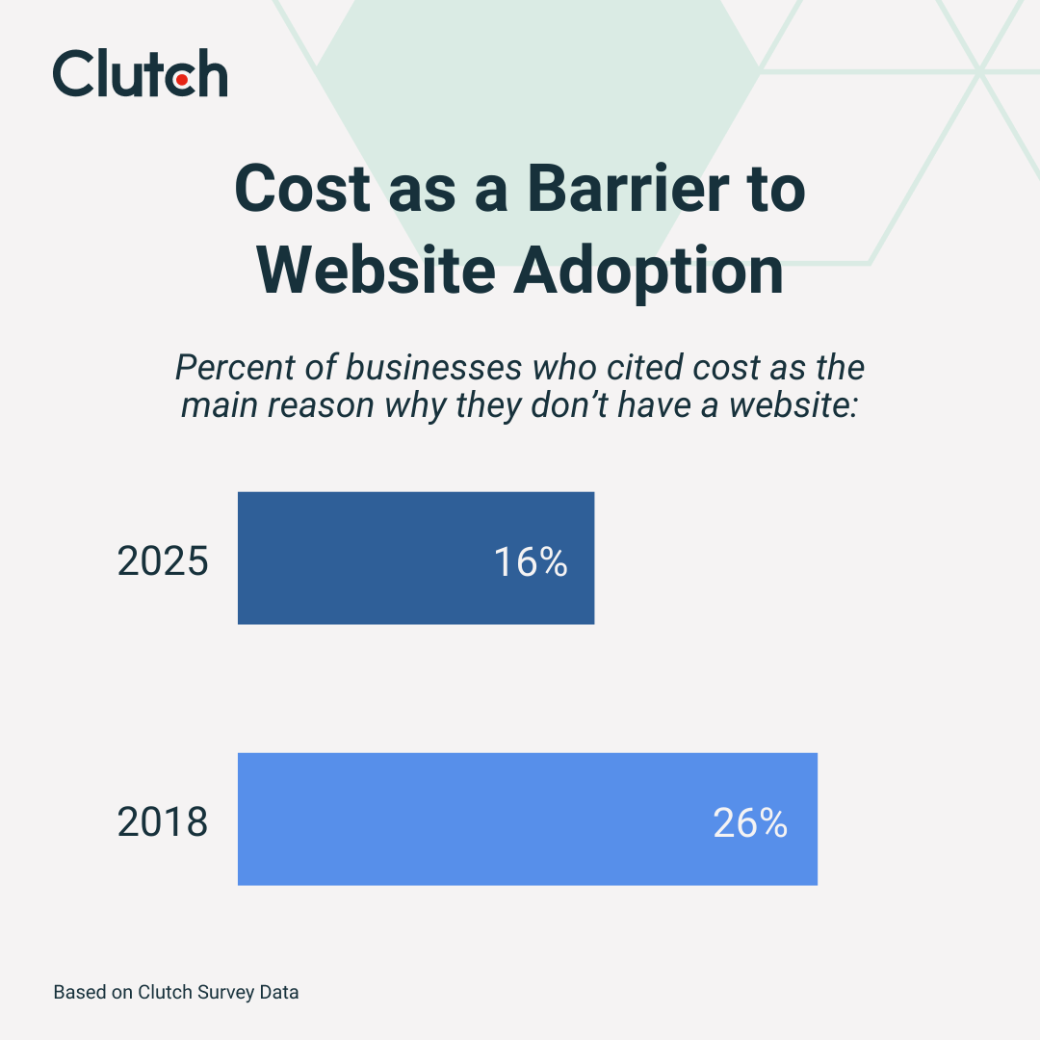
Why this matters: Despite cost being less of a barrier than ever, some businesses still hold back, assuming a website isn’t relevant. However, as Matthew Vermillion, Co-Founder of Artifact Branding & Marketing explains, “Powerful websites are built to achieve specific business goals with a tightly defined audience.”

Referrals are the most effective source of new business for 39% of small businesses without a website. Aside from referrals, other top lead generation sources include e-commerce marketplaces (12%) and organic social media (11%).
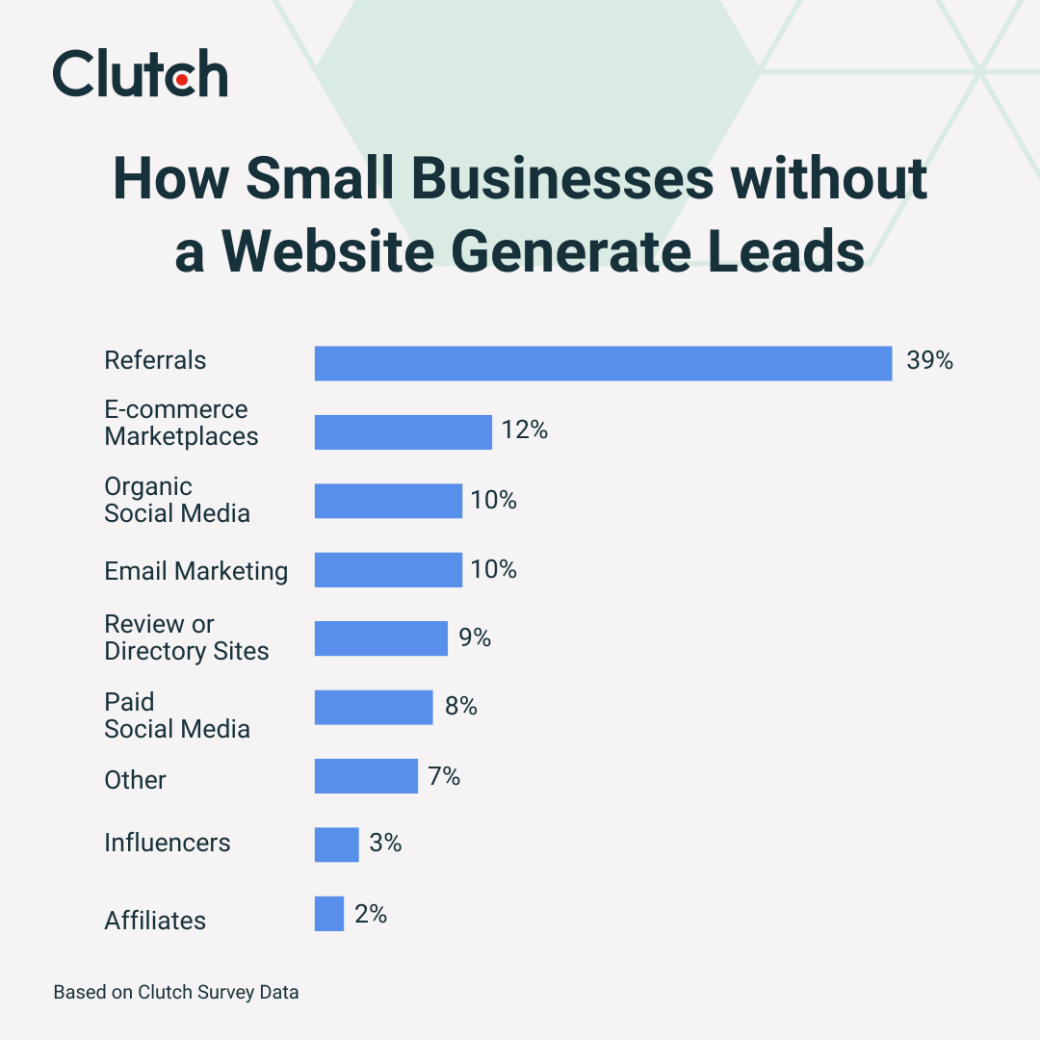
Why this matters: Referrals are a powerful source of both revenue and credibility, but they only go so far. A website helps amplify those referrals, giving prospects a place to learn more, engage with your brand, and take action on their own time.
Social media and marketplaces can extend your reach, but they come with trade-offs: algorithms and platform rules can change without warning, and you never fully control the space. A website, on the other hand, offers control, flexibility, and the ability to generate leads around the clock.
Whether you have a team or not, building a professional website is now realistic for nearly every small business. According to Clutch data:
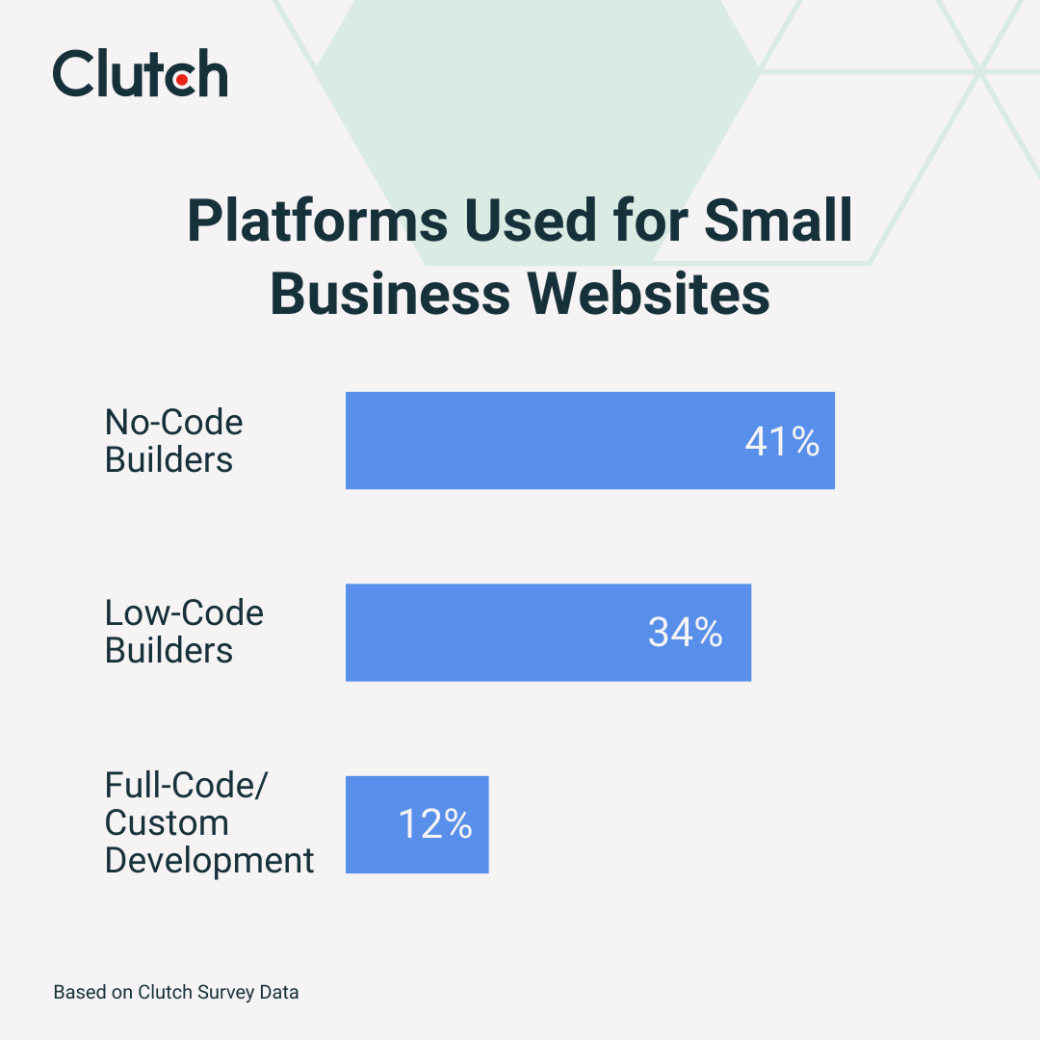
When it comes to building their websites, small businesses are split between outsourcing and designing in-house:
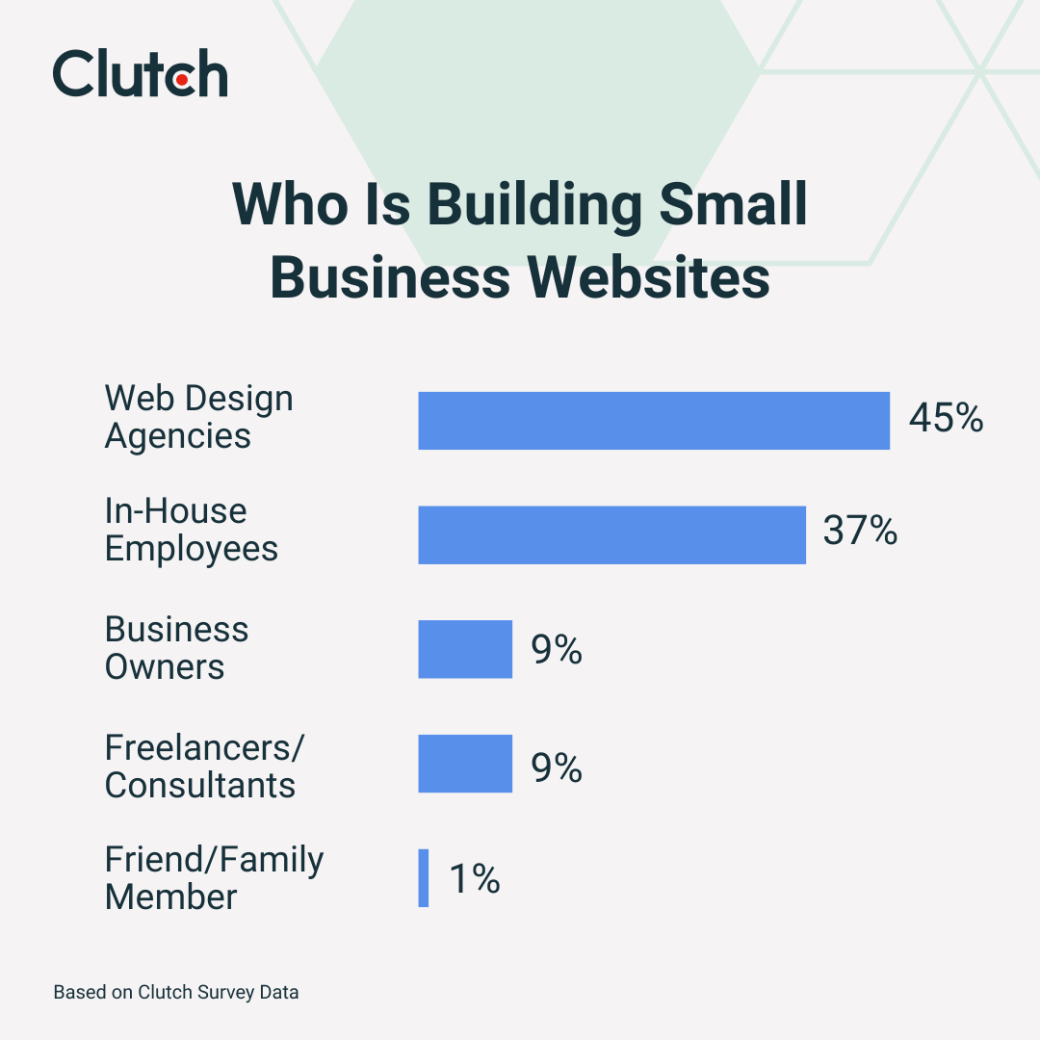
Why this matters: The days of needing a large budget or coding expertise are over. More small businesses are building websites in-house because many platforms now include AI-powered design suggestions, layout automation, and content guidance. As a result, creating professional sites without specialized skills is easier than ever.
At the same time, outsourcing to agencies remains a strong option. Agencies can leverage experience, tools, and streamlined processes to launch websites quicker while providing expert design, functionality, and strategy.
Ultimately, small businesses can now get online faster, cheaper, and more easily, allowing them to attract more customers and compete effectively in their markets.
Get help deciding if you should DIY your website or hire an agency.
The 83% of businesses who have invested in a website are seeing significantly stronger lead generation than those without. For 40% of small businesses with a website, search engine optimization (SEO) is their top source of leads, which shows the power of being discoverable on Google and other search engines.
In contrast, 40% of small businesses without a website rely on referrals as their main source of leads. While referrals tend to convert well, only 8% of small businesses with a website say referrals are their primary lead driver, suggesting they’re able to generate new leads more consistently through SEO.
Notably, social media was cited as the top source of leads by just 10% of small businesses, regardless of whether they had a website.
Why this matters: Referrals are some of the strongest converting leads. Successful businesses are still capitalizing on their referrals while getting in front of more potential customers via an SEO-optimized website.
The fact that the amount of leads coming from social media for those with and without websites indicates that prioritizing website creation or optimization is more of a needle mover than investing in social media management.
Small businesses with a website are turning traffic into revenue, with 87% of small businesses selling directly online.
While 38% of businesses may look like your traditional e-commerce website by selling physical products online, 30% of small businesses are selling digital products, and 19% more offer services.

Even if not selling online, websites can still drive sales through tools that allow scheduling, lead form capture, and customer communication.
Why this matters: A modern website signals trustworthiness and legitimacy, making it easier for customers to engage and purchase. It works around the clock to establish credibility and, ultimately, drive revenue.
Websites aren’t “set it and forget it.” The most successful small business owners treat theirs as a living asset by making steady updates and occasional redesigns to keep up with customer expectations.
To keep your website current, useful for customers, and driving sales, regular updates are essential. In fact, 61% of small businesses update their websites at least once a week. These updates often include:
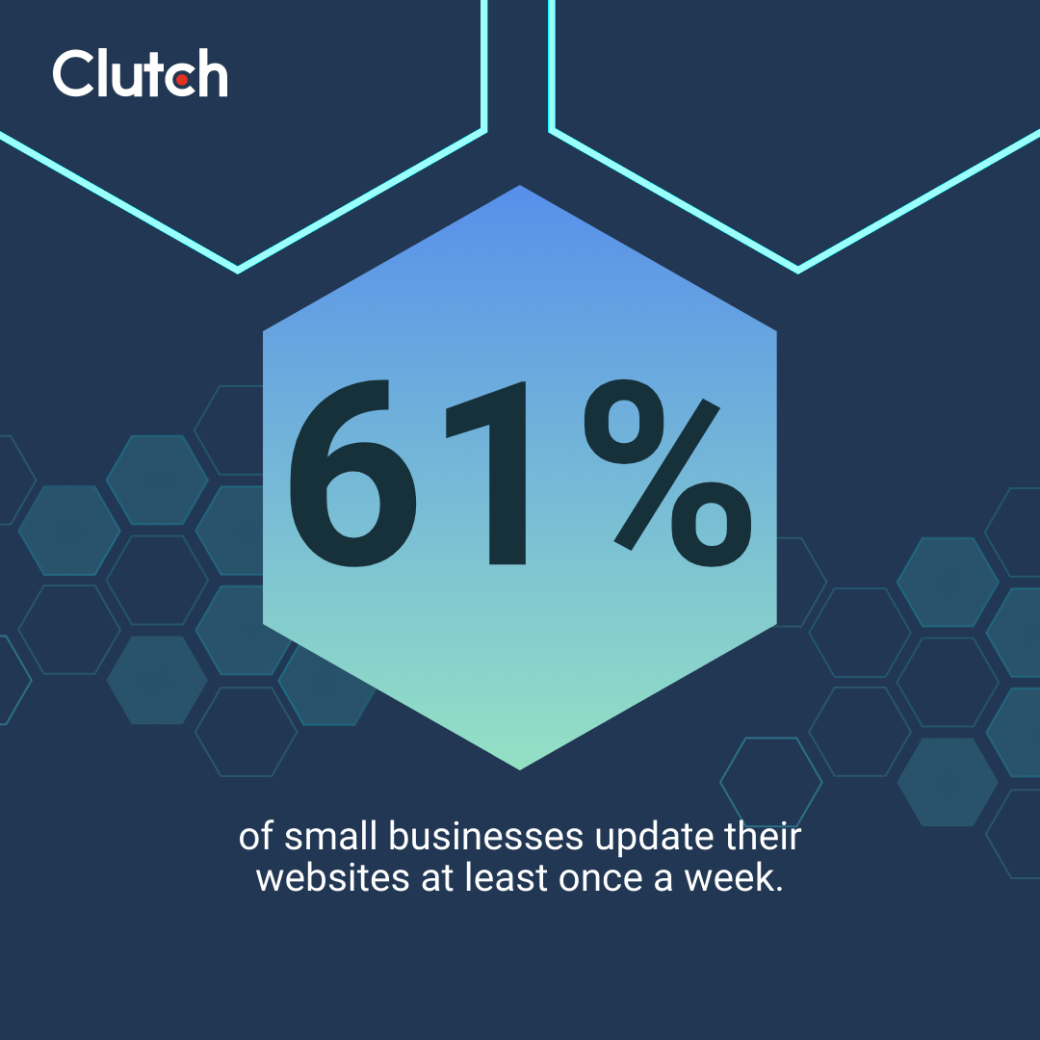
Why this matters: Frequent, lightweight website updates add up. Over time, they improve visibility, keep customers engaged, and signal that your business is active and trustworthy.
In addition to regular updates, keeping your website design fresh and modern is key.
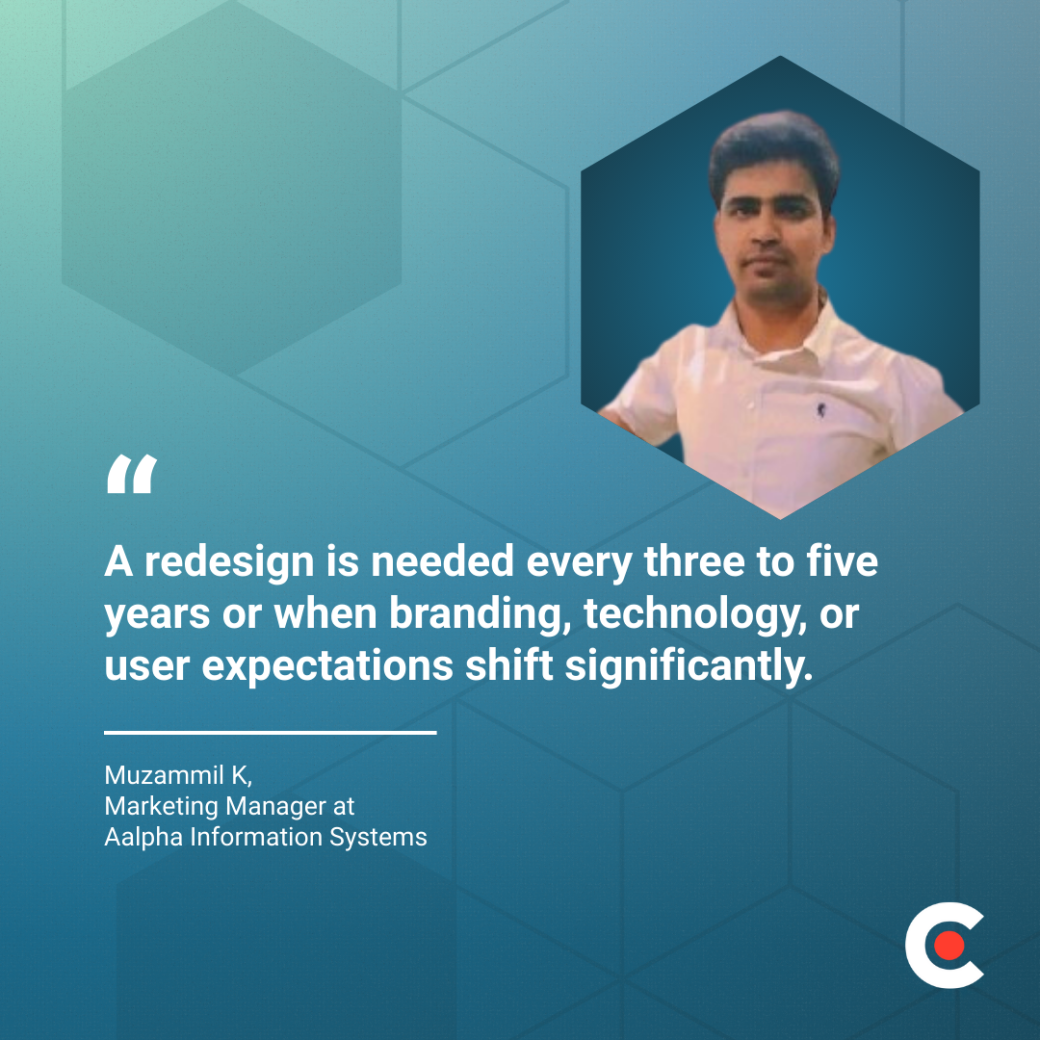
As Muzammil K, Marketing Manager at Aalpha Information Systems, notes, “A redesign is needed every three to five years or when branding, technology, or user expectations shift significantly.”
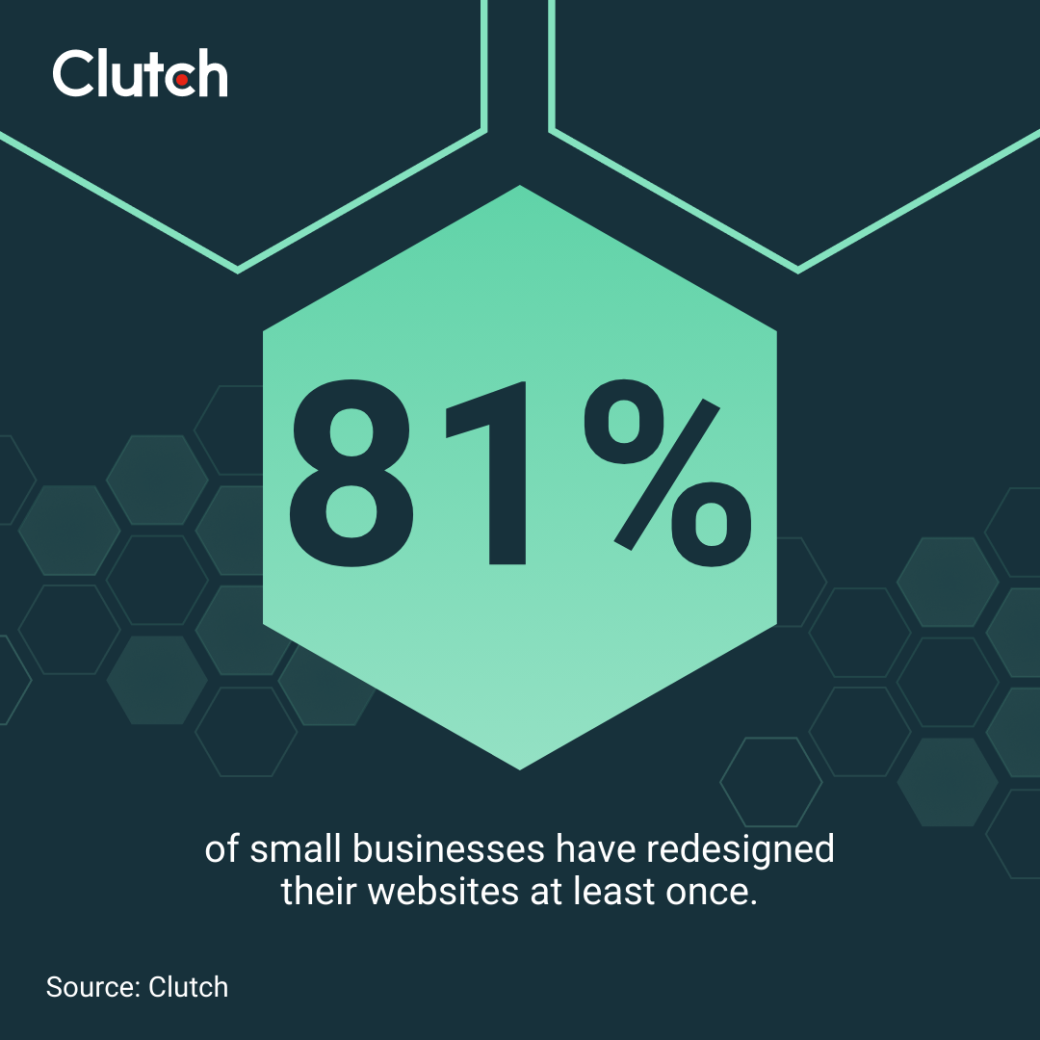
Eighty-one percent (81%) of small businesses have redesigned their websites at least once, usually to:
Why this matters: A website redesign, combined with ongoing updates, helps ensure your website stays competitive, engaging, and effective at driving sales.
As small business websites have become essential tools for revenue and customer engagement, the focus has shifted from simply having a website to making sure it performs, looks modern, and meets customer expectations.
Looking ahead, 90% of small businesses plan to invest in their website over the next 12 months to that enhance both functionality and user experience.

Here are the optimizations they are prioritizing:
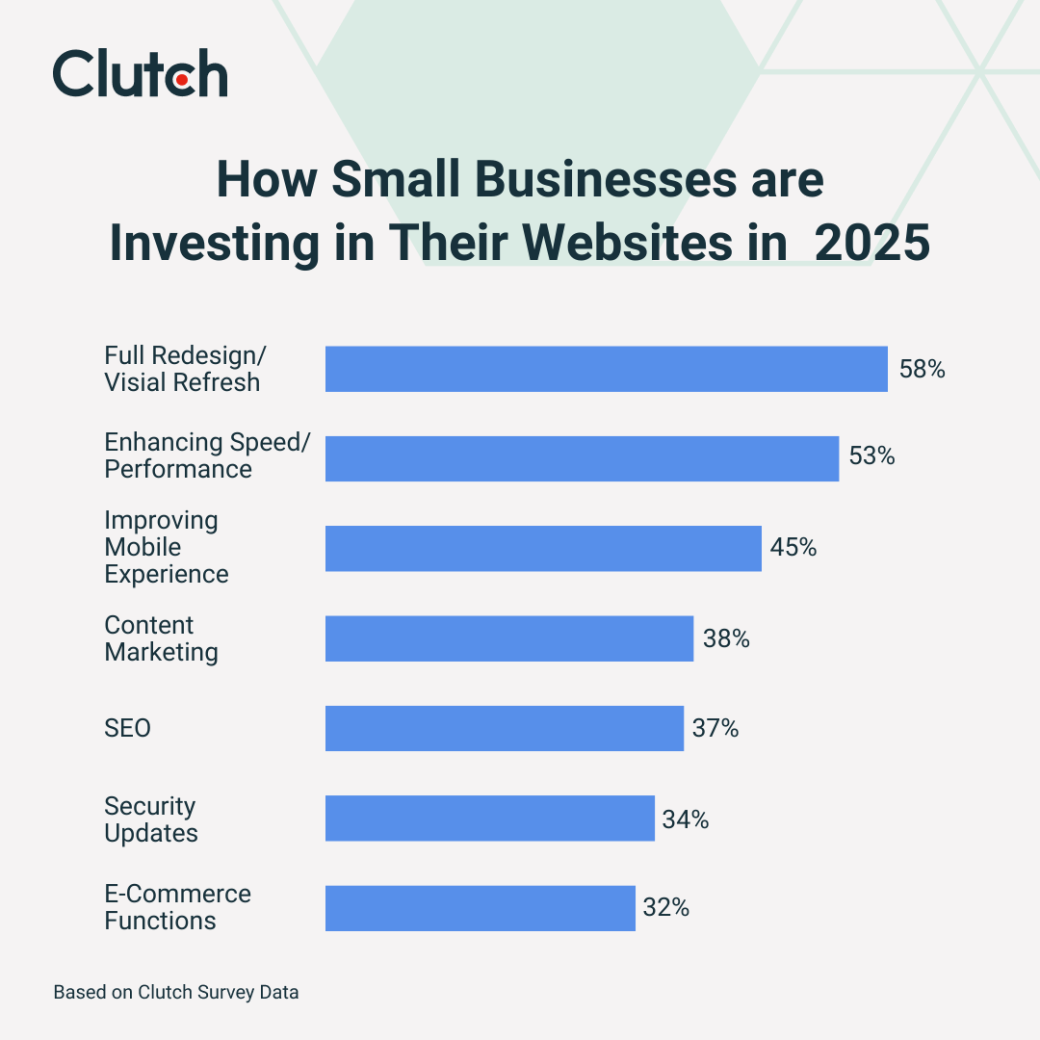
Why this matters: The bar for small business websites is rising. Companies that actively invest in performance, design, and functionality are setting themselves apart from competitors and future-proofing their business in a digital-first world.
Websites are a core part of running a competitive, growth-oriented small business. Whether you’re building your first site or upgrading an existing one, a professional website is an owned asset that puts you in control of your brand, audience, and sales.
Survey data shows more small businesses are investing in their websites than ever before, and the results are clear: websites work.
Ready to grow your business online? Explore top web design agencies on Clutch to build or refresh your website and turn it into a powerful growth engine.
This report is based on a survey conducted on August 5, 2025, using the online polling platform SurveyMonkey. We surveyed 406 small business owners in the United States between the ages 18-99 of all income levels. The respondents were 54% male and 46% female.
Participants were asked a series of multiple-choice and single-selection questions about the decisions made and results seen from either having or not having a website for their business. Quotas were applied to ensure a balanced distribution across demographic segments. All respondents were required to complete the survey in full to be included in the final analysis.
The findings provide insights into the state of web design for small businesses in 2025.